
Can Cat Eat Plants
This post contains affiliate links. As an Amazon Associate, we earn from qualifying purchases.
Cats can eat certain plants, but many are toxic and can pose serious health risks. Over 65% of cats nibble on plants weekly out of curiosity or boredom. Toxic plants like lilies and sago palms can cause severe symptoms, including vomiting and even death. To keep your cat safe, it’s important to remove toxic plants, monitor their behavior, and provide safe alternatives like cat grass. If you suspect poisoning, seek immediate veterinary care. Further details and guidance on safe plant choices will follow for those interested.
Essential Facts in 30 Seconds
- Cats can eat plants for fiber and folic acid, aiding digestion.
- Many houseplants, like lilies and sago palms, are toxic to cats.
- Safe plant options for cats include catnip, cat grass, and spider plants.
- Monitor your cat’s behavior around plants to prevent poisoning.
- Seek immediate veterinary help if a cat shows poisoning symptoms.
Understanding Cats’ Curiosity Towards Plants
Cats are naturally curious. Their interest in plants shows this instinct. About 65% of domestic cats nibble on plants each week. This isn’t just a silly habit.
Why do cats love plants?
- Fiber Needs: Cats often eat plants to get fiber. This helps their digestion and prevents constipation. Additionally, consuming cat grass can act as a natural source of fiber, further aiding their digestive health.
- Curiosity: Young cats, especially those aged 1-3 years, explore everything. Plants catch their attention.
- Boredom: Cats may chew on plants when they feel bored. This can help soothe them.
To keep your cat happy, offer fun toys and activities. Understanding why cats like plants helps you create a safe space for them. It also meets their natural instincts. Additionally, being aware of toxic plants for cats is essential for keeping your feline friend safe in a plant-filled environment.
Common Toxic Plants to Avoid
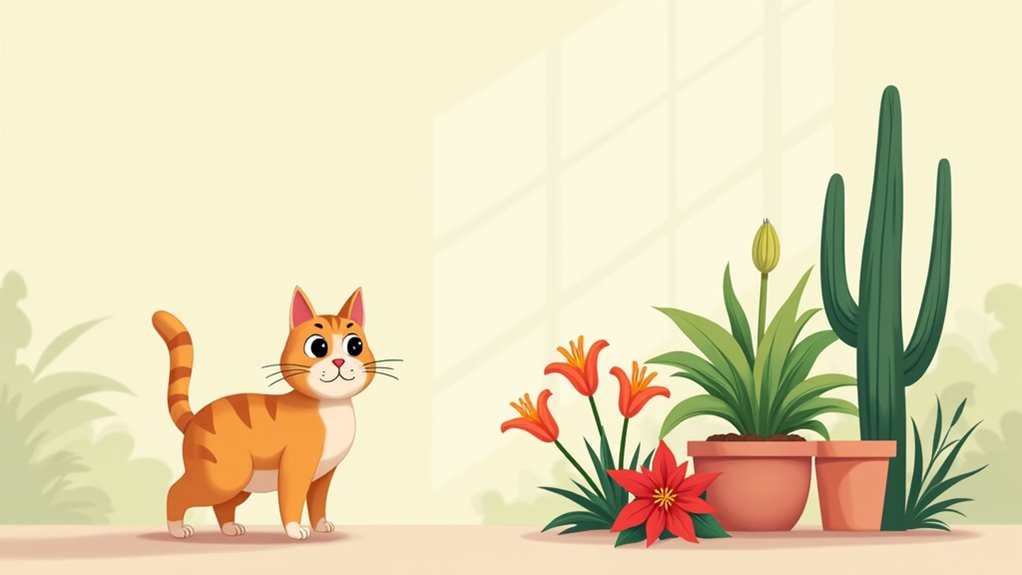
Be aware of toxic plants that can harm your cat. Some plants can cause vomiting, diarrhea, or even kidney failure.
To protect your furry friend, here are a few dangerous plants to avoid:
- Lilies: These flowers are very toxic to cats. Even a small amount can cause kidney damage.
- Sago Palm: All parts of this plant are toxic. It can cause severe liver damage and can be fatal.
- Azaleas: Eating even a few leaves can lead to vomiting and diarrhea. In severe cases, it can affect the heart.
- Oleander: This beautiful plant is deadly for cats. It can cause serious heart issues.
- Tulips: The bulbs are especially toxic. They can cause severe gastrointestinal problems.
Ingestion of lilies can lead to acute kidney failure, so it’s crucial to keep them out of your home.
Safe alternatives include cat grass, spider plants, and Boston ferns. These plants are safe for cats and can even help with their digestion.
Keep your home safe. Remove any toxic plants and choose safe options instead. Your cat will thank you!
Highly Toxic Species
Many common plants can harm your cat’s health. It’s important to know which ones to avoid. Here are some highly toxic plants:
| Plant Name | Toxic Component | Potential Effects |
|---|---|---|
| Sago Palm | Cycasin | Can cause liver failure, vomiting, and seizures. |
| Lilies | Unknown toxin | May lead to kidney failure. Can be fatal without treatment. |
| Oleander | Cardiac glycosides | Can result in heart failure and irregular heartbeat. |
| Cyclamen & Daffodils | Saponins & Lycorine | Can cause vomiting, seizures, and possibly death. |
These plants can cause serious health issues. They can damage vital organs. Always keep an eye on your cat around these plants. It’s best to remove them from your home for your cat’s safety.
Symptoms of Poisoning
Recognizing symptoms of poisoning in cats is crucial. Toxic plants can cause serious health issues. Early signs of poisoning include vomiting and diarrhea. These symptoms often come from plants like lilies and azaleas.
Excessive drooling, loss of appetite, and mouth pain indicate irritation from plants like pothos. Severe poisoning can lead to neurological symptoms. Tremors and disorientation are serious signs to watch for.
Monitor your cat closely for these symptoms after exposure to any plants. Seek veterinary care immediately if you notice anything unusual. Awareness is key to preventing poisoning.
Learn about harmful plants and keep them away from your cat. Always act quickly; early help can save your cat’s life. Keep toxic plants out of reach!
Safe Plant Alternatives
Cats are curious. They love to sniff and nibble on plants. To keep your cat safe, choose non-toxic plants.
Great options include catnip, which makes cats playful. Cat grass is another good choice. It helps with digestion and provides nutritional benefits. Silver vine is fun and excites most cats. Valerian can help with anxiety but use it carefully. The spider plant is safe and can make your cat a bit excited too. Always monitor cat behavior after potential ingestion to ensure their safety.
Avoid toxic plants like lilies and sago palms. These plants can be very dangerous. Always check if a plant is safe before bringing it home.
Safe plants make a happy home for your curious kitty.
Symptoms of Plant Poisoning in Cats
Plant poisoning in cats can be serious. Early symptoms are important to notice. Look for itchiness, vomiting, or drooling. These signs may mean your cat is sick.
Severe symptoms can include trouble breathing or seizures. These require immediate veterinary care. Always keep toxic plants out of your cat’s reach. Common plants that are dangerous include lilies, poinsettias, and philodendrons.
If your cat shows any symptoms, take action quickly. A veterinarian can help diagnose and treat your pet.
Keeping your cat safe means being aware of what plants are in your home.
Early Symptoms to Watch
Knowing the early signs of poisoning in pets is important. Quick action can save your cat’s life. Watch for these symptoms:
| Symptom Type | Symptoms |
|---|---|
| Irritation & Inflammation | Itchiness, swelling, red watery eyes |
| Gastrointestinal Symptoms | Vomiting, diarrhea, excessive drooling |
| Respiratory Issues | Breathing difficulties, coughing, pawing |
| Urinary & Kidney Symptoms | Frequent urination, jaundice, lethargy |
If you notice any of these signs, seek veterinary help right away. Fast treatment increases the chances of recovery for your furry friend. Stay alert and protect your pet!
Severe Toxicity Indicators
Recognizing severe toxicity indicators in your cat is vital for their health. If your cat eats a harmful plant, watch for repeated vomiting or severe diarrhea. These signs show gastrointestinal distress. They need immediate veterinary care.
Excessive drooling or trouble swallowing may mean oral irritation.
Look for neurological symptoms too. Tremors or confusion could indicate serious neurotoxic effects. Rapid breathing, abnormal heartbeats, or collapse signal respiratory or heart problems.
Jaundice, increased thirst, or less urination can hint at liver or kidney damage.
Always identify toxic plants. Seek help right away if your cat shows any of these symptoms. Your cat’s safety depends on quick action.
Reasons Cats May Eat Plants
Cats eat plants for various reasons. These reasons relate to their health, instincts, and daily life.
| Reason | Description | Plant Benefits |
|---|---|---|
| Nutritional Needs | Cats need fiber and folic acid for good digestion. | Helps digestion and prevents constipation. |
| Self-Medication | Some plants make cats vomit to feel better. | Can ease upset stomachs. |
| Behavioral Factors | Cats nibble on plants out of curiosity or boredom. | Provides mental stimulation. |
| Instinctual Behavior | Cats may eat plants to cleanse their bodies. | May help control parasites. |
While eating plants can be helpful, it’s important to watch your cat’s habits. Some plants are harmful, such as toxic ferns, which can cause distress if ingested. Additionally, providing safe plants can satisfy their curiosity and offer health benefits. A balanced diet can reduce their urge to snack on houseplants. Keep your feline friend safe and healthy!
Preventive Measures for Cat Owners
As a cat owner, your cat’s safety is a top priority. Remove all toxic plants from your home and garden. Lilies and azaleas can be harmful. Many common flowers can be toxic to cats, including those that can cause severe kidney damage.
Always research plant safety before bringing new plants home. Choose non-toxic options like spider plants and cat grass. These plants are safe for your curious cat.
Keep an eye on your cat, especially around new plants. Use shelves or hanging pots to keep plants out of reach. Sprinkling chili powder on leaves can help stop chewing.
Provide fun toys and scratching posts. This keeps your cat busy and away from your plants.
Regularly change their environment with new activities and plant positions. By taking these steps, you create a safe home for your cat while enjoying your plants. Additionally, it’s important to be aware of toxic compounds present in certain plants to ensure your cat’s well-being.
Emergency Responses to Plant Poisoning
Suspecting your cat has eaten a toxic plant requires quick action. Follow these emergency steps:
- Remove Plant Material: Take any plant pieces from your cat’s mouth, fur, and paws. This stops further exposure.
- Relocate Your Cat: Move your cat to a safe area away from plants. This reduces risks.
- Gather Evidence: Collect samples of the plant, vomit, or stool. Show these to your vet for better diagnosis.
- Contact a Vet: Call your veterinarian or an emergency animal hospital right away. Share details about the plant and symptoms your cat shows.
- Avoid Inducing Vomiting: Don’t make your cat vomit unless a vet tells you to. Some toxins can harm more if vomited.
Timely help from a vet can greatly improve your cat’s chances of recovery.
Seek help without delay!
Frequently Asked Questions
Can Eating Plants Be Beneficial for Cats?
Eating plants can be good for cats. They provide important nutrients. Plants help with digestion, too. They can ease hairballs and support gut health. Always check that the plants are safe for cats before letting them eat. Some safe options include cat grass and catnip. These plants can make your cat happy and healthy. Remember, not all plants are safe. Keep your cat’s well-being in mind.
Are There Any Non-Toxic Plants Safe for Cats?
About 70% of plants are toxic to cats. That can be scary for pet owners. Luckily, there are many safe options. Non-toxic herbs and plants exist. Catnip and spider plants are two great examples.
Catnip is fun for cats. It can make them happy and playful. Spider plants are also safe and easy to care for. They bring a nice touch of green to your home.
Choose plants that are safe for your furry friend. This way, you can have a beautiful space without worrying about their health. Enjoy your plants and your pet!
How Can I Train My Cat to Avoid Plants?
Train your cat to stay away from plants using simple methods. Start with redirection. When your cat approaches a plant, gently guide them to a toy. Use distractions to keep them entertained.
Citrus scents can help. Cats dislike these smells. Place citrus peels around your plants. This natural deterrent can keep your cat at bay.
Engaging toys are important too. Provide fun options for your cat. Interactive toys or puzzle feeders can capture their attention.
Create a safe space for your plants. Use shelves or hanging pots. This way, your cat can’t reach them.
Be patient. Training takes time. With consistent effort, your cat will learn to avoid your plants. Enjoy a happy home with both your cat and your greenery!
What Should I Do if My Cat Nibbles a Plant?
Act fast if your cat nibbles a plant. First, remove any plant debris from your cat’s mouth. Next, give your furry friend a bath to clean them up. Keep your cat away from more plants to prevent further issues. Watch for signs of plant toxicity. Symptoms may include vomiting, diarrhea, or lethargy. Contact your vet for advice right away. Being quick can help keep your cat safe and healthy.
Can Cats Be Allergic to Certain Plants?
Cats can be allergic to some plants. Watch for signs like scratching, sneezing, or upset stomach. These symptoms can mean your cat is having a reaction. Common plants that may cause allergies include lilies, poinsettias, and philodendrons. Always keep an eye on your cat’s behavior. If you see these signs, visit your vet. They can help with diagnosis and treatment options. Keeping your cat safe is important. Make sure your home is free of harmful plants.
Conclusion
Keeping your cat safe from plants is important. Many cat owners, about 50%, notice their pets nibbling on houseplants. This curiosity can cause serious health problems. Knowing which plants are dangerous helps protect your furry friend.
Common toxic plants include lilies, poinsettias, and philodendrons. Symptoms of poisoning can include vomiting, diarrhea, and lethargy. Always watch your cat’s behavior closely.
If you think your cat ate something harmful, contact a vet right away. Your attention can prevent serious issues. Keeping plants out of reach is a smart choice. A little caution goes a long way in keeping your cat safe and healthy.
