
Can Cat Eat Pomegranate
This post contains affiliate links. As an Amazon Associate, we earn from qualifying purchases.
Cats can eat pomegranate, but it is not recommended due to potential risks. While pomegranates aren’t toxic to cats, the seeds can pose a choking hazard, and the peel and membranes may lead to intestinal blockages. If you choose to give your cat pomegranate, offer only small, seedless pieces of the aril and monitor for any signs of upset stomach or choking. It’s advisable to prioritize a meat-based diet and treat fruits like pomegranate sparingly. For those interested, further details on safe fruits for cats will be provided later in the article.
Essential Facts in 30 Seconds
- Pomegranates are non-toxic to cats but not part of their natural diet.
- Cat owners should avoid giving seeds to prevent choking hazards.
- The peel and membranes can lead to intestinal blockages if ingested.
- Small amounts of pomegranate arils may be given as an occasional treat, but watch for digestive issues.
- A meat-based diet should always be prioritized for cats, with pomegranates used sparingly.
Toxicity and Safety of Pomegranates for Cats
Sharing pomegranate with your cat requires careful thought. Pomegranates are usually safe for cats, but they aren’t a natural food for them. The seeds, while not toxic, can be a choking risk.
Risks of Pomegranate for Cats:
- No Toxicity: Pomegranates themselves aren’t poisonous. Yet, the peel and membranes can cause dangerous blockages in the intestines.
- Choking Hazard: Hard seeds may get stuck in your cat’s throat or digestive system.
- Stomach Issues: The tannins and high sugar can upset a cat’s stomach. This may lead to diarrhea or vomiting.
Safety Tips:
- Always remove or crush seeds before giving pomegranate to your cat.
- Watch your cat closely while they eat to prevent choking.
Nutritional Content and Benefits of Pomegranates
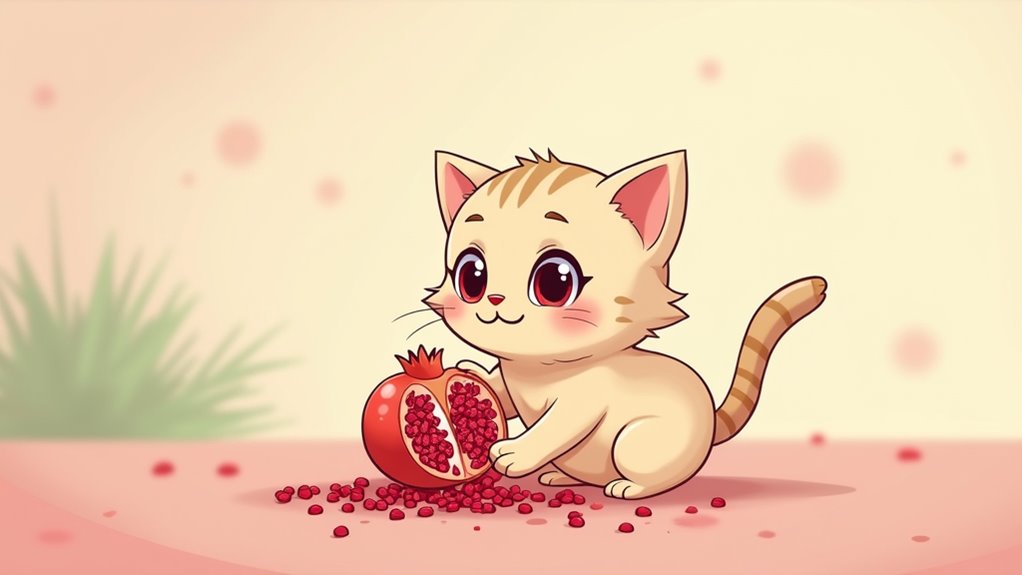
Pomegranates have important nutrients that can benefit your cat. They’re low in calories, which makes them a nice snack option. This fruit is rich in vitamins like C, K, and folic acid. Pomegranates also contain antioxidants, which help protect cells from damage. The high water content in pomegranates can help keep your cat hydrated, especially in hot weather.
While pomegranates provide valuable nutrients, they don’t offer the animal-based protein that cats need. Cats are obligate carnivores, meaning they must eat meat for a healthy diet. The antioxidants in pomegranates, like punicalagin, may help support your cat’s overall health, but the benefits may be limited. Additionally, excessive consumption of pomegranate can lead to gastrointestinal issues in cats.
Pomegranates also contain fiber, which can help with digestion.
Digestive Risks Associated With Pomegranate Consumption
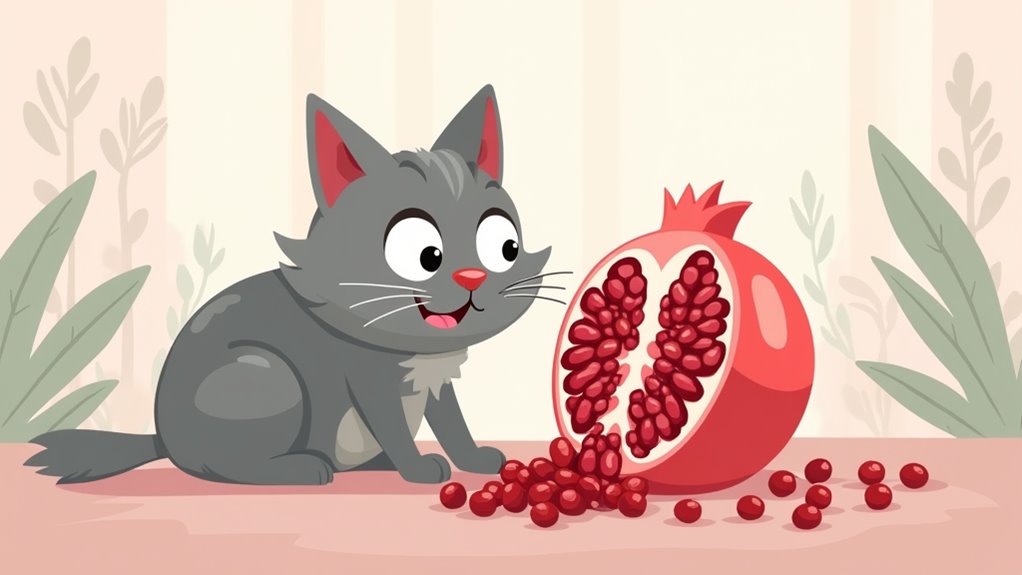
Pomegranates may look like a tasty snack for your cat, but they can cause big problems. Cats have delicate digestive systems that can’t handle the tannins and acids found in pomegranates. Eating this fruit can lead to serious issues like vomiting, diarrhea, and stomach pain.
Here are some important risks to consider:
- The tough fibers in the skin and membranes can cause harmful blockages.
- Even a tiny bit of the inedible parts can upset your cat’s stomach.
- The sugar content, about 14 grams per 100 grams, can throw off their digestion.
Watch for signs of illness after your cat eats pomegranate. Call your vet right away if you notice anything wrong.
It’s safer to avoid giving your cat pomegranates. Stick to foods that are right for their meat-based diet. Keeping your cat healthy means making smart food choices.
Choking Hazards of Pomegranate Seeds
Pomegranate seeds can be dangerous for cats. Their small, hard size makes them a choking hazard.
Cats might swallow these seeds whole. This can block their airways or cause digestive problems. Even one seed can hurt your cat.
Always keep pomegranate seeds away from your furry friend. Prioritizing their safety is very important.
Choose cat-friendly snacks instead. Keep your home safe and your cat happy!
Seed Size Concerns
Feeding your cat pomegranate can be risky. The seeds pose a serious choking hazard. Here are some important points to consider:
- Seed Texture: The seeds have a hard shell. This makes them tough to chew.
- Chewing Difficulty: Cats find it hard to break down these seeds.
- Size: The seeds are small enough to swallow whole.
- Curiosity: Cats often paw at or quickly eat these seeds.
To keep your cat safe, always remove the seeds before giving pomegranate.
Watch your cat closely while they eat. If you see any signs of trouble, contact your vet right away.
Safety first! Be aware of the risks of choking from pomegranate seeds.
Risk of Obstruction
Feeding your cat pomegranate seeds can be very dangerous.
These seeds are small and hard, which makes them easy to get stuck. They can lodge in your cat’s throat and cause choking. If swallowed whole or not chewed well, seeds may block the trachea or esophagus. This can lead to serious distress.
Watch for signs of obstruction. Sudden coughing, pawing at the mouth, or gagging are red flags. Take these signs seriously. Your cat may need urgent help to remove the seed.
Seeds can also cause intestinal blockages. This may result in vomiting, lethargy, or abdominal pain.
Always remove seeds before giving fruit to your cat. Consider safer options to keep your furry friend safe from these risks.
Palatability and Consumption Behavior in Cats
Cats usually prefer meat over fruit. Pomegranates aren’t their favorite. Many cats may try a piece out of curiosity. But most don’t like the sour taste. The texture can be too acidic for them.
If you want to share pomegranate with your cat, give only a tiny amount. A few arils are enough. This helps prevent any upset stomach.
Always pay attention to how your cat reacts. Their health and happiness matter the most.
Taste Preferences of Cats
Cats can’t taste sweetness. Their taste buds don’t recognize sweet flavors. Instead, they love proteins. They enjoy foods rich in amino acids and nucleotides. Fish flavors are their top choice. They find citrus flavors unappealing. Additionally, many cats may be lactose intolerant, making dairy products like cheese less suitable for them. Cats need a diet high in protein and fat. This is important for their health. Fresh meat and fish are great options. Cats thrive on a meat-based diet. It’s best to avoid sugary treats. Focus on what they naturally prefer. This keeps them happy and healthy.
Curiosity and Food Choices
Curiosity leads cats to try new foods, even those that aren’t good for them. Some cats might sniff or taste pomegranate, but most prefer sweeter flavors. Pomegranates can be sour and acidic, which isn’t appealing to them.
Risks of Pomegranate for Cats
- Stomach Issues: Pomegranates can cause vomiting or diarrhea.
- Choking Danger: The seeds can block their throat or intestines.
- Lack of Nutrition: Pomegranates don’t provide the nutrients cats need.
Keep an eye on your cat around new foods. If they show interest in pomegranate, redirect them to treats they can safely enjoy. This keeps them healthy and happy without any risks.
Recommendations and Veterinary Advice on Feeding Pomegranates
Pomegranates can be safe for cats, but care is needed. Here are some key tips:
- Remove all seeds, peel, and pith before giving any pomegranate.
- Only offer small, seedless pieces of the juicy aril as a treat.
- Watch for choking or tummy troubles after your cat eats it.
- Stick to a meat-based diet for your cat, using pomegranates for variety.
Keep these tips in mind to keep your cat safe and healthy!
Frequently Asked Questions
Can Kittens Eat Pomegranates Safely?
Kittens can’t eat pomegranates safely. They are non-toxic, but they can cause digestive upset. The seeds may also pose a choking hazard. It’s best to choose fruits that are safe for kittens. Safe fruits include small pieces of banana, melon, or blueberries. These options provide nutrients without the risks. Always check with a vet before introducing new foods to your kitten’s diet. Keeping your kitten healthy is the top priority.
What Symptoms Indicate Pomegranate Poisoning in Cats?
Pomegranate can be harmful to cats. Watch for signs of poisoning after your cat eats it. Symptoms include vomiting, diarrhea, and extreme tiredness. These signs mean your cat might have serious stomach issues.
Take action quickly. Contact your vet if you see these symptoms. Quick help can make a big difference. Keep your cat safe by preventing access to pomegranates. Always be careful about what your cat eats.
Are There Any Safe Fruit Alternatives for Cats?
Safe fruits can boost your cat’s nutrition. Apples, bananas, berries, melons, and pears are great options. These fruits offer important vitamins and help keep your cat hydrated. They can make your feline friend healthier and happier. Always remember to give fruits in moderation. Too much can upset their tummy. Always remove seeds and peels. This keeps your cat safe while enjoying a tasty treat. Fruits can be a fun and healthy addition to your cat’s diet.
How Much Pomegranate Is Too Much for a Cat?
Giving your cat pomegranate is risky. Too much can cause pomegranate toxicity. This can upset their digestion. Only offer a tiny piece as a treat. Watch your cat closely after feeding. Look for any signs of discomfort. Keep treats small to avoid problems. Always prioritize your cat’s health and safety.
Can Pomegranate Juice Be Given to Cats?
Pomegranate juice can be given to cats, but be careful. It has some benefits, but it also comes with risks. Digestive upset and high sugar levels can harm your cat. Always use moderation when offering any juice. Too much sugar is not good for their health. Always watch how your cat reacts. If they show any signs of discomfort, stop giving it to them. Cats need a balanced diet, and juice should not replace their regular food. Keep their health in mind when making choices.
Conclusion
Pomegranates may look delicious, but they are not safe for cats. These fruits can cause serious health problems. The seeds can lead to digestive issues and choking hazards. Always prioritize your cat’s health. Never feed them pomegranates or any parts of the fruit. If you want to try something new in their diet, ask your veterinarian for advice. Keep your furry friend safe and healthy by avoiding risky foods like pomegranates.
