
Can Cat Eat Popcorn
This post contains affiliate links. As an Amazon Associate, we earn from qualifying purchases.
Popcorn isn’t toxic for cats, but it should be given with caution. Hard kernels can pose risks such as choking, dental issues, and vomiting. If you choose to share popcorn with your cat, offer only a few plain, air-popped pieces without any toppings like butter or salt, as these can be harmful. Treats should constitute no more than 10% of their daily calorie intake. It’s important to monitor your cat while they eat. For those who want more information on safe snacks for cats, further details will follow.
Essential Facts in 30 Seconds
- Plain, air-popped popcorn is not toxic but can pose choking hazards.
- Popcorn lacks essential nutrients for cats and offers minimal protein and fat.
- Toppings like salt and butter are toxic and can cause health issues.
- Excessive popcorn can lead to digestive problems like vomiting and bloating.
- Healthier snack alternatives include lean meats and safe fruits for better nutrition.
Safety of Popcorn for Cats
Popcorn is a popular snack for people, but it can be risky for cats. Hard popcorn can be dangerous. Unpopped kernels can cause choking. If a piece gets stuck in your cat’s throat, it may need a vet’s help.
Some cat breeds, like Persians and Scottish Folds, are more likely to choke because of their flat faces. Hard kernels can also chip your cat’s teeth. It’s important to note that plain, air-popped popcorn is not toxic, but it still poses risks for your cat. Additionally, cats have sensitive digestive systems, which can make them more susceptible to issues from human foods.
Watch out for toppings too. Additives like salt, butter, and flavors are toxic for cats. They can cause serious health problems, including seizures and pancreatitis.
If your cat eats popcorn, keep an eye on them. Look for signs of distress like gagging or coughing. If you see these signs, call your vet right away.
Keep your cat safe by choosing better treats.
Nutritional Value of Popcorn for Cats
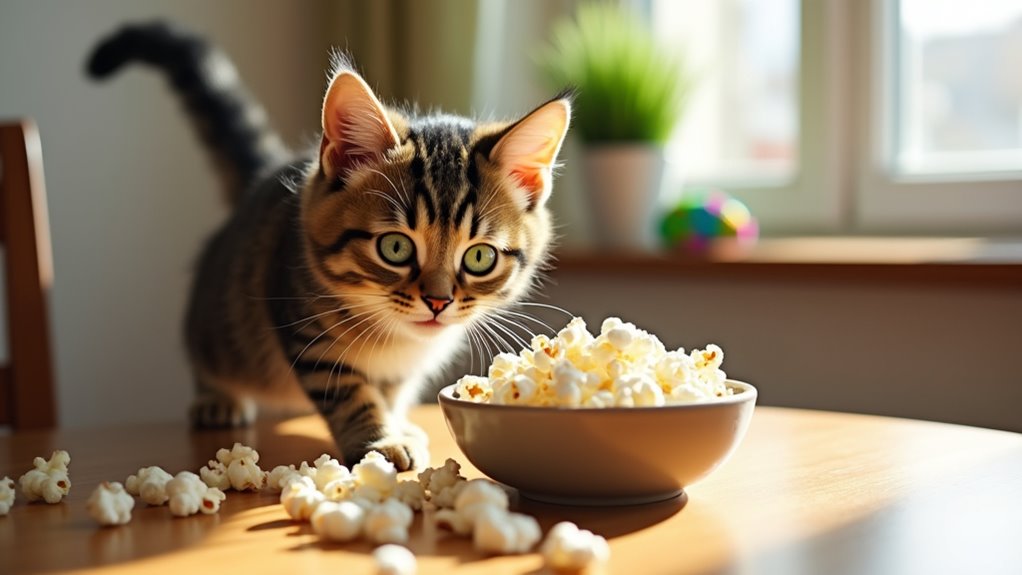
Popcorn may seem like a fun snack, but it doesn’t provide good nutrition for cats. This popular treat has very little to offer in terms of health benefits. Here’s a quick look at its nutrients:
| Nutrient | Amount per Ounce (28g) |
|---|---|
| Protein | 1-1.3 grams |
| Fat | 0.36-1.3 grams |
| Carbohydrates | 6.2-22 grams |
| Fiber | 1-4 grams |
Plain, air-popped popcorn is low in calories but also low in essential nutrients. It has minimal protein and fat, and it lacks important vitamins. The small amounts of minerals like iron and calcium are not enough for your cat’s needs. Additionally, cats are obligate carnivores, meaning they require a diet rich in animal proteins to thrive.
Popcorn does not contain vital amino acids, like taurine, which cats need. Regularly giving popcorn could lead to weight gain and nutrient imbalances. It’s best to keep this snack away from your furry friend. Focus on foods that support their health instead.
Risks Associated With Feeding Popcorn to Cats
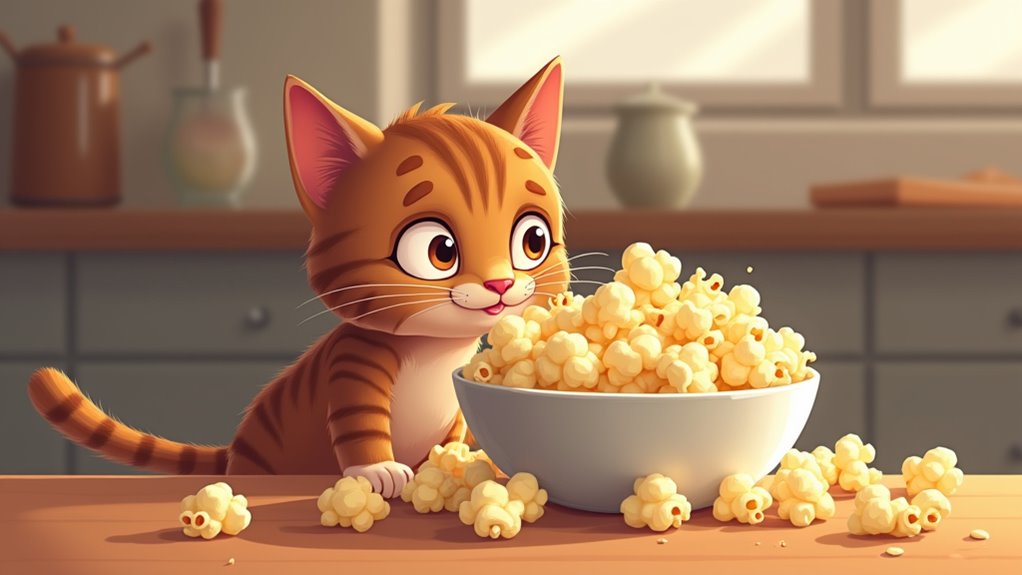
Feeding popcorn to your cat can be risky. It might seem like a fun treat, but it can cause serious health problems. Here are some dangers of giving popcorn to your furry friend:
- Unpopped kernels can get stuck in your cat’s throat. This can lead to choking.
- Cats, especially those with flat faces, find it hard to chew hard popcorn. Choking hazard is a significant concern for these cats.
- Eating too much popcorn can cause vomiting, diarrhea, and bloating.
- Flavored popcorn often has toxic ingredients like salt or garlic.
- Too much fiber from popcorn can mess with nutrient absorption and cause constipation.
Choking or severe stomach issues can happen. If that occurs, get your cat to the vet right away.
Vet Recommendations and Feeding Guidelines
Popcorn can be a fun treat for cats, but it must be given carefully. Serve only a few plain, air-popped pieces at a time. Always watch your cat for any bad reactions. Additives in popcorn can be harmful.
For healthier snack choices, consider lean meats or safe fruits. These options give your cat the nutrients it needs.
Keeping treats simple and safe helps your cat stay happy and healthy.
Occasional Treat Guidelines
Knowing which treats are safe for your cat is important. Some snacks can harm them. Popcorn can be a fun treat, but keep it simple and safe.
Follow these tips for giving popcorn:
- Only use plain, air-popped popcorn.
- Don’t give buttered or salted popcorn.
- Offer just a few pieces to avoid stomach problems.
- Watch your cat while they eat.
- Think about healthier choices like lean meats or fruits.
Additionally, be aware that cats are obligate carnivores, requiring a diet primarily of meat.
These guidelines help keep your furry friend happy and safe!
Monitor for Reactions
Monitoring your cat after giving them popcorn is very important. Watch for signs of trouble. Look for difficulty breathing, gagging, or drooling. These may mean your cat is choking.
Keep an eye out for vomiting, diarrhea, or tiredness. These can show that their stomach is upset or they might be sick.
Check their stool for changes. Notice if their appetite changes. Pay attention to any strange behavior. If your cat has breathing problems or vomits a lot, get to a vet right away. Always have fresh water available for them.
Only give plain, air-popped popcorn and do it in small amounts. Never force your cat to eat it. Your cat’s health and safety should always come first. Stay alert and watchful.
Nutritional Alternatives Recommended
Cats need animal-based proteins for good health. They’re obligate carnivores, which means they must eat meat. Instead of giving them popcorn, choose these better protein sources:
- Fresh meat like chicken or turkey
- Fish, such as salmon or tuna
- Freeze-dried raw snacks like turkey or lean pork
- Bone broth or light meat soups for hydration
- Small amounts of safe vegetables like zucchini or carrots
Focus on protein-rich foods. Popcorn gives empty calories. Treats shouldn’t make up more than 10% of your cat’s daily calories. High-quality commercial cat food is recommended to ensure they receive the necessary nutrients.
Always introduce new treats slowly. Watch for any allergies. Following these tips helps keep your cat healthy and happy!
Cat Digestive Physiology and Food Requirements
Cats have a special digestive system that meets their unique needs. As obligate carnivores, they need a diet high in protein. Their bodies are built to digest meat.
Food starts in the mouth and moves down the esophagus to the stomach. There, strong acids break down proteins quickly. This acidity also kills harmful bacteria, making meat safe to eat.
Next, food enters the small intestine, especially the duodenum. Here, bile from the liver and enzymes from the pancreas help absorb nutrients. The small intestine has tiny finger-like structures called villi. These villi capture nutrients and send them into the bloodstream.
The large intestine is shorter and mainly absorbs water and electrolytes. It plays a smaller role in digestion.
Knowing how this process works helps you feed your cat the right diet. With the right food, your cat stays healthy and happy.
Potential Long-Term Health Effects
Feeding your cat popcorn may cause serious long-term health issues.
Too much popcorn can lead to obesity. Those empty calories add up fast. Weight gain can create several health problems.
Cats need a balanced diet with vital nutrients. Without these nutrients, they can face nutritional deficiencies. This can harm their kidney health and overall well-being.
It’s important to check your cat’s diet now. Make sure they get the right food to stay healthy.
Obesity Risk Factors
Obesity in cats is a serious issue that can harm their health now and in the future. Understanding what causes obesity in cats is important for their well-being.
Many factors start at home. Consider these key risk factors:
- A lazy indoor lifestyle
- Free feeding all day
- Too many treats and human food
- Not realizing your cat’s true weight
- No set feeding schedule
These habits can lead to obesity.
Obesity can cause health problems like diabetes, joint pain, and urinary issues. By changing these behaviors, you can help your cat stay healthy.
A healthy weight leads to a happier, longer life. Take action now. Your cat will thank you!
Kidney Health Concerns
Kidney health is very important for your cat, especially as they get older. Too much phosphorus can be harmful. It can hurt your cat’s kidneys.
Cats that eat food high in phosphorus, five times more than they need, may face early kidney damage. This can lead to problems like glucosuria and microalbuminuria. These signs show that something is wrong.
To keep your cat safe, manage their phosphorus intake. Choose food that has low phosphorus levels. Avoid sources like inorganic phosphate additives. These can put extra stress on the kidneys.
Too much phosphorus can make Chronic Kidney Disease (CKD) worse. Keeping a close eye on what your cat eats is essential.
Pick cat food that promotes kidney health. Balanced nutrition helps while controlling phosphorus levels.
Take action now to protect your furry friend’s health!
Nutritional Deficiencies Issues
Popcorn may seem like a fun treat for your cat, but it can cause serious nutritional problems.
Popcorn lacks essential nutrients like protein and taurine. These nutrients are crucial for your cat’s health.
High fiber content in popcorn can lead to nutrient malabsorption. This can result in:
- Low levels of important amino acids
- Missing vital vitamins and minerals
- Poor overall nutrition
- Higher risk of long-term health issues
- Weak cellular and organ function
Without proper nutrition, your cat can suffer from serious health issues.
Chronic conditions and malnutrition can develop. It’s important to feed your cat a balanced diet that meets their needs. This will help your cat thrive and stay healthy.
Frequently Asked Questions
Can Kittens Eat Popcorn Safely?
Can kittens eat popcorn?
No, kittens cannot eat popcorn safely.
Why is popcorn unsafe for kittens?
Popcorn poses choking hazards and can disrupt kitten digestion.
What should kittens eat instead of popcorn?
Kittens should eat safe snacks like lean meats or appropriate fruits.
What nutrients do kittens need for healthy growth?
Kittens need proteins, vitamins, and minerals for their healthy growth and development.
What if My Cat Accidentally Eats Flavored Popcorn?
Q: What should I do if my cat eats flavored popcorn?
A: Monitor your cat for symptoms such as vomiting, diarrhea, or lethargy.
Q: What are the risks of flavored popcorn for cats?
A: Flavored popcorn can contain harmful ingredients that may lead to serious health issues.
Q: When should I contact my vet?
A: Contact your vet immediately if your cat shows any symptoms or if you are concerned about what they ingested.
Q: What symptoms indicate popcorn toxicity in cats?
A: Symptoms include vomiting, diarrhea, and lethargy.
Q: Is all popcorn safe for cats?
A: Plain, unseasoned popcorn is generally safe in small amounts, but flavored varieties can be harmful.
How Can I Safely Prepare Popcorn for My Cat?
How can I prepare popcorn safely for my cat?
Start with plain, air-popped kernels. Do not add any seasonings or toppings.
What type of popcorn should I use?
Use only plain, air-popped popcorn. Avoid microwave or flavored varieties.
How much popcorn can I give my cat?
Keep portions small to avoid digestive issues.
Should I remove unpopped kernels?
Yes, remove any unpopped kernels to prevent choking hazards.
Is popcorn a healthy treat for cats?
Popcorn can be given as an occasional treat, but it should not replace a balanced diet.
Are There Any Benefits to Feeding Popcorn to My Cat?
Q: Can I feed popcorn to my cat?
A: No, it is not recommended to feed popcorn to your cat.
Q: Are there any nutritional benefits of popcorn for cats?
A: No, popcorn lacks essential nutrients that cats need for their health.
Q: What should I feed my cat instead of popcorn?
A: Stick to meat-based treats that meet your cat’s nutritional requirements.
Q: Is popcorn harmful to cats?
A: While popcorn is not toxic, it is not a suitable food for cats and can lead to digestive issues.
Q: What are the ideal treats for my cat?
A: Ideal treats for cats are high-protein snacks, such as meat or fish-based options.
What Are Signs of Popcorn-Related Allergies in Cats?
Question: What are the signs of popcorn-related allergies in cats?
Answer: Signs include red, itchy, and inflamed skin, excessive grooming, vomiting, and respiratory distress.
Question: What should I do if my cat shows signs of a popcorn allergy?
Answer: Consult your veterinarian for a proper diagnosis and treatment plan.
Question: Can popcorn be toxic to cats?
Answer: Yes, popcorn can be toxic to cats and may cause allergic reactions or digestive issues.
Question: What are common symptoms of popcorn toxicity in cats?
Answer: Common symptoms include vomiting, diarrhea, and lethargy.
Question: How can I prevent my cat from having a popcorn allergy?
Answer: Avoid feeding your cat popcorn and monitor for any signs of allergic reactions if they accidentally consume it.
Conclusion
Popcorn may seem like a fun snack for your cat, but it’s not a good idea. It has little nutritional value. Sharing popcorn can lead to choking or digestive problems for your feline friend. Always think about your cat’s health first. Avoid giving them human snacks without knowing the risks. Instead, look for safe treats that your vet recommends. Your cat relies on you to make smart food choices. Keep them safe by choosing the right snacks.
