
Can Cat Eat Raw Fish
This post contains affiliate links. As an Amazon Associate, we earn from qualifying purchases.
Feeding your cat raw fish is not recommended due to serious health risks, including harmful parasites and toxic bacteria that can lead to gastrointestinal issues. Additionally, raw fish may contain thiaminase, which can disrupt vitamin levels. For your cat’s safety, it’s best to serve cooked fish or consider alternatives like cooked salmon or lean white fish. Further details and explanations will follow for those interested in a deeper understanding of this topic.
Essential Facts in 30 Seconds
- Raw fish can carry harmful parasites and bacteria, posing health risks to cats.
- Thiaminase in raw fish can deplete essential thiamine, leading to neurological issues.
- Some fish, like tuna, may contain high mercury levels, causing long-term health problems.
- Cooking fish reduces health risks while maintaining its nutritional value.
- Safe alternatives include cooked salmon or lean white fish for a nutritious cat diet.
Health Risks of Feeding Raw Fish to Cats
Feeding your cat raw fish carries health risks. Raw fish can have dangerous parasites. One serious risk is salmon poisoning disease, which can be fatal without quick treatment. Tapeworms can also be found in fish from bad sources.
Bacteria are another big worry. Raw fish may contain harmful bacteria like E. coli, Listeria, and Salmonella. These germs grow quickly if the fish isn’t stored correctly. Additionally, raw fish can contain harmful bacteria, which poses a risk not only to your cat but also to humans in the household. Cats with weakened immune systems are particularly vulnerable to serious health issues from consuming raw fish.
To lower these risks, freeze raw fish for at least three days. This can kill many parasites. Always buy fish from trusted suppliers. Fish from unreliable sources can lead to more contamination.
Safe handling is important too. Raw fish can also make you and other pets sick. Always think about your cat’s health. Be careful about what you feed them.
Nutritional Implications of Raw Fish in a Cat’s Diet
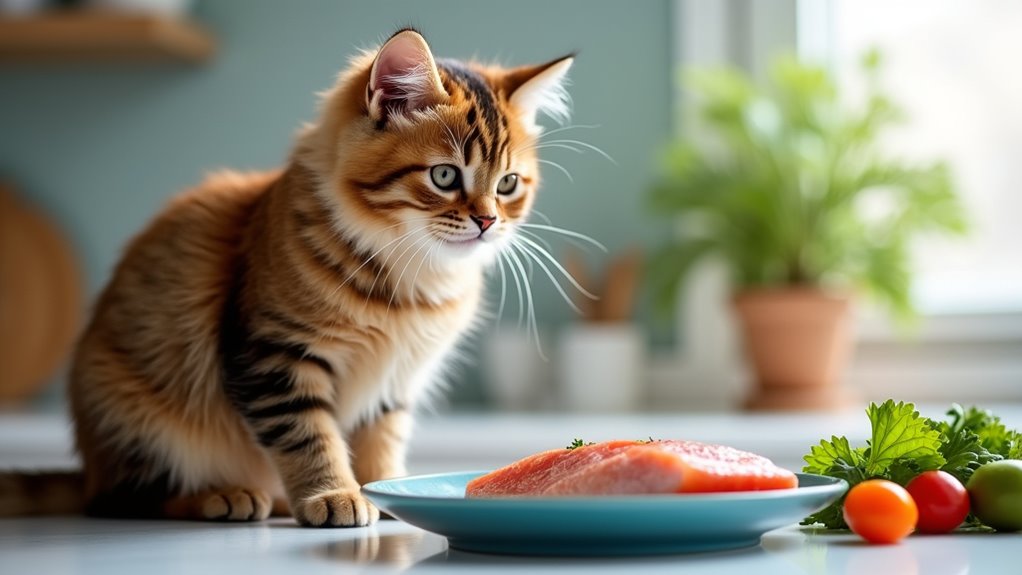
Raw fish can be a great part of your cat’s diet. It gives many important nutrients that help keep them healthy. This food is rich in protein, which helps your cat build muscles and stay strong. Raw fish also contains omega-3 fatty acids like EPA and DHA. These help reduce inflammation, support heart health, and give your cat a shiny coat. Additionally, raw feeding can be beneficial for your cat’s overall digestive health by providing natural enzymes that aid in digestion. However, it’s essential to note that raw fish can contain harmful bacteria that pose health risks.
Here’s a simple chart showing the benefits of raw fish:
| Nutrient Type | Benefits |
|---|---|
| Protein | Boosts energy and immune system |
| Omega-3 Fatty Acids | Good for skin and brain health |
| Vitamins and Minerals | Supports metabolism and strong bones |
| Hydration | Helps prevent urinary infections |
Adding raw fish to your cat’s meals can help with digestion and nutrient absorption. Safe preparation is key to avoiding health risks. With the right care, raw fish can be a delicious and nutritious choice for your cat.
Safe Preparation and Storage of Fish for Cats
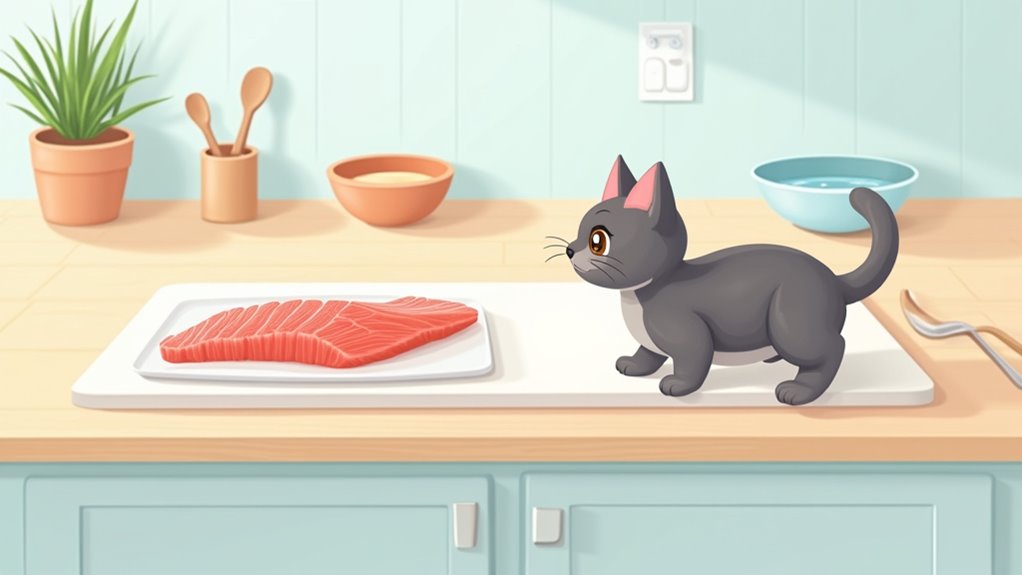
To keep your cat safe while enjoying raw fish, proper preparation and storage are key. Start by selecting fish from trusted sources. This helps reduce the risk of contamination. Clean the fish right away to remove any grit or sand. Remove all bones to prevent choking. Additionally, ensure that the fish is a lean source of protein to provide essential nutrients for your cat’s health. Tuna, for instance, can be a tasty treat, but should be given in moderation to prevent nutritional imbalances.
Store raw fish in the refrigerator at low temperatures. Keep it below 40°F (4°C) to stop bacteria from growing. To kill parasites, freeze the fish for three days. Serve it plain. Cats shouldn’t have seasonings or oils, as these can be harmful.
Always throw away fish that might’ve dangerous substances like mercury. For canned fish, choose those in water, not oil.
Following these steps helps ensure your cat enjoys fish safely. This way, you lower the risks of improper handling and consumption.
Common Health Issues Associated With Raw Fish Consumption
Many cat owners think raw fish is a tasty treat for their pets. It’s important to know the health risks that come with it. Raw fish can cause serious problems for your cat. Here are some key issues to consider:
- Parasites: Raw fish can have parasites like tapeworms. These can lead to bad stomach problems.
- Thiamine loss: Raw fish has thiaminase. This destroys thiamine and can cause seizures and other nervous system issues.
- Bacteria: Raw fish can be contaminated with bacteria like E. coli. This can make your cat vomit and have diarrhea.
- Toxins: Some fish, like tuna, can contain high levels of mercury. This can cause health problems over time.
- Nutritional balance: Feeding your cat raw fish often can create nutritional problems. It may also cause allergies or sensitivities.
Additionally, raw fish can contain harmful parasites like Neorickettsia helminthoeca, which may lead to serious health issues if consumed.
To keep your cat healthy, focus on parasite control and thiamine levels. Always talk to your vet before adding fish to your cat’s diet.
Recommended Alternatives for Feeding Fish to Cats
To safely add fish to your cat’s diet, choose healthy options that avoid raw fish risks. Cooked wild salmon is an excellent choice. It’s rich in Omega-3 and Omega-6 fatty acids, which are good for your cat. Additionally, incorporating plain, unseasoned, cooked salmon can provide essential nutrients in a safe manner.
Lean white fish like cod or haddock makes great treats too. These fish offer protein without too much fat. Acadian redfish is another good pick. It has important vitamins and low mercury levels.
For other protein sources, cooked chicken or turkey works well. Both provide lean protein and many nutrients. Cooked eggs are also a tasty option. Avoid raw egg whites as they can cause biotin absorption issues.
Small bits of hard cheese or plain yogurt can be fun treats too. Always ensure any fish or meat is fully cooked, plain, and bone-free. This keeps your cat safe from choking and digestive problems.
Frequently Asked Questions
Can Kittens Eat Raw Fish Safely?
Can kittens eat raw fish?
No, kittens cannot eat raw fish safely.
Why is raw fish unsafe for kittens?
Raw fish can contain parasites and bacteria that are harmful to kittens.
What happens if a kitten eats raw fish?
Eating raw fish can lead to digestive issues and health problems in kittens.
How should fish be prepared for kittens?
Fish should be cooked thoroughly before feeding it to kittens to ensure it is safe.
What type of fish is safe for kittens?
Well-cooked fish like salmon or tuna can be safe for kittens in moderation.
Are there any risks of feeding fish to kittens?
Yes, overfeeding fish can lead to nutritional imbalances and health issues. Always consult a veterinarian for guidance.
How Often Can I Give My Cat Fish?
How often can I give my cat fish?
You can give your cat fish as an occasional treat, ideally once or twice a week.
Is fish good for my cat?
Yes, fish can provide beneficial nutrients for cats, but it should not be their main source of food.
What should I consider when feeding my cat fish?
Follow feeding guidelines and avoid overconsumption to prevent potential health issues.
Can all types of fish be given to cats?
No, not all fish are safe. Avoid fish that are high in mercury or contain bones.
Should I cook the fish before giving it to my cat?
Yes, it is best to cook fish to eliminate harmful bacteria and parasites. Avoid seasoning or adding oil.
Is Sushi Safe for Cats to Eat?
Question: Is sushi safe for cats to eat?
No, sushi is not safe for cats.
Question: What are the harmful ingredients in sushi for cats?
Common harmful ingredients in sushi include soy sauce and rice.
Question: What issues can these ingredients cause for my cat?
These ingredients can lead to digestive issues or allergic reactions.
Question: What should I feed my cat instead of sushi?
Stick to cat-friendly treats and food specifically formulated for felines.
What Types of Fish Are Safest for Cats?
Question: What types of fish are safe for cats?
Answer: Sardines and trout are typically safe for cats to eat.
Question: Is tuna safe for cats?
Answer: Tuna’s safety can vary. It’s best to limit its consumption and ensure it’s from a safe source.
Question: Are there any risks associated with feeding cats salmon?
Answer: Yes, salmon can pose risks due to potential contaminants. It’s advisable to be cautious.
Question: How can I ensure the fish I feed my cat is safe?
Answer: Always prioritize fresh fish from reputable sources to minimize health risks.
Can I Use Raw Fish as a Cat Treat?
Can I give my cat raw fish as a treat?
Yes, you can give raw fish as a treat to your cat, but you need to be cautious.
What precautions should I take if I give my cat raw fish?
Ensure the fish is from a reputable source, is parasite-free, and has been frozen for safety.
Is cooked fish a better option for my cat?
Yes, cooked fish is generally safer and offers more health benefits compared to raw fish.
What are the health risks of feeding my cat raw fish?
Raw fish can carry parasites and bacteria that may pose health risks to your cat. Cooking the fish reduces these risks.
Conclusion
Cats might be curious about raw fish, but it’s important to be careful. About 30% of cats that eat raw fish often can face serious health problems. One major issue is thiamine deficiency. This condition can be toxic and lead to neurological issues.
Instead of taking chances, choose safer options. Cooked fish is a good alternative. You can also pick high-quality commercial cat food. Always make sure your cat’s meals are balanced and safe. Your cat’s health matters a lot. Keep them happy and healthy!
