
Can Cat Eat Rice
This post contains affiliate links. As an Amazon Associate, we earn from qualifying purchases.
Cats can eat plain, fully cooked rice in moderation, but it should not be a staple in their diet. While rice can provide quick energy, it lacks the essential protein that cats need. It’s best to serve small portions—just a few tablespoons mixed with their regular food—without any seasoning, especially avoiding toxic ingredients like garlic or onion. Keep an eye out for any allergic reactions, such as itching or vomiting. For more detailed feeding guidelines and safety tips, continue reading!
Essential Facts in 30 Seconds
- Cats can eat small amounts of plain, fully cooked rice as a diet supplement.
- Avoid rice with seasonings; garlic and onion are toxic to cats.
- Rice should constitute less than 25% of a cat’s total food intake.
- Watch for allergic reactions like itching or vomiting when introducing rice.
- Introduce rice gradually over 7-10 days to avoid digestive issues.
Safety of Feeding Rice to Cats
Feeding your cat rice can be safe if done carefully. Always use plain, fully cooked rice. Never add seasonings. Ingredients like garlic, onion, or salt can harm your cat.
Keep portions small. Too much rice can cause obesity and upset stomachs. A few tablespoons mixed with regular food is enough. Do this only occasionally, not every day. White rice may help firm up stools in cats with upset stomachs.
Watch for allergic reactions. Symptoms like itching or vomiting mean stop feeding rice right away.
Rice should never replace the high-protein diet that cats need. Small amounts of plain, cooked rice can be a rare treat if introduced properly. With careful preparation and strict portion control, you can include rice in your cat’s diet. This helps keep your cat healthy and happy.
Nutritional Value of Rice for Cats
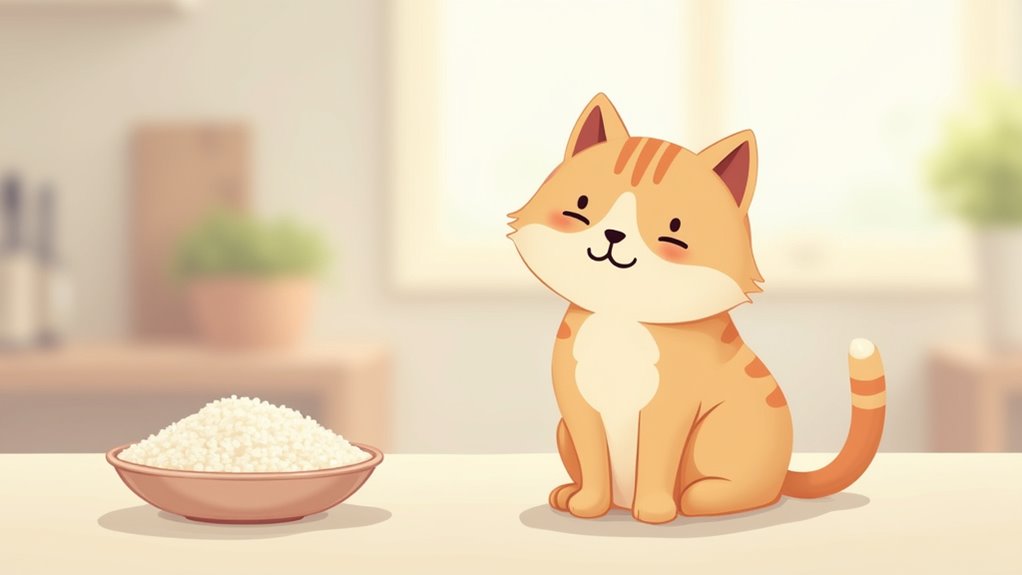
Rice can be part of a cat’s diet, but it shouldn’t be the main food. Here’s what to know about rice for cats:
- Quick Energy: Rice gives cats energy. It has carbohydrates, but cats need protein and fat more. Small amounts of rice can be beneficial for cats.
- Digestive Help: Brown and wild rice have fiber. This can help keep your cat’s digestion healthy. Plain, unseasoned rice is the safest option for cats.
- Low Protein: Rice doesn’t have much protein. Cats need better sources of protein for good health.
Small amounts of rice can be helpful, especially when your cat is sick or low on energy. Additionally, rice can serve as a digestible filler during digestive upset when used in moderation.
Too much rice can cause problems. Overfeeding can lead to weight gain and upset stomach.
Always check with your vet before adding rice to your cat’s meals. This ensures it’s safe and correct.
Role of Rice in Cat Diets

Rice can be a helpful part of a cat’s diet. It works well as a supplement but should be used carefully. Rice helps with digestion, especially during times of stomach upset like diarrhea. Boiled or plain rice is easy on their stomachs. It can help firm up loose stools.
Brown or wild rice is a better choice. These types have fiber, which can help with constipation. Always watch how your cat reacts to rice.
Rice can also give quick energy. This is useful for cats that are recovering from being sick. Remember, cats need protein for energy. Rice should be a rare treat, not a main meal.
Sometimes, rice can hide the taste of medicine. This makes it easier to give your cat their treatments. Additionally, plain white rice is the best option due to its digestibility and safety for cats.
Always speak with your vet before changing your cat’s diet. Your cat’s health is the most important thing.
Potential Risks and Considerations
Rice can be a part of a cat’s diet, but it comes with some risks. Here are three key points to remember:
- Digestive Issues: Cats are meat eaters. Their bodies find it hard to digest carbs like rice. This can cause gas, bloating, or vomiting. Cats not used to grains may react more strongly.
- Rice Allergies: Some cats can be allergic to rice. This might cause itching or upset stomach. Watch for any bad reactions and talk to your vet if you see them.
- Nutritional Imbalance: Too much rice can take away from important protein-rich foods. Cats need meat for nutrients like taurine, which rice doesn’t provide. Rice should never replace their meat-based meals. Additionally, proper preparation of any new food is essential to ensure its safety and digestibility for your cat.
Keep these points in mind when considering rice for your cat.
Feeding Guidelines and Best Practices
- For cats that weigh 5-9 lbs, give 1/4 to 1/2 cup of food each day.
- For cats weighing 10-14 lbs, serve 1/2 to 3/4 cup daily.
- Split this food into two or more meals. This helps prevent obesity.
- Rice should be less than 25% of their total diet. Vegetables like carrots can also be added for nutritional variety.
Introducing Rice
- Gradually add rice to their meals over 7-10 days. This helps avoid stomach problems.
- Always use fully cooked, plain white rice. Avoid any additives or seasonings.
- Watch how your cat reacts. Adjust the amount if needed. Small amounts of brown rice can be digested by cats.
Hydration
– Always provide fresh water every day. This is especially important when feeding rice.
Keep these tips in mind for a balanced diet for your cat.
Frequently Asked Questions
Can Kittens Eat Rice Safely?
Kittens should not eat rice. Their bodies need animal proteins for healthy growth. Rice can upset their stomachs and cause digestive problems. It’s important to focus on safe foods for kittens.
Look for high-quality kitten food. These foods have the right balance of nutrients. Good options include meat, fish, and special kitten formulas. These provide essential vitamins and minerals. They help kittens grow strong and healthy.
Always check with a vet if you have questions about your kitten’s diet. Keeping kittens healthy is important. They need the right food to thrive and play happily.
What Types of Rice Are Best for Cats?
Brown rice is the best choice for cats. It has more fiber and nutrients than white rice. White rice can be given, but only in small amounts. It doesn’t offer much benefit. Always serve rice plain and well-cooked. Avoid any added seasonings or sauces. This keeps it safe and healthy for your cat. Remember, rice should not be a main food. It can be a good addition to their diet. Always check with a vet if unsure about your cat’s diet. Keeping your cat healthy is the most important thing.
How Often Can I Feed Rice to My Cat?
Feeding rice to your cat can be safe and beneficial, but it should be done in moderation. Aim for once a week as a special treat. Mixing a small amount of rice with their regular food can help with digestion. Make sure it does not take the place of important nutrients. Cats need a balanced diet for good health. Always observe how your cat reacts to rice. If they enjoy it and have no stomach issues, it can be a fun addition to their meals. Keep it simple and occasional, and your cat will appreciate the variety.
Are There Any Cat Breeds That Shouldn’t Eat Rice?
No cat breeds should avoid rice completely. Cats are obligate carnivores. They need protein from meat for good health. Rice can be a safe addition to their diet. Each cat is unique. Some may react differently to rice. Always watch for any signs of upset stomach or allergies. Start with small amounts. This helps you see how your cat reacts. A balanced diet is key. Focus on high-quality protein for your feline friend. Keep rice as an occasional treat, not a regular meal. Your cat’s health is the top priority.
Can Rice Help With Cat Hairballs?
Rice is not the best choice for preventing cat hairballs. It doesn’t have enough fiber. Cats need fiber to help with digestion. Better options include pumpkin, psyllium husk, or green beans. These foods can help your cat pass hairballs more easily. Always check with your vet before making changes to your cat’s diet. Keeping your cat hydrated is also important. Fresh water helps with digestion. Regular grooming reduces fur intake too. These steps can help keep hairballs at bay.
Conclusion
Rice can be safe for cats in small amounts. But be careful. A cat needs protein to stay healthy. Too many carbs from rice can cause problems. Always talk to your vet before giving your cat new foods. Share rice wisely. Your cat’s health matters. Keep them happy and purring!
