
Can Cat Eat Romaine Lettuce
This post contains affiliate links. As an Amazon Associate, we earn from qualifying purchases.
Cats can eat romaine lettuce in moderation, as it is low in calories and can provide some hydration. However, it should not replace a balanced diet. It’s important to wash the lettuce, chop it into small pieces, and limit it to less than 10% of their daily food intake. Keep an eye out for any signs of digestive upset. Remember, cats are obligate carnivores and require protein-rich foods as their primary source of nutrition. For those interested in learning about other safe greens for cats, more information will follow.
Essential Facts in 30 Seconds
- Cats can eat romaine lettuce in small amounts as a dietary supplement.
- Romaine lettuce is hydrating and contains some vitamins and minerals.
- It does not provide essential nutrients required for cats.
- Always wash romaine lettuce thoroughly to eliminate pesticides.
- Limit lettuce to less than 10% of the cat’s diet to avoid gastrointestinal issues.
- Watch for signs of allergies or digestive problems when introducing romaine lettuce.
Nutritional Value of Romaine Lettuce for Cats
Nutritional Value of Romaine Lettuce for Cats
Understanding the nutritional value of romaine lettuce is important for your cat’s health. This leafy green can offer benefits but shouldn’t replace a complete meal.
Nutritional Highlights:
- Vitamins: Romaine is high in vitamin A, which helps vision and boosts the immune system. It also has vitamin C for tissue repair and vitamin K for blood clotting. These vitamins support your cat’s overall health.
- Minerals: This lettuce contains magnesium, potassium, phosphorus, and calcium. These minerals are vital for muscle function, heart health, and strong bones.
- Fiber Benefits: Romaine provides moderate fiber. This helps with digestion and can prevent constipation. But be careful, too much fiber can upset your cat’s stomach.
Caution:
Always introduce new foods slowly. Watch for any signs of upset stomach or allergies. Romaine should be a treat, not a main meal. Additionally, keep in mind that cats are obligate carnivores and require a diet primarily made up of meat.
Keep your cat’s diet balanced with their regular food.
Guidelines for Feeding Romaine Lettuce to Cats
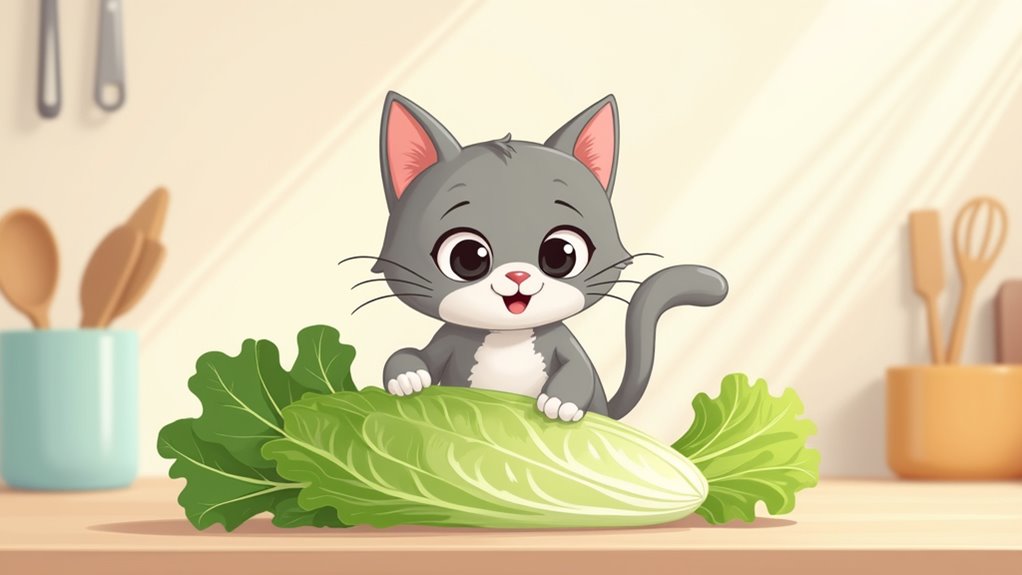
Feeding your cat romaine lettuce can add fun to their meals. Follow these simple steps for safe feeding.
Preparation: Always wash the lettuce well. This removes any harmful pesticides.
Take off the tough outer leaves and stems. Then, chop the lettuce into small pieces for easy eating.
Quantity: Keep lettuce to less than 10% of your cat’s diet. Start with a tiny amount mixed in their regular food. This helps you see if they like it and can handle it.
Observation: Watch your cat closely after feeding them lettuce. Look for signs like diarrhea or constipation.
If they seem upset or don’t want to eat, stop giving lettuce.
Remember, lettuce should be a special treat, not a main meal. Cats need a diet rich in meat for good health.
Keep their nutrition balanced and happy!
Potential Health Effects and Risks
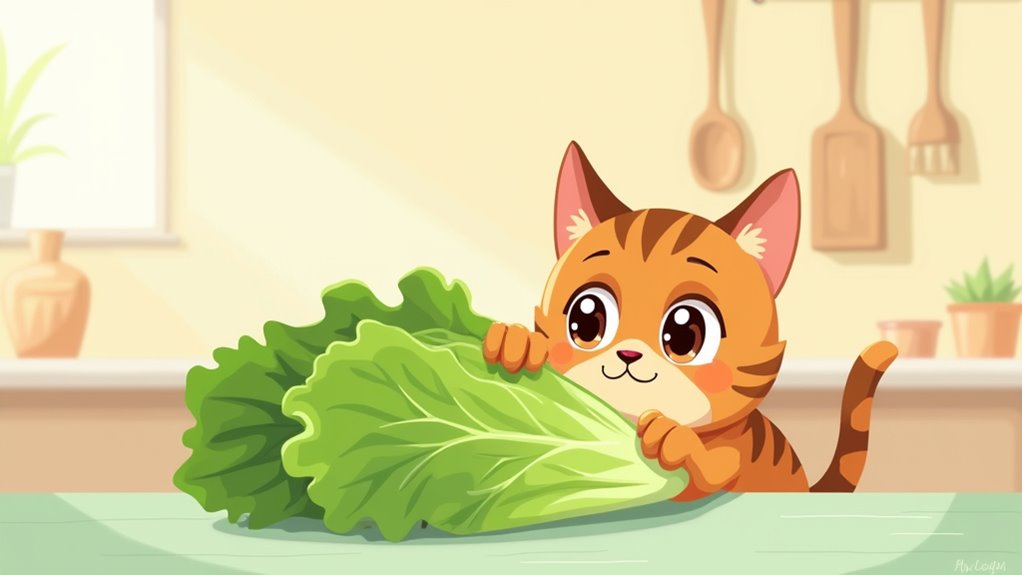
Many cat owners may not know that romaine lettuce can be a fun treat for their cats. It’s important to remember that it also has some health risks. Feeding too much lettuce can upset a cat’s stomach. This can cause diarrhea or constipation due to its high water and fiber content. Introducing lettuce suddenly can also lead to stomach issues.
Here’s a simple chart of potential health effects:
| Health Risk | Description | Recommendation |
|---|---|---|
| Gastrointestinal Upset | Causes diarrhea or constipation | Introduce lettuce slowly |
| Nutritional Deficiencies | May lack important nutrients | Limit lettuce serving sizes |
| Hydration Balance | Too much water can disrupt balance | Always provide water too |
| Allergic Reactions | Rare but possible sensitivities | Watch for any bad reactions |
To keep your cat healthy, always talk to your vet before changing their diet.
Comparison of Lettuce Types for Cats
Understanding different types of lettuce for your cat is key for their health and happiness. Each type of lettuce has its own benefits. Here’s a simple comparison:
- Iceberg Lettuce: It has a lot of water but very few nutrients. It won’t help your cat much.
- Romaine Lettuce: This one is better. It has minerals like magnesium and potassium. Cats might like its crunchy texture.
- Butter Lettuce: This type contains iron and vitamins A, C, and K. Its soft leaves can be more appealing to some cats.
Introduce lettuce slowly. Watch how your cat reacts. They may like one type more than another.
Always wash the lettuce well before serving. Offer it in small amounts. Too much lettuce can reduce their protein intake. Treat lettuce as a fun snack, not a main meal.
Overall Suitability of Romaine Lettuce in a Cat’s Diet
Romaine lettuce can be a fun addition to your cat’s diet, but it has its ups and downs. This leafy green helps keep your cat hydrated and is low in calories. It also has fiber, which can support digestion. Some cats might even enjoy its taste.
Yet, romaine lettuce isn’t perfect. It lacks important nutrients like taurine, which cats need. Relying on lettuce for food isn’t a good idea. It might upset your cat’s stomach if they eat too much. Some cats can also have allergies. Always prepare it carefully before giving it to your pet.
Instead of lettuce, consider options like cat grass or special cat treats. These can provide the nutrients your cat needs.
Introduce any new food slowly. Watch for any bad reactions. The health and happiness of your cat come first. A balanced diet is key. Always put their nutritional needs first.
Frequently Asked Questions
Can Cats Eat Lettuce Every Day?
Feeding your cat lettuce every day is not a good idea. Lettuce can help keep cats hydrated and provide some fiber. But it has very little nutrition. Eating too much lettuce can create imbalances in their diet. Cats need meat for protein and essential nutrients. A balanced diet is important for their health. Offer lettuce as a treat, not a daily meal. Always choose foods that support your cat’s needs. For a healthy cat, focus on high-quality cat food. Your furry friend will thank you!
What Should I Do if My Cat Refuses Lettuce?
Respect your cat’s choice if they don’t like lettuce. Some cats just don’t enjoy it. Try offering other greens like spinach or kale. These options might be more appealing.
Introduce new foods slowly. This helps your cat adjust to different tastes. Watch how they react to ensure they enjoy the change. Always prioritize their comfort and preferences. Keep mealtime fun and exciting!
Is Romaine Lettuce Better Than Other Vegetables for Cats?
Romaine lettuce has some nutritional benefits for cats. It provides hydration and fiber. Cats can enjoy it in small amounts. Yet, it should not replace meat in their diet. Cats need nutrients that only come from animal products. Always prioritize a balanced diet for your furry friend. Offer veggies like romaine as a treat, not a main meal. Remember, meat is essential for their health.
How Do I Prepare Romaine Lettuce for My Cat?
Prepare romaine lettuce for your cat by following these steps. First, rinse the lettuce well to remove dirt and pesticides. Cut off any tough parts. Slice the leaves into small pieces. Serve the lettuce as a treat. Keep the portions small to prevent stomach issues. Always watch how your cat reacts after eating it. Some cats enjoy it, while others may not. It’s a healthy snack, but moderation is key.
Can Kittens Eat Romaine Lettuce Safely?
Kittens can eat romaine lettuce safely, but only in small amounts. It’s important to focus on their main diet. Kittens need protein-rich foods for strong growth and health. You can give them safe vegetables as treats, but make sure it doesn’t change their main diet. Always prioritize what’s best for your kitten’s nutrition.
Conclusion
Romaine lettuce can be a fun snack for your cat. It has a nice crunch that some cats might enjoy. Always serve it in small pieces. This way, you can see how your cat reacts. Too much lettuce can upset their stomach. Not every cat likes lettuce, so pay attention to what your pet prefers.
If you notice any bad reactions, stop giving it to them. Keeping your cat healthy is important. If unsure, ask your vet for advice. Your cat deserves the best care and tasty treats!
