
Can Cat Eat Salty Food
This post contains affiliate links. As an Amazon Associate, we earn from qualifying purchases.
Cats should not eat salty food, as it can lead to serious health issues like poisoning and dehydration. Even small amounts of salt can cause symptoms such as vomiting and seizures. While AAFCO recommends a minimum of 0.2% sodium for balanced nutrition, excessive salt from human food poses significant risks. For a healthier feline diet, always check food labels and steer clear of salty snacks. Further details on the effects of sodium on your cat’s health will follow.
Essential Facts in 30 Seconds
- Cats should avoid salty foods to prevent serious health issues, including salt poisoning.
- Even small amounts of salt can cause vomiting, diarrhea, and seizures in cats.
- High salt intake disrupts electrolyte balance and can harm kidney function, potentially leading to obesity.
- A minimum of 0.2% sodium is recommended in cat diets for optimal health.
- Consult a veterinarian if your cat shows signs of sodium deficiency or health changes after eating salty foods.
Understanding Cats’ Salt Requirements
Many cat owners overlook sodium in their cat’s diet. Yet, sodium is vital for their health. Cats need sodium for growth and development. AAFCO suggests a minimum of 0.2% sodium in dry food. This amount helps with fluid balance, nerve function, and muscle contractions. Excess sodium can disrupt the nutrient balance in a cat’s diet, leading to health issues.
Too little sodium can cause problems. Low sodium can lead to lethargy and weakness. It also affects how much water your cat drinks. Proper hydration is essential for a healthy cat.
Always check food labels for sodium content. This ensures your cat gets what it needs.
Key Recommendations:
- Dry food must have at least 0.2% sodium.
- Watch sodium in special diets for growing or nursing cats.
Following these guidelines keeps your cat healthy. Make sure they get enough sodium for their well-being.
Health Risks of Salty Human Foods for Cats
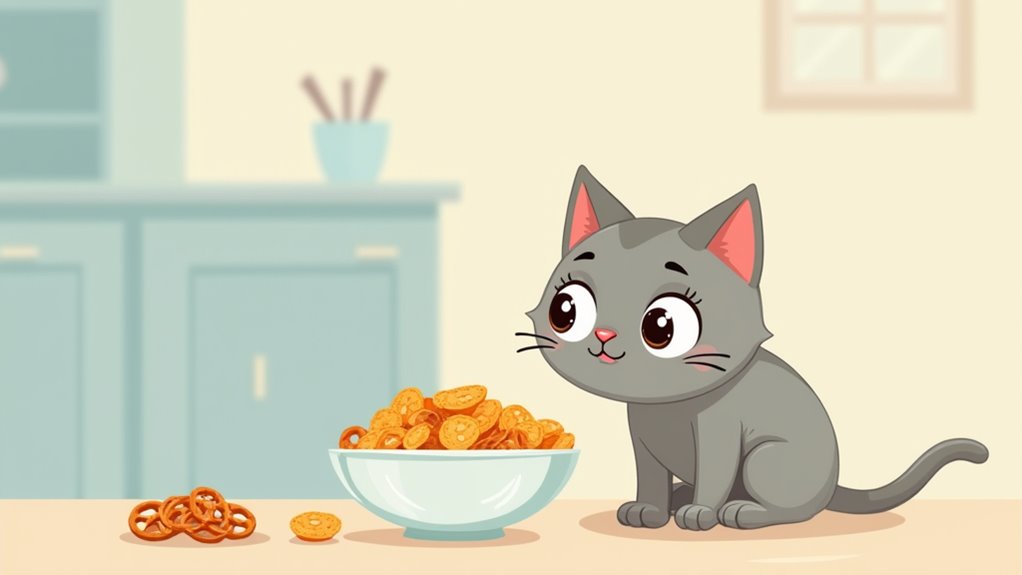
Cats and salty human foods don’t mix well. Salt can be very dangerous for cats. Even a small amount can cause serious health problems. A toxic dose is usually more than 41 mg of salt per day. It’s tough to measure that at home. High salt intake can lead to dehydration, prompting increased water consumption.
Signs of salt poisoning include vomiting, diarrhea, and seizures. If you see these symptoms, get your cat to a vet right away. Salty foods like brined turkey or salted tuna can upset their electrolyte balance. This can lead to dehydration, especially if your cat doesn’t drink enough water.
High salt can also harm their kidneys over time. Additionally, high fat content in human foods can exacerbate health issues and lead to obesity.
To keep your cat safe, don’t feed them salty snacks. Stick to treats approved by your vet. This keeps their diet balanced and healthy. Always watch what goes into your cat’s bowl. Your care can help keep them safe and happy.
Sodium Deficiency and Its Effects on Cats
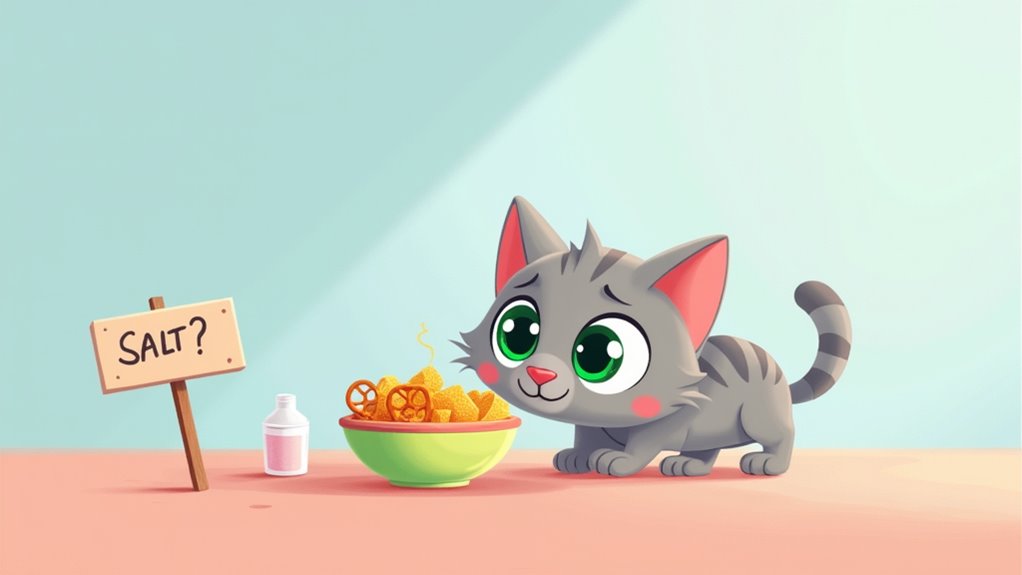
Sodium deficiency, also known as hyponatremia, can harm your cat’s health. It can happen suddenly and lead to serious problems. Watch for signs like tiredness, weakness, or not eating. Rapid sodium loss can cause seizures or confusion.
This deficiency messes with your cat’s electrolyte balance. It affects muscle function and can make walking difficult or cause trouble breathing. Some health issues, like kidney disease or drinking too much water, can make sodium loss worse.
Seeing a vet is crucial if you think your cat has hyponatremia. Blood tests can check sodium levels. Treatment may include giving sodium fluids through an IV. Fixing any underlying health problems is also important to stop this from happening again.
Keep track of your cat’s drinking and eating habits. This can help keep sodium levels healthy and support overall health.
The Role of High Salt Diets in Urinary Health
High salt diets can greatly affect your cat’s urinary health. These diets help manage conditions like struvite urolithiasis. More sodium means more water in your cat’s diet. This leads to increased urine output. Increased urine helps dilute harmful crystals, like struvite. As a result, the risk of urolithiasis goes down.
Here are some benefits of high salt diets for your cat:
| Benefit of High Salt Diets | Explanation |
|---|---|
| Increased Urine Volume | More water means more urine. |
| Urine Dilution | Diluted urine lowers crystal formation risk. |
| Struvite Management | Helps dissolve struvite uroliths by increasing urination. |
| Lower Specific Gravity | Reduces harmful minerals’ saturation. |
| Therapeutic Approach | Flushing the urinary tract helps with LUTD. |
These benefits are important, but keep an eye on your cat’s health. Cats with kidney disease need special care. Always talk to your vet before changing their diet.
Monitoring Salt Intake for Feline Cardiovascular Health
Monitoring your cat’s salt intake is key to their heart health, especially as they grow older. Even if your cat seems healthy, keep an eye on their sodium levels. Follow these easy steps:
- Pick low-sodium cat food: Look for food with about 3.1 g sodium per Mcal. This amount is safe for long-term feeding.
- Limit salty treats: Don’t give your cat human snacks. Chips and processed foods can be high in sodium, and processed meats should also be avoided.
- Regular vet check-ups: Take your cat to the vet once a year. This helps check their blood pressure and heart function.
- Watch for symptoms: Keep an eye on your cat’s behavior. Changes may signal heart problems.
Even though healthy cats can handle some salt, it’s smart to keep track of their intake. Additionally, it’s important to remember that commercial cat treats are designed to meet specific nutritional needs and can be a safer option for occasional indulgence.
These steps help ensure your furry friend stays happy and healthy.
Frequently Asked Questions
Can Cats Taste Salt Like Humans Do?
Cats can taste salt, but they do it differently than humans. They have fewer taste buds, which means they don’t have a strong preference for salt. Instead, they mainly taste salty flavors that come from protein. This is why cats enjoy meat. Their taste system focuses more on the nutrients they need rather than just salty flavors. So, while they can taste salt, it’s not a big deal for them. They care more about the protein in their food.
What Types of Human Foods Are Safe for Cats?
Cats can eat some safe human foods. Unseasoned chicken and fish work well. Certain fruits and veggies are also good. Examples include blueberries, bananas, and carrots. Always avoid salt and spices. Too much can harm your cat. Keep their meals simple for better health. Always check what is safe before sharing food. Your cat will enjoy these tasty treats!
How Much Sodium Is in Commercial Cat Food?
Commercial cat food has sodium levels between 0.2% and over 3.75 grams for every 1,000 kcal. This means some foods have more salt than others. Cats need some sodium for good health, but too much can be harmful. It’s important to find the right balance, especially for cats with health issues. Always check the label before buying cat food. Look for options that meet your cat’s nutritional needs without excess sodium. Your cat’s health depends on what you feed them. Choose wisely!
Are There Any Salt-Free Treats for Cats?
You can make tasty salt-free snacks for your cat. Try mixing tuna with oat flour. These treats are healthy and safe. Your furry friend will love them. They get all the flavor without any salt. Cats enjoy treats just like we do. Always choose ingredients that are good for their health. Make snack time fun and worry-free!
Can Kittens Eat Salty Foods?
Kittens should not eat salty foods. These snacks can hurt their health. Salty foods can cause dehydration. They can also stress a kitten’s kidneys. It’s important to feed kittens a balanced diet. Look for food and treats made just for them. These specially made options meet their nutritional needs. Taking care of their diet helps keep them healthy and happy. Always choose food that is safe for young cats. Their well-being depends on it.
Conclusion
Cats love tasty food, but salty snacks are not good for them. Too much salt can cause serious health problems. It can lead to dehydration and kidney issues. For example, a cat named Whiskers had urinary tract problems because he ate salty chips.
Keep salty foods away from your feline friend. Always watch their salt intake. Stick to cat-specific food that is healthy for them. A little caution helps keep your cat happy and healthy. Take care of your furry companion!
