
Can Cat Eat Sardines
This post contains affiliate links. As an Amazon Associate, we earn from qualifying purchases.
Cats can safely eat sardines, as they offer a nutritious source of omega-3 fatty acids, protein, and essential vitamins. However, it’s important to be cautious by choosing boneless sardines and limiting their intake to no more than 10% of their daily diet—ideally once or twice a week. Additionally, be mindful of allergies and the salt content found in canned varieties. Proper preparation, such as draining excess liquid, is crucial. For those interested in more detailed information on serving sardines safely to your feline friend, further explanations will follow.
Essential Facts in 30 Seconds
- Cats can eat sardines; they are high in protein and omega-3 fatty acids.
- Opt for low-salt canned or fresh sardines cooked without seasoning.
- Limit sardine intake to 10% of your cat’s daily food to prevent digestive issues.
- Watch for allergies or sensitivities when introducing sardines.
- Serve sardines once or twice a week as a special treat.
Nutritional Benefits of Sardines for Cats
Sardines offer many nutritional benefits for cats. These small fish are rich in omega-3 fatty acids like EPA and DHA. Omega-3s help reduce inflammation and support overall health. Sardines are low in mercury, making them safer than larger fish.
These fish are also a great source of lean protein. They provide all essential amino acids, including taurine. Taurine is important for your cat’s heart and vision.
Sardines are packed with vitamins too. They contain vitamin D and B12, which help strengthen bones and support cells.
With about 65% crude protein, sardines help build muscles and support organ function. Their calcium comes from bones, making it easier for cats to digest than dairy. Additionally, the flavor of sardines can entice picky eaters and make mealtime more enjoyable.
Sardines clearly stand out as a healthy choice for your cat’s diet.
Safety and Risks of Feeding Sardines to Cats

Feeding sardines to your cat can be a healthy choice, but there are some risks to consider. Mercury can build up in fish, including sardines. Even though sardines have less mercury than bigger fish, too many can cause problems. Look for signs like shaking or trouble moving.
Some cats may be allergic to sardines. This can lead to itching or stomach issues. Start with a small piece and watch how your cat reacts.
Canned sardines often have high salt levels. This can be hard on your cat’s kidneys, especially if they already have health issues. Choose sardines packed in water or rinse them to cut down on salt.
Be careful with bones. They can be a choking hazard. Use boneless sardines or take out the bones before feeding.
With the right precautions, you can treat your cat to sardines safely.
Appropriate Serving Guidelines for Cats
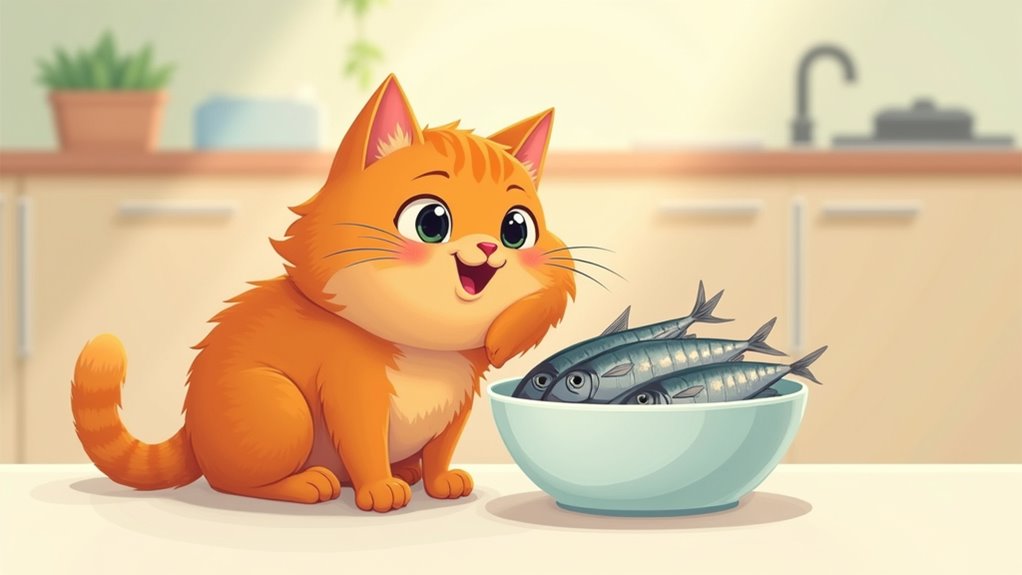
Feeding cats sardines can be a great treat. Follow these simple guidelines to keep your cat healthy.
Start with one sardine. This small portion is enough to see if your cat enjoys it. Limit sardines to 10% of their daily food intake. Too much can upset their tummy.
Prepare the sardines carefully. Drain any extra liquid. Remove all bones. This makes it safe and easy for your cat to eat.
Sardines are tasty and packed with nutrients. Your cat will love this special treat!
Recommended Portion Size
The right portion size for sardines is key to your cat’s health. Start with 1-2 teaspoons to see how your cat reacts. For an average adult cat, one small sardine works well. Sardines shouldn’t make up more than 10% of your cat’s daily diet. This helps prevent digestive problems.
For a cat weighing 8-10 lbs, you can feed about one 5 oz can each day if sardines are the main food. Keep in mind that activity levels can change this amount.
For commercial wet food, give around two cans for every 7 lbs of body weight daily.
Always watch your cat’s response and change the serving size as needed. Moderation is important. This way, your cat stays healthy and happy.
Frequency of Feeding
Cats enjoy a variety of foods. Sardines can be a tasty treat for them. It’s important to feed sardines in moderation. Most cats can have sardines 1 to 2 times a week. For cats with sensitivities, offer sardines every one to two weeks.
Here are some easy guidelines:
- Start with a small amount. A teaspoon or one sardine is enough.
- Watch how your cat reacts. Check their tummy health.
- Keep sardines to less than 10% of their total diet. This helps keep their meals balanced.
- Use sardines as a special treat. Mix them with other foods like cooked meat or vegetables.
Always talk to your vet for advice. This is important, especially for cats with health problems.
Preparation Tips
Feeding sardines to your cat can be a fun and tasty treat. Start by choosing sardines packed in water. Avoid those in oil, salt, or sauces. Rinse canned sardines to remove extra salt. For fresh sardines, cook them well. Always take out any hard bones to prevent choking.
If your cat is trying sardines for the first time, flake or mash them. Mix these with their regular food. This helps your cat get used to the new flavor. Keep servings small. One sardine or a teaspoon or two is enough. This should be no more than 10% of their daily food.
Store opened cans in the fridge. Use them within two days. Additionally, sardines are rich in omega-3 fatty acids, which can support your cat’s skin and coat health.
For a change, cooked eggs or lean meats can be great alternatives. These options keep your cat’s diet balanced. Enjoy sharing this special treat with your furry friend!
Health Benefits Supported by Sardine Nutrients
Sardines are a great choice for your cat’s health.
They’re full of nutrients that support well-being. Omega-3 fatty acids help keep joints healthy and coats shiny. Taurine is vital for good vision and overall health.
Protein in sardines gives your cat energy and helps build strong muscles.
Treat your cat to sardines, but do so in moderation for the best benefits.
Omega-3 Fatty Acids
Omega-3 fatty acids offer many health benefits for cats. These nutrients are essential for their well-being. EPA and DHA, found in fish like sardines, are especially important. Cats can’t turn plant-based omega-3s, like ALA, into forms they need. This makes fish a key part of their diet.
Health Benefits of Omega-3s:
- Skin and Coat: Omega-3s help reduce allergies. They promote shiny fur and cut down on shedding.
- Joint Support: These fatty acids can ease arthritis symptoms. They help improve your cat’s movement.
- Heart Health: Omega-3s support the heart. They can lower the risk of heart disease.
- Immune Boost: Omega-3s strengthen the immune system. This helps cats fight infections better.
Incorporating omega-3s into your cat’s diet can lead to a happier and healthier life. Fish is a tasty way to give them these important nutrients.
Taurine and Vision
Taurine is essential for your cat’s vision. Without enough taurine, your cat may face serious eye problems. A lack of taurine can cause the retina to deteriorate. This can lead to feline central retinal degeneration (FCRD). The result? Vision loss or even blindness.
To keep your cat’s eyes healthy, provide enough taurine. Sardines are a great source of taurine. Feeding your cat sardines regularly helps maintain their vision. Sardines also offer other vital nutrients.
Here’s how to ensure your cat gets enough taurine:
- Feed sardines: Offer them a few times each week.
- Check their diet: Make sure their overall food meets taurine needs. The recommended level is 0.25 g per 1,000 kcal for dry food.
Keep your cat’s vision sharp and healthy with taurine!
Protein for Vitality
Cats need high-quality protein to stay strong and active. Sardines are great sources of protein. They’re full of complete animal protein, which helps your cat’s muscles. Sardines have all the amino acids that cats can’t make by themselves. Eating sardines regularly helps keep muscles healthy and supports repair. This is especially important for playful cats.
Here are some benefits of sardines:
- Lean Protein: Sardines are low in fat and calories.
- Tissue Support: They help with muscles, skin, and joints.
- Organ Function: Sardines aid digestion and keep cats lively.
Adding sardines to your cat’s meals can boost energy and promote health. Just serve them in moderation for balanced nutrition!
Cat Preference and Behavior Regarding Sardines
Not all cats like the same foods. Some mightn’t care for sardines at all. This can happen due to their unique tastes or eating habits.
To keep things exciting, offer sardines just once or twice a week. This makes it feel special for them.
Watch how your cat reacts. If they enjoy the taste, that’s great! Be careful not to overfeed them. Too many treats can lead to problems.
Presentation is also key. Cats usually prefer plain sardines that are packed in water.
Always check for allergies or sensitivities. Talk to your vet before adding sardines to their meals. Keeping your cat happy and healthy is important!
Preparation and Types of Sardines for Cats
Feeding sardines to your cat can be a tasty treat. Knowing the right types and how to prepare them is important. Here are some simple tips to help you out.
Sardine Varieties
- Fresh Sardines: These are the healthiest choice. Cook them to kill any germs. Always take out the bones to avoid choking.
- Canned Sardines: Choose those in water, with no extra salt or oil. Drain and rinse them to cut down on sodium.
- Frozen Sardines: Thaw and cook before giving them to your cat.
Cooking Methods
- Fresh or Frozen Sardines: Bake or steam them plain. No seasoning is needed.
- Canned Sardines: Drain the liquid. Serve them at room temperature for better taste.
Recommendations
Start with a small amount of sardines. Watch for any signs of allergies. Limit servings to once or twice a week. Use sardines as a treat, not a meal.
One small fresh sardine or a tablespoon of canned sardines is perfect!
Frequently Asked Questions
Can Kittens Eat Sardines Safely?
Kittens can safely enjoy sardines. These tasty fish can be a good part of their diet. Always choose plain, boneless sardines. Serving them in moderation is key. Too many can upset their stomachs. It’s best to check with a vet. They can help ensure your kitten gets the right nutrition. Sardines are high in protein and omega-3 fatty acids. This makes them a healthy treat. Just remember, moderation is important!
What Types of Sardines Are Best for Cats?
Finding the best sardines for your cat is important. Look for grain-free options. These are healthy and packed with nutrients. Avoid brands with additives or fillers. Whole sardines in gravy are a tasty treat. They provide protein and omega-3 fatty acids. These nutrients support your cat’s skin and coat. Choose sardines packed in water or gravy, not oil. Always check the label for quality. Your cat will love the flavor and health benefits!
How Do I Store Leftover Sardines for My Cat?
Store leftover sardines for your cat in an airtight container. This keeps them fresh. Refrigerate the sardines quickly. Use them within 1-2 days for the best quality. Proper storage helps maintain their nutrition. It also prevents spoilage. Your cat will enjoy fresh sardines and stay healthy.
Can Sardines Help With My Cat’s Dry Skin?
Sardines are great for your cat’s skin health. They contain omega-3 fatty acids. These fatty acids help reduce dryness and inflammation. This can make your cat’s coat softer and shinier. Sardines are a tasty treat for cats.
It’s important to feed them in moderation. Too many sardines can cause health issues. Always remember to balance your cat’s diet. With the right amount, sardines can be a wonderful addition. Your cat will enjoy the taste and benefit from healthier skin.
Are There Any Alternatives to Sardines for Cats?
There are many tasty fish options for your cat. Canned salmon is a great choice. Mackerel also makes a delicious treat. Flaked tuna can be a favorite too. Fresh fish is good as well. Just make sure it’s cooked and plain. No seasoning should be added. These options offer nutrition and can keep your cat happy. Always check for any allergies before feeding. Cats love variety, so mix it up!
Conclusion
Sardines can be a tasty treat for your cat. They add variety to your cat’s diet. But remember, moderation is important. Too many sardines can cause obesity or upset stomach. A small sardine once a week is a good idea. It allows your cat to enjoy the flavor without health risks. Always choose sardines packed in water. Avoid those in oil or sauce. Keeping your cat healthy and happy is the goal. Enjoy those fishy moments together!
