
Can Cat Eat Shrimp
This post contains affiliate links. As an Amazon Associate, we earn from qualifying purchases.
Yes, cats can eat shrimp, but it should be prepared safely. Cook it by boiling or steaming, and avoid adding fats or spices. Always remove the shells, tails, and veins to prevent choking and digestive issues. Cut the shrimp into small pieces and limit it to one or two shrimp as an occasional treat—keeping it under 10% of their daily calories. It’s important to monitor for any allergic reactions, such as vomiting or diarrhea. More detailed information on safe serving options will follow.
Essential Facts in 30 Seconds
- Cats can eat shrimp, but it must be cooked and free of shells, tails, or veins.
- Shrimp is high in protein and contains B12 and Omega-3 fatty acids.
- Limit shrimp to less than 10% of your cat’s daily caloric intake.
- Avoid raw shrimp to prevent exposure to harmful bacteria.
- Watch for allergic reactions or digestive issues after feeding shrimp.
Safety and Preparation of Shrimp for Cats
Shrimp can be a tasty treat for your cat, but safety is very important. Always cook shrimp well. Cooking kills harmful bacteria like Salmonella. Boil or steam shrimp without adding fats, oils, or spices. Never serve raw shrimp. It’s unsafe for your cat.
Remove all shells, tails, and veins from the shrimp. These can cause digestive problems. Cut the shrimp into small pieces. This helps prevent choking. Shrimp is high in protein, which is essential for muscle development in cats.
Treat shrimp as an occasional snack. It should be less than 10% of your cat’s daily calories. Too much shrimp can upset their diet and cause health issues. Talk to a vet before giving shrimp, especially if your cat has health problems.
Watch for any signs of upset stomach or allergies after giving shrimp. Moderation is essential to prevent digestive issues. Your cat’s health always comes first!
Nutritional Benefits of Shrimp
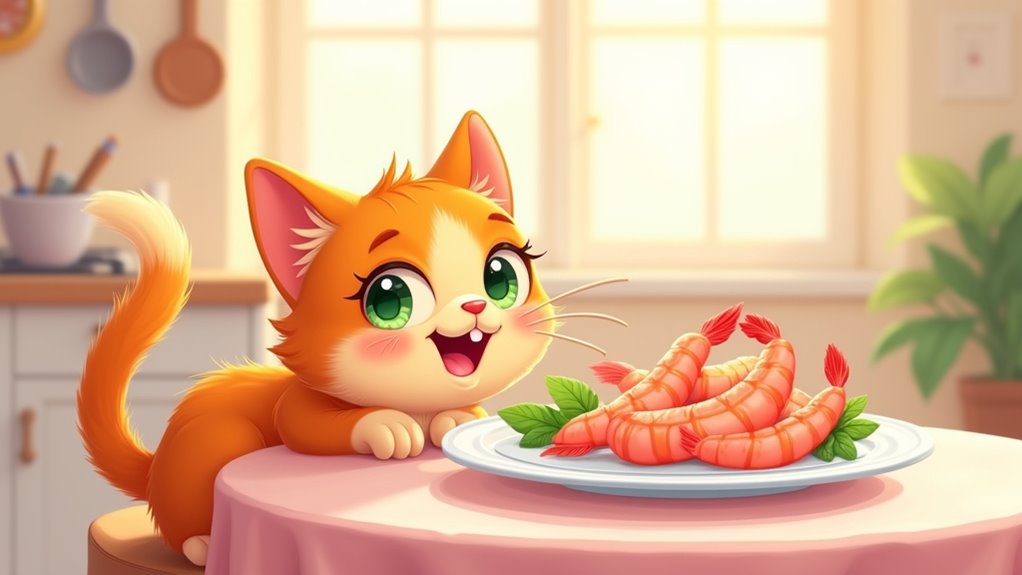
Shrimp isn’t just a tasty treat for cats; it offers many health benefits. It’s a great source of protein. Protein is important for building muscles and repairing tissues. A protein-rich diet helps boost your cat’s immune system and keeps their energy high.
Shrimp also has important vitamins, especially B12. These vitamins help make red blood cells and give energy. They also support your cat’s brain and skin health.
Minerals found in shrimp are important too. Phosphorus helps keep bones strong. Selenium acts as an antioxidant. It protects your cat’s cells from damage.
Omega-3 fatty acids in shrimp are beneficial as well. They lower inflammation and support joint health. These fatty acids help keep your cat’s coat shiny and brain sharp.
Shrimp contains antioxidants, mainly astaxanthin. These help strengthen the immune system and fight harmful free radicals. However, it’s essential to ensure the shrimp is cooked thoroughly to eliminate any harmful bacteria and parasites that could affect your cat’s health.
Health Risks and Considerations
Many cat owners love to share shrimp with their pets. It’s important to know the health risks involved. Here are some key points to consider:
- Bacterial Contamination: Raw shrimp can carry dangerous bacteria like Salmonella and Listeria. These can make cats very sick.
- Allergy Symptoms: Some cats might be allergic to shrimp. Look for signs like vomiting, diarrhea, or itching. Contact your vet right away if you see these symptoms.
- Digestive Upset: Introducing shrimp too quickly can upset your cat’s stomach. Watch for any signs of discomfort after they eat.
- Toxic Additives: Shrimp that has seasonings or preservatives can be harmful. Always serve plain, cooked shrimp without any extras.
Keep these points in mind to ensure your cat stays healthy and happy.
Feeding Guidelines for Cats
Feeding your cat shrimp can be a fun treat. Follow these simple rules to keep them safe and healthy.
Start by controlling portions. Limit it to half or one shrimp each time. This helps prevent overfeeding. Shrimp should be an occasional treat, not a daily food. Variety in their diet is important.
Offer shrimp once or twice a week. This will complement their main cat food.
Always cook shrimp well. Remove the shells and tails. Cut shrimp into small pieces to avoid choking. Serve it plain. Don’t add salt or oil, as this can upset their stomach.
Talk to your veterinarian before giving shrimp regularly. This is especially important if your cat has health issues.
Watch your cat after feeding shrimp. Look for any bad reactions or allergies. Keeping your cat safe is the most important thing.
Enjoy treating your furry friend!
Culinary Forms and Preferences for Serving Shrimp
Serving shrimp to your cat requires careful preparation. The right cooking method ensures safety and flavor.
Here are some popular ways to serve shrimp:
- Steamed: This keeps shrimp moist and tender. It also preserves the delicious taste.
- Sautéed: Cooking shrimp quickly in a little oil gives it a nice texture. Remember, don’t add spices.
- Poached: Cooking shrimp in seasoned water enhances its natural flavor. This keeps it soft and tasty.
- Boiled: Brining shrimp before boiling makes it sweeter. This creates a delightful treat for your cat.
Choose one of these methods for a yummy shrimp snack!
Frequently Asked Questions
Can Cats Be Allergic to Shrimp?
Cats can indeed be allergic to shrimp. Many cat owners might not realize this. Allergies can cause various symptoms. Common signs include itchy skin, inflammation, and upset stomach. Sometimes, cats may vomit or have diarrhea after eating shrimp. Observing your cat’s health is important. If you notice these symptoms, visit your vet. They can help with diagnosis and treatment. Keeping shrimp away from your cat may also be wise. A proper diet helps your cat feel better. Always pay attention to what your cat eats. Healthy cats are happy cats!
How Often Can I Give My Cat Shrimp?
Treat your cat to shrimp now and then. It’s a special treat, not a daily meal. Shrimp can be tasty and nutritious. Always prepare it properly. Cook it without any spices or sauces. This keeps it safe for your cat. Remember, moderation is key. Too much shrimp can upset their stomach. A small portion once in a while is just right. Keep their diet balanced and healthy. Your cat will enjoy the surprise!
What Are Symptoms of Shrimp Intolerance in Cats?
Shrimp intolerance in cats can cause several symptoms. Watch for chronic itching. Look for skin lesions or irritations. Your cat may also have digestive problems. Vomiting or diarrhea can occur. Some cats may scoot their bottoms on the floor. Keep a checklist of these symptoms. This helps you track any reactions your cat has. Acting quickly can make a difference in your cat’s health. Always consult a vet if you notice these signs.
Is Shrimp Safe for Kittens?
Shrimp can be a safe treat for kittens when prepared correctly. It offers important nutrients and seafood benefits. Cooked shrimp is best. Raw shrimp can make kittens sick. Always introduce shrimp slowly to avoid stomach issues. Cut it into small pieces to make it easier for them to eat. Watch for any signs of allergies. If your kitten enjoys shrimp, it can be a tasty addition to their diet. Always prioritize their health and safety first.
Can I Feed My Cat Shrimp Shells?
Feeding your cat shrimp shells is not a good idea. Shrimp shells can be dangerous. They can cause choking. They may also lead to digestive problems. The shells are tough and hard to digest. Stick to giving your cat cooked shrimp meat without the shells. This keeps it safe and tasty. Always follow feeding guidelines for your cat’s health. Enjoy giving your furry friend a special treat, but make sure it’s a safe one!
Conclusion
Cats can enjoy shrimp, but it’s important to be careful. Shrimp can be a tasty treat for your feline friend. Always make sure to cook the shrimp well and remove the shell first. Offer only a small amount to start. Watch for any signs of allergies or stomach issues. A properly prepared shrimp can add excitement to their diet. Keep their health as the top priority. With the right precautions, mealtime can be a fun experience for both of you. Enjoy those moments together!
