
Can Cat Eat Spider Plants
This post contains affiliate links. As an Amazon Associate, we earn from qualifying purchases.
Cats can eat spider plants as they are non-toxic. However, nibbling on the leaves may lead to an upset stomach, and excessive consumption could result in vomiting or diarrhea. To avoid these issues, it’s best to keep the plants out of reach or provide safer alternatives like cat grass. Regularly monitor your cat for any symptoms, and seek veterinary advice if necessary. Further details on ensuring your cat’s safety around houseplants will be provided later in the article.
Essential Facts in 30 Seconds
- Spider plants are safe for cats as they are non-toxic.
- Cats may be drawn to spider plant leaves for their texture and mild hallucinogenic effects.
- Eating spider plant leaves can lead to mild gastrointestinal issues, such as vomiting and diarrhea.
- To prevent ingestion, keep spider plants out of cats’ reach.
- Offering alternatives like cat grass can help satisfy cats’ curiosity.
Overview of Spider Plant Toxicity
Spider plants are safe for cats. They don’t have harmful substances.
Still, these plants can cause mild effects in your cat. They contain compounds similar to catnip. This may make your cat want to chew on the leaves. Eating the leaves could lead to upset stomach, vomiting, or diarrhea.
Tips for Spider Plant Care:
- Keep spider plants out of your cat’s reach to reduce nibbling.
- Use hanging planters or barriers to protect your plants.
- Try natural deterrents like neem oil or lemon to keep cats away.
Watch Your Cat’s Behavior:
- Look for signs of digestive issues.
- If your cat shows symptoms, they usually go away on their own.
Why Cats Are Attracted to Spider Plants

Cats love spider plants for a few reasons.
First, spider plants have mild hallucinogenic compounds. These compounds excite a cat’s brain. This creates a fun feeling, similar to catnip. That’s why cats want to nibble on these plants again and again.
Second, the shape of spider plants attracts cats. Their long, arching leaves and dangling “spiderettes” look like prey. This triggers a cat’s natural hunting instincts. Cats enjoy pouncing and chewing on them. Chewing also helps satisfy their need for greens, a leftover habit from their wild ancestors.
If your cat is too interested in your spider plants, try giving them cat grass or catnip. These options can guide their curiosity and playful energy. This way, both your plants and your furry friend stay safe and happy.
Potential Risks of Cats Consuming Spider Plants
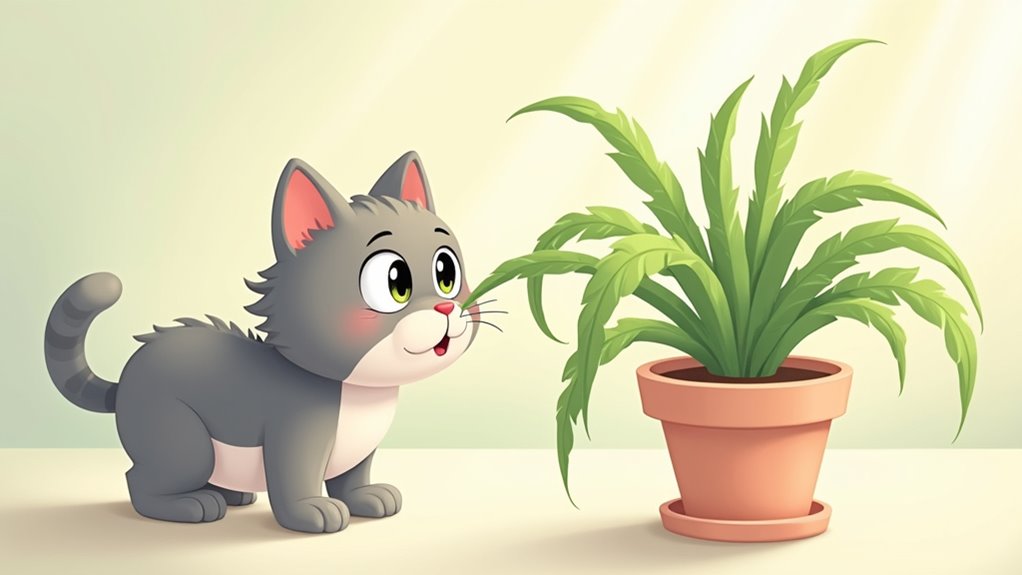
Spider plants are usually safe for cats. But they can still cause problems.
Cats may have mild stomach issues after eating the leaves. This can include vomiting or diarrhea.
Spider plants can also make cats act a bit strange. The plant can have a hallucinogenic effect. This might lead to obsessive nibbling. More nibbling means a higher chance of digestive upset.
Watch your cat if it likes to chew on spider plants. Keep an eye on its health. If you see any signs of distress, talk to a vet. Additionally, it’s beneficial to provide safe alternatives for chewing to promote better digestive health.
Mild Hallucinogenic Effects
To manage your cat’s behavior, try these steps:
- Watch your cat closely.
- Keep spider plants out of reach.
- Use deterrent sprays if needed.
These plants can cause mild hallucinogenic effects. They won’t harm your cat permanently.
Still, it’s smart to keep an eye on your pet. Contact a vet if your cat acts strangely for a long time.
This way, you can help make sure your cat stays safe and healthy.
Gastrointestinal Distress Risks
Gastrointestinal distress is a serious concern for cats that eat spider plants. Cats may show symptoms like nausea, vomiting, and diarrhea after eating these plants. Small amounts usually cause mild reactions, but larger amounts can lead to worse symptoms.
Watch for these symptoms:
- Vomiting
- Diarrhea
- Drooling
- Loss of appetite
Keep a close eye on your cat after it eats a spider plant. Persistent symptoms or severe vomiting and diarrhea require immediate veterinary care. Quick action can help prevent problems like dehydration.
The best way to protect your cat is to keep spider plants out of reach. This simple step helps keep your furry friend safe and healthy.
Behavioral Changes in Cats
Cats can act differently after eating spider plants. These plants have mild effects that can make cats curious. This curiosity may lead them to play with the plant.
| Behavior Change | Description |
|---|---|
| Playfulness | Cats may bat and chew on the plant. |
| Excessive nibbling | They might chew a lot due to fascination. |
| Stress-related chewing | Chewing can increase during stressful times. |
| Lethargy or confusion | Eating too much can cause mild discomfort. |
| Temporary issues | Behavior changes usually go away with less food. |
Watch your cat around spider plants. This helps prevent any discomfort or stress. Keeping an eye on their behavior is important. Enjoy your time with your furry friend!
Management and Prevention Strategies
Managing risks with cats and spider plants takes attention and smart choices. To keep your plants safe and watch your cat, follow these tips:
- Keep spider plants out of reach. Use hanging pots or high shelves.
- Use barriers. Put netting around plants to stop your cat from getting close.
- Offer alternatives. Give your cat safe toys or cat grass to play with instead.
Watch your cat closely. Look for signs of nibbling or changes in behavior, like drooling or tiredness.
If you see these signs, keep an eye on your cat. Contact your vet if things don’t improve.
Remember, spider plants are usually safe, but too much can upset your cat’s stomach.
Identifying Spider Plants and Their Characteristics
A spider plant (*Chlorophytum comosum*) has long, arching leaves. These leaves can be solid green or have white or yellow stripes.
This tough plant usually grows between 12 and 24 inches tall. It forms a clump with offshoots called “spiderettes.” These spiderettes can root easily and grow into new plants.
Knowing these features helps you identify spider plants. It also shows you how to care for them. A healthy spider plant creates a great home for you and your curious cat.
Plant Appearance and Features
Spider plants (*Chlorophytum comosum*) are easy to recognize. They’ve slender, arching leaves that can grow up to 60 cm tall. The leaves come in solid green or have beautiful variegated patterns. This adds a lovely touch to any room.
Here are some features to help you spot them:
- Size: Most mature spider plants grow between 30-60 cm tall.
- Leaf Color: Look for green leaves or ones with white or yellow stripes.
- Growth Form: These plants form thick clumps. They also produce long stems with baby plantlets that trail down.
Keep these traits in mind as you find or care for spider plants in your home!
Growth Habits and Care
Spider plants need the right care to stay healthy and vibrant. They grow well in medium to bright, indirect light. Direct sunlight can cause leaf burn, so keep them away from it.
Water your spider plants when the top two inches of soil feel dry. Use distilled or rainwater to avoid harmful chemicals. These plants like temperatures between 60–80°F (15–27°C) and some humidity. Mist the leaves sometimes to keep them from turning brown.
Feed your spider plants once a month during spring and summer. Use a balanced fertilizer. Don’t fertilize in fall or winter.
These plants grow quickly and enjoy being a bit root-bound, so repot them occasionally. Regularly trim the leaves to keep them looking nice. Basic care can help control pests too.
Understanding Cat Interaction With Spider Plants
Cats love spider plants. They enjoy the soft texture and the fun shape of the leaves. These plants have special compounds that attract cats. This attraction is part of their natural curiosity. Spider plants are safe for cats. They can even cause mild hallucinogenic effects.
Here are some important things to know:
- Cat Behavior: Cats find the hanging leaves very interesting. They may play with them for a long time.
- Health Effects: Eating too many leaves can upset a cat’s stomach. This might cause vomiting or diarrhea.
- Safety Tips: Keep an eye on your cat’s playtime with the plant. You might want to put spider plants out of their reach.
Understanding these facts helps keep your cat safe. By watching their behavior, you can ensure they’ve a fun and safe experience with spider plants.
Frequently Asked Questions
Can Spider Plants Cause Severe Health Issues in Cats?
Spider plants are generally safe for cats. They are non-toxic and don’t usually cause serious health problems. Most cats can safely be around them. Some cats might have a mild stomach upset after eating a spider plant. This can lead to vomiting or diarrhea. Always watch your cat after they interact with any plant. If your cat shows any unusual signs, contact your vet. Keeping an eye on your pet’s health is important. Overall, spider plants are a safe choice for homes with cats. Enjoy having these plants without worry!
How Much Spider Plant Can a Cat Safely Consume?
There is no official guideline for how much spider plant a cat can eat. It’s best to limit their access to it. Watch your cat’s behavior. Small bites are usually safe. But larger amounts can upset their stomach. Monitor your cat closely. If they show signs of discomfort, remove the plant. Always prioritize your cat’s health. Keep them safe and happy.
Are There Other Plants Similar to Spider Plants for Cats?
Boston ferns, Cast Iron plants, and Peperomia varieties are great choices for cat-safe plants. These plants are safe for your furry friends. They also bring beauty to your home.
Boston ferns have lush green leaves. They like humidity and can thrive in many homes. Cast Iron plants are very tough and need little care. They can survive in low light and neglect. Peperomia plants come in many colors and shapes. They are small and easy to care for.
These plants keep your cats entertained and safe. They can play with the leaves without harm. Enjoy the beauty of these plants while keeping your pets safe and happy.
Do Spider Plants Have Any Benefits for Cats Aside From Chewing?
Spider plants are more than just a tasty treat for cats. They can make your cat’s life better in many ways. First, they grab your cat’s attention. The leaves sway and move, which can be fun for them to watch. This helps keep your cat active and engaged.
Having spider plants around can also improve your cat’s behavior. Cats love to explore and play. A spider plant gives them something to interact with. This can help reduce boredom and anxiety in your furry friend.
While spider plants do not provide nutrition, they still create a happier environment. A happy cat is a healthy cat. So, adding a spider plant to your home can be a great choice for your pet’s well-being.
What Should I Do if My Cat Eats a Spider Plant?
A cat that eats a spider plant may show signs like vomiting or diarrhea. The plant is not very toxic, but it’s still important to keep an eye on your cat. Watch for any unusual behavior or symptoms. If your cat continues to feel unwell, contact your vet. Keeping your pet safe is the priority.
Conclusion
Spider plants are not very toxic to cats, but they can still be harmful. Cats might nibble on these plants out of curiosity. This can lead to stomach upset or other issues. It’s best to keep spider plants away from your cat’s reach. Offer safe plants or cat grass instead. This way, your cat can chew on something safe. Pay attention to your pet’s behaviors. Keeping your cat safe is important. A healthy cat is a happy cat. Be proactive in caring for your furry friend.
