
Can Cat Eat Sushi
This post contains affiliate links. As an Amazon Associate, we earn from qualifying purchases.
Sushi is not a safe treat for your cat. Raw fish can harbor harmful parasites that may lead to vomiting and diarrhea, and the presence of thiaminase in raw fish can cause a severe thiamine deficiency, resulting in seizures. Additionally, ingredients like soy sauce and wasabi can upset your cat’s stomach. Instead, consider offering cooked fish, such as salmon or tuna, which are safer options. Always ensure it is plain and boneless, and monitor for any adverse reactions. More details and considerations will follow for those looking for a deeper understanding.
Essential Facts in 30 Seconds
- Raw fish in sushi can carry harmful parasites, causing health issues in cats.
- Soy sauce and other sushi ingredients can have high sodium levels, risking kidney damage and dehydration.
- Sushi rice contains excessive carbohydrates, which can lead to weight gain and diabetes in cats.
- Cats need protein-rich diets; cooked fish like salmon or tuna are safer alternatives to sushi.
- Consult a vet before introducing new foods, as some sushi ingredients may trigger allergies or stomach upset in cats.
Risks of Raw Fish in Sushi for Cats
Cats shouldn’t eat sushi with raw fish. Raw fish can carry harmful parasites like *Anisakis*. These parasites can make your cat very sick with vomiting and diarrhea. Even a tiny bit of contaminated fish can cause serious health issues.
Raw fish also has thiaminase. This enzyme breaks down thiamine, which is important for your cat’s nervous system. A lack of thiamine can lead to serious problems, like seizures or coma. To keep your cat safe, avoid sushi with raw fish. Cooked fish is a better option. You can also choose cat food made for their dietary needs. Additionally, thiamine deficiencies can be prevented by ensuring your cat’s diet includes a variety of nutrients. Fresh fish is a safer alternative, as it can provide protein and omega-3 fatty acids without the risks associated with raw sushi.
If your cat accidentally eats sushi, watch for signs of illness. Contact your vet right away if they show any symptoms.
Harmful Ingredients in Sushi Beyond Fish

Sushi can be harmful to your cat. It’s not just about the raw fish. Many sushi dishes have ingredients that can hurt your feline friend.
Soy sauce is common in sushi. It has high sodium levels, which can cause dehydration. It can also harm your cat’s kidneys. Even small amounts can accumulate and create serious health issues for your cat.
Wasabi and spicy sauces can upset their stomachs, leading to vomiting or diarrhea.
Watch out for toxic vegetables. Garlic and onion can cause anemia in cats. Even rice vinegar can upset their digestion. Cats struggle with acidic foods.
Sushi rice is another concern. It’s high in carbohydrates. This can lead to weight gain and diabetes. The sticky rice contains sugars, making it even worse for cats. Additionally, cats are obligate carnivores and cannot process plant materials effectively, making sushi even less suitable for their diet.
Keep your cat safe. Don’t share sushi with them. Choose treats made for cats. These are better for their health and diet.
Nutritional Considerations for Cats and Sushi
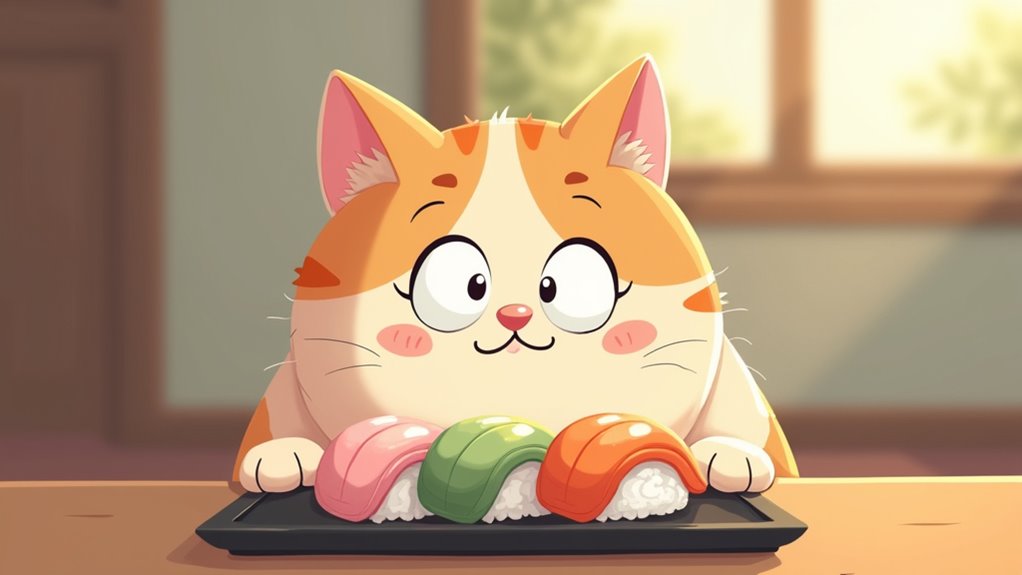
Sharing sushi with your cat can be a tasty treat, but be careful. Cats need a lot of protein in their diet. They require at least 26% protein, especially growing kittens who need even more.
Fresh fish in sushi can give your cat important amino acids, like taurine. Taurine helps with heart and eye health. On the other hand, sushi rice has too many carbs for cats. Cats are obligate carnivores, meaning they thrive on meat. Plain, cooked fish is the best option for cats, as it minimizes health risks.
Choose high-quality fish like salmon or tuna. These fish can be good for your cat’s health. Stay away from sushi rolls with sauces or added sugars. These extras can lead to weight gain and other health problems. Additionally, ensure the fish is cooked properly to eliminate harmful bacteria and parasites.
Treat your cat right. Make sure their meals are balanced and healthy. Keep their protein needs in mind when sharing sushi.
Potential Health Issues From Sushi Consumption
Sushi can have some health risks. Many sushi seasonings, like soy sauce and wasabi, contain high sodium. Too much sodium can harm your kidneys.
Some ingredients might cause allergies or upset stomachs. Raw fish contains thiaminase, which can reduce important Vitamin B1. This may lead to serious issues like seizures.
Sushi also has hard bits that can choke you or hurt your teeth. It’s best not to share sushi with your cat. Their health matters too.
Always ask your vet if you notice any bad reactions. Stay safe and enjoy sushi wisely!
Safe Alternatives and Feeding Recommendations
Feeding your cat safe alternatives to sushi is important for their health. Cooked fish like salmon or tuna makes a great choice. Always keep it plain and free from seasonings. Remove bones to avoid choking hazards. Fish should only make up 10% of their daily diet. This helps keep their meals balanced. Additionally, be cautious of mercury levels in fish, as high concentrations can be harmful to cats. Feeding raw fish, however, can pose risks due to bacterial contamination.
Try safe treats like freeze-dried fish. You can also make homemade sushi. Use cooked fish wrapped in unsalted seaweed. Small bits of shrimp or finely chopped cucumber are good too.
Follow these feeding tips:
- Introduce new treats slowly.
- Watch for any bad reactions.
- Talk to your vet before adding new foods.
Avoid toxic foods like raw eggs and onions. These can harm your cat. By following these guidelines, your kitty can enjoy safe and healthy snacks without the risks of sushi.
Frequently Asked Questions
Can Cats Eat Sushi Occasionally Without Health Risks?
Feeding your cat sushi is not a good idea. Raw fish can harm your cat’s health. It may cause thiamine deficiency. This can lead to serious problems. Sushi also has harmful bacteria that can make your cat sick.
Stick to safe options. Cooked fish is a much better choice. It keeps your cat healthy and happy. Always prioritize your pet’s well-being. Avoid sushi and choose cooked fish instead.
Are There Sushi Types Safer for Cats Than Others?
Sushi can be a fun treat for cats, but some choices are better than others. Cooked fish, cucumber, and plain seaweed are safer options. Raw fish can cause health issues for cats. Always check the ingredients before sharing sushi with your pet. Keep your furry friend safe by choosing wisely. Remember, not every sushi is good for cats. Enjoy sushi responsibly!
What Symptoms Indicate My Cat Ate Sushi?
Your cat might show signs of trouble after eating sushi. Look for vomiting or diarrhea. These can mean food poisoning. Loss of appetite is another red flag. Allergic reactions could cause skin redness or swelling. Watch for lethargy or any strange behavior too. Keep an eye on your cat closely. If symptoms worsen, contact a veterinarian right away. It’s always better to be safe!
How Can I Safely Introduce New Foods to My Cat?
To introduce new foods to your cat safely, take it slow. Use a 7 to 10-day plan. Start by mixing a small amount of the new food with their regular diet.
Watch your cat closely. Look for signs of upset stomach or allergies. These signs may include vomiting, diarrhea, or itching. If you notice any of these, stop giving the new food.
Give your cat time to adjust. Some cats may take longer than others. Patience is key.
Always choose high-quality cat food. Check the ingredients. Avoid foods with too many fillers or artificial additives. This helps keep your cat healthy and happy.
Can I Make Homemade Cat-Safe Sushi?
You can make homemade cat-safe sushi with cat-friendly ingredients. Use sushi-grade fish for the best quality. Avoid any seasonings or sauces. Serve small portions to keep it a fun treat for your cat. Make sure to check for allergies. Cats enjoy fish, but not all cats react the same way. Always introduce new foods slowly. With care, your cat can enjoy a tasty sushi treat!
Conclusion
Sushi may look tempting for your cat, but it can be risky. Raw fish can carry dangerous bacteria and parasites. Some sushi ingredients are not safe for cats either. It’s better to choose treats made for cats that are healthy and safe. Your cat deserves snacks that keep them happy and healthy. Opt for vet-approved options to ensure their safety. Keep your feline friend purring with treats that are good for them.
