
Can Cat Eat Tomatos
This post contains affiliate links. As an Amazon Associate, we earn from qualifying purchases.
Yes, your cat can eat ripe tomatoes in small amounts as a treat, but it’s important to be cautious. Unripe tomatoes and plant parts, such as stems and leaves, contain harmful compounds that can lead to serious health issues. Even ripe tomatoes might upset your cat’s stomach, potentially causing vomiting or diarrhea. It’s crucial to remember that cats require a meat-based diet for proper nutrition, so tomatoes should not be a regular part of their meals. For those interested in more details and safety tips regarding treating your cat, further information will be provided later in the article.
Essential Facts in 30 Seconds
- Ripe, red tomatoes can be a small treat for cats, but only in moderation.
- Avoid green tomatoes and any part of the tomato plant due to harmful toxins.
- Tomato products, such as sauces, often contain harmful additives and should not be fed to cats.
- Symptoms of digestive upset from tomatoes include vomiting and diarrhea; consult a vet if these occur.
- Cats need a meat-based diet for proper nutrition; tomatoes provide minimal benefits.
Understanding Tomato Safety for Cats
Cats can eat small amounts of ripe, red tomatoes as a treat. These tomatoes have some good nutrients like vitamin C and potassium. They aren’t a major part of a cat’s diet. Always keep portions small.
Too many tomatoes can upset your cat’s stomach. Watch for signs like vomiting or diarrhea. If you notice these symptoms, check with your vet. Ripe tomatoes should only be given occasionally, as small amounts can be safe for most cats.
Stay away from tomato products like sauces. They often have bad ingredients such as garlic and salt.
Tips for Sharing Tomatoes Safely:
- Offer tiny pieces of ripe tomato only.
- Watch for any stomach problems.
- Contact your vet if symptoms get worse.
Being careful helps keep your cat safe while enjoying treats.
Toxic Compounds in Tomato Plants

Ripe tomatoes are usually safe for your cat. But tomato plants can be dangerous. They contain toxic compounds that can harm your pet.
The main danger is solanine. This toxin is in the leaves and stems. It can cause serious problems. Symptoms include vomiting, diarrhea, and confusion.
Alpha tomatine is another concern. This toxin is found in green tomatoes and other parts of the plant. Both solanine and alpha tomatine help protect the tomato plant. But they can be harmful to cats.
To keep your cat safe:
- Don’t let your cat chew on tomato plants.
- Watch for signs of poisoning, like drooling or tiredness.
- Get veterinary help right away if you think your cat ate any part of the plant.
Ripe tomatoes are low risk, but caution is important. Keeping your cat safe and healthy is the priority.
Digestive Effects of Tomatoes on Cats
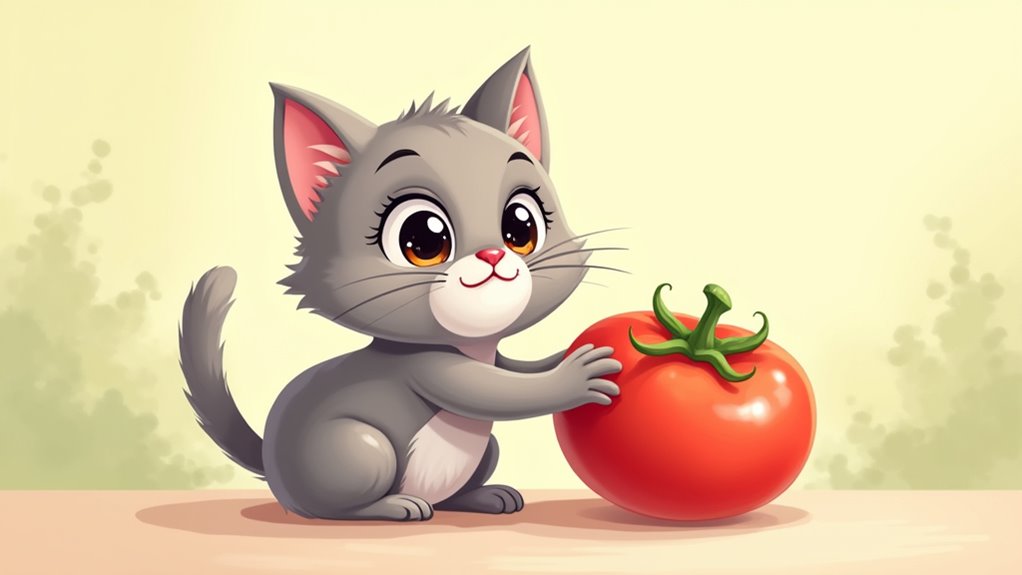
Here is the revised content with the new sentence added:
Cats can enjoy ripe tomatoes safely, but moderation is important. Healthy adult cats can eat a few small pieces. Too many tomatoes can upset their stomachs.
Here are three key points to remember:
- Sensitive Stomachs: Kittens, senior cats, and pregnant queens might have weaker digestive systems. They’re more likely to feel sick after eating tomatoes.
- Symptoms to Watch For: Signs of trouble include vomiting, diarrhea, or stomach cramps. These may mean your cat’s stomach is irritated.
- Avoid the Green Parts: Green tomatoes and the plant itself can be harmful. They contain compounds that cause serious digestive problems.
Additionally, even small amounts of tomatoes can cause gastrointestinal issues, so always be careful when sharing tomatoes with your cat. Keep their health in mind!
Nutritional Content and Lack of Benefits
Tomatoes are mostly water, making up 94-95% of their weight. This means they offer very little nutrition for cats. A 100-gram serving of tomato has only about 0.9 grams of protein and 18-20 calories.
Cats have unique dietary needs. They can’t turn beta-carotene from plants into vitamin A. They need animal sources for this vitamin. Vitamin C isn’t necessary for cats since their bodies produce it naturally.
Fiber and carbohydrates don’t support their diets well. Cats thrive on meat and animal proteins.
Tomatoes add no real value to your cat’s diet. The tiny amounts of plant nutrients, like antioxidants, don’t help your cat’s health. A balanced, meat-based diet is best for your feline friend.
Focus on what truly meets their needs. The right nutrition keeps your cat healthy and happy. Avoid plant-based fillers like tomatoes.
Risks of Commercial Tomato Products
Commercial tomato products can be risky for your cat. Many sauces have parts of the tomato plant that are harmful. Always check the ingredients. Here are three main risks:
- Toxic Parts: Unripe tomatoes, leaves, and stems have solanine and tomatine. These can hurt your cat.
- Dangerous Additives: Ingredients like garlic and onion can cause anemia. High salt levels can lead to salt poisoning.
- Stomach Issues: Eating too much can cause vomiting, diarrhea, and dehydration.
Read labels carefully. A product may look safe but still contain harmful ingredients.
Watch for symptoms like lethargy or vomiting. If your cat shows these signs, call your vet right away. Quick action can help keep your furry friend safe and healthy.
Frequently Asked Questions
Can Cats Eat Cooked Tomatoes Safely?
Cats can eat cooked tomatoes, but only in small amounts. Make sure to cook them plain. Avoid adding salt, garlic, or onion. These extras can be harmful to cats.
Cooked tomatoes don’t offer much nutrition for your pet. They are safe as an occasional treat. Always watch for any signs of upset stomach after feeding tomatoes. If your cat shows any bad reactions, stop giving them tomatoes.
Remember to keep treats like this rare. Cats need a balanced diet mainly made up of meat. Keep their health in mind when sharing food.
How Much Tomato Is Safe for My Cat?
Cats can have a tiny bit of tomato, but not too much. A safe amount is just one or two small bites of ripe tomato. This keeps your cat happy without causing stomach problems or harm.
Tomatoes are part of the nightshade family. Some parts of the plant can be toxic to cats. For example, green tomatoes and the leaves are not safe. Always remove these parts before giving any tomato to your cat.
Watch your cat after they eat tomato for any signs of upset. If they show any unusual behavior, contact your vet.
Are Cherry Tomatoes Toxic to Cats?
Cherry tomatoes can be harmful to cats, especially the green parts. The stems and leaves contain toxins that can make your cat sick. Symptoms can include vomiting, diarrhea, and lethargy. Keep all tomato plants away from your pets. It’s safer to avoid giving any part of the tomato plant to your cat. Always talk to your vet if you think your cat ate something harmful. Keeping your furry friend safe is important.
What Should I Do if My Cat Eats Tomato Leaves?
Act quickly if your cat eats tomato leaves. Watch for signs of sickness. Symptoms can include vomiting, diarrhea, or weakness. Contact a vet right away. They can help your cat feel better.
To keep your cat safe, keep tomato plants out of reach. Use hanging pots or shelves. Always check your home for any plants that might be harmful. Prevention is key to keeping your furry friend healthy.
Can Tomato Consumption Lead to Long-Term Health Issues in Cats?
Tomato consumption can harm cats. It may lead to serious health problems. Cats can suffer from neurological issues and digestive problems due to tomatoes. The green parts of the tomato plant are especially toxic. Signs of toxicity include vomiting, diarrhea, and weakness.
It’s best to keep tomatoes away from your cat. Always choose safe foods for your furry friend. There are many healthy options for cats that won’t cause harm. Your cat’s safety and well-being should always come first.
Conclusion
Cats may find tomatoes interesting, but they should not eat them. Many pet owners, about 70%, wrongly think tomatoes are safe for cats. The truth is, tomato plants can be harmful. They contain toxic compounds that can cause serious health problems for your cat. It’s important to keep tomatoes and tomato products away from your furry friend. Always check with your vet if you have questions about your cat’s diet. Keeping your cat safe and healthy is the priority.
