
Can Cat Eat Wheat Grass
This post contains affiliate links. As an Amazon Associate, we earn from qualifying purchases.
Cats can eat wheatgrass, but it should be given in moderation. A few blades as a treat each day is sufficient, as too much can lead to stomach upset, including vomiting or diarrhea. It’s important to monitor your cat’s reaction and adjust the amount accordingly. Always opt for organic wheatgrass to avoid harmful chemicals. For more information on the nutritional benefits and safe usage guidelines, continue reading to ensure your pet enjoys it safely!
Essential Facts in 30 Seconds
- Wheatgrass is safe for cats in moderation, even for those with diabetes.
- It is gluten-free and suitable for gluten-sensitive cats.
- Contains vitamins A, C, and E that support joint and eye health.
- Excessive intake may cause stomach upset; introduce gradually.
- Always choose organic wheatgrass to avoid chemicals.
- Consult a vet before adding wheatgrass to your cat’s diet.
Safety of Wheatgrass for Cats
Many cat owners love to give their pets treats. Wheatgrass is a popular choice. It’s usually safe for most cats, even those with diabetes. Wheatgrass is gluten-free, so it’s good for cats that are sensitive to gluten.
Moderation is important. Too much wheatgrass can upset your cat’s stomach. This might cause vomiting or diarrhea.
Safety Tips:
- Start with a few blades. Watch how your cat reacts.
- Choose organic or home-grown wheatgrass. This helps avoid chemicals.
- Look for signs of upset. Reduce the amount if your cat gets sick.
Wheatgrass can be a fun and healthy treat for your cat. Just remember to keep it safe!
Nutritional Benefits of Wheatgrass

Adding wheatgrass to your cat’s diet offers many benefits. Wheatgrass is full of vitamins A, C, and E. These vitamins help older cats with joint and eye health. They also promote shiny fur.
Wheatgrass contains a lot of dietary fiber. This fiber helps with digestion. It can reduce hairballs and prevent constipation. Better digestion means your cat absorbs nutrients well.
The antioxidants in wheatgrass protect your cat’s cells. They also boost the immune system. A stronger immune system means your cat can fight off illnesses better.
Chlorophyll in wheatgrass helps detoxify the body and freshens breath.
For cats on a weight management plan, wheatgrass is a great low-calorie snack. It keeps them satisfied without adding extra calories.
With all these nutrients, wheatgrass can improve your cat’s overall health and happiness. It provides a natural source of phytonutrients, making it a smart choice for your furry friend.
Usage Guidelines and Portions
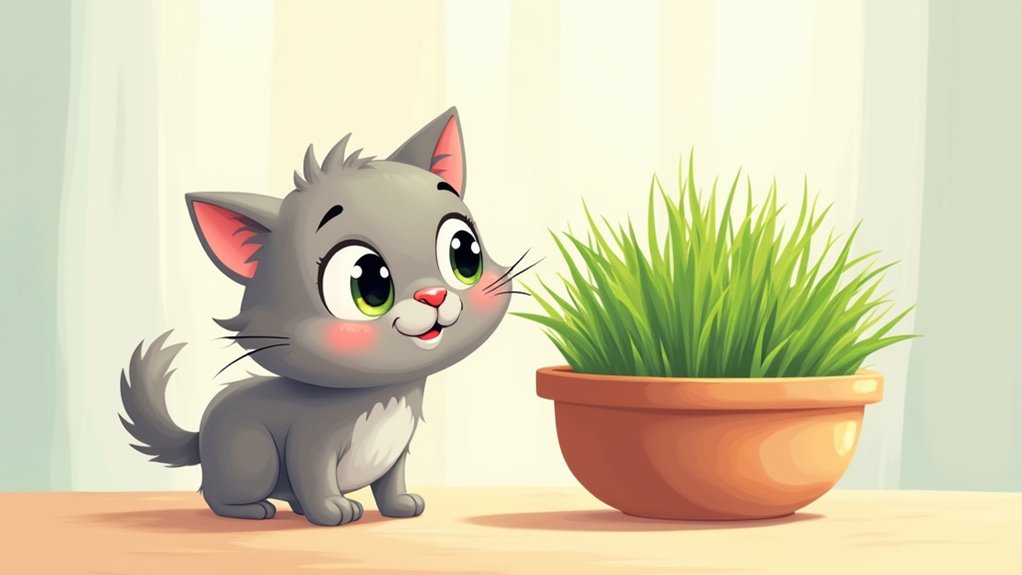
To keep your cat healthy while enjoying wheatgrass, follow these serving guidelines. Start with a few blades each day. This amount is safe and tasty for your cat. Remember, treats like wheatgrass should only be 10% of your cat’s total calories. Too much can upset their stomach.
Portion Control:
- Adjust the amount based on your cat’s size. Bigger cats can have a little more.
- Watch for any signs of vomiting or discomfort. This means you may be giving too much.
Feeding Frequency:
- Offer small amounts of wheatgrass daily or as a special snack.
- Don’t leave it out all the time. Trim and replace the grass when it grows to 5 inches. This keeps it fresh and tasty for your cat.
Behavioral and Environmental Enrichment
Your cat’s happiness matters. Natural grazing behavior plays a big role in their health.
Wheat grass is a great addition to their diet. It gives them sensory stimulation. Cats love to nibble and explore. Wheat grass lets them enjoy this instinct. Cat grass is generally safe for cats to consume, making it an excellent choice for your feline companion.
This simple addition enriches their environment. It keeps their mind active and their body healthy. A happy cat is a healthy cat. Additionally, wheat grass aids digestion, making it a beneficial treat for your feline friend.
Give your feline friend the benefits of wheat grass.
Natural Grazing Behavior
Understanding your cat’s natural grazing behavior helps keep them healthy and happy. Cats spend about 30% of their day hunting or looking for food. To support this, offer several small meals or leave canned food out all day.
Use food puzzles to spark their hunting skills. Hide food in different spots to encourage them to explore. Provide crunchy textures that feel like eating their prey.
These ideas boost their mind and body activity. They also stop boredom and bad behaviors.
Enrich your cat’s space with safe plants like wheat grass. This allows them to nibble naturally and feel satisfied. Additionally, providing safe plants can satisfy their curiosity and offer health benefits.
Environmental Sensory Stimulation
Improving your cat’s indoor environment boosts their well-being. Cat grass is a great addition. It offers tactile stimulation. Your cat will enjoy touching, chewing, and pawing at it. The natural scent of cat grass attracts them. This can reduce stress and spark curiosity.
To get the most benefits from cat grass:
- Make a patch: Use a container with potting soil to plant cat grass.
- Change it often: Replace it every two weeks for freshness and nutrition.
- Watch their intake: Limit grass to about 10% of their daily diet to avoid upset stomachs.
Creating a fun and safe space helps your cat feel happy and healthy.
Potential Risks and Precautions
Introducing wheatgrass to your cat’s diet can be a fun idea.
But be careful. Too much grass can upset their stomach. This may cause vomiting or diarrhea. Moderation is very important.
Always talk to your vet before adding new foods. They can help you avoid toxic plants. Keeping your furry friend safe is your top priority.
Gastrointestinal Distress Risks
Wheatgrass can be good for your cat, but it may also cause some stomach issues. Eating too much wheatgrass can lead to problems like nausea, diarrhea, or cramping.
Cats with sensitive stomachs need special care when eating wheatgrass.
To keep your cat safe, start with only a few blades of wheatgrass each day. Watch for changes in their appetite or energy. Check their stool to see if it stays normal.
If your cat seems uncomfortable, give them less wheatgrass.
Keeping an eye on your cat’s reaction to wheatgrass helps prevent any digestive troubles. It’s all about balance and making sure your furry friend stays healthy and happy.
Toxic Plant Awareness
Wheatgrass can be good for your cat, but it’s important to know the risks. Here are some key points for keeping your cat safe:
- Choose Organic: Always pick organic wheatgrass. Chemicals from pesticides or herbicides can harm your cat.
- Watch for Allergies: Look for signs like itching or sneezing. Stop using wheatgrass if you notice these symptoms.
- Be Cautious Indoors and Outdoors: Indoor plants might tempt your cat to nibble on toxic ones. Outdoor grass can have harmful chemicals.
To keep risks low, place wheatgrass in a safe spot. Keep it away from toxic plants.
Check it often for mold. Enjoy wheatgrass in moderation to keep your cat healthy and happy.
Veterinary Consultation Importance
Veterinary consultation is crucial for safely adding wheatgrass to your cat’s diet. It helps you avoid potential risks. Talking to your vet ensures a full health check and personalized advice.
Here are some key points to remember:
- Personalized Guidance: Your vet gives safe portion recommendations based on your cat’s health.
- Allergy Checks: They look for possible allergies or sensitivities to keep your cat safe.
- Digestive Monitoring: Watch for signs like vomiting or diarrhea. Call your vet if these happen.
- Safe Sourcing: Make sure the wheatgrass is free from pesticides and harmful chemicals.
Consulting with your vet helps keep your cat healthy and happy.
Alternatives and Additional Options
Safe outdoor options for pets go beyond just grass. Consider clover or microclover as great choices. They’re non-toxic and tough. These plants need little care and resist dog urine. No more brown patches!
Artificial turf is another smart option. It lasts a long time and is easy to clean. Perfect for busy pet owners!
Natural ground covers like wood chips and pea gravel help with drainage. They also offer a comfy spot for your pets.
Eco-friendly choices like xeriscaping and ornamental grasses make your yard safe and easy to care for. These options cut down on chemicals and save water. They keep your outdoor space safe for pets.
Always check that plants and materials are pet-friendly. Some can be harmful. Research well to keep your pets safe while enjoying the outdoors.
Frequently Asked Questions
How Do I Grow Wheatgrass for My Cat at Home?
Grow wheatgrass for your cat easily at home. Start by soaking the seeds in water for a few hours. This helps them sprout. Next, plant the seeds in organic soil. Make sure the soil is loose and well-draining.
Place the pot in a spot with bright, indirect sunlight. Cats love to nibble on wheatgrass. It is good for their digestion and overall health. Water the grass lightly every few days. In about 7 to 10 days, your wheatgrass will be ready for your cat to enjoy.
This simple indoor garden project is fun and beneficial. Your furry friend will love the fresh taste!
Can I Mix Wheatgrass With My Cat’s Food?
You can mix wheatgrass with your cat’s food. Wheatgrass provides important vitamins. Many cat foods do not have these vitamins. Adding wheatgrass can boost your cat’s nutrition. It may help with digestion too. Just give it in small amounts. Your cat will enjoy the new taste. Always watch how your cat reacts. If they like it, you can keep adding it to their meals. Wheatgrass can support your cat’s overall health. It’s a simple way to enhance their diet. Just remember to use it wisely and in moderation.
Is There a Specific Type of Wheatgrass for Cats?
Choose organic wheatgrass made for cats. This type of wheatgrass fits what cats like. It helps with digestion and gives important nutrients. Your cat will feel better and enjoy it more. It’s a great addition to their diet.
How Long Does Wheatgrass Last After Cutting?
Wheatgrass stays fresh for 2 to 3 weeks after cutting. Store it in green storage bags. Keep it in the fridge to maintain freshness. Protect it from air and moisture. This helps it last longer. Enjoy your nutritious wheatgrass!
Can Wheatgrass Help With My Cat’s Bad Breath?
Wheatgrass can be a great treat for your cat. It’s fresh and green, full of natural fibers. These fibers help keep your cat’s teeth clean. They reduce plaque and fight bad breath.
As your cat enjoys wheatgrass, it also soothes any oral irritations. This means a happier and healthier mouth. Fewer dental problems lead to fresher breath.
Many cat owners find that adding wheatgrass to their pet’s diet makes a difference. It’s an easy way to support dental health. Your furry friend will love the taste while you enjoy the benefits. Make wheatgrass a part of your cat’s routine for a cleaner mouth and happier purrs.
Conclusion
Wheatgrass can be a safe and healthy treat for your cat. It offers some nutrients and fiber. Start with a small amount, like a teaspoon. This helps you see how your cat reacts. Watch for any signs of discomfort or allergies. If you’re unsure, ask your vet for advice. A balanced diet is important for your cat’s health. Use wheatgrass as a fun treat, not a main food. Enjoy watching your cat nibble on this green snack!
