
Can My Cat Eat Raw Beef
This post contains affiliate links. As an Amazon Associate, we earn from qualifying purchases.
Raw beef is not a suitable food option for your cat due to potential health risks. It can harbor harmful bacteria that may lead to serious issues like diarrhea and vomiting, and a diet consisting solely of beef can create nutritional imbalances by lacking essential vitamins and minerals. Additionally, there are dangers associated with bones that could choke your cat or splinter, causing internal injuries. For those interested in a deeper understanding, further details and recommendations will follow in the article.
Essential Facts in 30 Seconds
- Raw beef can carry harmful bacteria that may lead to severe infections in cats.
- A raw beef diet can result in nutritional deficiencies, lacking vital amino acids and vitamins.
- Small bones in raw beef pose choking hazards and risks of organ injury from splintering.
- Proper handling and storage are essential to prevent cross-contamination and foodborne illnesses.
- Consult a veterinarian before adding raw beef to your cat’s diet and watch for adverse reactions.
Understanding the Risks of Raw Beef for Cats
Bacterial Risks of Raw Beef:
- Raw beef can carry harmful bacteria.
- These bacteria can cause diarrhea and vomiting.
- In serious cases, infections can be fatal.
- Handling raw beef raises risks to you and other pets.
- Bacteria can spread through saliva and feces.
- Regular monitoring for adverse reactions is essential when introducing new foods.
Preventing Bacterial Spread:
- Wash your hands after touching raw beef.
- Wear gloves during preparation.
- Clean surfaces well to reduce germs.
- Avoid feeding raw beef to sick cats or those with health problems.
- Always source meat from reputable suppliers to ensure safety.
Stay safe and keep your pets healthy!
Nutritional Imbalances and Considerations
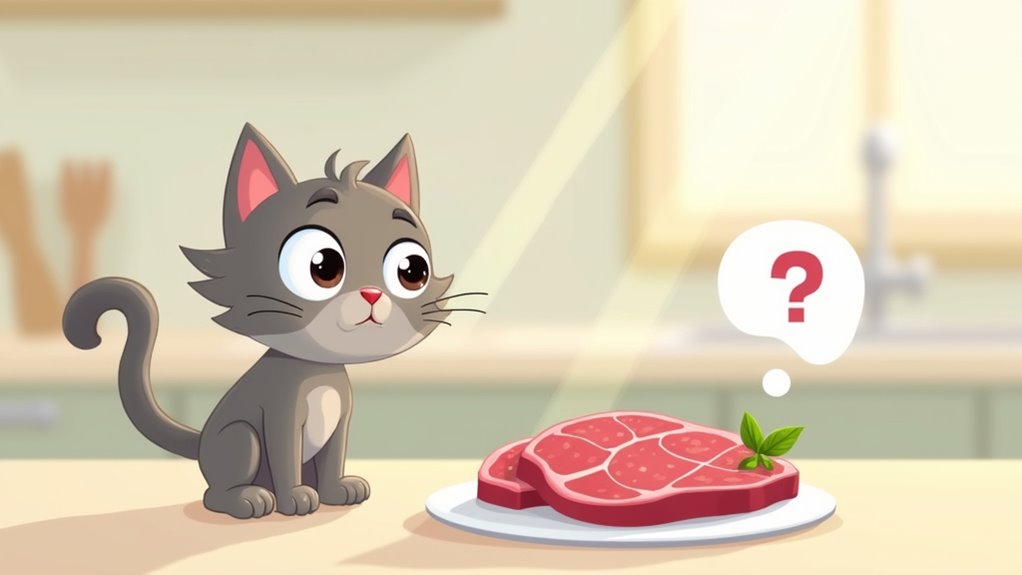
A raw beef diet for your cat can lead to serious nutritional problems. Relying only on beef may cause nutrient deficiencies. For example, beef doesn’t provide enough calcium. This can lead to skeletal issues over time. Additionally, a diet lacking essential nutrients may compromise your cat’s overall health.
Key Nutritional Imbalances:
- Calcium Deficiency: Without bones or supplements, your cat may lack calcium.
- Amino Acid Gaps: Eating only beef may miss essential amino acids.
- Fatty Acid Imbalance: Too many omega-6 fatty acids can harm skin health.
Solutions:
- Diet Variety: Include other proteins like chicken or rabbit. This helps keep a balanced diet.
- Use Organ Meats: Adding organ meats gives vitamins A and copper that beef lacks.
Additionally, relying solely on raw beef can pose risks of harmful bacteria that may lead to gastrointestinal issues for your cat.
Keeping your cat’s diet balanced is key to their health and happiness.
Bone Hazards Associated With Raw Beef Feeding
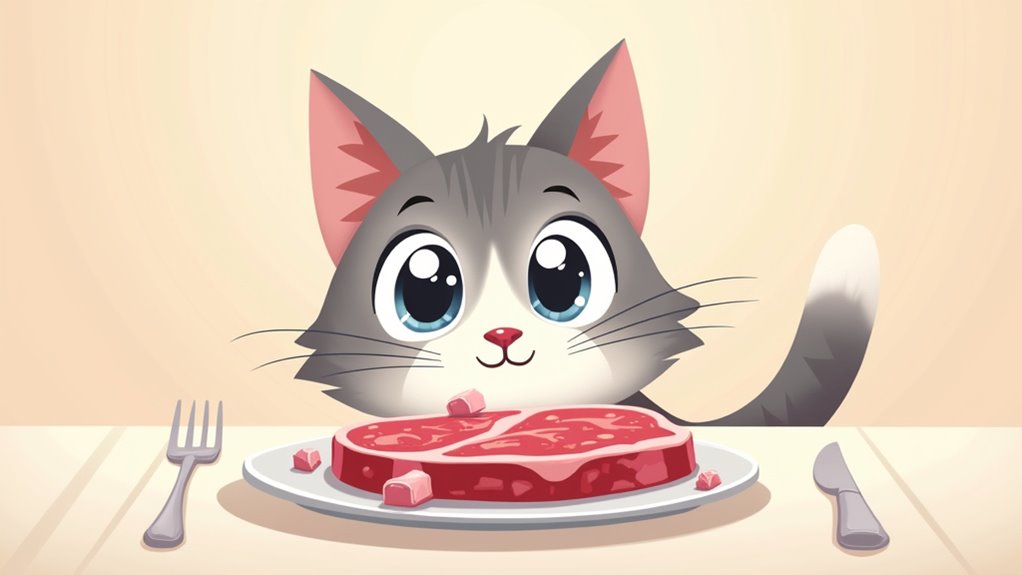
Feeding raw beef to your cat can bring some bone hazards. It’s important to know these risks for your cat’s health. Choking can happen if a small bone gets stuck in their throat. Splintered bones can cause serious injuries by puncturing organs. Always avoid cooked bones since they break easily and can splinter.
Follow these feeding tips for safety:
- Pick the right size bones. Larger bones can splinter, so choose meaty ones.
- Watch your cat while they eat. Look for signs of dental problems.
- Keep a balanced diet. Aim for 3-7% bone content to avoid nutrition issues.
Safety Protocols for Handling Raw Beef
Handling raw beef requires safety first. Keep yourself and your cat safe. Use good freezing methods. Store beef at safe temperatures. This stops bacteria from growing.
Always wash your hands after handling meat. Use clean utensils for preparation. Buy beef from trusted suppliers. This helps reduce health risks.
Stay safe while enjoying your beef.
Proper Freezing Techniques
To keep your raw beef safe and tasty, use proper freezing techniques. Rapid freezing helps maintain texture and flavor. Quickly lower the temperature to 0°F (-18°C) or below. Here are effective methods and packaging tips:
| Freezing Method | Tips for Success |
|---|---|
| Vacuum Sealing | Cuts air exposure, stops freezer burn. |
| Freezer-Specific Wrap | Use butcher paper or heavy-duty foil to keep moisture. |
| Air Removal Techniques | Squeeze out air from bags to prevent oxidation. |
| Double Wrapping | Wrap in plastic wrap, then place in a freezer bag for extra protection. |
Follow these tips to enjoy delicious beef later. Proper freezing makes a big difference!
Hygiene and Sanitation
Hygiene and sanitation are very important when handling raw beef. Improper practices can cause foodborne illnesses. Here are some simple steps to keep you and your cat safe:
Wash Your Hands: Always use soap and water. Wash for at least 20 seconds before and after touching raw beef.
Prevent Cross-Contamination: Keep raw beef away from other foods. Use separate cutting boards and utensils for raw and cooked items.
Sanitize Surfaces: After handling raw beef, clean all surfaces. Use hot, soapy water to kill harmful bacteria.
Store Safely: Always keep raw beef in sealed containers. This stops juice leaks and keeps other foods safe.
Following these steps helps ensure safe handling of raw beef. Stay clean and keep your kitchen safe!
Trusted Meat Sources
Selecting the right source for raw beef is key for your cat’s health. Follow these guidelines to ensure meat quality and safety:
- Buy from trusted suppliers with strict food safety standards.
- Look for bright red ground beef. This shows freshness and low spoilage.
- Choose vacuum-sealed packages with clear sell-by dates.
Keep raw beef refrigerated at 40°F (4°C) or below. Use it within two days. Always thaw frozen beef in the refrigerator. Never leave it at room temperature.
Use separate utensils for raw meat to avoid cross-contamination. Wash your hands well after handling raw beef.
Stick to these steps to provide safe, high-quality beef for your cat. This helps reduce health risks and keeps your feline friend happy and healthy.
Potential Health Benefits of Raw Diets
A raw beef diet can offer many health benefits for your cat. This type of diet mimics what wild cats eat. It provides essential nutrients that help improve health and digestion.
High-quality protein in raw beef supports strong muscles and energy. Better digestion means your cat may feel happier and more active.
Always talk to your vet before changing your cat’s diet. They can give you the best advice for your pet.
Nutrient Similarity to Wild Diets
Understanding the nutrient similarity between raw beef and a cat’s natural diet can boost your cat’s health.
Raw beef is very close to what wild cats eat. It offers important nutrients your cat needs. Here are three main benefits:
- High-Quality Protein: Raw beef has proteins that help build and maintain muscles.
- Hydration: The moisture in raw beef helps keep your cat hydrated, just like wild prey.
- Natural Nutrients: Raw beef is rich in vitamins and minerals, like taurine and zinc, found in a cat’s wild diet.
Feeding your cat raw beef can support their overall well-being. It’s a simple way to give them what they need.
Improved Digestive Health
Many cat owners know that raw beef has high-quality protein. It also helps your cat’s digestive health. A raw diet can improve how well cats digest food. Cats can absorb 90-95% of nutrients from raw meat. In comparison, commercial diets only allow them to absorb less than 82%. This leads to smaller, less smelly stools and fewer tummy problems like vomiting and diarrhea.
Raw meat keeps natural digestive enzymes. These enzymes help break down food easily. This reduces bloating and gas. A raw diet can also help your cat’s gut. It may increase the diversity of good bacteria in their stomach. This supports better overall gut health.
Veterinary Recommendations and Regulatory Concerns
Feeding your cat raw beef may seem natural, but it’s not safe. Major veterinary groups warn against it. The risks are real and could harm your pet and your family. Here are the key issues:
- Bacteria Danger: Raw beef often has harmful bacteria like *Salmonella* and *E. coli*. These can make both cats and humans very sick.
- Nutritional Problems: Raw diets can cause imbalances. Cats may get too much or too little of important nutrients, which harms their health.
- Health Risks at Home: Handling raw meat can spread bacteria. This increases the chance of sickness in your house.
Veterinarians suggest talking to a professional before considering a raw diet.
If you still want to feed raw, choose commercial foods that are tested for pathogens.
Always keep your cat’s health and safety as a top priority. Know the risks involved.
Frequently Asked Questions
Can I Mix Raw Beef With Other Cat Foods?
Mixing raw beef with other cat foods is possible. Start by adding small amounts of raw beef to your cat’s regular food. This helps your cat adjust without stomach issues. Raw beef can provide important nutrients like protein and healthy fats.
Make sure the beef is fresh and safe for your cat. Always check for any signs of spoilage. Monitor your cat for any reactions. If there are no issues, gradually increase the amount of raw beef. This can make mealtime more exciting for your cat.
Balancing raw and regular food ensures your cat gets a variety of nutrients. Consult with your vet for the best diet plan for your cat. A well-rounded diet keeps your cat healthy and happy.
How Often Can I Feed My Cat Raw Beef?
Feeding your cat raw beef can be healthy. It’s important to do it right. Give your cat raw beef twice a day. This helps keep their diet balanced.
Too much raw beef can be bad. Follow the recommended guidelines for portions. Always make sure your cat gets other nutrients too. Include vitamins and minerals in their meals.
Watch for any signs of allergies. If your cat has a bad reaction, stop feeding it raw beef. Always consult your vet for the best advice on your cat’s diet. They can help you make the best choices for your pet’s health.
What Signs Indicate My Cat Is Sick From Raw Beef?
Your cat may be sick from raw beef if it shows vomiting, diarrhea, or a lack of appetite. These signs can mean serious health issues. Keep an eye out for fever, lethargy, or changes in behavior. These are important warning signs. Always consult your vet if you notice these symptoms. It’s better to be safe and get professional advice. Your cat’s health is very important.
Are There Specific Beef Cuts Safer for Cats?
Beef heart is a great choice for cats. It is packed with nutrients. Tougher stewing cuts are also good options. These cuts provide essential vitamins and minerals. They have lower fat content, which is healthier for your cat.
Feeding your cat these beef cuts can support their overall health. Beef heart is rich in taurine, an important amino acid for cats. Stewing cuts can be cooked well, making them easy to chew.
Always make sure to prepare the meat safely. Remove any bones and excess fat. Cook the beef thoroughly to kill harmful bacteria. This will keep your cat safe and healthy.
Choosing the right beef cuts can help your cat thrive. They will enjoy the taste while getting the nutrition they need.
Can Kittens Eat Raw Beef Safely?
Kittens cannot eat raw beef safely. Their stomachs are sensitive and cannot handle germs from raw meat. Raw beef also does not have all the nutrients kittens need to grow strong. Kittens need a balanced diet. This helps them develop properly and stay healthy. Always choose kitten food made for their age and needs. This way, you support their growth and well-being.
Conclusion
Many cats might like raw beef. Yet, feeding them raw meat can be risky. Raw beef can carry dangerous bacteria. This can make your cat sick. Always talk to your vet before changing your cat’s diet.
If you decide to give raw beef, keep safety in mind. Wash your hands and clean surfaces well. Use fresh beef and store it properly. These steps help reduce risks.
Your cat’s health is very important. A well-balanced diet helps them live a happy life. Always prioritize their needs.
