
Do Cat Eat Canned Tuna
This post contains affiliate links. As an Amazon Associate, we earn from qualifying purchases.
Cats can eat canned tuna, but it should be given in moderation due to potential mercury content. It’s recommended to limit tuna to less than 10% of their diet. Symptoms of mercury poisoning, such as wobbly gait and vomiting, can occur, so it’s essential to monitor your cat for any unusual signs. Opt for tuna packed in water and avoid albacore. Consulting your vet before offering it as a treat is advisable. For those interested in healthier alternatives, further details will follow.
Essential Facts in 30 Seconds
- Cats can eat canned tuna as an occasional treat, not a regular part of their diet.
- Select tuna packed in water without additives; avoid tuna in oil or saltwater.
- Light tuna (like skipjack) is safer due to lower mercury levels than albacore tuna.
- Limit tuna to less than 10% of a cat’s diet to avoid nutritional deficiencies.
- Consult a veterinarian before giving tuna, especially for cats with health issues.
Nutritional Benefits of Canned Tuna for Cats
Canned tuna can be a tasty treat for your cat. It offers high-quality protein that helps build strong muscles. Tuna has important amino acids that support healing and boost the immune system. This helps keep your cat healthy and active.
Tuna is also packed with omega-3 fatty acids. These fats help your cat’s skin stay healthy and their coat shiny. They may even help with brain function. Plus, tuna contains vitamins like B12 and D. These vitamins support energy and bone health. However, mercury levels in tuna can pose risks if consumed too frequently.
Tuna shouldn’t be the only food your cat eats. It misses important nutrients like vitamin E and calcium. Too much tuna can cause health problems over time. Use tuna as an occasional treat. Limit tuna intake to about once a week or less to ensure your cat’s overall health.
Always make sure your cat has a balanced diet with different protein sources. Regular vet visits help keep track of your cat’s health and nutrition needs.
Risks of Mercury Exposure From Tuna
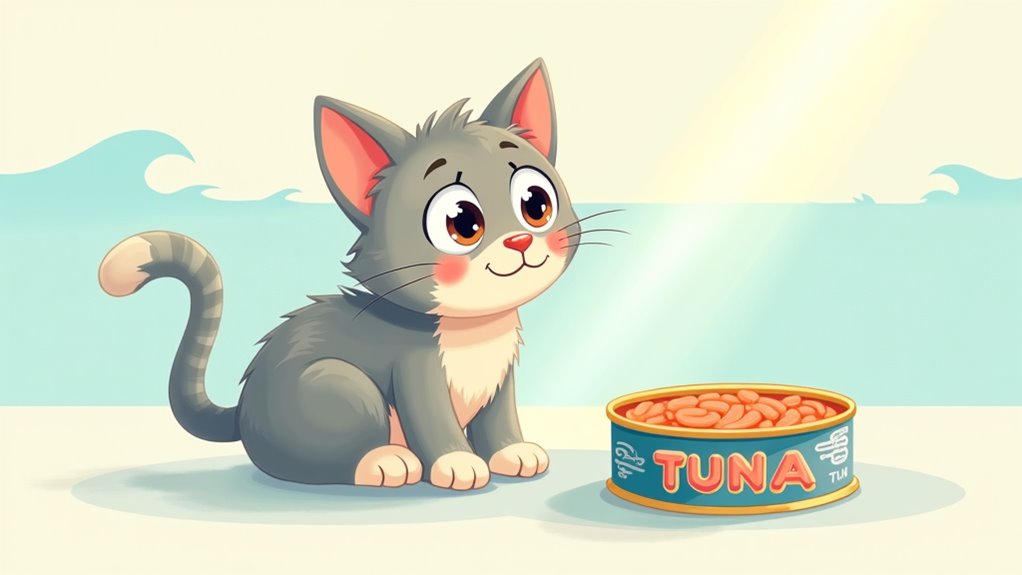
Feeding your cat canned tuna can be risky. Tuna often contains mercury, which can harm your cat. Mercury builds up in their body over time. This can cause serious health issues. Your cat might face problems like poor coordination and brain damage. Symptoms of mercury poisoning are scary for any pet owner.
It’s important to be careful with the type of tuna you give. Light tuna has less mercury than albacore tuna. Additionally, high mercury levels can accumulate in cats after regular consumption. Limit the amount of tuna in your cat’s diet. Treat tuna as an occasional snack, not a daily meal. Regular consumption of tuna increases exposure to mercury, so moderation is key.
Always watch for signs of illness. Keeping your cat safe is the top priority.
Mercury Accumulation Effects
Many people love tuna for its high protein. Yet, it’s important to know about mercury risks in this fish. Tuna collects mercury from the environment, especially from the air.
Here are some important facts:
- Mercury Levels: Albacore tuna usually has about 0.407 ppm of mercury. Light tuna has lower levels, around 0.17 ppm.
- Consumption Frequency: Some canned tuna can have high mercury. It’s best to eat it no more than once a week.
- Health Risks: Pregnant women and young children should stay away from high-mercury tuna. This helps avoid potential health problems.
Understanding these points will help you make smart choices about eating tuna. This is important for you and your pet cat too.
Symptoms of Poisoning
Mercury poisoning in cats is a serious concern. Recognizing the symptoms early is essential. Consult a veterinarian right away if your cat shows any signs of poisoning. Here’s a simple table to help you identify potential symptoms:
| Neurological Symptoms | Behavioral Signs | Gastrointestinal Issues |
|---|---|---|
| Wobbly gait (ataxia) | CNS depression | Vomiting |
| Tremors or seizures | Lethargy | Diarrhea |
| Vision loss | Strange behavior | Loss of appetite |
| Rapid eye movement (nystagmus) | Depression | Mouth sores (stomatitis) |
| Paralysis (in severe cases) | Hyperactivity | Dehydration |
Limit tuna in your cat’s diet. This helps prevent mercury buildup and reduces health risks. Stay alert to your cat’s health and seek help quickly if needed.
Health Concerns Associated With Tuna Consumption
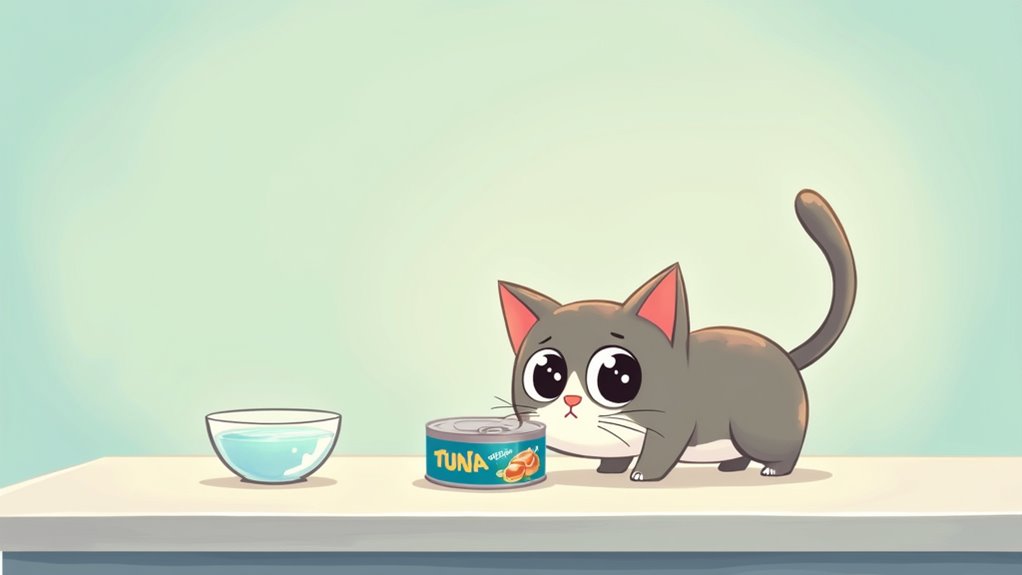
Feeding your cat tuna can be risky. Tuna often has high mercury levels. This can cause serious health issues. Symptoms of mercury poisoning include muscle weakness and seizures.
Tuna also lacks important nutrients. Without these nutrients, your cat may develop nutritional deficiencies. This can harm their overall health and well-being. Additionally, high-quality cat food is necessary to meet dietary needs and ensure balanced nutrition.
Consider safer alternatives for your cat’s diet. Options like chicken or fish specially made for cats are better choices.
Always consult your vet before making changes to your cat’s diet. Keeping your furry friend healthy is the most important thing.
Mercury Poisoning Risks
Canned tuna hides dangers of mercury poisoning. This toxic substance can harm both people and cats. Here are three important points to consider:
- Mercury Sources: Tuna absorbs methylmercury from its food. Larger species like albacore and bigeye tend to have higher levels.
- Health Risks: Long-term exposure can cause tremors, memory problems, and sensory issues. Pregnant women and children face greater risks.
- Cat Safety: Feeding your cat tuna often may raise their mercury levels, which can be harmful.
To keep you and your pet safe, limit canned tuna. Choose varieties with lower mercury levels.
Make sure your cat’s diet is balanced and nutritious.
Nutritional Deficiencies Concerns
Cats enjoy the taste of tuna, but feeding it too often can cause health problems. Tuna doesn’t have all the vitamins and minerals your cat needs. For example, it has low levels of B vitamins. This can lead to nerve issues. Tuna also lacks calcium, which is important for strong bones.
A diet high in tuna can lead to serious issues. Your cat might develop muscle weakness, skin problems, or heart disease. This happens because tuna doesn’t provide enough taurine.
It is best to treat tuna as a special snack. Make sure your cat eats a balanced diet with complete cat food. This way, your kitty will get all the nutrients for good health.
Tuna as an Occasional Treat vs. Regular Diet
Tuna is a tasty treat for cats, but it shouldn’t be a regular part of their diet. While cats may love it, eating tuna too often can cause health problems.
Here are some important facts to remember:
- Mercury Risk: Tuna can have high mercury levels. This can harm your cat’s brain and nervous system over time.
- Missing Nutrients: Tuna doesn’t have enough taurine or vitamin E. These nutrients are essential for your cat’s health. Without them, your cat could get sick.
- High in Calories: Tuna has a lot of calories. Too much can lead to weight gain and other health issues.
Keep tuna as a rare treat. Small amounts are safe and enjoyable. This way, your cat can have a special snack without risking their health.
Always talk to your vet about your cat’s diet for the best advice.
Suitable Forms of Tuna for Cats
Understanding which tuna is safe for your cat is important. Always choose tuna that is fully cooked. This helps kill harmful bacteria and the thiaminase enzyme. Raw tuna can cause bacterial infections and neurological problems.
Here’s a simple guide to safe tuna options for your cat:
| Tuna Variety | Cooking Method |
|---|---|
| Skipjack (chunk light) | Fully cooked and unseasoned |
| Albacore (white) | Avoid this type completely |
| Canned tuna (in water) | Ensure it has no additives |
| Fresh tuna | Cooked plain, without spices |
These guidelines will help you treat your cat safely with tuna. Always double-check what you give them. Cats can enjoy tuna, but it must be safe and healthy.
Veterinary Recommendations for Feeding Tuna to Cats
To keep your cat healthy, feed tuna with care. Follow these simple tips to avoid health problems:
- Feed in Moderation: Keep tuna to less than 10% of your cat’s food. This helps prevent nutritional issues.
- Pick the Right Type: Choose canned tuna in water. Avoid tuna in oil or saltwater to skip unhealthy extras. Additionally, remember that cats are obligate carnivores and thrive primarily on meat.
- Talk to Your Vet: Always check with your vet before giving tuna. This is especially important if your cat has health issues like kidney problems.
Watch for signs of mercury poisoning or vitamin deficiencies. Look for muscle weakness or changes in behavior. Additionally, consider using plain, unseasoned, cooked salmon as an alternative treat for variety.
If you see anything unusual, get veterinary help right away. By staying careful and informed, you can enjoy feeding your cat tuna while keeping them healthy and happy.
Frequently Asked Questions
Can Kittens Eat Canned Tuna Safely?
Kittens should not eat canned tuna. It does not have the right nutrients for their growth. Tuna can also cause health problems for young cats. Too much tuna can lead to mercury poisoning and other issues. Stick to kitten food made for their needs. This food has all the vitamins and minerals they need. It helps them grow strong and healthy. Always choose what is best for your kitten.
What Are the Signs of Tuna Allergy in Cats?
Tuna allergy symptoms in cats can show up in many ways. Watch for signs like chronic itching and overgrooming. Skin infections may also occur. Vomiting is common too. Gastrointestinal distress, like diarrhea, can happen.
Be careful with tuna. It can cause serious reactions. Keep a close eye on your cat if they eat it. Make sure to consult a vet if you notice any of these symptoms. Your cat’s health is important.
How Often Can I Feed My Cat Tuna?
Tuna can be a special treat for your cat. Offer it once or twice a week. Think of it like dessert. Cats love the taste, but too much can upset their diet. Moderation is important for their health. Always choose tuna packed in water, not oil. Check for any added salt or spices. Fresh water should always be available for your cat. Remember, a balanced diet is key for a happy cat!
Is Homemade Tuna Safe for Cats?
Homemade tuna can be a tasty treat for your cat. Use plain, cooked tuna for the best results. Avoid any added spices or oils. Tuna should be an occasional snack, not a regular meal. It can help prevent mercury build-up in your cat’s body. Too much tuna can cause nutritional imbalances. Always balance your cat’s diet with other foods. Keep an eye on your cat’s health after giving them tuna. If you notice any changes, consult a vet. Treats like tuna can be rewarding, but moderation is key. Give your cat a safe and happy mealtime experience!
Can Tuna Cause Dental Problems in Cats?
Tuna can lead to dental problems in cats. It lacks the crunch needed for proper chewing. Without this, cats can develop plaque buildup. This buildup can cause gum disease and other dental issues. Tuna also doesn’t have all the nutrients cats need for good health. Giving tuna too often may harm your cat’s teeth. Always feed tuna in moderation to keep your cat’s mouth healthy. Regular dental care and a balanced diet help maintain good oral health for your furry friend.
Conclusion
Cats often enjoy the taste of canned tuna. It’s a tasty treat for them. Yet, it’s important to give tuna in moderation. Too much tuna can cause health problems. One issue is mercury, which can be harmful. Another concern is that tuna alone does not provide all the nutrients cats need.
Talk to your vet about how much tuna is safe for your cat. They can help you make the best choices for your pet’s diet. A small amount of tuna now and then is okay. Balance is crucial in keeping your cat healthy and happy. Remember, you want your feline friend to thrive, not just get by!
