
What Foods Can Cat Not Eat
This post contains affiliate links. As an Amazon Associate, we earn from qualifying purchases.
Cats cannot eat certain foods due to severe health risks. Toxic foods such as chocolate, onions, garlic, grapes, and anything containing xylitol can lead to poisoning, vomiting, and even death. Additionally, fatty or dairy foods may upset their stomachs and cause diarrhea. It’s important to check labels for harmful additives and avoid raw food, as it can carry bacteria harmful to both cats and humans. For those interested in a deeper understanding, further explanations and details will follow.
Essential Facts in 30 Seconds
- Chocolate, caffeine, onions, and garlic are toxic to cats and can cause vomiting and seizures.
- Grapes, raisins, and citrus fruits can result in kidney failure and gastrointestinal upset.
- Xylitol is highly toxic and can lead to liver failure in cats.
- Fatty foods and dairy may cause digestive issues; prefer lean meats and lactose-free options.
- Raw food carries bacterial contamination risks; handle it safely and consult a vet for dietary advice.
Toxic Foods Causing Immediate Illness or Poisoning
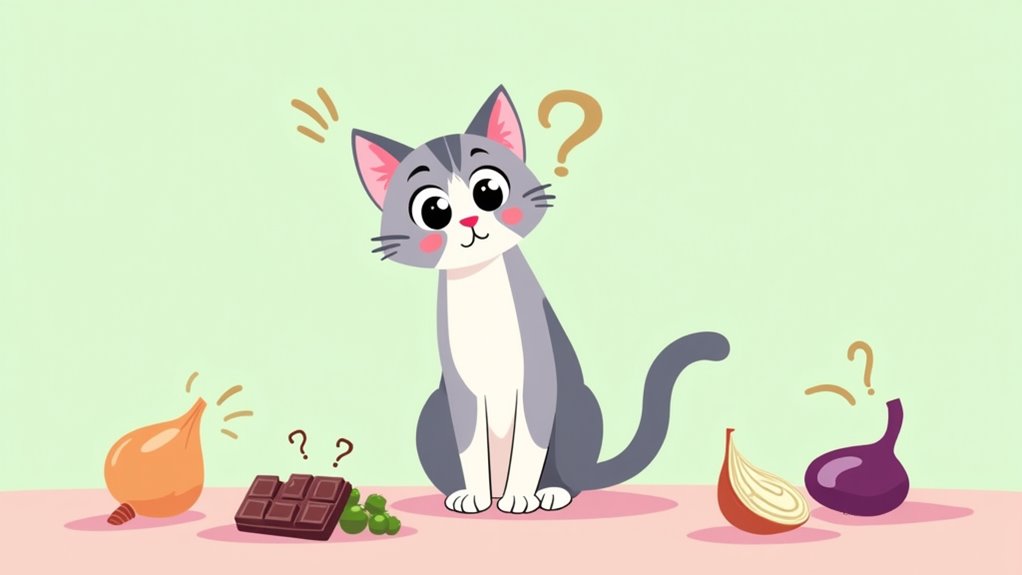
Keeping your cat safe means knowing about toxic foods. Chocolate and garlic can harm your pet. Chocolate has a substance called methylxanthines. Even a little can cause serious problems like seizures and vomiting.
Garlic and other allium foods, like onions and leeks, can hurt your cat too. They damage red blood cells and can lead to anemia. Symptoms may take days to show. Watch for vomiting, tiredness, and pale gums. Garlic powder should never be fed to cats due to its toxicity. Onions are toxic to cats in all forms, including raw and cooked.
To keep your cat safe, avoid these foods:
- Methylxanthine Sources: Chocolate, caffeine
- Allium Sources: Onions, garlic, chives
If you think your cat ate any of these foods, take them to the vet right away. Fast action can save your pet’s life.
Stay aware of what your cat eats. Your pet’s health is important!
Foods Causing Digestive Upset or Nutritional Issues
Cats can get sick from certain foods. Some foods can upset their stomachs and cause health problems. Fatty foods, dairy, and nuts are common culprits. Changing their diet suddenly can make things worse. It’s important to be careful with what you feed your cat. Regular consumption of plant-based foods can lead to digestive discomfort in sensitive cats, especially since most adult cats are lactose intolerant and cannot properly digest dairy.
| Problematic Foods | Potential Issues | Suggested Alternatives |
|---|---|---|
| Fatty Foods | Diarrhea, pancreatitis | Lean meats, fish |
| Dairy Products | Diarrhea, lactose intolerance | Lactose-free options |
| Nuts Varieties | Vomiting, incoordination | Treats designed for cats |
High-fat meats, dairy, and nuts can lead to serious stomach issues. Always switch your cat’s food slowly. Talk to your vet about safe and healthy options. Keeping your cat healthy is all about good food choices!
Fruits and Vegetables Unsafe for Cats
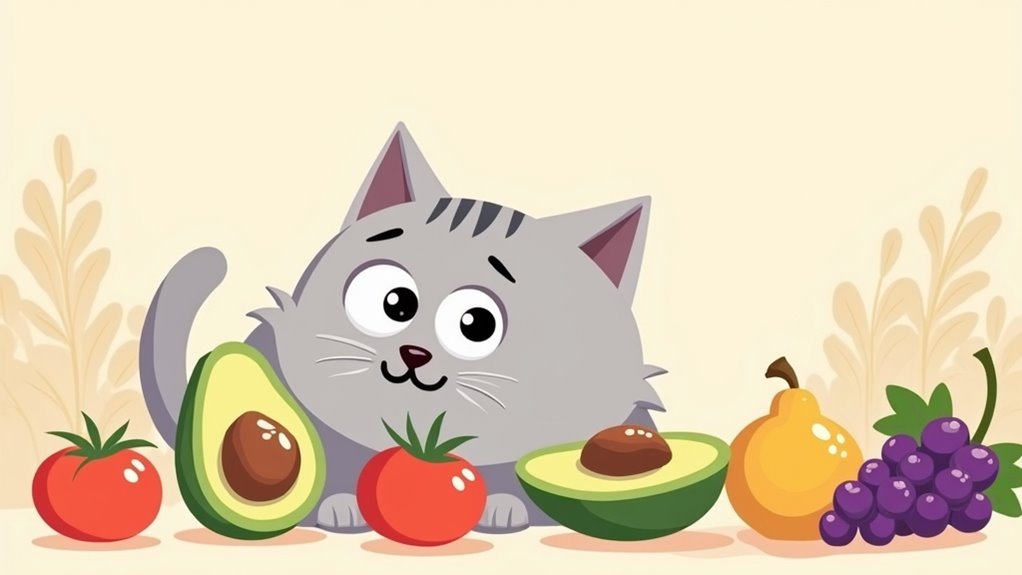
Some fruits and vegetables can harm your cat. Citrus fruits like oranges and lemons have toxic oils. These oils can upset your cat’s stomach. Grapes are toxic to cats and can cause serious health issues, including kidney failure. Stone fruits, such as cherries and plums, have seeds that can release cyanide. This substance is very harmful. Even dried grapes can be dangerous. Keep these foods away from your cat to keep them safe. Always check what you feed your pet. It’s better to be safe than sorry.
Harmful Citrus Fruits
Citrus fruits can be dangerous for your cat. Fruits like oranges, lemons, and limes have oils and compounds, such as limonene and linalool. These can cause citrus toxicity. Even small bites can make your cat sick.
Watch for signs like vomiting, diarrhea, and drooling. Eating too much can lead to weakness or tremors.
Keep all citrus fruits away from your cat. This includes peels and seeds, which are very toxic. Citrus fruits can lead to stomach upset and other issues in cats.
Always check your cat for any signs of trouble. If your cat eats citrus, contact your vet right away. Quick action can help prevent serious health issues.
Toxic Stone Fruits
Stone fruits like cherries, plums, peaches, and apricots can be harmful to cats. Their pits contain amygdalin, which turns into hydrogen cyanide. This can lead to serious poisoning. Symptoms include increased salivation, bright red gums, and convulsions.
Never let your cat eat these fruits. Even a small piece of the pit is risky. Watch for signs of trouble, like lethargy, vomiting, or trouble breathing. If your cat eats any part of a stone fruit, get to a vet quickly.
Always make sure pits are completely removed. To keep your cat safe, it’s best to avoid stone fruits entirely.
Dangerous Dried Grapes
Grapes and raisins are very dangerous for cats. Even a little bit can cause serious problems. This is called grape toxicity. It can hurt your cat’s kidneys badly.
Here are important symptoms to watch for:
| Symptoms | Timing | Severity |
|---|---|---|
| Vomiting | 12-24 hours after eating | Early sign |
| Diarrhea | Often happens with vomiting | Gastrointestinal irritation |
| Decreased appetite | Due to discomfort | Systemic illness |
| Reduced urination | Shows kidney failure | Advanced sign |
| Neurological symptoms | In severe cases | May indicate fatality |
If your cat eats grapes or raisins, call your vet right away. Fast action can save your cat’s life. Keep these fruits away from your pets!
Hazardous Additives and Sweeteners
Be careful with your cat’s diet. Hazardous additives and sweeteners can be harmful.
Xylitol is a toxic sugar substitute. Even a small amount can cause liver failure.
High-salt processed foods are also dangerous. They can lead to dehydration and kidney problems.
Always check ingredient labels. This helps keep your feline friend safe and healthy.
Choose natural foods whenever possible. Your cat deserves the best!
Toxic Sugar Substitutes
Many people think sugar substitutes are safe for their pets. This isn’t true for all of them. Xylitol is a common sugar substitute that can be very dangerous for cats. It can cause a quick release of insulin. This can lead to low blood sugar, or hypoglycemia. It might even cause liver failure, which can be fatal.
Symptoms of xylitol poisoning can show up fast. They can start within 10 to 60 minutes after your cat eats something with xylitol. Watch for signs like vomiting, weakness, or seizures.
To keep your cat safe, follow these tips:
- Avoid Sugar-Free Products: Don’t give your cat anything that’s sugar-free or has xylitol in it.
- Read Labels: Always check ingredient lists. Xylitol may be listed as “birch sugar.”
- Visit the Vet: If you think your cat has eaten xylitol, take them to the vet right away. Quick action can help save their life.
Stay alert to protect your furry friend!
High-Salt Processed Foods
High-salt processed foods are dangerous for your cat. Their high sodium content can lead to serious health problems. Sodium poisoning can cause vomiting, diarrhea, and lethargy. Even a little bit of salty snacks, like pretzels or salted meats, can harm your pet. Regular consumption of high-sodium foods can lead to long-term health issues.
Avoiding high-salt foods is important. Excess sodium can lead to tremors, seizures, and even death. For older cats, high-salt diets can worsen kidney disease. Increased urination from salt can also cause dehydration. Additionally, many processed meats contain toxic ingredients like garlic that are harmful to cats.
To keep your cat safe, don’t give them salted snacks. Store salt lamps and other salty items out of their reach. Following these simple steps helps protect your furry friend from serious health issues.
Raw Food Risks
Raw food diets for cats come with serious risks. Cat owners must know these dangers.
Bacteria can contaminate raw food. Harmful germs like Salmonella and E. coli are common. Studies show that 25% of raw pet food has these bacteria. This can lead to illnesses in cats. Symptoms include diarrhea and vomiting. In severe cases, infections can be deadly.
These germs can also spread through your cat’s saliva and feces. This puts you and other pets at risk too. Additionally, careful sourcing of raw meat from reputable suppliers is essential to mitigate health risks.
To reduce these dangers, handle raw food carefully. Always wear gloves. Disinfect surfaces after use. Keep raw food areas separate from where you prepare human meals. It’s crucial to wash your hands thoroughly after handling raw food. Taking these steps helps protect your cat and family from raw diet risks.
Other Foods Causing Long-Term Health Problems
Certain foods can harm the long-term health of cats. It’s important to know which foods to avoid for your cat’s well-being.
- Allium plants like garlic and onions can cause anemia in cats.
- Alcohol and yeast dough can damage the liver and lead to poisoning.
- Grapes and raisins can cause kidney failure, even if the reasons are unclear.
- Too many vitamins from supplements can lead to bone deformities and organ damage.
- Low-quality diets, such as dog food, can cause malnutrition and obesity.
Stay away from these foods to protect your cat’s health.
Always talk to your vet if your cat eats anything unsafe. Being careful and informed helps ensure your furry friend lives a long and happy life!
Frequently Asked Questions
Can Cats Eat Bread or Baked Goods?
Cats can eat plain bread, but only in small amounts. Bread does not provide health benefits for them. It’s important to be careful with baked goods. Many contain harmful ingredients. Some may have too many calories. This can lead to health problems for your cat. Always check the ingredients before sharing food with your pet. Keeping your cat healthy is the priority.
Is Peanut Butter Safe for Cats?
Peanut butter is not safe for cats. It can cause health problems for them. Some cats may be allergic to peanuts. Others may have trouble digesting it.
Instead of peanut butter, try safer treats. Tuna or chicken snacks are great options. Cats usually love these flavors. Always check with your vet before giving new snacks.
Keeping your cat safe is important. Stick to cat food made for them. This way, you can avoid any health risks.
Can Cats Consume Fish Oil Supplements?
Cats can indeed benefit from fish oil supplements. These supplements can help improve their coat and joint health. Fish oil contains omega-3 fatty acids, which are good for their overall well-being.
Some cats may experience upset stomachs or diarrhea when taking fish oil. Always talk to your vet before starting any new supplement. Your vet can recommend the right dosage and brand for your cat.
With proper guidance, fish oil can be a great addition to your cat’s diet. Your furry friend may enjoy a shinier coat and healthier joints!
Are There Any Safe Human Foods for Cats?
You can safely share some human foods with your cat. Cooked lean meats are a great choice. Plain fish is another tasty option. Certain fruits can be given too, but only in small amounts. These foods can provide important nutrients for your cat. They can also serve as fun treats. Always consult your vet before adding new foods to your cat’s diet. Keeping your furry friend healthy and happy is the goal!
How Can I Tell if My Cat Is Sick From Food?
A cat acting like a shadow may be feeling unwell. Watch for signs like vomiting, diarrhea, or not eating. These symptoms might mean food allergies or an upset stomach.
Check for other indicators too. Is your cat more tired than usual? Does it avoid playtime? These changes can signal a problem.
Pay attention to your cat’s behavior. A sudden change can mean it needs help. If you notice these signs, contact your vet. They can help find the cause and give the right treatment. Your cat’s health is important. Don’t wait too long to get advice.
Conclusion
Keeping your cat safe means paying close attention to what they eat. Many common foods can be dangerous for them. Chocolate and onions are two big ones. Even a small piece can cause serious health problems. Always read food labels. Look for harmful ingredients and hidden sweeteners.
Some other foods to avoid include garlic, grapes, raisins, and caffeine. These can all make your cat sick. Certain artificial sweeteners, like xylitol, are also very toxic.
Being careful with your cat’s diet helps them live a long and healthy life. You want your furry friend to stay safe and happy. Make sure to keep harmful foods out of reach. This way, you can avoid any accidents.
