
Can Cat Eat Cantaloupe
This post contains affiliate links. As an Amazon Associate, we earn from qualifying purchases.
Cats can eat cantaloupe, but it should be prepared safely by removing the seeds and rind to avoid choking or blockages. Offering 2-3 small cubes once a week is a good start, while monitoring for any digestive upset or allergic reactions. Due to its high water content and vitamins, cantaloupe can serve as a fun, hydrating treat, but it should not replace your cat’s regular diet. For those interested in more details and tips on safe treats, additional information will follow.
Essential Facts in 30 Seconds
- Cantaloupe is safe for cats without seeds and rind.
- Introduce cantaloupe gradually with small pieces.
- Monitor for any adverse reactions after introduction.
- Limit to 1-2 small cubes once a week.
- Cantaloupe should not replace regular cat food.
- High water content aids hydration, but too much fiber can upset digestion.
- Consult a veterinarian before introducing new foods, especially for cats with health issues.
Safety and Digestibility of Cantaloupe for Cats
Cantaloupe can be safe for cats, but you must take care. This fruit is non-toxic. Always remove the seeds and rind. These parts can cause choking or blockages in their stomach.
Cats with diabetes or stomach problems shouldn’t eat cantaloupe. The fruit contains sugar and fiber, which may worsen their condition.
Here are some important tips for feeding cantaloupe to your cat:
- Start with just 2-3 small pieces, like kibble, once a week.
- Watch your cat for any bad reactions, like vomiting or diarrhea, for 24 hours after feeding.
- Keep cantaloupe as a rare treat. Too much can upset their stomach.
Cats are meat eaters. Cantaloupe shouldn’t replace their regular food.
Always talk to your vet before adding new foods to your cat’s diet. They can give advice based on your cat’s health needs.
Nutritional and Hydration Benefits
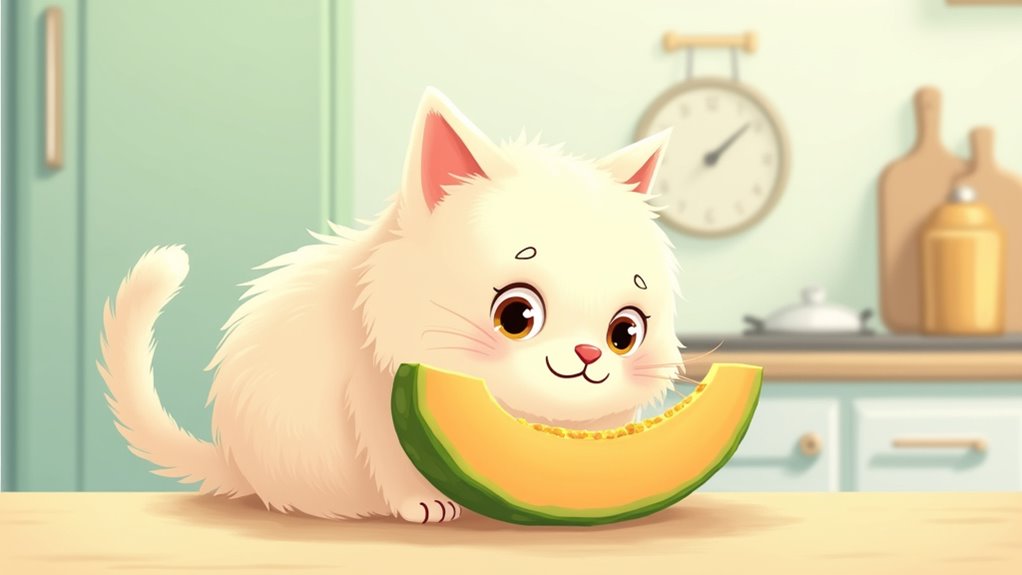
Cantaloupe is a great treat for your cat. It has over 90% water. This helps keep your cat hydrated.
Cantaloupe also contains antioxidants and vitamins. These nutrients can support your cat’s health. They’re good for eye health too. However, it’s important to remember that cats are obligate carnivores and primarily require meat in their diet.
Serve cantaloupe in small amounts. Too much can upset your cat’s stomach.
Always watch how your cat reacts to new foods. This fruit can be a fun snack, but moderation is key.
Enjoy feeding your furry friend this tasty fruit!
High Water Content
Cantaloupe is a juicy delight for cats. With about 90% water by weight, it helps keep your cat hydrated. This is important for kidney health and urinary tract function.
Cats usually drink less water. Adding cantaloupe to their diet can boost their water intake and help prevent dehydration.
One cup of cantaloupe has over 118 ml of water. That’s more than many other fruits. Serve cantaloupe fresh and cut into small, bite-sized pieces. Always remove seeds and rind first.
Too much cantaloupe can upset your cat’s stomach because of its sugar and fiber. Use it as a treat, not a daily food. Remember, cantaloupe shouldn’t replace fresh water.
Antioxidants and Vitamins
Cantaloupe isn’t just a delicious snack. It’s full of helpful antioxidants and vitamins for your cat. Antioxidants like carotenoids and flavonoids fight free radicals. These compounds can reduce cell damage and may slow down aging.
Cats can make their own vitamin C. Still, they can benefit from the vitamins in cantaloupe. It also has folate, which helps with cell function.
Eye Health Support
Keeping your cat hydrated is very important for their health, especially for their eyes. Cantaloupe is a great choice. It has about 90% water, which helps keep your cat hydrated. This hydration is good for kidney function and waste elimination.
Cantaloupe also has special nutrients like xanthophyll, lutein, and zeaxanthin. These protect your cat’s eyes from damage. Even though cats don’t convert beta-carotene well, these antioxidants help reduce cell harm.
For the best results, give your cat small pieces of cantaloupe. About 2-3 pieces the size of kibble once a week is perfect. This helps with hydration and supports eye health.
Always watch how your cat reacts and adjust the amount if needed. Your goal is their overall wellness.
Recommended Serving Guidelines

Treat your cat to cantaloupe safely by following these simple guidelines. Limit cantaloupe to small, occasional treats. Offer it about once a week. A good portion size is 1-2 small cubes, similar to kibble size.
Serving Frequency and Portion Size:
- Serving Frequency: Once a week.
- Portion Size: 1-2 small cubes per serving.
Always remove seeds and rind. These can cause choking or digestive problems. Cut the fruit into small, easy-to-eat pieces. Serve only fresh cantaloupe. Steer clear of any with added sugars or preservatives.
Before giving cantaloupe, check how your cat reacts. Watch for signs of upset stomach for at least 24 hours after the first serving.
Stop feeding it if any bad reactions happen. Following these steps helps ensure your cat enjoys cantaloupe safely and healthily.
Potential Risks and Precautions
Cantaloupe can be a tasty treat for your cat. But there are risks to consider. The tough rind and seeds can cause choking. Always remove these parts before feeding. Cut the fruit into small, easy-to-eat pieces.
Watch your cat after they eat. Some cats may have allergic reactions. Others might get an upset stomach. Keep an eye on their behavior. If they seem unwell, contact your vet.
Cantaloupe is safe in small amounts. Many cats enjoy its sweet taste. Just be careful and make sure it’s prepared properly. A little caution goes a long way in keeping your cat safe.
Choking Hazards
Many cat owners may not know that cantaloupe can be dangerous for their pets. Cantaloupe seeds are small and hard. They can block a cat’s throat or intestines if swallowed whole. Always remove seeds and tough rind before giving cantaloupe to your cat. Cut the fruit into tiny, kibble-sized pieces. This helps reduce the risk of choking.
Prevention Strategies:
- Avoid giving whole melons. Large slices can be risky.
- Offer only a few small pieces at a time.
- Watch your cat closely. Look for signs of discomfort or trouble swallowing.
Keeping your cat safe is important. Follow these tips to enjoy treats together without worry.
Allergic Reactions
Cats can have allergic reactions to many foods, including cantaloupe. Allergies to fruits aren’t very common, but caution is important. Symptoms may include itching, redness, or swelling on the skin.
You might also see your cat having stomach issues like vomiting or diarrhea.
Watch your cat closely after giving cantaloupe. Look for signs like swelling around the mouth or face. Serious reactions are rare, but they can happen. Anaphylaxis is one serious condition that can occur.
To keep your cat safe, try these tips:
- Introduce new foods slowly.
- Observe your cat after feeding cantaloupe.
- Talk to your vet if you see any allergic symptoms.
Stay alert to protect your furry friend!
Digestive Upset
Cantaloupe can upset your cat’s stomach. Cats are meat eaters, and their bodies don’t handle high-fiber foods well. The fiber in cantaloupe may cause diarrhea or soft stools.
Cats with fiber sensitivity may have more trouble if they eat cantaloupe too fast.
To keep your cat safe, follow these tips:
- Start Small: Give only 2-3 tiny pieces once a week.
- Watch Closely: Look for signs of stomach problems, like vomiting or tiredness, for 24 hours after feeding.
- Talk to Your Vet: This is important for cats with diabetes or sensitive stomachs.
Always keep your cat’s health and comfort as a priority!
Cat Behavior and Preference
Cats often show a surprising interest in cantaloupe. The sweet aroma can remind them of meat. Even though cats are meat-eaters, their curiosity leads them to explore this fruit.
You might see your cat pawing at, nibbling, or even carrying pieces of cantaloupe. This playful behavior shows their natural hunting instincts. Enjoy this fun interaction, but stay safe!
Always remove the rind and seeds. This helps prevent choking. Offer small, bite-sized pieces to avoid stomach issues.
Introduce cantaloupe slowly. Watch for any bad reactions. Enjoy sharing this unique treat with your furry friend!
Veterinary and Nutritional Perspectives
Understanding how to safely feed cantaloupe to your cat is important for their health. Cantaloupe is safe and non-toxic. Still, moderation matters. Here’s what to keep in mind:
Safety Guidelines
- Remove Rind and Seeds: These can cause choking or blockages in the stomach.
- Watch for Health Issues: Cats with diabetes or tummy troubles shouldn’t eat cantaloupe.
Nutritional Benefits
- Hydration Help: Cantaloupe has over 90% water, keeping your cat hydrated.
- Vitamins and Fiber: It contains vitamins A and C. But too much fiber can upset their stomach.
Recommended Practices
- Serve Small Portions: Give only 2-3 tiny pieces, about the size of a kibble.
- Limit Frequency: Offer it only once a week to avoid tummy issues.
Consider Alternatives
If cantaloupe isn’t right for your cat, try safer options. Cooked pumpkin or small bits of meat are better choices.
Always ask your vet before adding new foods to your cat’s diet! Additionally, while cats can occasionally eat fruits, it’s essential to ensure that treats do not dominate their diet.
Frequently Asked Questions
Can Kittens Eat Cantaloupe Safely?
Kittens can safely eat cantaloupe in small amounts. This tasty fruit offers hydration and some vitamins. It’s a fun treat for your furry friend. Always watch how your kitten reacts. Limit the amount to keep their nutrition balanced. Too much sugar isn’t good for them. Remember, treats should not replace their regular food. Enjoy feeding your kitten this sweet treat!
How Should Cantaloupe Be Prepared for Cats?
Cantaloupe should be prepared carefully for your cat. Remove the rind and seeds completely. Cut the fruit into small, bite-sized pieces. Only serve fresh cantaloupe as a special treat. This snack is healthy and can be fun for your cat. Remember, moderation is key. Too much fruit can upset their stomach. Always watch your cat’s reaction to new foods. Enjoy sharing this tasty treat with your furry friend!
Are There Any Specific Cat Breeds That Like Cantaloupe?
No cat breeds are known to love cantaloupe more than others. Each cat has its own likes and dislikes. Some cats might enjoy the smell of cantaloupe. Others may not care for it at all. It’s all about the individual cat. So, don’t worry about breed. Just see what your cat thinks!
Can Cantaloupe Help With a Cat’s Hydration?
Cantaloupe can boost your cat’s hydration. This juicy fruit helps provide extra moisture. Cats often enjoy its sweet taste. It’s a great choice for picky drinkers. Just serve it in small amounts. Too much can upset their tummy. Always watch your cat’s reaction. Hydration is key for their health. Consider offering cantaloupe as a fun treat. It’s safe and refreshing for your furry friend.
What Should I Do if My Cat Refuses Cantaloupe?
Cats can be picky eaters. If your cat won’t eat cantaloupe, that’s okay! Every cat has its own tastes. Respect what your cat likes.
Try offering different fruits like blueberries. They are safe and tasty for cats. You can also give safe veggies like cooked carrots or peas.
Keep your cat’s treats interesting. Change things up to entice its appetite. Remember, it’s all about finding what your cat enjoys!
Conclusion
Cats can eat cantaloupe safely in small amounts. Start with a one-inch piece as a treat. Always remove the seeds and rind. These parts can be choking hazards. Monitor your cat’s reaction to the fruit. Look for any signs of upset stomach. If any digestive issues happen, talk to your vet. This simple approach helps keep your cat happy and healthy. A little caution can make a big difference!
