
Can Cat Eat Cheese
This post contains affiliate links. As an Amazon Associate, we earn from qualifying purchases.
Cats can eat cheese, but it is not recommended due to their lactose intolerance. Most adult cats have difficulty digesting lactose, which can result in digestive issues like diarrhea, gas, and vomiting. Additionally, cheese is high in fat and salt, posing risks for obesity and kidney problems. If you choose to give cheese, opt for small amounts of low-lactose options like cottage cheese. However, it’s best to stick with cat-specific treats for a healthier choice. Further details and explanations will follow for those interested in a deeper understanding of this topic.
Essential Facts in 30 Seconds
- Most adult cats are lactose intolerant, which can cause digestive issues with cheese.
- Cheese may lead to vomiting, diarrhea, and bloating due to its high lactose content.
- Although cheese is rich in protein and calcium, it is not a suitable main food for cats.
- Small amounts of low-lactose cheese, such as cottage cheese, can be given occasionally.
- It’s better to choose cat-specific treats over cheese for a healthier diet.
Understanding Lactose Intolerance in Cats
Cats often struggle with lactose intolerance. Kittens produce lactase, an enzyme that helps digest lactose in their mother’s milk. This production drops significantly after weaning, around 8 to 10 weeks old. By one year, most cats make little to no lactase. This makes it hard for them to digest dairy products like cheese.
If a cat eats cheese, lactose may not be digested properly. This can lead to diarrhea, as undigested lactose draws water into the intestines. Symptoms usually show up within 8 to 12 hours. Common signs include:
- Watery diarrhea
- Excess gas and bloating
- Vomiting
- Abdominal pain
Long-term lactose exposure harms a cat’s digestive health. Some cats might handle small amounts of dairy, but it’s safer to avoid cheese. This helps prevent stomach problems. Most adult cats are lactose intolerant, making dairy consumption risky for their digestive system. Additionally, cheddar cheese is not a staple in a cat’s diet, which further emphasizes the importance of moderation.
Always ask your vet for advice specific to your cat.
Nutritional Suitability of Cheese for Cats

Cheese might seem like a fun treat for your cat. But it’s important to know what it means for their health.
Cheese has some benefits. It offers protein and calcium. Yet, it’s not the best choice for your feline friend. A slice of cheddar cheese, about 28 grams, has around 113 calories. That can be more than 10% of your cat’s daily calorie needs.
Instead of cheese, try these tasty options:
- Meat-based treats: These provide high-quality protein. They’re great for your cat’s diet.
- Fish: Fish is full of protein and omega-3 fatty acids. It’s a healthy choice.
- Commercial cat treats: These are made to meet your cat’s nutritional needs without extra calories.
Use cheese sparingly. It should be a rare treat. Keep an eye on your cat’s weight and health. A balanced diet is key to keeping your cat happy and healthy.
Health Risks Associated With Cheese Consumption
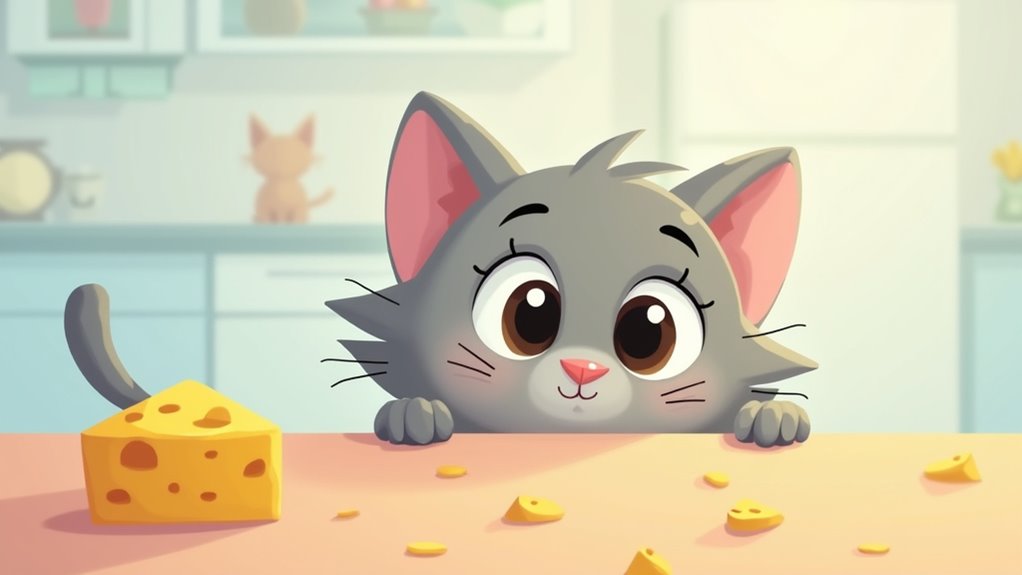
Giving your cat cheese can lead to health problems. Most adult cats can’t digest lactose well. Eating cheese might cause vomiting, diarrhea, or bloating. These issues can start 8 to 12 hours after they eat dairy.
Cheese also has a lot of fat and salt. Too much fat can make your cat overweight. This can cause diabetes or joint pain. High salt can harm your cat’s kidneys and lead to salt poisoning.
Some cats may even have allergies to cheese. This can cause itchy skin or hair loss. Additionally, many cats are lactose intolerant, which means they lack the enzyme needed to digest lactose properly.
To keep your cat healthy, it’s best to avoid cheese. Offer treats made for cats instead. This helps keep their diet balanced and nutritious. A healthy cat is a happy cat!
Types of Cheese and Their Safety for Cats
Many cat owners want to know which cheeses are safe for their cats. Understanding different types of cheese helps you make better choices for your pet.
Cheddar Cheese is low in lactose. Most cats can digest it easily. Use it carefully since it can be high in salt.
Gouda and Swiss Cheese are safe in small amounts. Gouda is soft, and Swiss has less fat. They make good occasional treats.
Cottage Cheese is low in lactose and high in protein. It’s one of the best choices for cats when given in moderation.
Feta and Parmesan Cheese should be given only a little. They’ve more fat and salt, which can be unhealthy.
Cheeses to Avoid: Blue cheese, processed cheeses, and cheeses with spices can harm cats.
Watch how your cat reacts to different cheeses. Adjust based on their preferences.
Feeding Recommendations for Cheese in Cat Diets
Feeding cheese to your cat can be fun, but do it carefully. Cheese is a treat, not a main food. Here are some important tips:
- Give small amounts of cheese, like a piece the size of a die or smaller.
- Watch for signs of lactose intolerance. Look for diarrhea or vomiting.
- Stay away from processed and moldy cheeses. These can be harmful to cats.
- Use cheese sparingly. It can help hide pills or be a special reward.
- Consider cat-specific treats instead. These are healthier and made for your pet.
- Remember that many cats are lactose intolerant and may not digest dairy properly.
Keep these tips in mind to keep your cat happy and healthy!
Frequently Asked Questions
Can Cheese Help With a Cat’s Dental Health?
Cheese can be good for your cat’s dental health. It helps improve enamel and can reduce plaque. Remember to use cheese sparingly. It should be part of a complete dental care routine. Regular brushing and dental treats are also important. Always consult your vet for the best advice on your cat’s dental care. Keeping your cat’s teeth healthy is key to their overall health.
What Are Some Safe Cheese Alternatives for Cats?
Don’t put all your eggs in one basket. Cheese isn’t the best choice for your cat. Instead, pick safe dairy options like low-fat cottage cheese. You can also try special cat treats made just for them. Remember, cheese doesn’t give your cat important nutrients. Focus on what keeps them healthy and happy. Your cat will love tasty treats made for their needs.
Do All Cats Dislike Cheese?
Not all cats dislike cheese. Some cats may actually enjoy it. They might like the texture or the smell. Other cats may ignore cheese entirely. Some might even find it unappealing. Each cat has its own taste. It’s important to know your cat’s preferences. Experiment with small pieces of cheese. Watch their reactions. This way, you can see if they like it or not. Always remember, moderation is key. Too much cheese can upset a cat’s stomach.
Can I Use Cheese as a Training Treat?
Cheese can be a great training treat for your cat. Use it in small amounts. Try different cheese flavors to see what your cat likes best. Always give tiny pieces to avoid stomach issues. Keep an eye on how your cat reacts to the cheese. This helps make training fun and effective. Remember, treats should not replace regular meals. Use them to reward good behavior. With patience and the right treats, your cat will learn quickly.
How Can I Tell if My Cat Likes Cheese?
To see if your cat likes cheese, watch its behavior closely. Excited movements, like jumping or running, show interest. Sniffing the cheese a lot is another good sign. If your cat starts to eat it quickly, that’s a positive response.
Look for signs of affection, too. If your cat rubs against you or meows, it probably enjoys the cheese. Always keep an eye out for negative reactions. If your cat refuses to eat or shows discomfort, cheese may not be a good treat for them.
Conclusion
Cats often beg for cheese, but it’s not good for them. Many cats are lactose intolerant. This means they can’t digest dairy well. Giving cheese can upset their stomachs. It might lead to diarrhea or vomiting.
Cats need special food made just for them. Treats designed for cats are safer and healthier. These treats help keep your cat happy and healthy. So, stick to cat-friendly snacks. Your furry friend will thank you!
