
What Kind of Human Food Can Cat Eat
This post contains affiliate links. As an Amazon Associate, we earn from qualifying purchases.
Cats can safely enjoy small portions of cooked chicken, turkey, or lean beef as well as certain vegetables like carrots, green beans, and peas. You can also offer a few small slices of apple or banana as treats. However, it’s crucial to avoid harmful foods such as chocolate, onions, and grapes. Always introduce new foods gradually. For those interested in a deeper understanding of feline nutrition and safe food options, further details will follow.
Essential Facts in 30 Seconds
- Cooked chicken and turkey are good lean protein sources for cats.
- Safe vegetables include carrots and green beans for added nutrients.
- Occasional treats can include fruits like apples and blueberries.
- Avoid toxic foods such as chocolate, onions, and grapes.
- Introduce new foods slowly and consult a vet for dietary issues.
Safe Protein Sources for Cats
Varying protein sources helps meet all your cat’s nutrient needs. Raw chicken can also be a safe protein source if handled carefully. Additionally, it’s important to note that raw beef should be introduced cautiously due to potential health risks. Talk to your vet for advice, especially if your cat has health issues.
Avoid additives and keep an eye out for digestive problems. Your cat’s health is important!
Vegetables That Cats Can Enjoy
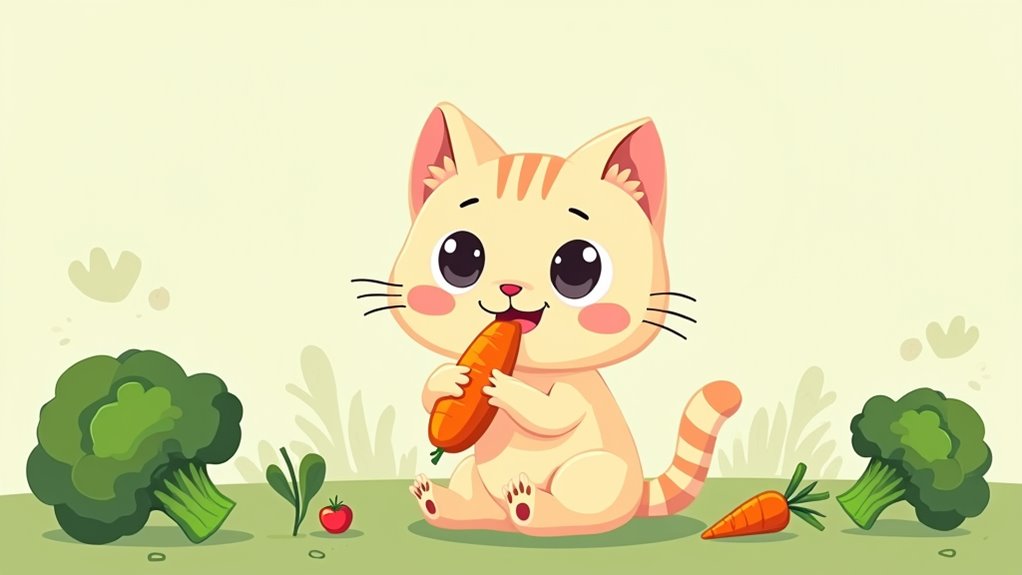
Cats can eat many vegetables. Knowing which ones are safe is important. Here’s a list of some veggies that cats can enjoy and their benefits:
| Vegetable | Benefits |
|---|---|
| Carrots | High in beta carotene; helps eye health |
| Cucumber | Rich in vitamins C and K; keeps cats hydrated |
| Celery | Low in calories; helps with digestion |
| Green Beans | Contains protein and fiber; low in calories |
| Lettuce | High in water; great for hydration |
Preparation Tips:
- Cook vegetables by steaming or boiling. This makes them easier to digest.
- Peel skins that are tough and chop veggies into small pieces.
- Don’t add salt or seasoning. This keeps the veggies healthy for your cat.
Additionally, it’s important to remember that some vegetables should be avoided to ensure your cat’s safety. These simple steps can help your cat enjoy tasty veggies safely. Furthermore, introducing safe vegetables gradually can help monitor your cat’s reactions to new foods.
Fruits for Cats: Occasional Treats
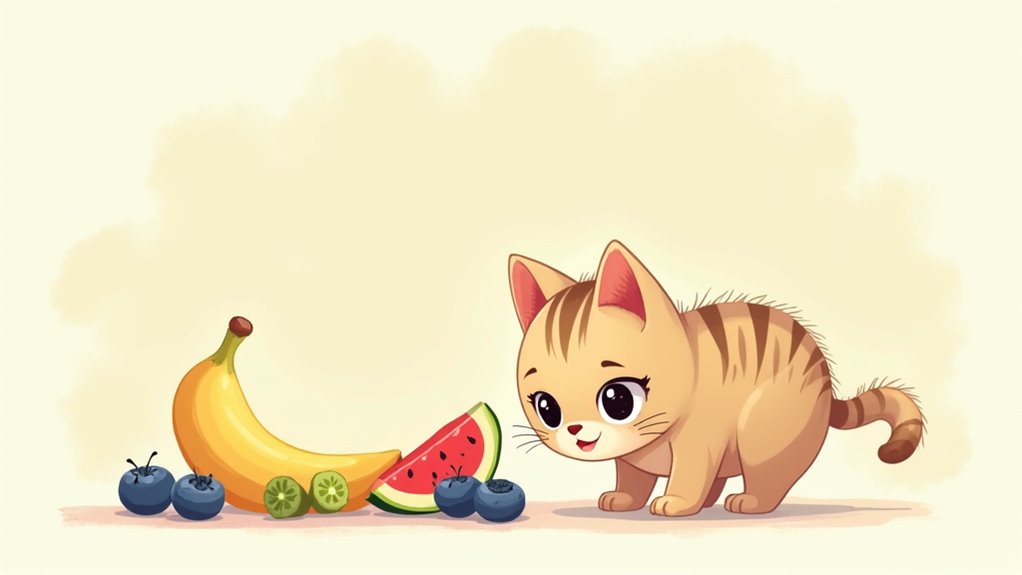
Safe Fruits for Cats
- Apples: Remove the seeds and stems. Offer 1-2 small slices.
- Bananas: Give 1-2 slices. They contain sugar, so keep it low.
- Mangoes: Only give the flesh. Avoid the peel and pit.
- Berries: Blueberries and blackberries are good in small amounts.
- Strawberries: Fresh or frozen is fine, just serve a little.
Seasonal Fruit Choices
- Pears: Take off the peel and seeds. Serve tiny pieces.
- Cantaloupe and Watermelon: Great options for hydration!
Cut fruits into small pieces. Watch your cat for any bad reactions. Cats can eat apples in small amounts as an occasional treat.
Foods to Avoid or Limit for Cats
Cats need a safe diet to stay healthy.
Avoid giving your cat raw eggs. They can carry Salmonella, which is dangerous.
Onions and garlic are also harmful. Garlic powder is toxic and can lead to serious health issues for cats. Ingesting onions can cause hemolytic anemia, a condition that affects red blood cells and may take days to manifest.
Chocolate is toxic and can make your cat very sick.
Keep sugary foods away from your cat. These can lead to weight gain and diabetes.
Always choose safe and healthy options for your feline friend.
Keeping your cat safe starts with knowing what foods to avoid. A healthy cat is a happy cat!
Raw Eggs Risks
Raw eggs can be very dangerous for your cat. They can carry harmful bacteria like Salmonella and E. coli. These germs can cause serious infections. Symptoms include vomiting, diarrhea, and tiredness. Kittens and older cats are at higher risk.
Raw egg whites have avidin, which can lead to biotin deficiency. This can cause skin problems and make your cat irritable. Cooking eggs kills avidin, making them safe to eat. Cooking eggs is essential for ensuring your cat’s health and safety.
Cooked eggs can be a tasty treat for your cat. Just remember, eggs should only be about 10% of their daily calories. Moderation in dietary treats is key to preventing potential health issues.
Always watch your cat for any bad reactions after trying new foods. If you notice any strange symptoms, talk to your vet.
Toxic Foods List
Cats are sensitive to many human foods. Some foods are very dangerous for them. Keep your cat safe by avoiding these toxic foods:
Toxic Foods to Avoid
- Alcohol: Even a small amount can cause serious harm, like a coma.
- Caffeine: Found in coffee and chocolate. It can make cats restless and can be deadly.
- Allium Plants: Onions and garlic hurt red blood cells. Just a little can be harmful, leading to hemolytic anemia, which is a serious condition.
- Toxic Fruits: Grapes, raisins, and citrus fruits upset their stomachs and cause distress.
- Fatty Foods: Fat trimmings can lead to pancreatitis, causing vomiting and pain.
Always read labels. Your cat’s health depends on it!
High Sugar Concerns
High sugar intake can be very harmful to your cat. Cats need a diet that’s mostly meat. Sugary foods can cause serious health problems. This is especially true for cats with diabetes.
To keep your cat safe, avoid giving them:
- Bread, pasta, and cereals. These foods have too many carbs and sugars.
- Candy and gum. They contain refined sugars and dangerous xylitol.
- Sweet spreads like peanut butter and ketchup. These often have added sugars.
- Pastries and desserts. They can overload your cat with carbohydrates.
Keep your cat healthy by sticking to their natural diet. Feed them meat-based foods and fresh water. This will help them live a longer, happier life.
Nutritional Considerations When Feeding Human Food
Adding human food to your cat’s diet can be risky. Sharing meals may seem innocent, but it can cause serious health problems. Here are three important points to remember:
- Toxic Foods: Certain foods can be deadly for cats. Chocolate and onions are just two examples. Keep these away from your furry friend.
- Nutrient Imbalance: Some foods, like liver, can be harmful in large amounts. Overfeeding can lead to vitamin toxicity. This is dangerous for your cat’s health.
- Portion Control: Treats should only make up 10% of your cat’s daily calories. This helps keep their diet balanced.
Safety comes first when feeding human food. Watch for any allergies and introduce new foods slowly. Keep portions small.
Your cat needs their regular diet for important nutrients. What’s safe for you mightn’t be safe for your cat. Always do your research before sharing your food!
Health Benefits of Certain Human Foods for Cats
Including some human foods in your cat’s diet can bring health benefits. Here are some options that can help your cat feel better:
Antioxidant Benefits
- Blueberries: These little fruits are full of antioxidants. They help your cat’s cells stay healthy and boost their immune system.
- Strawberries: Packed with vitamin C, strawberries can help reduce inflammation.
- Peeled Apple Slices: Apples give fiber but make sure to remove the seeds.
Fiber Sources
- Pumpkin: Pumpkin is great for digestion. It can help with both constipation and diarrhea.
- Cooked Green Beans: Low in calories, green beans help with digestion and keep minerals balanced.
Healthy Proteins
– Unseasoned Chicken or Turkey: These lean meats are easy to digest. They provide important amino acids for your cat.
Hydration and Vitamins
– Seedless Watermelon: Watermelon keeps your cat hydrated and provides vitamins A and C.
Introduce new foods slowly to your cat.
Always check with your vet for the best advice. A balanced diet is key for a healthy, happy cat!
Frequently Asked Questions
Can Cats Eat Human Food Every Day?
Feeding your cat human food every day is not a good idea. It’s best to give treats only sometimes. Cats need a balanced diet to stay healthy. Human food can upset their nutrition. Too much human food can lead to health problems. Stick to cat food to make sure they get the right nutrients. Treats should be small and rare. Keep your cat’s health as a top priority. A happy cat means a healthy cat!
How Can I Introduce Human Food to My Cat?
Introducing human food to your cat can be fun and safe. Start with small amounts of one food item. Good choices include cooked chicken, plain rice, or small pieces of carrots. Watch how your cat reacts to each food. Some cats may love certain foods while others may not care for them.
Treats should be given only a few times a week. Too many can upset their stomach. After introducing each new food, wait a day or two. Look for any signs of allergies or discomfort. Common signs include vomiting or diarrhea.
Take your time. Gradually add new foods to their diet. This helps your cat adjust and find what they enjoy. Always keep their main diet balanced with cat food. Human food should not replace their main meals. Use it as a fun treat instead. Enjoy sharing new tastes with your furry friend!
Are There Any Safe Snacks for Overweight Cats?
Over 50% of cats are overweight. Keeping them healthy is important. Choose lean meats like chicken or turkey as snacks. Steamed veggies like carrots or green beans are also great. Small pieces of fruit, like blueberries or watermelon, can be a tasty treat. Always watch portion sizes. This helps your cat stay at a healthy weight. Healthy snacks can make a big difference in your cat’s life. Enjoy treating your furry friend!
What Are Signs of Digestive Upset in Cats?
Cats can show signs of digestive upset in different ways. Watch for vomiting or diarrhea. A decreased appetite is another sign to notice. Lethargy can also indicate problems. Changes in behavior matter too. Cats may hide or act irritable when they feel unwell. These signs often point to digestive issues. Keep an eye on your cat. Early detection can help. If you notice any of these signs, consult a vet. Your cat’s health is important.
Can Human Food Help With My Cat’s Allergies?
Human food does not help with cat allergies. Most human food isn’t made for cats. Cats have special dietary needs. Some safe ingredients from vet-approved diets can help manage allergies well. Always check with your vet before adding new foods to your cat’s diet. They can guide you on what is safe and effective.
Conclusion
Adding safe human foods to your cat’s diet can enhance their meals. It makes their eating experience better. Always be cautious. Too many treats can upset their stomach or cause health problems. Consult your vet before giving new foods.
Some safe options include cooked chicken, turkey, and fish. Plain rice and small amounts of cooked vegetables can also be good. Avoid foods like onions, garlic, chocolate, and grapes. These can be harmful.
Stick to small portions. Treats should not make up more than 10% of their daily diet. With care, you can improve your cat’s diet and keep them healthy. A happy cat means a happy home!
