
Can Cat Eat Cheesecake
This post contains affiliate links. As an Amazon Associate, we earn from qualifying purchases.
Cats should not eat cheesecake due to its high dairy and sugar content, which can cause digestive issues and increase the risk of obesity and diabetes. For those interested in a deeper understanding, further explanation and supporting details will follow. Ingredients like chocolate or xylitol found in some cheesecakes can also be toxic to cats. Instead of dessert, safe treats like plain cooked chicken or freeze-dried meats are recommended.
Essential Facts in 30 Seconds
- Cats should not eat cheesecake due to high dairy content, which may cause digestive issues.
- Most adult cats are lactose intolerant, making cheesecake risky for their health.
- Cheesecake’s high sugar and calorie content can lead to obesity and other health problems.
- Some cheesecakes may contain toxic ingredients like chocolate or xylitol, which are harmful to cats.
- Safe treat alternatives for cats include plain cooked meats or single-protein meat treats.
The Risks of Cheesecake for Cats
Treating your cat with cheesecake can be risky. Cheesecake has a lot of dairy. Many cats can’t digest dairy well. Most adult cats make very little lactase. Lactase is the enzyme that helps digest lactose. This means your cat may feel sick after eating cheesecake.
Signs of lactose intolerance include vomiting, diarrhea, and gas. These symptoms can show up 8 to 12 hours after eating. Some cats might handle small amounts of dairy better. Still, cheesecake has a lot of rich dairy. This raises the chance of a tummy upset. Additionally, the sugar content in cheesecake can lead to obesity and other health issues in cats. Furthermore, most adult cats are lactose intolerant, which increases the likelihood of digestive problems after consuming dairy products like cheesecake.
If your cat eats cheesecake often or in big amounts, the problems could get worse. You might need to visit the vet for help. Always be careful when sharing treats with your pet.
Nutritional Needs of Cats
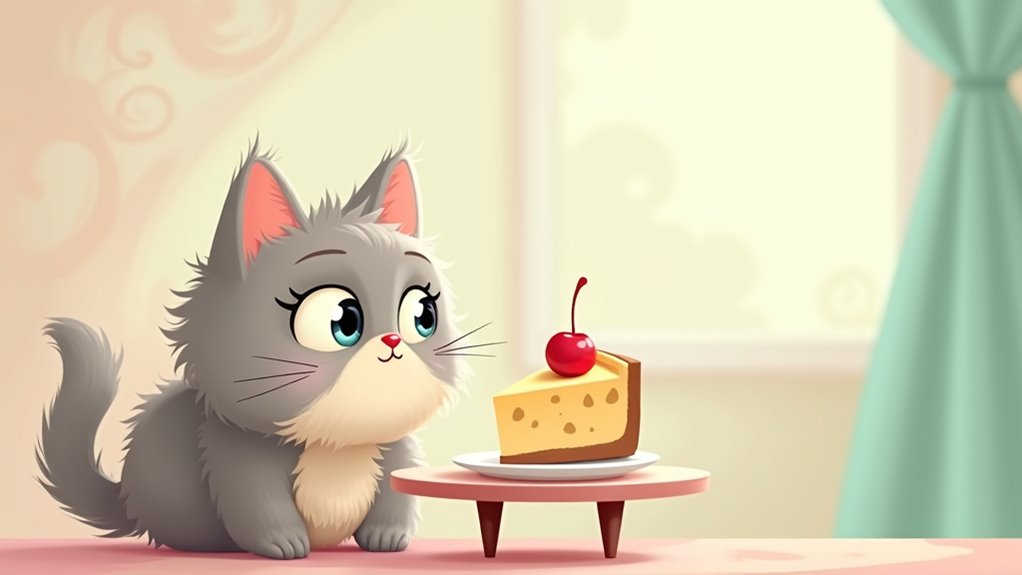
Understanding your cat’s nutrition is key for their health. Cats need about 41 important nutrients. Most of these come from animal sources. Essential nutrients include amino acids, like taurine, which is vital for heart and eye health. Additionally, cats thrive on high levels of animal protein, which are crucial for their energy requirements.
Cats also need preformed vitamin A because they can’t turn plant-based beta-carotene into usable vitamin A.
Cats are obligate carnivores. They require high levels of animal protein for energy and muscle. Their short digestive systems make it hard to break down plant proteins.
Fats are also important. They provide energy and help with cell structure. Cats need specific fatty acids, such as omega-6 and omega-3, from their food.
Different life stages mean different dietary needs. Kittens and older cats need different nutrients. Always give your cat fresh water. Additionally, it’s crucial to avoid known toxic foods that can harm your cat’s health.
Consult your vet for personalized advice. An unbalanced diet can cause obesity and other health problems. Focus on proper nutrition instead of treats like cheesecake.
Ingredients That Can Harm Cats
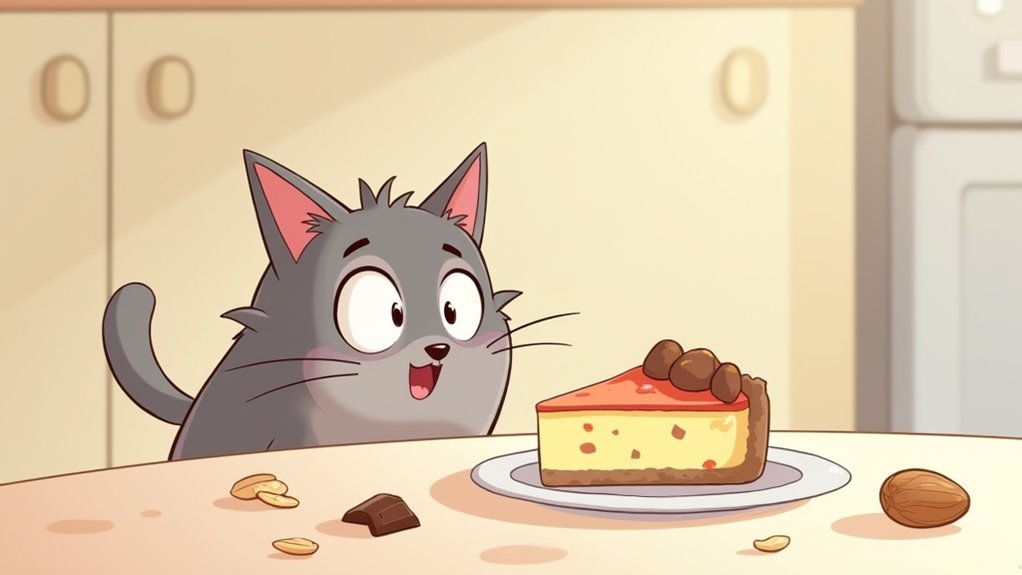
Cheesecake might seem harmless, but it can be risky for cats. Several ingredients in cheesecake can harm them. Here are the main ones to watch out for:
- Onions and garlic: These can hurt red blood cells. They may cause anemia, even in small amounts, due to thiosulfates found in onions.
- Chocolate: It has substances like theobromine and caffeine. Both are toxic to cats.
- Dairy products: Many cats can’t digest lactose. This can upset their stomach.
- Raw eggs or meat: These can lead to salmonella or E. coli infections.
- Fruit seeds or pits: They may contain cyanogenic glycosides, which can release cyanide.
Garlic powder, like other members of the Allium family, is toxic to cats and should always be avoided. Signs of poisoning include vomiting and lethargy. Always contact your vet for help if your cat eats these harmful ingredients.
Keep cheesecake and similar treats out of your cat’s reach for their safety.
Health Issues Related to Cheesecake Consumption
Cheesecake can be harmful to your cat. Its ingredients can lead to serious health issues. Here are some key points to consider:
- Lactose Intolerance: Many cats struggle with dairy. This can cause vomiting or diarrhea.
- Obesity Risks: Cheesecake is very high in calories. Weight gain can lead to other health problems.
- Digestive Upset: Processed sugars in cheesecake can upset your cat’s stomach.
- Toxic Ingredients: Some cheesecakes contain chocolate or xylitol, which are dangerous for cats.
- Long-term Effects: Eating cheesecake regularly can cause chronic health issues like diabetes.
Cats are obligate carnivores, meaning their diet should primarily consist of meat, making treats like cheesecake unsuitable.
Watch for signs like bloating or diarrhea after your cat eats cheesecake. If these symptoms happen, check with your vet.
Keeping cheesecake away from your cat is the best way to keep them healthy and happy.
Safe Treat Alternatives for Cats
Keeping your cat happy and healthy means knowing which treats are safe. Instead of cheesecake, try these tasty and nutritious options.
Natural Treats:
- Single-protein meat treats: Chicken, tuna, or beef are excellent choices. They lower allergy risks.
- Plain cooked meats: Small bits of unseasoned turkey or chicken are safe and tasty. Cats thrive on a meat-based diet to meet their nutritional needs.
Dental and Hydration Treats:
- Freeze-dried or dehydrated meats: These snacks keep important nutrients and are easy to store.
- Dental treats: Crunchy treats can help reduce plaque buildup.
Safe Human Foods:
- Cooked eggs or fish: These provide protein and are safe in small amounts.
- Fruits like raspberries: They offer antioxidants but should be given only sometimes.
Cottage cheese can also be a safe and nutritious occasional treat for cats if given in moderation.
Choose these treats to keep your cat healthy and happy!
Frequently Asked Questions
Can Cheesecake Cause Allergies in Cats?
Cheesecake can cause allergies in cats. Its ingredients like dairy, eggs, and sugar may upset your cat’s stomach. Cats often have sensitivities to these foods. Symptoms can include itching, upset stomach, or skin infections. It’s best to keep cheesecake away from your cat. Stick to cat food that is safe and healthy for them. Your cat will thank you for it!
What Should I Do if My Cat Eats Cheesecake?
Your cat eating cheesecake can be concerning. Watch for any signs of discomfort. Look for symptoms like vomiting or diarrhea. Some cheesecake ingredients can be harmful to cats. Cream cheese and sugar are not good for them. Keep your cat hydrated with fresh water. If your cat shows any bad signs, contact a vet right away. It’s always better to be safe.
Are There Any Safe Cheesecake Recipes for Cats?
Make a tasty treat for your cat using plain Greek yogurt and pumpkin. These ingredients are safe for cats and create a delicious cheesecake alternative. Your kitty will love this healthy dessert. It’s easy to prepare and packed with flavor. No harmful effects to worry about! Enjoy making this simple recipe for your furry friend.
How Do I Know if My Cat Is Lactose Intolerant?
To know if your cat is lactose intolerant, watch for signs. Diarrhea, vomiting, or bloating after eating dairy are common symptoms. These reactions show that your cat’s stomach struggles with lactose. It’s best to keep dairy away from your cat. Instead, offer safe treats made for cats. This keeps your pet happy and healthy. Always pay attention to their reactions after meals. Your cat’s health is important, so avoid dairy products altogether.
Can Occasional Cheesecake Be Harmless for Cats?
Cheesecake may look delicious, but it’s not safe for cats. This dessert has many ingredients that can harm your feline friend. Dairy, sugar, and certain toppings can upset their stomachs. Cats are not made to digest these foods.
Even a small bite can lead to health issues. Common problems include vomiting, diarrhea, or even more serious conditions. It’s best to avoid sharing cheesecake with your cat.
Focus on giving them healthy treats made just for them. These options keep your cat happy and healthy. Always put their well-being first. Skip the cheesecake, and choose safer snacks for your furry companion!
Conclusion
Sharing cheesecake with your cat might seem fun, but it’s not safe. Cheesecake isn’t made for cats. It can cause stomach problems or even pancreatitis. These health issues can make your cat very sick.
Instead of cheesecake, give your cat safe treats. Small pieces of cooked chicken are a great option. You can also find special cat treats at the store. Always think about your cat’s health first. If you’re unsure about what to feed your pet, ask your vet for advice. Keeping your cat healthy is the best choice.
