
Can Cat Eat Fish Everyday
This post contains affiliate links. As an Amazon Associate, we earn from qualifying purchases.
Feeding your cat fish every day is not recommended due to potential health issues. While fish offers protein and omega-3 fatty acids, it can create nutritional imbalances and expose your cat to heavy metals. Excessive fish consumption may lead to high phosphorus levels, which can cause urinary tract problems. Instead, fish should be given as an occasional treat, cooked without seasoning. It’s essential to provide a balanced diet with other protein sources to meet all their nutritional needs. For those interested in more details about safe fish options and feeding guidelines, further information will be provided later in the article.
Essential Facts in 30 Seconds
- Cats should not eat fish daily due to nutritional imbalances, such as low calcium and high phosphorus levels.
- Daily fish consumption poses risks due to potential heavy metal contamination, which can affect kidney health.
- Regular fish feeding may cause allergies and skin issues in cats, so it should be given in moderation.
- Fish should be an occasional treat, not a dietary staple, to ensure a balanced diet.
- Consult a veterinarian for recommendations on fish types and feeding frequency for optimal cat health.
Nutritional Benefits of Fish for Cats
Fish can be a great addition to your cat’s diet. It offers many nutritional benefits, but moderation is important. Fish contains Omega-3 fatty acids like EPA and DHA. Cats can’t make these nutrients themselves. Omega-3s help with digestion, reduce inflammation, and support heart and joint health. Additionally, too much fish can lead to nutritional imbalances over time.
Fish also provides high-quality protein. This helps with muscle growth and tissue repair. Both kittens and adult cats can benefit. Fat-soluble vitamins, such as vitamin D, are good for bones. B vitamins help with energy and nervous system health. A varied diet is necessary to meet all nutritional needs, as fish alone cannot provide all essential nutrients for cats.
To get the most from fish, follow these tips:
- Choose oily, cold-water fish like salmon or cod. They’ve the most Omega-3s.
- Limit fish to 2-3 times a week. Too much can cause nutrient imbalances.
- Prepare fish safely. Avoid harmful seasonings or additives.
With the right portions, fish can boost your cat’s health. It helps keep them happy and strong.
Risks and Dangers of Feeding Fish Daily to Cats
Feeding your cat fish every day can seem appealing. Yet, it can cause serious health issues. Here’s a quick look at the main dangers of a fish-heavy diet for your cat:
| Health Risk | Description | Symptoms |
|---|---|---|
| Nutritional Imbalances | Fish can lead to low calcium and high phosphorus. This disrupts bone and kidney health. | Weak bones, kidney problems |
| Heavy Metal Contamination | Fish may contain mercury and arsenic, which can harm kidneys. | Lethargy, vomiting |
| Fish Allergies | Fish is a common allergen for cats. It can cause skin problems. | Itching, hair loss |
| Urinary Tract Disorders | High magnesium and phosphorus can raise the risk of infections. | Painful urination, blood in urine |
Long-term feeding of fish can lead to vitamin deficiencies. Certain fish may also cause thiamine deficiencies in cats. Cats may also become sensitive to fish proteins. Be careful. Regular fish meals are not safe for many cats, especially those with allergies. Always consult your vet for the best diet for your cat. Additionally, excessive fish intake may lead to health risks due to mercury accumulation in cats.
Fish Types and Preparation Considerations
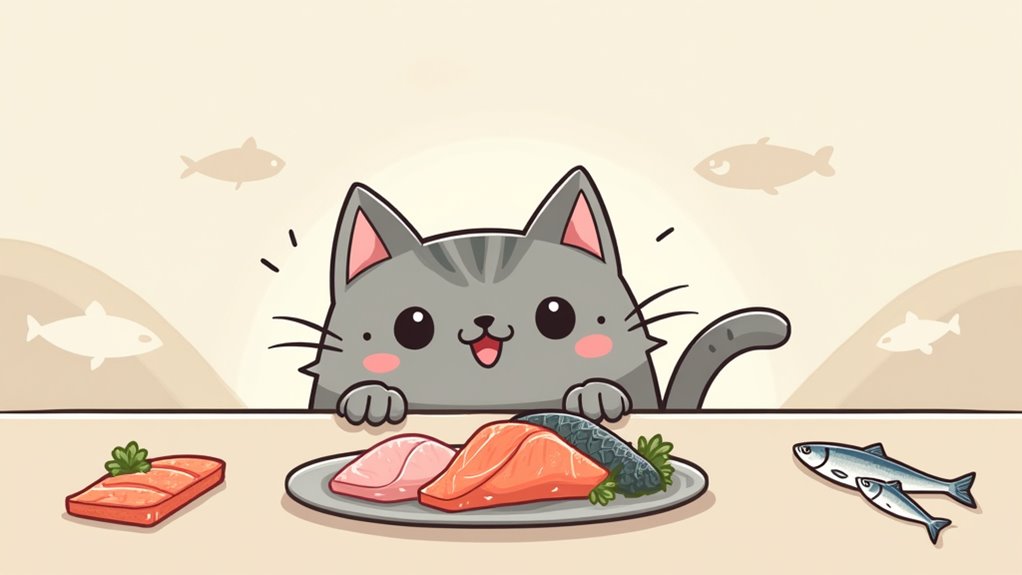
Tuna (light canned): Great protein source. Use as a treat, not daily.
Preparation Methods:
- Cook fish all the way through. No seasoning is needed.
- Avoid raw fish. It can carry harmful bacteria.
- Make sure the fish is boneless to prevent choking.
- Skip cans with additives like brine or seed oils.
Additionally, salmon should be cooked properly to eliminate harmful bacteria and parasites. Proper cooking ensures that any digestive issues related to raw fish are avoided.
Following these tips keeps your furry friend safe and healthy!
Health Conditions and Fish Feeding Implications
Adding fish to your cat’s diet can be risky. Daily fish feeding might cause allergies or digestive problems. Here are some important points to consider:
- Fish has omega-6 fatty acids. Too much can lead to inflammatory bowel disease.
- Contaminated fish can cause gastrointestinal inflammation.
- Larger fish often contain pollutants like mercury. These can harm your cat’s health and lead to serious health issues.
- Proper cooking and handling help prevent foodborne illnesses.
- Raw meat safety is essential when introducing any new food into your cat’s diet to avoid potential health risks.
Keep an eye on your cat’s fish intake to avoid these health issues. Always talk to your veterinarian before changing your cat’s diet. This ensures a balanced diet and keeps your furry friend safe and healthy.
Feeding Frequency and Dietary Balance
Feeding your cat fish can be a tasty treat. Use it sparingly. Fish shouldn’t be a daily meal. A balanced diet keeps your cat healthy.
Cats need different types of protein. This helps them get essential nutrients. Tuna should only be an occasional treat to prevent nutritional imbalances. Variety in food is important for their well-being. Always combine fish with other proteins like chicken or beef.
This way, your cat enjoys different flavors and stays healthy. Remember, moderation is key. Your feline friend will thrive with a balanced diet. Fish should only be an occasional treat to prevent nutritional imbalances.
Occasional Treats Recommended
Feeding your cat fish as a treat can be fun. It’s important to do it wisely. Here are simple tips for giving fish to your cat:
- Limit fish treats to 1-3 times a week. This helps keep your cat healthy.
- Pick low-mercury fish. This reduces the risk of toxins.
- Make sure the fish is fully cooked and has no bones. This keeps your cat safe.
- Pair fish with a complete diet. This ensures your cat gets all the nutrients it needs.
Use these tips to make fish a tasty and safe treat for your cat.
Nutritional Variety Importance
To keep your cat healthy and happy, offer different protein sources in their diet. A diet that only includes fish can cause problems. Too much phosphorus can be harmful. Cats may also miss out on important amino acids like taurine.
Mixing in meats, poultry, or special cat foods helps. This variety gives your cat a better mix of amino acids. A wider range of nutrients means better health.
Think about these tips:
- Change protein sources often to keep meals interesting.
- Ensure a mix of key amino acids, like lysine and methionine.
- Watch for signs of health issues, like a dull coat.
A varied diet supports your cat’s overall well-being.
Balanced Diet Essentials
A balanced diet is important for your cat’s health, especially with fish in their meals.
Here are some key points to keep in mind:
- Feed fish to your cat once a day. Avoid giving too much to prevent nutrient issues.
- Ensure your cat’s diet has protein, fats, vitamins, and minerals from different foods.
- Limit fish portions. Only a few ounces a few times a week is enough.
- Use commercial cat food to balance out nutrients. This helps avoid any harmful effects.
Following these tips will help keep your cat healthy and happy.
Summary of Key Concerns & Recommendations
Feeding your cat fish can be beneficial but also risky. Fish gives cats high-quality protein and omega-3 fatty acids. These nutrients are good for your cat’s skin and coat. But there are important concerns to keep in mind.
Key Concerns:
- Nutritional Imbalances: Fish lacks calcium and has too much phosphorus. This can hurt your cat’s health. It might lead to vitamin B1 deficiency, causing neurological problems.
- Toxins: Fish can have harmful substances like mercury and arsenic. These toxins can build up and damage your cat’s organs over time.
- Kidney Health: Fish has high magnesium levels. This can cause urinary tract issues and worsen kidney problems.
Recommendations:
- Feed fish only as a treat, not every day.
- Choose safer types like sardines or mackerel, and do this in moderation.
- Look into omega-3 supplements made from microalgae to avoid heavy metals.
Keep your cat healthy by balancing their diet. Be mindful of what you feed them.
Frequently Asked Questions
Can Cats Be Allergic to All Types of Fish?
Cats can be allergic to different kinds of fish. Some common signs include constant itching and stomach problems. Watch for these symptoms in your cat. Consult your vet for a diagnosis. They can suggest dietary changes to help your cat feel better. Fish allergies in cats are not rare. It’s important to pay attention to what your cat eats. Keeping track of their health can make a big difference.
What Are Signs My Cat Enjoys Fish?
Cats show their love for fish in many fun ways. Watch for their excitement. They may rush to the food bowl when they smell fish. You might hear them meow a lot, asking for a tasty treat.
Look for their body language too. Bright eyes and perked ears signal interest. Cats often lick their lips in anticipation. When they eat, pay attention. Fast eating means they really enjoy it. Purring is another great sign. It shows they are happy.
Playful behavior can also indicate they love fish. They might chase after their food or play with the packaging. All these signs mean your cat is excited about fish. Enjoy the moment together!
How Can I Introduce Fish to My Cat’s Diet?
Start by adding a small amount of fish to your cat’s meals. Choose fish that is cooked and without bones. This helps keep your cat safe while enjoying a new flavor. Many cats love fish, but be careful. Around 25% of cats may have a sensitivity to it. Watch for any signs of allergies like vomiting or itching. If your cat seems fine, you can slowly increase the portion. Fish can be a tasty treat, but it should not replace their regular food. Balance is important for your cat’s health. Enjoy the process of introducing this new food!
Is Fish Safe for Kittens or Senior Cats?
Fish can be a good part of a kitten’s diet and help senior cats stay healthy. It is important to prepare fish the right way. Always cook it thoroughly. Avoid raw fish because it can have harmful germs.
Limit fish to once or twice a week. Too much fish can lead to health problems. A balanced diet is key for all cats. Include other foods like meat and cat food.
Watch for any allergic reactions. Some cats may not digest fish well. Always consult your vet before making big changes to your cat’s diet. Keeping your cat healthy means giving them good food in the right amounts.
Can I Use Fish as a Training Treat for My Cat?
Fish makes an excellent training treat for your cat. It is packed with protein and healthy fats. Cats love the taste, which helps during training. Fish can boost their energy and keep them active.
Use fish in small amounts. Too much can cause health problems. Too much protein or certain fatty acids may harm your cat. Always check with a vet before changing their diet.
Balance is important. Mix fish treats with other healthy snacks. This way, your cat enjoys a variety of flavors. Training becomes fun and rewarding for both of you. Remember, happy cats learn better!
Conclusion
Fish can be a fun treat for your cat. But giving fish every day can cause health problems. Cats may get vitamin deficiencies or even mercury poisoning. They might also become picky eaters.
Focus on a balanced diet. High-quality cat food should be the main meal. Treats like fish are best once a week. This keeps your cat healthy and happy. Moderation is key for a long, joyful life for your feline friend!
