
Can Cat Eat Fried Eggs
This post contains affiliate links. As an Amazon Associate, we earn from qualifying purchases.
Fried eggs are not a suitable choice for your cat due to health risks like harmful bacteria and excessive fat, which can lead to stomach issues and pancreatitis. Instead, it’s better to offer scrambled, boiled, or poached eggs without oil or seasoning. Keep portions small—1 teaspoon for small cats or 1 tablespoon for larger ones—and serve them occasionally, about once or twice a week, to avoid nutritional imbalances. For those interested in more details on safe egg feeding for your feline companion, further explanation will follow.
Essential Facts in 30 Seconds
- Cats can eat eggs, but fried eggs are not advisable.
- Fried eggs have high fat content, which can cause stomach upset in cats.
- They may contain harmful bacteria like *Salmonella* and *E. coli*.
- Eggs should be cooked thoroughly; scrambled, boiled, or poached eggs are safer options.
- Avoid adding oil or seasoning when preparing eggs for cats.
- Eggs should only be a treat and make up no more than 10% of a cat’s daily calorie intake.
Nutritional Benefits of Eggs for Cats
Fried eggs can be a great treat for your cat. They provide high-quality protein, with 6-12.6 grams in each large egg. This protein helps your cat build and maintain strong muscles. Eggs also contain essential amino acids. Taurine, found in eggs, supports your cat’s heart and vision.
Eggs are rich in healthy fats, including omega-3 and omega-6 fatty acids. These fats help with brain function and heart health. They also help your cat absorb important vitamins like A, D, E, and K. Additionally, feeding eggs in moderation is crucial to prevent dietary imbalances. Cooking eggs thoroughly is vital to eliminate health risks associated with raw eggs.
Always cook eggs thoroughly. Boiling or scrambling without added ingredients is best. This keeps your cat safe and helps them get the most nutrition.
Eggs can be a tasty addition to your cat’s meat-based diet. Enjoy the benefits of eggs for your furry friend!
Risks of Feeding Fried Eggs to Cats

Feeding fried eggs to your cat might seem fun, but it has some serious risks. Here are the main concerns to think about:
- Bacteria: Fried eggs can carry harmful bacteria, like *Salmonella* and *E. coli*. This can cause your cat to vomit or have diarrhea.
- Too Much Fat: Frying adds a lot of oil and calories. This can upset your cat’s stomach or even lead to pancreatitis, as excessive fat intake can be harmful to their health.
- Allergies: Some cats might be allergic to egg proteins. This can cause scratching or stomach issues.
- Nutritional Issues: Fried eggs don’t give all the nutrients your cat needs. Feeding them too often can lead to obesity or other health problems. Moderation is key when introducing any new treats to your cat’s diet.
Think carefully about these risks.
Always talk to your vet before adding new foods to your cat’s diet. Keeping their diet balanced is important for their health.
Safe Preparation Methods for Cat-Friendly Eggs
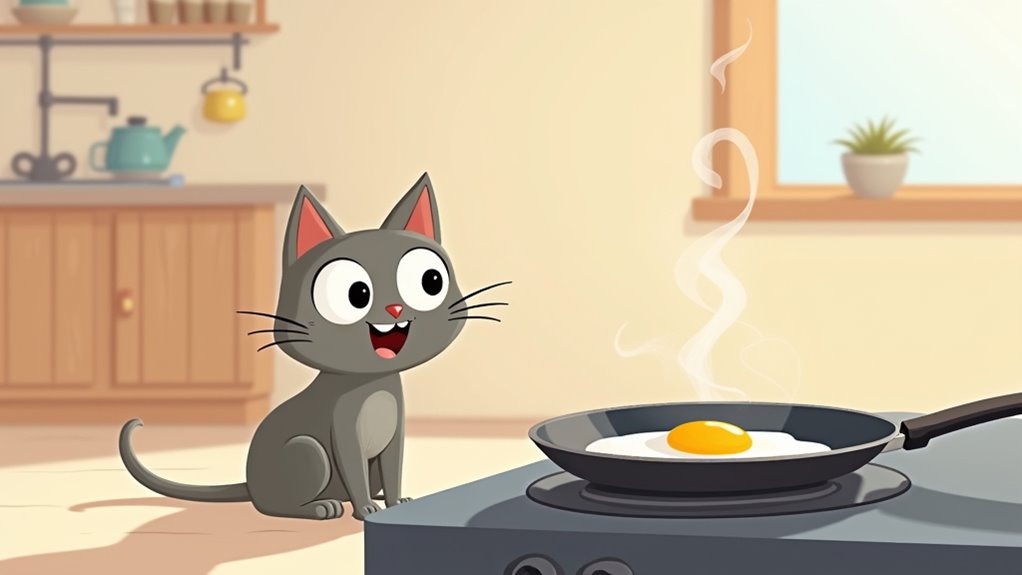
Cooking eggs for your cat can be a fun and healthy treat. To keep things safe, follow these easy steps for cat-friendly eggs:
Cooking Techniques
- Scramble, boil, or poach eggs without using oil or seasoning.
- Skip frying. It adds too much fat and calories.
- Always cook eggs well to kill any harmful bacteria. Cooking eggs properly also helps retain most of their nutritional benefits.
Egg Storage
- Store cooked eggs in the fridge to keep them fresh.
- Let eggs cool down before giving them to your cat. This stops burns.
Safety Tips
- Take off all eggshells to prevent choking.
- Serve eggs plain. Don’t add salt, spices, or dairy.
- Wash your hands and all kitchen tools before and after handling eggs. This keeps everything clean.
Following these simple rules helps keep your cat happy and healthy while enjoying this tasty treat. Additionally, remember that cooked eggs can be a nutritious treat when served in moderation.
Always check with your vet before adding new foods to your cat’s diet.
Recommended Portions and Feeding Guidelines
Fried eggs can be a tasty treat for cats. Portion control is very important. For small cats, give just 1 teaspoon of egg. Larger cats can handle 1 tablespoon.
Treats shouldn’t be more than 10% of their daily calories. Feeding eggs once or twice a week is best. This helps keep their diet balanced and avoids health problems.
Keep it occasional, not daily. Your cat will enjoy the treat without overdoing it.
Portion Control Importance
Portion control is very important for your cat’s health. It helps when adding eggs to their diet.
Here are some easy tips to follow:
- Keep egg portions to 10% of your cat’s daily calories.
- Serve 1 teaspoon to 1 tablespoon of cooked egg.
- Give smaller portions to kittens and older cats.
- Treat eggs as a special snack, not an everyday food.
These steps will help your cat enjoy eggs safely. Healthy choices make for a happy cat!
Frequency of Feeding
Feeding your cat eggs can be a fun treat. Do it wisely. Aim for once or twice a week. This keeps their diet balanced. Cats are obligate carnivores and require a diet primarily of meat, so eggs should be an occasional supplement.
Too many eggs can add extra calories and lead to weight gain. Eggs shouldn’t make up more than 10% of their daily calories.
Here are some tips for feeding eggs:
- Portion Size: Offer one or two teaspoons of cooked egg.
- Kittens: Give eggs sparingly. Too much can affect their growth.
- Health Monitoring: Check for any stomach issues or weight changes.
Talk to your vet before adding eggs to their diet. They can help you find the right balance for your cat’s health. Additionally, ensure that the eggs are prepared simply, avoiding salt, butter, or seasonings to keep them safe for your cat.
Dangers of Raw or Undercooked Eggs
Raw or undercooked eggs can be dangerous for your cat. They carry risks that every cat owner should know. Here are the dangers:
- Bacterial Infection: Raw eggs may contain *Salmonella* and *E. coli*. These bacteria can cause serious stomach issues.
- Gastrointestinal Upset: Eating raw eggs can lead to vomiting, diarrhea, and tiredness.
- Biotin Deficiency: Raw egg whites have avidin. This substance can block biotin and cause skin and coat problems.
- Egg Allergies: Some cats may develop allergies. This can lead to itchy skin, hair loss, and upset stomach.
Cooking eggs makes them safe. Heat kills harmful bacteria and neutralizes avidin.
Avoid giving your cat raw eggs to keep them healthy. If your cat has symptoms after eating raw eggs, contact your vet right away. Your cat’s health is in your hands!
Special Considerations for Kittens and Cats With Health Issues
Consider your cat’s diet carefully, especially for kittens and those with health issues. Eggs can be a good source of protein, helping kittens grow strong. But be cautious with health conditions.
Health Risks:
- Kittens: Serve small, cooked egg portions. Raw eggs can harm them.
- Obesity/Pancreatitis: Limit egg yolks. They contain fat and cholesterol.
- Kidney Disease: Egg yolks may worsen kidney problems. Stick to egg whites, as they provide high-quality protein that supports muscle health.
Feeding Guidelines:
- Always cook eggs well, like scrambling or boiling.
- Don’t add salt or spices. These can upset their stomach.
- Introduce eggs slowly to check for allergies. Chicken hearts can also provide essential amino acids that support muscle development.
Always talk to your vet before adding eggs to your kitten’s meals, especially if they’ve health issues. Balancing their nutrition and managing health concerns is vital for your furry friend’s happiness.
Frequently Asked Questions
Can Cats Eat Eggs Every Day?
Feeding your cat eggs every day is not a good idea. Cats need a balanced diet. Too many eggs can lead to weight gain and health problems. Limit egg treats to 1-2 times a week. This helps keep your cat healthy and happy. Eggs can be a fun treat, but moderation is key. Always make sure your cat gets a variety of foods for proper nutrition.
What Types of Eggs Are Safe for Cats?
Plain boiled, scrambled, and poached eggs are safe for cats. These types of eggs provide great nutrition. They are a good source of high-quality protein. They also contain healthy fats. Keep it simple. Avoid oils and seasonings. This keeps the eggs safe and easy to digest for your cat. Always serve eggs in moderation. Too many can upset your cat’s stomach. Eggs can be a tasty treat for your feline friend. Just make sure they are well-cooked. Enjoy watching your cat savor this healthy snack!
Are Egg Substitutes Safe for Cats?
Egg substitutes can be risky for cats. They often miss important nutrients found in eggs. Some cats might even have allergies to these substitutes. Always ask your vet before adding anything new to your cat’s diet. This keeps their meals healthy and balanced. Cats need proper nutrition to stay strong and happy. Make sure you choose the right foods for your furry friend.
How Do I Introduce Eggs to My Cat’s Diet?
Introduce eggs to your cat’s diet slowly. Start with boiled or scrambled eggs. Watch how your cat reacts. Some cats may love them, while others might not be interested. Serve small portions at first. This helps you see if your cat likes eggs or has any bad reactions. Always remove the shell. Cats cannot digest it well. Avoid adding salt, spices, or butter. Those can upset their stomach. Eggs are rich in protein and nutrients. They can be a healthy treat. Keep it simple and safe for your furry friend.
Can Eggs Help With My Cat’s Coat Condition?
Eggs can benefit your cat’s coat. They contain high-quality protein and essential fatty acids. These nutrients help improve coat health. A good diet can make your cat’s coat shinier and softer. Adding eggs to your cat’s meals can enhance their coat texture too. It’s important to use eggs wisely. Too many can upset your cat’s stomach. Always cook the eggs before giving them to your cat. Scrambled or boiled eggs work well. A little goes a long way for a healthy coat!
Conclusion
Your cat can enjoy fried eggs sometimes. Serve them in small amounts. Always cook eggs without salt or oil. Too much can upset your cat’s stomach. Eggs provide protein, which is good for your cat. Make sure to watch for any bad reactions. Cats with special diets may need extra care. Treat your furry friend to a tasty egg treat, and enjoy their happy purrs!
