
Can Cat Eat Fruit
This post contains affiliate links. As an Amazon Associate, we earn from qualifying purchases.
Cats can eat some fruits, but it’s important to offer them in moderation. Safe options like blueberries and apples provide beneficial vitamins and fiber, while others, such as grapes and citrus, can be toxic. Always wash fruits thoroughly, cut them into small pieces, and remove any seeds or pits. Limit fruit to about 10% of your cat’s diet, offering it just once or twice a week. For those interested in a deeper understanding, further details on safe fruits and serving methods will follow.
Essential Facts in 30 Seconds
- Cats can safely eat fruits like blueberries and apples for vitamins and antioxidants.
- Avoid feeding cats toxic fruits such as grapes and citrus.
- Always wash fruits, remove seeds and pits, and cut into small pieces before serving.
- Fruits should be limited to less than 10% of a cat’s total diet to prevent health issues.
- Monitor for any adverse reactions and consult a veterinarian if concerned.
Nutritional Benefits of Fruits for Cats
Cats are known as strict carnivores, but some fruits can be good for them. Fruits like blueberries and apples are full of vitamins and antioxidants. These nutrients can help boost your cat’s immune system.
For example, apples contain vitamins K, A, and C. These vitamins help reduce inflammation and support overall health. Additionally, bananas can provide occasional treat options that some cats might enjoy.
Here are some fruits that can benefit your cat:
- Blueberries: Packed with antioxidants. They support immune health.
- Mangoes: Loaded with vitamins A, B6, and C. They help with eye health.
- Raspberries: Offer vitamins A, B, C, and E. These vitamins are great for cellular health.
Blackberries and apples also provide fiber. Fiber helps with digestion.
Introduce fruits slowly and in small amounts. Too much fruit can upset your cat’s stomach. Keep an eye on your cat after trying new fruits. This way, they can enjoy the benefits without any trouble. Additionally, always remember to monitor for adverse reactions when introducing new fruits to ensure your cat’s well-being.
Safety Considerations and Toxicity Risks
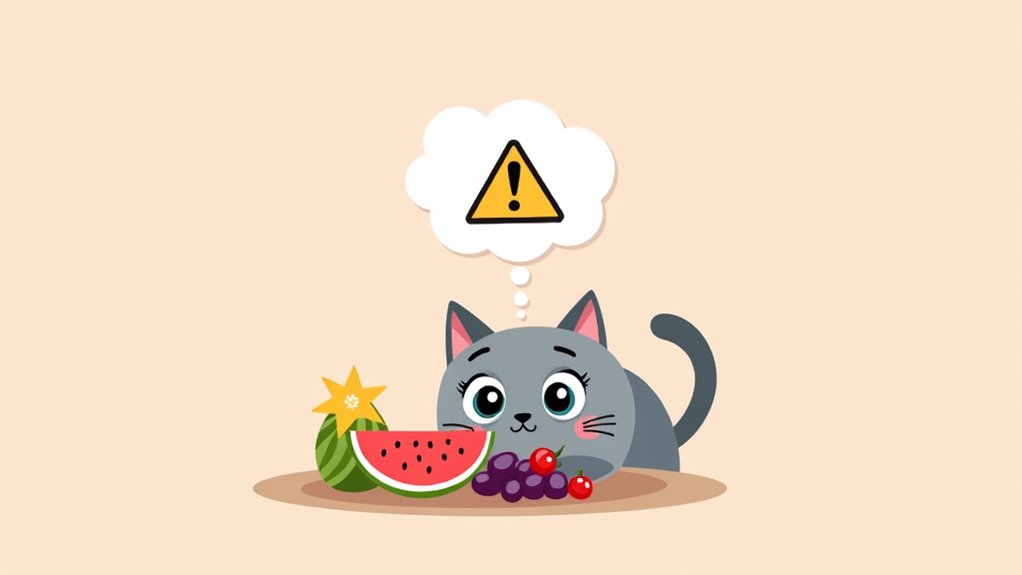
Fruits can be a nice treat for cats, but some are unsafe. Grapes, cherries, and citrus fruits are toxic. Keep these fruits away from your cat. Grapes are toxic to cats, leading to serious health issues, including kidney failure.
Always prepare safe fruits by removing seeds and peels. Offer fruits in moderation to avoid sugar problems. Cats don’t need many fruits. Always watch for any bad reactions. Keeping your cat safe is the most important thing.
Toxic Fruit Types
Knowing which fruits are toxic to cats is important for their safety. Some fruits may seem safe but can harm your pet.
Citrus fruits like lemons and limes are dangerous. They’ve harmful compounds called limonene and linalool. These can cause vomiting, diarrhea, and even liver damage. Additionally, citrus fruits like grapefruit contain toxic compounds that can lead to serious health issues in cats.
Grapes and raisins can lead to kidney failure, even in tiny amounts. Cherry and plum pits contain cyanide, which can cause serious organ failure.
To keep your cat safe, keep these fruits out of reach. Don’t give any fruit with seeds or stems. Additionally, some fruits can be toxic to cats, so it’s essential to research before introducing new foods.
If you think your cat ate toxic fruit, get veterinary help right away. Quick action can save your cat from severe poisoning or worse outcomes.
Fruit Preparation Guidelines
Preparing fruit for your cat is important for their safety. Start by washing all fruits well under fresh water. This removes dirt and pesticides. Don’t use soaps or chemicals.
Always remove seeds, pits, and stems. These can be toxic or cause choking. Cut the fruit into small pieces. Bite-sized pieces are best for easy chewing. Cats are obligate carnivores, so fruit should only be an occasional treat and not a main part of their diet.
Serve fruit only once or twice a week. Keep portions small to avoid stomach upset. Strawberries are not toxic to cats; however, moderation is crucial to prevent digestive upset. Cranberries can also be offered in moderation for potential urinary tract health benefits.
Watch your cat for any signs of discomfort after they eat fruit. Remember, fruit shouldn’t make up more than 10% of their daily food. Your cat’s health is worth this extra care!
Sugar and Health Risks
Fruit may seem like a fun snack for your cat, but sugar can be harmful. Cats need meat to thrive. Their bodies don’t handle sugar well.
Here are some important facts:
- Sugar can upset your cat’s stomach. This may cause diarrhea or vomiting.
- Too much fruit adds extra calories. This can lead to obesity or diabetes. Cats are obligate carnivores and require a meat-based diet to stay healthy.
- Even safe fruits should be a small part of their diet. Keep it under 10% of their total food. Moderation is key when offering fruits like blueberries.
Watch your cat closely when giving fruit. Look for signs of upset stomach or allergies.
Recommended Serving Practices

Serving fruit to your cat requires careful preparation. Always remove seeds, stems, and pits. Cut the fruit into small, easy-to-eat pieces. This helps prevent choking.
Limit fruit treats to about 10% of your cat’s daily calories. Offer fruit only a few times a week. This keeps their diet balanced and healthy.
Appropriate Portion Sizes
Feeding your cat fruit can be a fun treat.
It’s important to serve the right amount. Follow these guidelines to keep your cat healthy while enjoying fruit:
- Fruit should make up no more than 10% of your cat’s daily calories.
- Offer 2-3 small pieces of fruit once or twice a week.
- Cut fruit into small, bite-sized pieces. This helps prevent choking.
Keep these tips in mind for a happy and healthy cat!
Safe Fruit Preparation
To ensure your cat enjoys fruit safely, proper preparation is key. Start by washing the fruit under clean water. This removes dirt and pesticides. Avoid soap or any chemicals. They can harm your cat.
Next, remove all seeds, pits, and stems. These parts can be toxic or cause choking. After that, cut the fruit into small pieces. This makes it easier for your cat to chew and reduces choking hazards.
Serve only fresh fruit without any additives. Frozen fruit is okay, as long as it has no harmful ingredients.
Following these steps helps your cat enjoy fruit while keeping them healthy and safe.
Frequency of Offering
Fruit treats can be a fun part of your cat’s diet. Just remember to offer them carefully.
Here are some important tips for giving fruit treats:
- Give fruit treats once or twice a week. This keeps sugar levels low.
- Serve small amounts. 1-2 slices of apple or 1-2 chunks of banana work well.
- Watch your cat’s health closely. This is important for cats with diabetes or other issues.
Treats should be a small part of their meals. Enjoying fruit can be a nice change for your feline friend!
Cat Dietary Needs and the Role of Fruit
Many pet owners love sharing food with their cats. It’s important to know that cats have special dietary needs. They’re obligate carnivores. This means they need animal proteins for their health.
Cats can’t digest plant materials well. They also can’t turn plant proteins into nutrients they need.
Fruits don’t provide essential amino acids. Taurine is one of these. Taurine is crucial for heart and eye health. Cats need about 41 vital nutrients. Most of these come from meat.
Instead of fruits, offer lean meats. You can also give commercial cat treats. These treats are made for cats and meet their needs.
Safe Fruits Commonly Recommended for Cats
Safe fruits can be a tasty treat for your cat. Here are three options you can offer:
- Apples: Remove seeds and stems. Cut into small pieces. Apples are high in fiber and vitamins.
- Blueberries: These tiny fruits are full of antioxidants. Serve them fresh or frozen. Remember to give in moderation.
- Bananas: Slice into small pieces. Bananas are rich in potassium. They should only make up 10% of your cat’s daily calories.
These fruits can add variety to your cat’s diet.
Always introduce new foods slowly. Watch for any reactions. Happy feeding!
Fruits to Avoid or Use With Caution
Many fruits can be safe for your cat, but some are very dangerous. It’s important to know which fruits to avoid. Here are the key fruits that shouldn’t be fed to cats:
- Grapes, Raisins, and Currants: These can cause serious kidney damage. Keep them away from your cat.
- Citrus Fruits (Lemons, Limes, Oranges, Grapefruits): All parts are toxic. They can upset your cat’s stomach and cause other health issues.
- Cherries: These contain cyanide, which can lead to organ failure. A single bite can be harmful.
- Avocado: This fruit has persin. It can upset your cat’s stomach. It’s best to avoid it completely.
- Nuts and High-Fat Fruits: These can lead to pancreatitis and blockages in the intestines.
Be careful when introducing new fruits to your cat.
Always consult a vet if you think your cat has eaten something toxic. Your cat’s health is important.
Frequently Asked Questions
Can Kittens Eat Fruit Safely?
Kittens can safely eat fruit in moderation. Stick to safe options like apples and blueberries. Always cut them into small pieces. This makes it easier for kittens to digest. Pay attention to what your kitten likes. Their health is the most important thing. Treats should be fun, not harmful. Offering fruit can add variety to their diet. Just remember, not all fruits are safe. Avoid grapes, raisins, and citrus fruits. Keep it simple and watch your kitten enjoy their tasty treats!
How Should Fruit Be Introduced to a Cat’s Diet?
Introduce fruit to your cat slowly. Start with small pieces. Safe fruits include apples and bananas. Always remove seeds before giving them to your cat. Watch how your cat reacts. Adjust the amount based on their health. Some cats may love fruit, while others might not. Always prioritize your cat’s well-being. Enjoy experimenting with different fruits!
Can Cats Develop Allergies to Fruits?
Cats can have allergies to fruits, but it’s not very common. Look for signs like itching or stomach problems. These could mean your cat is allergic. Some fruits can cause reactions more than others. Always check with your vet if you see these symptoms. They can help you figure out what’s safe for your cat to eat. Keeping an eye on your cat’s health is important.
What Are the Signs of Fruit Intolerance in Cats?
Persistent itching, vomiting, and diarrhea can signal fruit intolerance in cats. Watch for these signs closely. Changes in behavior or mood can also indicate a problem. Digestive issues often arise from certain foods, including fruits. If your cat shows any of these symptoms, it’s time to act. Consult your vet for guidance. Keeping your cat healthy is important. Pay attention to their diet and reactions. Avoid feeding them fruits that may cause discomfort. Your cat’s well-being matters most.
Are Organic Fruits Better for Cats Than Non-Organic?
Organic fruits have fewer pesticides than non-organic fruits. This is a plus for your cat’s safety. But, the nutritional differences are not significant. Both types of fruits have limited nutrients for cats. A cat’s diet should mainly focus on meat. Fruits can be a treat, but they are not essential. Always wash fruits before giving them to your cat. Remember, moderation is key. Too much fruit can upset your cat’s stomach. Stick to safe options like blueberries or watermelon. Always check with a vet if unsure. Your cat’s health is the most important thing.
Conclusion
Cats can eat some fruits, but not all fruits are safe. Some fruits give health benefits to cats. For example, watermelon and blueberries are usually safe. They can be refreshing and hydrating. But some fruits, like grapes and raisins, are dangerous. They can cause serious health problems.
Always be careful with fruit. Just because it is healthy for you does not mean it is good for your cat. Always check which fruits are safe. Consulting a vet is smart. They can help you choose the best treats for your kitty. Keep your furry friend healthy and happy!
