
Can Cat Eat Hard Boiled Eggs
This post contains affiliate links. As an Amazon Associate, we earn from qualifying purchases.
Yes, cats can eat hard-boiled eggs, which provide high-quality protein and essential vitamins. It’s important to serve them plain and ensure they are cooked properly to eliminate harmful bacteria. Start with a small amount, around 1-2 teaspoons, and limit egg intake to 10% of their daily calories as an occasional snack. Monitor for any signs of allergies or digestive upset. Further details on safely incorporating eggs into your cat’s diet will follow.
Essential Facts in 30 Seconds
- Cats can safely eat hard-boiled eggs, which provide high-quality protein and essential nutrients.
- Cooking eggs eliminates harmful bacteria like Salmonella, making them safe for cats.
- Serve hard-boiled eggs in moderation, limiting them to about 10% of your cat’s daily caloric intake.
- Introduce eggs gradually and watch for signs of allergies or digestive issues.
- Always serve eggs plain, without any seasonings or oils, to maintain their health benefits for cats.
Nutritional Benefits of Hard-Boiled Eggs for Cats
Adding hard-boiled eggs to your cat’s diet offers great nutritional benefits. These eggs are a strong source of high-quality protein. This protein is important for your cat, as they’re obligate carnivores. Hard-boiled eggs provide all the essential amino acids. These acids help maintain muscles and support overall body functions.
Eggs are also full of vitamins A, D, and E. These vitamins help with vision, bone health, and immune function. All these factors are vital for your cat’s wellbeing. Additionally, cooked eggs eliminate harmful bacteria that can pose health risks.
In addition, eggs supply important minerals like iron, zinc, and selenium. These minerals aid in blood cell production and improve skin health.
Egg yolks have healthy fats, including omega-3 and omega-6 fatty acids. These fats are essential for energy and give your cat a shiny coat.
When introducing eggs to your cat’s diet, ensure that they are cooked options to eliminate any health risks.
Moderation is key. Too many eggs can cause obesity and digestive problems. Always talk to your vet for advice on how much to feed your cat.
Safety and Preparation of Eggs for Cats
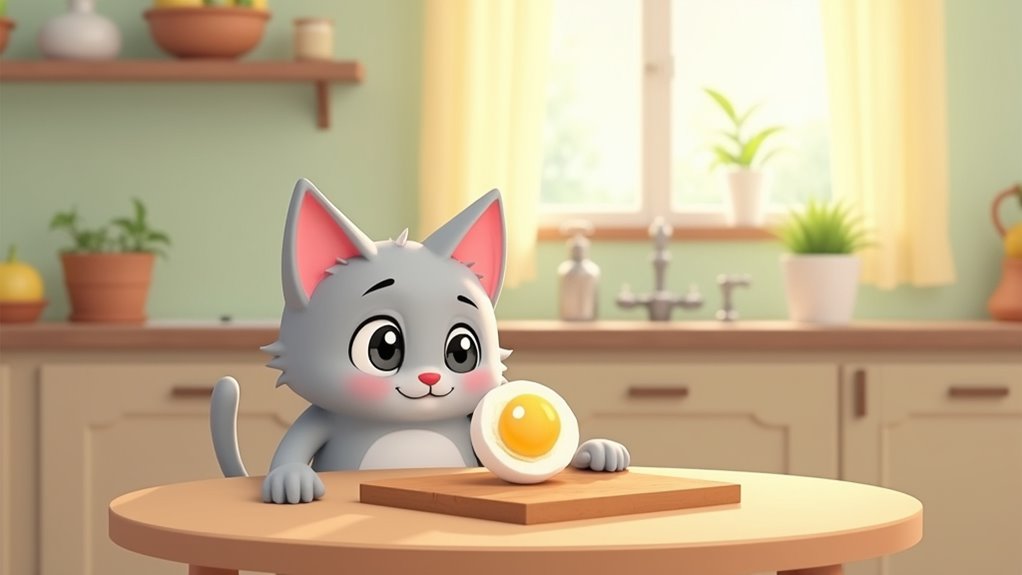
Cats can safely enjoy hard-boiled eggs. Cooking eggs well is very important. Hard-boiling kills harmful bacteria like Salmonella, reducing the risk of serious illness in cats.
For less cooked eggs, choose in-shell pasteurized ones. Raw or runny eggs can make your cat sick, so avoid those.
Egg Storage Tips:
- Always keep eggs in the refrigerator.
- Use eggs before the expiration date for freshness.
Preparation Guidelines:
- Serve eggs plain. No seasonings or oils.
- Start with small amounts. 1-2 teaspoons is enough for a 10-pound cat.
- Watch how your cat reacts.
- Treat eggs as an occasional snack, not a daily meal. It’s important to monitor for allergies when introducing any new food to your cat’s diet.
Digestibility and Dietary Role of Eggs in Cats
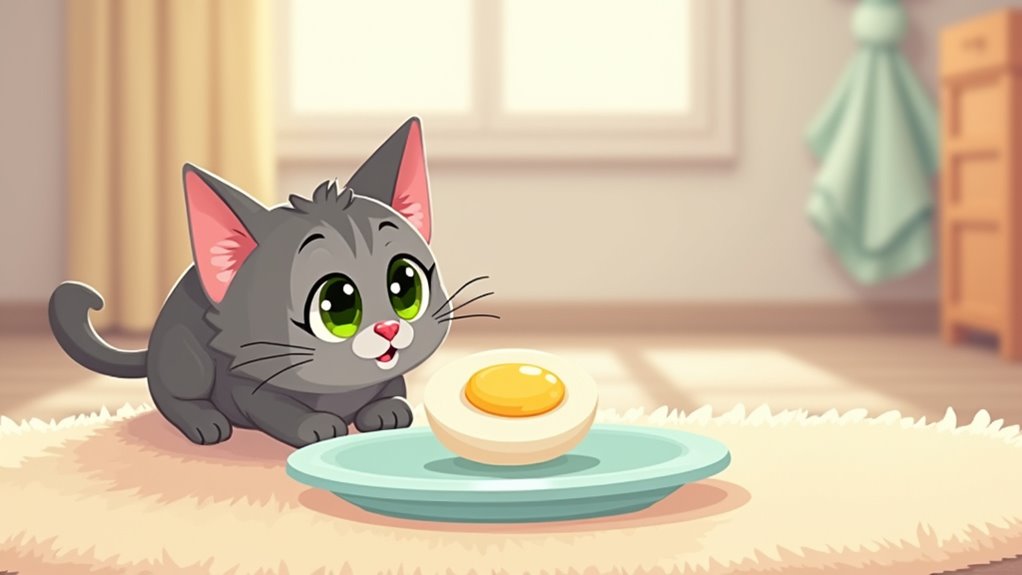
Understanding how well cats digest eggs helps keep them healthy. Eggs are full of high-quality protein. This protein is easy for cats to digest. Eggs can be a great addition to their meat-based meals. Cooked eggs provide essential amino acids that support overall health and muscle development in cats.
Feed your cat eggs only sometimes. About 10% of their daily calories should come from eggs. This keeps their diet balanced. Too many eggs can cause digestive problems. Additionally, cooked eggs eliminate bacterial risks associated with raw eggs, making them a safer choice for your cat.
Always cook the eggs before giving them to your cat. Raw eggs can be harmful. Cooked eggs are safe and tasty. Your cat will enjoy them as a treat!
Protein Digestibility in Cats
Understanding protein digestibility is essential for your cat’s health. High-quality protein sources, like eggs, are great choices. Eggs have a biological value of 94. This means cats can digest and use egg protein very well for building strong tissues.
Here are some important facts:
- Complete Protein: Eggs provide all the amino acids your cat needs.
- High Amino Acid Score: The amino acid score is higher than what cats require. This supports better health.
- Cooking Benefits: Cooking eggs, like hard-boiling, makes them easier to digest. It also inactivates avidin, which can block biotin absorption. Feeding eggs in moderation is crucial to ensure a balanced diet for your cat. Additionally, cooked eggs can contribute to a balanced diet by providing essential nutrients.
Adding cooked eggs to your cat’s diet can improve protein digestibility. This helps with muscle growth and overall health. Always serve eggs cooked to keep your cat safe.
Role in Balanced Diet
Hard-boiled eggs can be a tasty treat for your cat. They offer many benefits but must fit into a balanced diet. Eggs should only make up a small part of your cat’s meals.
Here are some important points:
- Eggs are a great source of protein. Protein helps keep your cat’s muscles strong.
- They’re rich in vitamins and minerals. Vitamin A and zinc boost your cat’s overall health.
- Limit eggs to about 10% of your cat’s daily calories. This helps prevent dietary problems.
Adding eggs can be fun and healthy, but keep balance in mind. Your cat will enjoy the extra flavor and nutrition!
Frequency of Egg Feeding
Feeding your cat hard-boiled eggs can be a tasty treat. Just remember, moderation is important.
Follow these simple guidelines for egg serving and frequency:
- Egg Portioning: Limit egg servings to about 10% of your cat’s daily calories.
- Feeding Frequency: Offer eggs as a treat once or twice a week.
Introduce eggs slowly. Watch for any signs of food intolerance or allergies. Overfeeding may cause digestive issues like vomiting or diarrhea.
Always serve eggs plain, without any seasonings. Eggs are nutritious, but they shouldn’t replace a balanced diet.
If your cat shows any bad reactions, contact your vet. Keeping your cat happy and healthy is the goal!
Health Risks and Potential Adverse Effects
Hard-boiled eggs can be a tasty treat for cats. But they might cause stomach problems. Some cats may vomit or have diarrhea after eating eggs. This often happens if they eat too much or if they aren’t used to eggs.
Allergies are another concern, though they’re rare. Watch for any strange symptoms after your cat eats eggs. Signs of an allergy can include itching, swelling, or trouble breathing.
Always introduce new foods slowly. Start with a small amount and see how your cat reacts. This way, you can make sure they enjoy their treat safely.
Gastrointestinal Upset Risks
Gastrointestinal problems can happen if your cat eats hard boiled eggs. Too many eggs or a sensitive stomach can cause issues.
To keep your cat safe, follow these tips:
Limit egg intake to 10% of your cat’s daily calories. Start with small amounts. This helps you see how your cat reacts. Watch for signs of trouble, like vomiting or diarrhea. Cats are obligate carnivores, and too many eggs can upset your cat’s stomach due to their unique digestive systems. Some cats may not tolerate eggs well. If your cat has any digestive problems after eating eggs, stop giving them eggs right away. Additionally, it’s important to note that fresh eggs from reputable sources should be used to minimize health risks.
Talk to your veterinarian. Keeping an eye on your cat’s health is very important.
Allergic Reactions Possibility
Gastrointestinal upset can happen when you add hard-boiled eggs to your cat’s diet.
Allergic reactions are another serious concern. Cats can develop allergies at any age. Their immune system may react strongly to egg proteins.
Watch for symptoms like itching, skin rashes, or too much grooming. These signs may mean your cat has an allergy. Digestive problems, such as vomiting and diarrhea, are also common.
To keep your cat safe, follow these steps:
- Begin with a tiny amount of egg.
- Watch how your cat reacts.
- If you see any symptoms, call your vet right away.
- Stop giving eggs if your cat shows signs of an allergy.
Taking these precautions can help keep your furry friend healthy.
Feeding Recommendations and Moderation
Feeding your cat hard-boiled eggs can be a tasty treat. But moderation is important. Follow these simple recommendations:
- Portion Control: Give a small piece, about one-quarter of an egg. Limit this to a few times a week.
- Frequency: Treat eggs as a special snack. Don’t make them a daily food to avoid too many calories and fat.
- Health Considerations: Talk to your vet. This is important if your cat has health problems or is overweight. They can help you decide how much egg is safe.
Egg yolks have a lot of fat. Overfeeding them can cause obesity or pancreatitis.
Egg whites are better. They provide protein with less fat.
Always keep an eye on your cat’s weight. Adjust egg treats as needed. This way, you can ensure a balanced diet.
Being careful with egg servings helps your cat stay healthy and happy!
Summary of Egg Types and Cooking Methods for Cats
Knowing which types of eggs and cooking methods are safe for your cat is essential. Here’s a simple summary of suitable egg types and cooking methods.
| Egg Types | Cooking Methods |
|---|---|
| Fully cooked eggs | Boiled (hard or soft) |
| Cooked egg whites | Scrambled (without additives) |
| Boiled and ground eggshells | Poached or lightly fried (no oil) |
Cats can safely eat fully cooked eggs. Hard-boiled or scrambled eggs are good options. Avoid raw eggs due to Salmonella risks. Cooking eggs helps kill harmful bacteria and makes them easier to digest.
Egg yolks are a source of healthy fats and vitamins. Egg whites provide protein. Always ask your vet about your cat’s dietary needs. Don’t add any seasoning, as it can upset their stomach. With the right care, eggs can be a tasty and nutritious treat for your cat.
Frequently Asked Questions
Can Kittens Eat Hard-Boiled Eggs Safely?
Kittens can safely eat hard-boiled eggs in moderation. Make sure to cook the eggs fully. Offer only small portions to your kitten. This helps with their nutrition while avoiding stomach problems or too many calories. Eggs provide protein and vitamins that can benefit your kitten’s growth. Always watch how your kitten reacts to new foods. If they show any signs of trouble, stop feeding them eggs. Keep their diet balanced for the best health. Enjoy watching your kitten grow strong and healthy!
How Should I Store Leftover Cooked Eggs for My Cat?
Proper egg storage is important for your cat’s health. After cooking, let the eggs cool down. Place them in a shallow airtight container. Store the container in the refrigerator. Keep the temperature below 40°F. This helps keep the eggs fresh and safe for your cat to eat later. Don’t forget to feed your cat the eggs within a few days. Enjoy keeping your furry friend happy and healthy!
Are There Any Alternatives to Eggs for Protein?
There are plenty of alternatives to eggs for protein. Meat options like cooked chicken, turkey, and fish are great choices. They provide high-quality protein and essential nutrients.
For those who prefer plant-based options, consider beans, lentils, and quinoa. These foods are rich in protein and also provide fiber. Tofu and tempeh are excellent soy-based choices. They can be used in many recipes and take on different flavors.
Pea protein is another option. It is often found in protein powders and bars. Keep in mind that some plant-based proteins may lack certain amino acids. Combining different sources can help meet your protein needs.
Whether you eat meat or not, there are many ways to get enough protein without eggs. Choose what fits your diet best!
How Can I Tell if My Cat Is Allergic to Eggs?
To know if your cat is allergic to eggs, watch for signs. Symptoms include excessive itching, vomiting, or diarrhea after eating eggs. Any unusual behavior or discomfort can be a clue. Pay attention to changes in your cat’s health. Is your cat scratching more than usual? Did they throw up after eating? These could be warning signs.
Consult your vet if you notice these symptoms. They can provide a proper diagnosis. Your vet may suggest tests or an elimination diet. This helps determine if eggs are the cause. Proper care is essential for your cat’s health. Keep a close eye on your pet after feeding them eggs. Early detection can make a big difference.
Can I Feed My Cat Eggs Every Day?
Feeding your cat eggs every day is not a good idea. Eggs are high in protein and vitamins, which are great for your cat. But too many can cause health problems. Think of eggs as a special treat, not a regular meal. Moderation is important for your cat’s diet. A little egg now and then can be a nice surprise!
Conclusion
Hard-boiled eggs can be a healthy treat for cats. They are packed with protein and nutrients. Moderation is important. Too many eggs can upset your cat’s stomach. Always remove the shell before giving eggs to your cat. Introduce them slowly to see how your cat reacts. Balance is key. Offer a variety of foods to keep your cat healthy. Make smart choices for your feline friend!
