
Can Cat Eat Kiwi Fruit
This post contains affiliate links. As an Amazon Associate, we earn from qualifying purchases.
Cats can eat kiwi fruit, but it’s not the best choice for them due to their carnivorous diet and potential digestive issues. While kiwi offers some fiber and hydration, it may lead to digestive upset, allergic reactions, or choking hazards. If you choose to give your cat kiwi, make sure to wash and peel it thoroughly, and serve only small, bite-sized pieces. Treat kiwi as an occasional snack, making up no more than 10% of their diet. It’s always best to consult your veterinarian first to ensure it’s safe for your pet. Further insights and details will follow for those interested in learning more.
Essential Facts in 30 Seconds
- Cats can eat kiwi fruit in moderation for its fiber and hydration benefits.
- Kiwi does not provide essential nutrients like taurine and should not replace a meat-based diet.
- Excessive kiwi consumption may lead to digestive issues, such as stomach upset or diarrhea.
- Always peel the kiwi and remove seeds to prevent choking hazards and irritation.
- Consult a veterinarian before introducing kiwi to your cat’s diet for safety.
Nutritional Benefits of Kiwi for Cats
Kiwi fruit offers several nutritional benefits for cats. It’s high in dietary fiber, which helps improve digestion. This fiber promotes regular bowel movements and works as a natural laxative. This can lower the risk of constipation in your cat.
Kiwi contains actinidin, an enzyme that helps break down proteins. This can aid cats that have trouble digesting protein. As a result, they can absorb nutrients better.
The water content in kiwi also supports hydration. Many cats don’t drink enough water. Adding kiwi to their diet can provide extra moisture. This can help with kidney health and overall metabolism.
Keep an eye on serving sizes. Too much kiwi can upset your cat’s stomach and cause diarrhea. Offering kiwi in moderation can be a great addition to your cat’s diet.
Always talk to your vet before making changes to their food.
Cats’ Dietary Needs and Kiwi
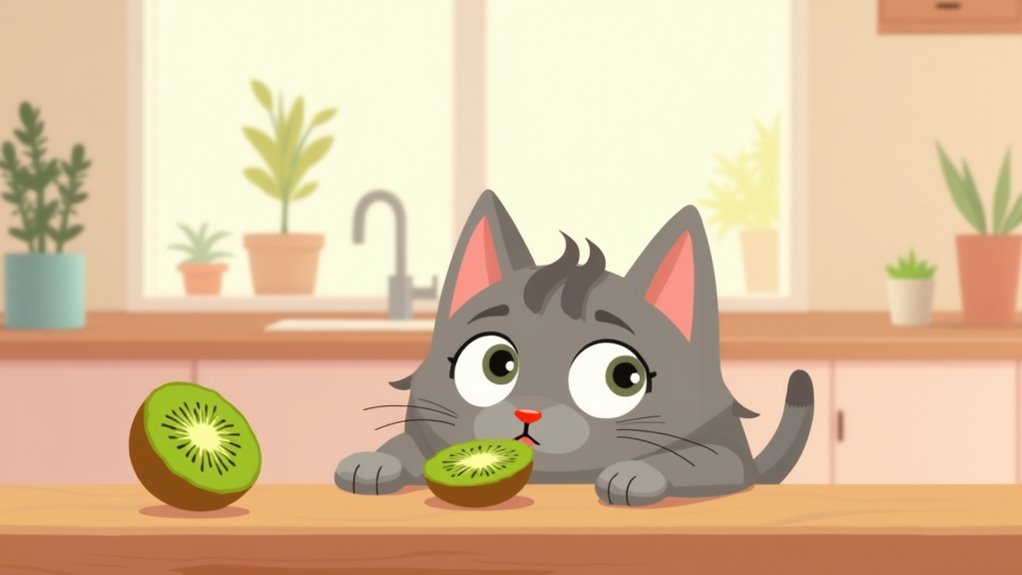
Cats’ Dietary Needs and Kiwi
Cats have special dietary needs. They’re obligate carnivores. This means they need nutrients from animal tissues. Important nutrients include protein and specific vitamins. Kiwi may look tasty, but it doesn’t meet a cat’s nutritional needs.
Feline Nutrition Facts:
- Cats need 41 essential nutrients. One key nutrient is taurine, which kiwi doesn’t provide. Additionally, cats thrive on a diet that is primarily high-quality animal protein.
- Cats have short intestines. They lack the enzymes to digest plant foods well. Eating unfamiliar foods can upset their stomachs.
Cat Behavior Insights:
- Most cats ignore sweet or sour fruits like kiwi.
- Giving kiwi can disrupt their diet. This can lead to stomach issues. Moreover, digestive issues may arise from high fiber content in kiwi, making it unsuitable for regular feeding.
Stick to food that gives your cat the right nutrients. It’s best for their health and happiness.
Potential Risks of Feeding Kiwi to Cats
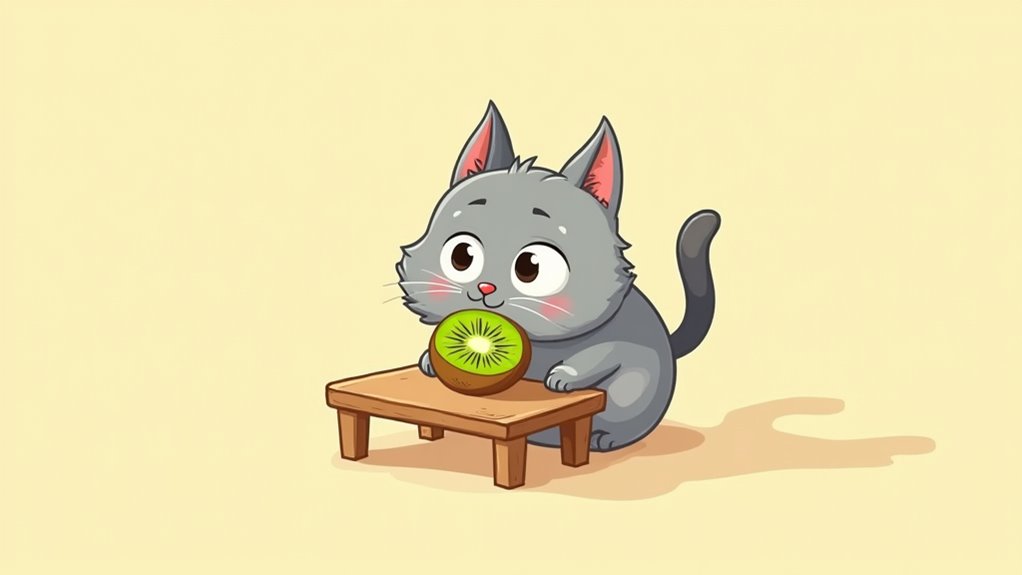
Feeding kiwi to cats has some risks. It might be tempting, but it can cause harm. Here are three main concerns:
- Allergic Reactions: Kiwi contains an enzyme called actinidain. This can irritate sensitive cats. Symptoms may include mouth irritation, inflammation, or stomach upset.
- Digestive Issues: Kiwi’s fibrous texture and acidity may upset your cat’s stomach. Too much fiber can lead to diarrhea or vomiting. This can disturb their digestive system.
- Physical Hazards: The skin and tiny seeds of kiwi pose choking risks. They can also irritate your cat’s mouth and throat.
Prioritize your cat’s safety. If you choose to give kiwi, do it carefully. Always remove the skin and watch for any bad reactions.
Keep these risks in mind to help make safe choices for your cat’s diet.
Preparation and Feeding Guidelines
Preparing kiwi for your cat is simple and safe. Start by washing the kiwi well.
Peeling is important, so remove the skin completely. Cut the fruit into small, bite-sized pieces. Kiwi should be a rare treat. Keep it to no more than 10% of your cat’s diet. This way, your cat can enjoy a tasty snack without any health risks.
Always watch your cat after giving kiwi for the first time. Make sure it doesn’t cause any upset stomach. Treats like kiwi can be fun, but they shouldn’t replace your cat’s regular food.
Safe Preparation Steps
Preparing kiwi for your cat is simple but important. Follow these steps to keep your furry friend safe and healthy.
- Wash Thoroughly: Rinse the kiwi under cold water. This helps remove dirt and pesticides. Use only water, not soap.
- Remove Skin: Peel the kiwi completely. The skin is tough and not good for cats. Use a knife or spoon to do this carefully.
- Remove Seeds: Take out the small seeds. This cuts down on choking risks and helps avoid stomach troubles.
Cut the kiwi into small, bite-sized pieces. This makes it easier for your cat to chew.
Always watch your cat after giving kiwi. It should be a rare treat, not a daily snack. Enjoy sharing this tasty fruit with your pet!
Feeding Frequency Recommendations
To keep your cat safe while enjoying kiwi, limit this fruit as a treat. Offer kiwi once or twice a week. Keep portions small, just 1 or 2 bite-sized pieces. This helps prevent too much sugar and lowers choking risk.
Treats shouldn’t make up more than 10% of your cat’s daily calories. It’s smart to serve these treats during meal times. This helps create a routine and reduces begging.
Always watch your cat for any bad reactions, like upset stomach. Stop giving kiwi right away if you notice any problems and talk to your vet.
Moderation is key for a healthy and happy cat!
Veterinary Recommendations and Precautions
Feeding your cat kiwi can be tricky. Always talk to your veterinarian first. They know your cat’s health best. Some cats may have conditions that make kiwi unsafe.
Watch your cat closely after giving kiwi. Look for any signs of discomfort or digestive problems. If you see any issues, stop giving kiwi immediately.
Keeping your cat healthy is the most important thing.
Consult Before Feeding
Consulting a veterinarian is very important before adding kiwi to your cat’s diet.
Discuss potential risks, such as kiwi allergies. Consider these three key points:
- Health Issues: Talk about any existing conditions like diabetes or stomach problems. Kiwi has sugar and fiber that might affect these issues.
- Portion Sizes: Your vet can tell you how much kiwi is safe for your cat. This helps avoid tummy troubles.
- Preparation: Learn how to peel and remove seeds from kiwi. This helps prevent choking.
A thorough vet consultation helps keep your cat safe when trying new treats like kiwi.
Monitor for Reactions
Monitor your cat closely after giving them kiwi. Watch for any allergy signs. Look for itching, swelling, or trouble breathing. Stop feeding kiwi right away if you see redness, hives, or breathing problems. Call your vet for help.
Keep an eye out for stomach issues too. Kiwi has a lot of fiber. This can lead to diarrhea or vomiting, especially in sensitive cats. Check your cat’s poop and behavior for any discomfort.
Prepare the kiwi safely. Always peel it and remove the seeds. Cut the fruit into small pieces. Stay nearby while your cat eats. This helps avoid choking.
Alternative Treats for Cats
Cats need special care when it comes to treats. Their diet should mostly be meat. It’s important to offer a variety of safe treats. Here are some healthy options:
- Protein Snacks: Give small pieces of cooked chicken or turkey. Cats love these protein sources.
- Freeze-Dried Meat Treats: These treats are tasty and packed with nutrients. Just give them in small amounts.
- Commercial Cat Treats: Look for treats made just for cats. These are safe and provide balanced nutrition. Occasional treats like bananas should complement a cat’s regular diet to ensure they receive proper nutrition.
Fruits like blueberries and apples can be safe in small amounts. Treats should be less than 10% of your cat’s daily diet. Additionally, always ensure that any fruits offered are safe for cats to prevent any health issues.
Watch for any bad reactions. Avoid high-sugar fruits. Always talk to your vet before trying new foods. This keeps your cat healthy and happy.
Frequently Asked Questions
Can Kittens Eat Kiwi Fruit Safely?
Kittens can safely eat kiwi fruit in small, prepared amounts. This fruit can be a fun treat for them. Kiwi is full of vitamins and fiber, which can be good for your kitten’s health. Just make sure to remove the skin and seeds first.
Keep in mind that kittens need balanced food for their main diet. Treat kiwi as a special snack, not a daily meal. Always watch for any signs of upset stomach. If your kitten enjoys kiwi, it’s a nice change from regular treats. Just remember, moderation is key!
How Often Can I Feed My Cat Kiwi?
Feed your cat kiwi once or twice a week. Offer only small amounts. Kiwi has vitamins that can help, but it shouldn’t be their main food. Cats need meat and cat-safe veggies for a healthy diet. Lean meats are great choices. Always watch for any unusual reactions after feeding kiwi. Keep your cat’s meals balanced for their best health.
What Are Signs of Kiwi Intolerance in Cats?
Kiwi intolerance in cats can show up in different ways. Watch for signs like diarrhea, vomiting, and stomach pain. Your cat might also scratch or have swelling, which could mean an allergy. Check your cat closely after they eat kiwi. Look for any signs of discomfort. Keeping an eye on them helps ensure their health and happiness.
Can I Use Kiwi as a Training Treat?
Kiwi can be a fun training treat for your cat. Use small pieces to avoid overfeeding. This fruit offers fiber and hydration, which your cat may enjoy. Keep in mind that cats prefer protein-rich snacks. Balance kiwi with protein treats for the best training results. Always watch your cat’s reactions. Some may love it, while others may not. Offer a variety to find what they like best.
Is Kiwi Safe for Cats With Diabetes?
Kiwi is not safe for diabetic cats. It contains about 9 grams of sugar in every 100 grams. This sugar can make blood sugar levels worse. Cats with diabetes need to avoid high-sugar foods. Kiwi may help with hydration, but it’s best to keep it away from your cat. Always prioritize their health and stick to safe snacks.
Conclusion
Kiwi fruit can be good for cats, but use caution. About 25% of cats may have tummy troubles from new foods. A small slice of kiwi may be okay, but watch for any bad reactions. Always check with your vet before giving your cat new treats. Keeping your cat safe is the most important thing.
