
Can Cat Eat Mandarin
This post contains affiliate links. As an Amazon Associate, we earn from qualifying purchases.
Cats should not eat mandarins, as they are toxic and can lead to serious health issues. The high sugar content can upset their stomachs, and compounds like D-limonene and linalool may cause symptoms such as vomiting, diarrhea, and lethargy. If your cat ingests mandarins, it’s important to monitor them closely for signs of distress and contact a vet immediately. For safer alternatives, consider treating your cat with fruits like apples or blueberries. Further details on cat-friendly snacks will be provided for those interested in learning more.
Essential Facts in 30 Seconds
- Cats should not eat mandarins due to harmful compounds.
- Ingestion can cause gastrointestinal upset and toxicity.
- Symptoms may include vomiting, diarrhea, and lethargy.
- Mandarins have high sugar content, which can upset a cat’s stomach.
- Cats are obligate carnivores, and fruits can lead to dietary imbalances.
- Safer fruit alternatives include apples, bananas, and berries in moderation.
Understanding Citrus Toxicity in Cats
Citrus fruits can be very dangerous for cats. Many pet owners don’t know this. Citrus contains harmful compounds like D-limonene and linalool. Cats can’t break these down in their bodies, which makes them at risk for serious health issues. Cats are obligate carnivores and their digestive systems are not designed for fruits. Additionally, even small amounts of citrus can lead to gastrointestinal upset, resulting in discomfort for your cat.
Signs of citrus toxicity in cats include:
- Stomach problems: vomiting and diarrhea
- Nerve issues: tiredness, muscle shaking, and trouble walking
- Skin reactions: redness and swelling from touching citrus
Keep citrus fruits, juices, and scented products stored safely. Clean up spills right away. Avoid citrus-based cleaners in your home.
If you think your cat has eaten or touched citrus, call your vet immediately. Fast action can help your cat feel better.
Why Mandarins Are Not Suitable for Feline Diets

Mandarins aren’t good for your cat. They’ve a lot of sugar and some toxic parts. Cats can’t handle sugar well. Eating mandarins can upset their stomachs. This can lead to serious health problems.
Cats need animal proteins for their diet. They don’t need fruits like mandarins. These fruits can be harmful to your furry friend.
Stick to cat food that meets their nutritional needs. Keep your cat safe and healthy by avoiding mandarins.
Toxicity of Citrus Fruits
Citrus fruits, like mandarins, can be very harmful to cats. They contain toxic compounds that may upset your cat’s stomach. This can lead to vomiting and diarrhea.
Essential oils, such as limonene and linalool, can cause skin irritation or rashes, especially in sensitive breeds. Psoralens found in mandarins can make your cat’s skin sensitive to sunlight. This can lead to painful burns.
Cats may also show strange behaviors, like trembling or mood swings, after eating citrus. Keep all citrus fruits away from your cat. Protecting their health is important.
If you think your cat has eaten mandarins, get help from a vet right away. Quick action can keep your furry friend safe from these dangers.
Cats’ Dietary Needs
Understanding your cat’s diet is key to keeping them healthy. Cats are obligate carnivores. This means they need animal-based proteins to thrive.
Here are three important points about cat nutrition:
- High Protein Needs: Cats need a lot of protein for energy and repairing their bodies. This protein should mainly come from animal sources.
- Essential Vitamins and Minerals: Cats need specific vitamins and fatty acids that only come from animal tissue. For example, they require preformed vitamin A.
- Limited Carbohydrate Digestion: Cats can’t process high-carb foods well. Foods like mandarins can lead to weight gain and other health issues.
Feeding your cat foods like mandarin may lower their nutrient intake. This can create a diet imbalance.
Supplements can’t fix this problem. It’s crucial to consult your vet. They can help ensure your cat’s diet supports their health needs.
Cats’ Natural Aversion to Citrus Fruits
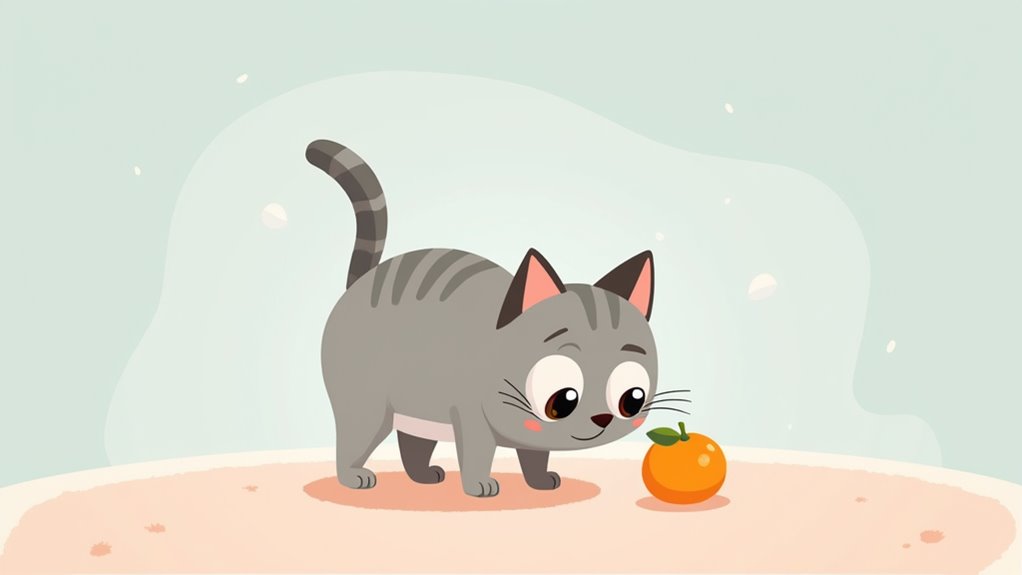
Sharing a slice of fruit with your cat may seem fine, but many cats dislike citrus fruits. This dislike comes from their strong sense of smell.
Cats have a special organ called the Jacobson’s organ. This helps them detect strong scents like limonene in oranges and lemons.
Why does this matter?
- Natural Instinct: Cats avoid citrus to stay safe from toxins.
- Nose Sensitivity: Citrus smells can bother their noses, causing sneezing.
- Evolution: Their ancestors avoided harmful plants, shaping their instincts today.
Cats avoiding citrus is normal behavior. Respect their feelings. In addition to citrus, many plants, including toxic lilies, can pose serious health risks to cats.
Keep citrus away from their space. This helps your cat feel safe and comfortable at home.
Symptoms of Mandarin Ingestion in Cats
Cats can have problems after eating mandarin. Watch for signs of stomach upset. Vomiting and diarrhea may happen within a few hours. These symptoms can be alarming.
Also, look for signs of trouble in their nervous system. Tremors or unusual tiredness can occur. These signs show that your cat may have a serious reaction.
It’s important to keep your cat safe. Prevent access to mandarin and other citrus fruits. Always be cautious with what your cat eats.
Gastrointestinal Distress Symptoms
Cats may experience gastrointestinal distress after eating mandarins. Symptoms can appear quickly and affect their digestion. Watch for these signs:
- Vomiting – Your cat may vomit often after eating mandarins.
- Diarrhea – This can happen due to irritation in the digestive tract.
- Drooling – Excess drooling may occur from oral irritation or nausea.
These symptoms show your cat is uncomfortable. They can lead to more serious issues if not treated. Additionally, citrus fruits can contain citric acid and essential oils, which may irritate your cat’s stomach.
Always provide fresh water to help your cat flush out irritants. Contact your veterinarian if symptoms continue or get worse.
It’s best to avoid giving mandarins and other citrus fruits to your cat. This helps prevent gastrointestinal upset and keeps them healthy.
Neurological Effects Signs
Eating mandarins can harm your cat’s nervous system. It can cause serious symptoms due to toxins. Signs to watch for include lethargy or unusual sleepiness. These indicate slowed brain activity. You might also notice reduced responsiveness or mental dullness. Muscle control may be impaired, making it hard for your cat to walk.
In severe cases, symptoms can worsen. Stupor or coma may occur. Look for tremors, ataxia, or staggering. These indicate motor and coordination issues.
Behavioral changes like disorientation or sudden withdrawal can happen too. Drooling or odd pupil reactions signal problems with the autonomic nervous system.
Always consult your vet if you think your cat ate mandarins. Your cat’s safety is the top priority.
Recommended Actions After Ingestion
It can be scary to find out that your cat ate mandarin. Quick action is key. Here’s what to do:
- Watch your cat for signs like vomiting, diarrhea, or drooling.
- Call your vet right away if you see any symptoms or if you’re unsure how much was eaten.
- Contact an animal poison control center for expert help. You can reach out to ASPCA Poison Control or the Pet Poison Helpline.
Taking care of your cat after ingestion is crucial.
Don’t try to make your cat vomit or use home remedies without talking to a vet first. Keep some of the mandarin for your vet to check.
Treatment may include fluids and medications. Keep an eye out for any unusual behavior or worsening conditions.
Acting quickly can help your furry friend feel better. Seek help without delay!
Safe Fruit Alternatives for Cats
Cats can enjoy safe fruit snacks that taste good and are healthy. Here are some great fruit choices for your feline friend:
1. Apples****
Always remove seeds and stems. Offer 1-2 small pieces. Apples give fiber, vitamins A and C, and help with hydration. However, cats are obligate carnivores, so fruits should be given only as occasional treats. It’s important to remember that moderation is crucial to prevent any digestive upset.
2. Bananas****
Serve 1-2 small slices. Bananas provide vitamins B6 and C, plus potassium for muscle health.
3. Berries****
Blueberries, strawberries, and raspberries are safe. Serve 2-3 berries each day. They’re full of antioxidants and support the immune system.
4. Melons****
Watermelon and cantaloupe are refreshing options. Always remove seeds and don’t give rinds.
5. Pears
Remove seeds and give small amounts. Pears are rich in vitamins and dietary fiber.
These tasty fruit snacks can boost your cat’s health and keep them happy!
Frequently Asked Questions
Can Cats Have Mandarin Juice or Zest?
Cats should not eat mandarin juice or zest. These citrus fruits can upset their stomachs. They may also cause neurological issues. Citrus fruits are toxic to cats. Keep all types of citrus away from your furry friend. It’s best to stick to safe cat treats instead. Your cat’s health is important. Always choose foods that are safe for them.
Are There Any Safe Citrus Fruits for Cats?
Citrus fruits are not safe for cats. All types can cause harm. This includes oranges, lemons, limes, and grapefruits. These fruits can upset your cat’s stomach and cause other health issues.
Instead, offer your cat safe snacks. Apples and blueberries are great choices. These fruits do not harm cats and can be a tasty treat. Always chop them into small pieces. This makes it easier for your cat to eat.
Keep your furry friend healthy. Avoid giving them any citrus fruits. Stick to safe options that make your cat happy and healthy.
What Should I Do if My Cat Likes Mandarins?
Cats and mandarins don’t mix well. These fruits can upset a cat’s stomach. Citrus fruits like mandarins contain compounds that are toxic to cats. Keep your cat safe by avoiding mandarins.
Instead, find cat-friendly treats. Look for options made specifically for cats. Toys are also a great alternative. Engage your cat with fun, safe toys to keep them busy.
Understanding what your cat likes helps. Cats are curious about different smells and tastes. Redirect that curiosity to safe choices. This keeps your cat happy and healthy. Always prioritize their safety over their curiosity.
How Much Mandarin Is Dangerous for Cats?
A small piece of mandarin can upset a cat’s stomach. Even just a nibble may cause vomiting. Any amount of mandarin can be harmful. It is best to keep mandarins away from your cat. Always choose safe foods for your pet. Cats need proper nutrition to stay healthy. Avoid risks by not feeding them citrus fruits. Remember, a happy cat is a healthy cat.
Can Mandarin-Scented Products Harm My Cat?
Mandarin-scented products can harm your cat. These products often contain essential oils that are toxic to pets. Symptoms of mandarin toxicity include drooling, vomiting, and tremors.
Keep all mandarin-scented items out of reach. Your cat’s health is important. Always check labels before using any scented products. Stick to safe options to protect your furry friend.
Conclusion
Mandarins may look tempting, but they aren’t good for cats. Citrus fruits like mandarins can upset your cat’s stomach. The acidity and oils in these fruits can cause digestive problems and even toxicity. It’s better to stick to cat-friendly fruits such as blueberries or watermelon. These options are safe and tasty. A happy cat is a healthy cat, so make smart choices for their diet!
