
Can Cat Eat Pizza Crust
This post contains affiliate links. As an Amazon Associate, we earn from qualifying purchases.
Cats should not eat pizza crust. It is high in carbohydrates, which are unnecessary for their diet, and consuming too much can lead to weight gain and kidney issues due to the high salt content. Additionally, raw dough poses risks of painful bloating or even alcohol poisoning in cats. Toxic ingredients commonly found in pizza, such as garlic, onions, and fatty meats, can also be harmful. For those interested, further details and safer snack options for your feline friend will be discussed later in the article.
Essential Facts in 30 Seconds
- Pizza crust is high in carbohydrates, unnecessary for cats.
- It contains high salt levels that can harm a cat’s kidneys.
- Raw dough can cause painful bloating and alcohol poisoning.
- Garlic and onion, common pizza ingredients, are toxic to cats.
- Cats are typically lactose intolerant, making cheese and dairy risky for them.
Nutritional Value of Pizza Crust for Cats
Sharing pizza crust with your cat might seem fun, but it’s not good for them.
Pizza crust mainly has flour, yeast, water, sugar, and salt. This means it’s high in carbs. Cats don’t need carbs. They need protein to stay healthy. Additionally, excessive consumption of pizza crust can lead to weight gain and health issues.
Pizza crust has too much salt. Too much salt can hurt your cat’s kidneys over time. Plus, pizza crust has little nutrition. It lacks important amino acids like taurine and essential vitamins.
Feeding your cat pizza crust can lead to weight gain and health problems. A tiny bite may be okay, but don’t make pizza crust a regular treat. Rich, fatty foods can contribute to obesity and other health problems.
Stick to cat-friendly snacks. Your cat will be healthier and happier!
Risks of Feeding Raw Dough to Cats
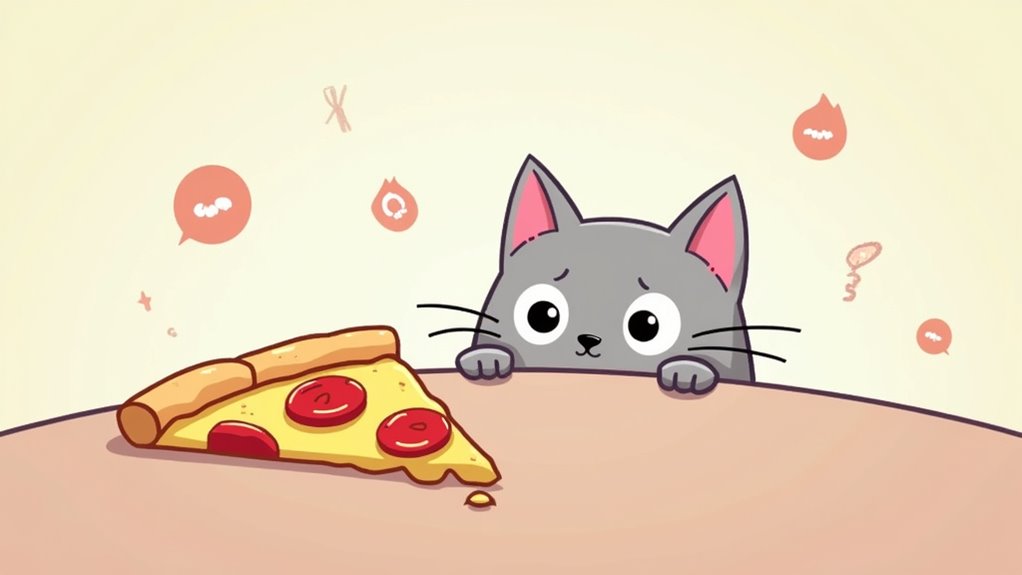
Sharing food with your cat should be done carefully. Raw dough isn’t safe for cats. When cats eat raw dough, it expands in their stomachs. This happens because of the yeast in the dough. The expansion can cause painful bloating. In serious cases, it can lead to a dangerous condition called gastric dilatation and volvulus.
Yeast toxicity is another big problem. As dough ferments, it produces carbon dioxide and ethanol. These substances can enter the bloodstream and cause alcohol poisoning. Symptoms include vomiting, weakness, and trouble breathing.
To keep your cat safe, don’t feed them raw dough. Store dough-making supplies out of their reach. Learn about the risks of raw dough. If you think your cat has eaten dough, take them to the vet right away. Quick action can help prevent serious problems.
Toxic Ingredients in Pizza That Affect Cats
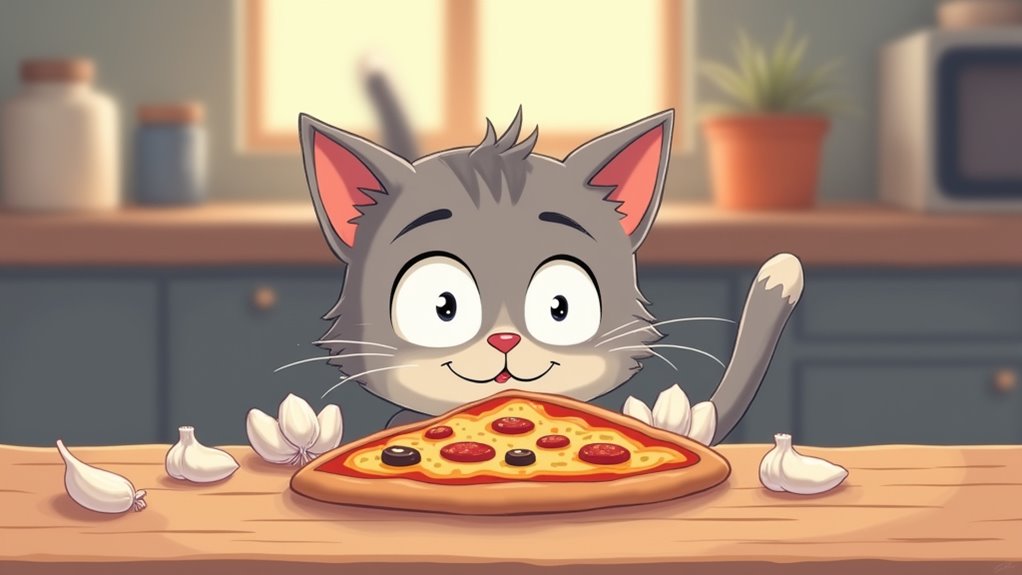
Cats love to explore food. This curiosity can lead them to pizza. But many pizza ingredients can be harmful to them.
Garlic and onions are two big threats. These foods belong to the allium family. Even a little can be toxic. Garlic can harm red blood cells. This may cause serious issues like hemolytic anemia. Onion toxicity can lead to symptoms like vomiting, diarrhea, and weakness.
Here are other harmful pizza ingredients for cats:
- Garlic and Onion: Very toxic. They can destroy red blood cells.
- Processed Meats: High in fat and sodium. They can lead to obesity and salt toxicity.
- Tomato Sauce: Often has garlic and spices. This can upset your cat’s stomach.
Garlic powder contains thiosulfates that are harmful to cats, making it critical to keep it away from their diet.
Keep your cat safe. Don’t share pizza or any food with these harmful ingredients.
If your cat eats any pizza, watch them closely. Contact your vet if you see any symptoms.
Digestive Issues Related to Cheese and Dairy
Many pet owners don’t know that cheese and dairy can upset a cat’s stomach. Most adult cats can’t digest lactose well. This means they might get sick after eating cheese.
Watch for these signs of lactose intolerance:
- Diarrhea
- Vomiting
- Bloating and gas
These symptoms can happen 8-12 hours after eating. Cats aren’t built to digest dairy. This can lead to pain and discomfort. In fact, most adult cats are lactose intolerant, which makes dairy consumption particularly risky. Many adult cats also produce less lactase as they age, exacerbating the problem.
Cheese can also cause constipation if eaten too often. Cheese doesn’t give cats any important nutrients. It’s best to avoid it. Focus on a balanced diet that includes meat. This will meet your cat’s needs.
If your cat feels bad after eating dairy, talk to your vet. They can give you advice on how to help.
Safe Alternatives to Pizza for Cats
Sharing pizza with your cat might be tempting, but it’s better to choose safer options. Cats need special foods that fit their diet. Here are some great protein choices:
- Fish (baked or boiled without seasoning) is rich in omega-3s and protein.
- Plain cooked meats such as beef, chicken, or turkey are full of nutrients.
- Eggs are another excellent source of protein when cooked simply.
For healthy vegetable snacks, consider:
- Carrots (cooked or raw) for fiber and vitamins.
- Melons like cantaloupe in small amounts for hydration.
- Pumpkin helps with digestion; just use a little. Fruits and vegetables are not critical to a cat’s diet.
You can also make homemade treats that look like pizza. Use cooked chicken on a base of squash or sweet potato. Remember that treats should only make up a small portion of the cat’s diet, ensuring your cat receives balanced nutrition.
Never give your cat pizza crusts. Dough with yeast, salt, or spices can be dangerous. These tasty alternatives keep your cat happy and healthy!
Frequently Asked Questions
Can Cats Eat Pizza Toppings Like Pepperoni or Sausage?
Cats should not eat pizza toppings like pepperoni or sausage. These foods can be harmful. Pepperoni contains ingredients that can poison cats. Sausage often has unhealthy fats and spices. These can lead to big health problems for your cat.
Cats need a balanced diet. Their bodies are not made to digest processed meat. Instead, stick with cat food that gives them the nutrients they need. Safe treats are better options. Always keep your cat’s health in mind.
What Should I Do if My Cat Eats Pizza?
Your cat just ate pizza. Now what? First, keep an eye on your cat’s behavior. Look for signs of distress like vomiting or lethargy. Remove any pizza leftovers to prevent further eating.
Some pizza ingredients can be harmful. Garlic is toxic to cats. Excessive cheese can upset their stomachs. If your cat shows any strange symptoms, call a vet right away. Better safe than sorry!
Stay calm. Cats are tough. Many will be fine after a little pizza. Just watch them closely for a few hours. Keep their water nearby and encourage them to drink. This helps their digestion.
In short, monitor, remove leftovers, and consult a vet if needed. Your cat’s health is the priority.
How Much Pizza Crust Is Safe for Cats?
Very small pieces of plain pizza crust can be safe for your cat. Just remember to give little bites. Cats have different diets. Some may need to avoid carbs or extra ingredients. Always check for any health issues. Too much pizza crust can upset their tummy. Keep portions small to keep your cat happy and healthy.
Are There Any Benefits to Giving Cats Pizza Crust?
Giving your cat pizza crust has no benefits. It may look tasty, but it doesn’t provide key nutrients that cats need. Pizza crust can even cause health problems for your furry friend. It’s best to choose healthier treats that will keep your cat happy and healthy. Stick to cat-friendly snacks for their well-being!
Can Kittens Eat Pizza Crust Safely?
Kittens cannot eat pizza crust. It’s not good for them. Pizza crust lacks the nutrients they need. It can upset their stomachs and cause other health problems. Kittens need a special diet. Offer them treats made just for kittens. These treats support their growth and health. Always choose foods that are safe for your furry friends. Keep them happy and healthy with the right snacks!
Conclusion
Pizza crust may seem harmless, but it’s not good for your cat. It can cause digestive issues. Some ingredients in pizza are toxic to cats. The risks outweigh any enjoyment your cat might get.
Instead of sharing your pizza, give your cat safe treats. Cooked chicken is a great option. Catnip-infused snacks are also fun and safe.
Always put your cat’s health first. They depend on you to make smart food choices. Choose treats that nourish without the risks. Your cat will appreciate the thought!
