
Can Cat Eat Raw Food
This post contains affiliate links. As an Amazon Associate, we earn from qualifying purchases.
Yes, cats can eat raw food, but it’s crucial to ensure that it is nutritious and safe. Raw diets should be balanced, containing 30-45% fat and 20% raw meaty bones for calcium. However, there are risks, as up to 20% of raw foods may harbor harmful bacteria like Salmonella, and raw bones can pose choking hazards or cause injuries. For detailed guidance on nutrition and safety, consulting your vet is recommended. Further explanation and supporting details will be provided for those interested in a deeper understanding of the risks and benefits.
Essential Facts in 30 Seconds
- Cats can consume raw food if the diet is balanced and complete for health.
- Raw diets may contain harmful bacteria like Salmonella and Listeria, posing risks to cats and humans.
- Raw bones can lead to choking or internal injuries; caution is advised.
- Consult a veterinarian for nutritional adequacy and safety of raw diets.
- Benefits of raw feeding include improved coat condition and increased energy, but nutritional balance is crucial.
Nutritional Completeness and Balance of Raw Diets
A raw diet for your cat needs to be balanced and complete. Cats need lots of protein for their health. They require amino acids, especially taurine. Taurine is crucial for their heart and vision.
To ensure your cat gets enough nutrition, follow these tips:
- Protein: Make muscle meat the main part of the diet. Use different types of meat for variety.
- Fat: Aim for 30-45% of calories from fat. Watch levels to keep them balanced. Additionally, monitoring for signs of nutritional deficiencies is crucial to maintain overall health.
- Vitamins and Minerals: Include raw meaty bones for calcium. Bones should be about 20% of the diet.
Consult your veterinarian when making a raw diet. They can help you choose the right foods. This way, your cat gets all the nutrients needed for a long, healthy life. Additionally, consultation with a veterinarian is crucial to avoid potential deficiencies that could harm your cat’s health.
Bacterial and Pathogenic Risks Associated With Raw Food
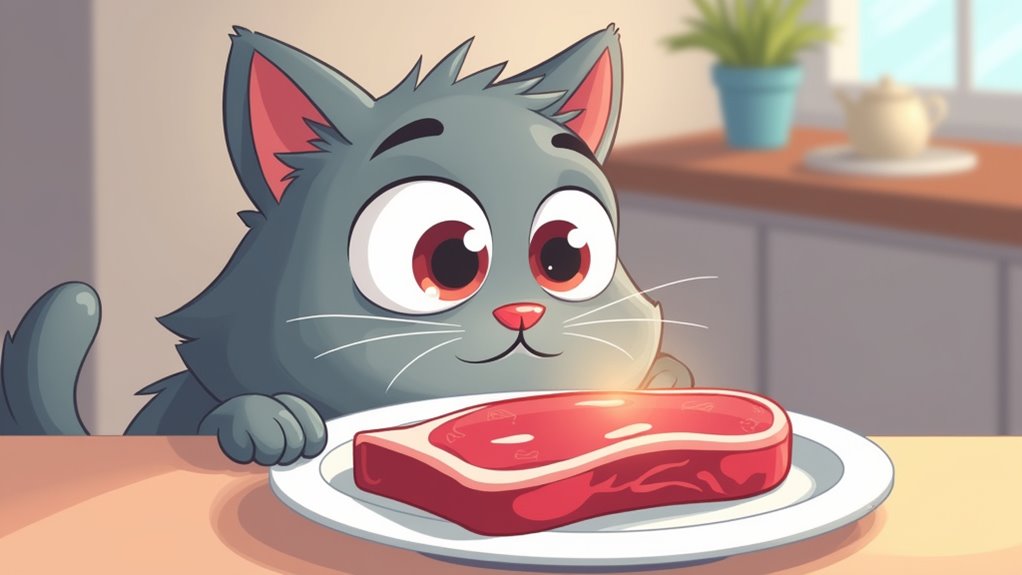
Contamination Levels: Up to 20% of raw pet foods can carry *Salmonella*. In contrast, traditional pet foods have less than 0.5%. This high level of bacteria can harm both your cat and your family.
Almost 25% of raw cat food samples test positive for dangerous bacteria, like *Listeria monocytogenes*, which can lead to serious health problems.
Your cat can spread these germs through saliva and feces. This can make your home unsafe. Keep hygiene a priority. Always wash your hands, feeding bowls, and surfaces after handling raw food.
Be extra careful around children and elderly family members. They’re more likely to get sick from germs like *Salmonella* or *E. coli*.
To stay safe:
- Handle raw food carefully.
- Store it properly.
- Watch your pet’s health closely.
Additionally, raw fish can contain harmful bacteria that pose further risks to both cats and humans.
With these steps, you can protect both your cat and your family from these risks.
Physical Hazards of Feeding Raw Diets

Feeding your cat a raw diet has serious risks. Knowing these risks helps keep your cat safe.
- Choking Hazards: Raw bones can break. This can cause choking or injure their mouth and throat.
- Physical Injuries: Sharp bone pieces can cut the digestive tract. This can lead to dangerous blockages or internal damage.
- Contamination Risks: Dirty preparation or foreign objects can harm your cat. This can cause stomach issues or infections.
To keep your cat healthy, consider safer food options. Ensure any raw food is clean and from trusted sources. Additionally, consulting with a veterinarian can help ensure nutritional needs are met safely.
Always talk to your vet about your cat’s diet. Regular check-ups can help catch nutrient problems and keep your cat in good health.
Taking these steps reduces the risk of injuries and keeps your furry friend happy.
Veterinary and Regulatory Recommendations
Many pet owners think raw diets are good for cats. But experts warn against them. The CDC, FDA, and CVMA say raw food can be unsafe. It often carries harmful bacteria like Salmonella and E. coli. These germs can make both cats and their owners sick. Additionally, raw fish can contain harmful bacteria that pose health risks.
Veterinarians point out that raw diets can cause health problems. Cats might suffer from nutritional imbalances. This can lead to organ issues and weakened immune systems. This is especially risky for young, old, or sick cats. Additionally, feeding cats urinary food is not necessary for those without urinary problems, as it may lead to further dietary imbalances. Some raw fish, like sardines, can be safer options if given in moderation.
To keep your cat safe, consider these tips:
- Feed balanced, commercially made, or cooked diets.
- Keep a clean kitchen when handling raw food.
- Wash hands and clean surfaces after preparing food.
Taking care of your cat means following expert advice. Choose safe food options. Avoid the dangers of raw feeding. Your feline friend deserves a healthy and safe diet.
Potential Benefits and Considerations of Raw Feeding
A raw diet for cats offers many benefits and some risks. Many pet owners notice positive changes after switching to raw food. They often see better health and more energy in their cats.
- High Digestibility: Raw diets have a digestibility rate of 90-95%. This means better nutrient absorption and smaller stools.
- Natural Nutrients: Raw food closely resembles a cat’s natural diet. It provides essential vitamins and minerals that processed foods often lack.
- Positive Owner Feedback: Many owners report shinier coats, increased energy, and cleaner teeth after switching to raw feeding. Additionally, raw ground beef can be included in the diet as an occasional treat to enhance variety and interest.
Balanced nutrition is crucial. An unbalanced raw diet can cause nutrient deficiencies. Always talk to your vet before changing your cat’s diet.
Safe handling practices are vital to reduce contamination risks.
Frequently Asked Questions
How Do I Transition My Cat to a Raw Food Diet?
To transition your cat to a raw food diet, start slowly. Mix a small amount of raw food with their regular meals. Use about 10% raw food at first. Watch how your cat reacts. If they like it, increase the raw food portion gradually. Aim for a 50/50 mix after a few weeks.
This method helps your cat adjust. It also allows time for any digestive changes. Keep an eye on their health. Look for signs of energy and good digestion.
Raw food can offer many benefits. It may improve your cat’s coat and teeth. A raw diet can also boost their energy levels. Be sure to choose high-quality raw food. Look for options that are safe and nutritious. Consult your vet for guidance. They can help you make the best choices for your cat.
Can I Mix Raw Food With Dry Kibble?
Mixing raw food with dry kibble is fine. Many pet owners do this to improve their cat’s diet. This combination can offer better nutrition and taste.
Start by adding a small amount of raw food to the kibble. This helps your cat adjust. Watch for any signs of digestive problems. If everything goes well, you can gradually increase the raw food.
Keep an eye on your cat’s weight and health. A balanced diet is key for their well-being. Mixing raw food with kibble can make meals more exciting and nutritious. Enjoy feeding time!
How Often Should I Feed My Cat Raw Food?
Think of your cat as a little lion! Feed your cat raw food two times a day. Kittens need three meals daily. Adjust the amount based on their size and activity. Always watch their health and appetite. This helps you know if they need more or less food. Cats thrive on a diet that mimics what they would eat in the wild. Raw food can keep their coat shiny and their energy high. Keep fresh water available at all times. Regular feeding times help your cat feel secure. Enjoy your time with your little feline friend!
What Are the Signs My Cat Is Allergic to Raw Food?
Cats can have allergies to raw food. Watch for these signs: chronic itching, skin inflammation, vomiting, diarrhea, or excessive paw chewing. These symptoms can mean your cat’s body is reacting poorly to the food. It’s important to keep an eye on their behavior and health. If you notice any of these signs, consider changing their diet. Consulting a vet can help you find the right food for your cat’s needs. Keeping your cat healthy is key, so pay attention to their reactions.
Is It Safe to Prepare Raw Food at Home?
Preparing raw food at home can be risky. Bacterial contamination is a big concern. Foodborne illnesses can make you very sick. Nutritional balance is also important. Without expert guidance, it’s hard to get it right. Strict hygiene is essential. You need to wash hands and surfaces often. Sourcing safe ingredients is crucial too. Not all stores offer fresh, safe produce.
If you want to try raw food, consider local classes. Many places teach safe practices. They can help you learn about safe preparation. Eating raw can be healthy, but safety comes first. Always prioritize your health and well-being.
Conclusion
Raw food diets can have benefits for some cats. They may enjoy fresh, natural meals. Yet, there are big risks involved. Raw food can hide harmful bacteria. It might also lead to imbalances in nutrition.
Before changing your cat’s diet, talk to your vet. They can help you make safe choices. Always put your cat’s health first. A balanced diet, approved by a vet, keeps your cat happy and healthy. Avoid unnecessary risks with their food.
