
Can Cat Eat Raw Spinach
This post contains affiliate links. As an Amazon Associate, we earn from qualifying purchases.
Feeding your cat raw spinach can pose risks, as it may lead to vomiting and diarrhea due to its calcium oxalate content, which can also contribute to kidney stones. Cooking spinach is a safer option, as it reduces oxalate levels and aids digestion. Always serve it plain and in moderation. If your cat shows interest, monitor for any signs of an upset stomach afterward. For those interested in a deeper understanding of the topic, further details will follow.
Essential Facts in 30 Seconds
- Cats can eat raw spinach in small quantities, but it shouldn’t be a staple in their diet.
- Raw spinach contains vitamins A and B6, beneficial for health, but it may cause digestive issues.
- The calcium oxalate in raw spinach can potentially lead to kidney stones and urinary problems in some cats.
- Always wash spinach well to remove pesticides and serve it plain, without additives.
- Observe your cat for any signs of discomfort after eating raw spinach, as reactions may vary.
Nutritional Benefits of Spinach for Cats
Feeding your cat raw spinach can offer many nutritional benefits. Spinach, especially baby spinach, is rich in vitamins.
Vitamin A helps your cat see better and boosts their immune system. Vitamin B6 supports healthy red blood cells.
Spinach also contains essential minerals like iron. Iron helps prevent anemia.
Calcium and magnesium are important for strong bones and healthy muscles.
Fiber in spinach aids digestion. It promotes regular bowel movements and can help with constipation.
Cats have their own likes and dislikes. Introduce spinach slowly. Start with a small amount and see how your cat reacts.
Adding spinach can enhance your cat’s health. Balance it with their regular diet.
Always check with your vet before making big changes to their meals. This ensures the food meets their specific needs.
Risks of Feeding Raw Spinach to Cats
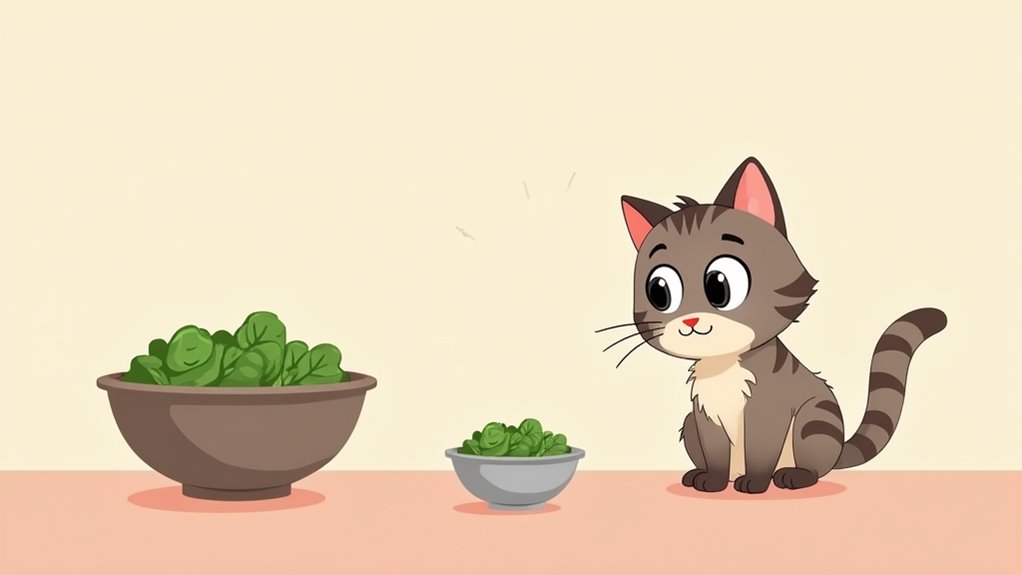
Feeding raw spinach to cats can be risky. Here are important things to know:
- Upset Tummies: Raw spinach can cause vomiting and diarrhea. This can make your cat feel bad.
- Oxalate Issues: Spinach has calcium oxalate. This can lead to kidney stones and hurt the urinary tract.
- Choking Risks: The fibrous texture of raw spinach can make choking more likely than with cooked spinach.
- Nutritional Problems: Regularly feeding spinach can block mineral absorption. This may cause deficiencies in your cat’s diet.
Additionally, cats are obligate carnivores and their primary diet should consist of meat. Talk to your vet before adding spinach to your cat’s meals. Watch for any signs of stomach upset.
Don’t give large amounts. A small piece might be fine, but your cat’s health is the most important thing. Always focus on what’s best for their diet.
Benefits of Cooked Spinach for Cats
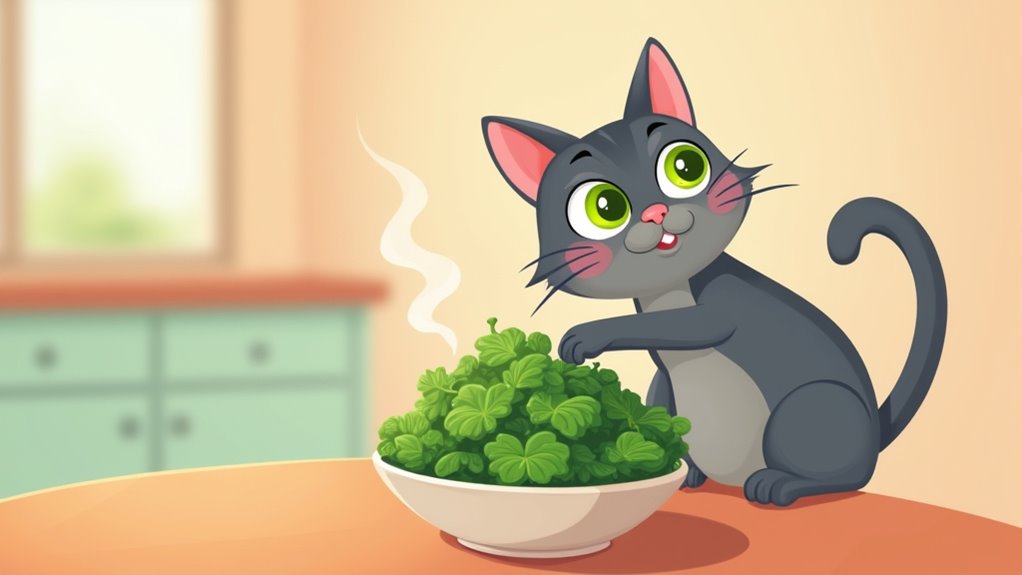
Cooked spinach brings many benefits for cats. Preparing it the right way helps keep its nutrients. Cooking spinach lowers oxalate levels. This helps your cat absorb more minerals and reduces the risk of kidney stones. Additionally, cats are obligate carnivores, so the majority of their diet should still consist of meat.
Cooked spinach keeps important vitamins like A, K, and E. These vitamins support vision, immune health, and skin condition. Cooking also makes spinach leaves softer. This softness makes it easier for your cat to chew and digest. The added fiber helps with digestion and keeps bowel movements healthy.
With lower oxalates, cooked spinach is safer for cats. This is especially important for cats with urinary sensitivities. Additionally, moderation is crucial as too much spinach can lead to gastrointestinal upset.
To serve cooked spinach, steam or sauté it gently. Avoid adding oils or spices. This preserves its nutrients and keeps it safe for your cat. Remember to serve it in small amounts to avoid tummy troubles.
General Guidelines for Feeding Spinach to Cats
Spinach can be a fun treat for your cat. Follow these tips to serve it safely:
- Start Small: Give your cat a tiny piece of raw spinach first. This checks if your cat likes it.
- Wash Thoroughly: Clean the spinach leaves well. This helps remove pesticides and dirt.
- Serve Plain: Offer the spinach leaves as they’re or lightly steamed. Don’t add salt, oil, or spices.
- Occasional Treat: Remember, spinach is a special snack. It shouldn’t be part of your cat’s daily meals. Keep in mind that cats cannot effectively process plant matter, so moderation is key.
Keep these tips in mind for a safe and enjoyable experience!
Health Considerations Regarding Spinach and Cats
Adding spinach to a cat’s diet can be risky. Spinach has calcium oxalate, which may cause urinary crystals and stones. This is especially dangerous for cats with kidney problems.
Avoid spinach if your cat has urinary issues.
For healthy cats, small amounts of spinach can be safe. Still, not all cats like it. Some may find the texture hard to chew, which can be a choking risk.
Cooking spinach can help lower oxalates while keeping some nutrients. Always talk to your vet before giving spinach. This is important if your cat has health problems.
Watch for signs like upset stomach or changes in urination after eating spinach.
Frequently Asked Questions
Can Kittens Eat Raw Spinach Safely?
Kittens can eat raw spinach, but it might not be the best choice. Spinach contains oxalates. These can cause kidney problems in some cats. It’s better to focus on safer vegetables for their diet. Carrots and peas are good options. Introduce any new food, like spinach, slowly to see how your kitten reacts. Watch for any digestive upset. Always ask your vet for advice on your kitten’s meals. Keeping them healthy is the most important thing.
What Are Signs of Spinach Allergy in Cats?
Intense itching, trouble breathing, vomiting, or upset stomach can mean your cat is allergic to spinach. These signs show that spinach can harm their health. Spinach may not be safe for cats. Always pay attention to how your cat reacts after eating new foods. Keeping your cat healthy is the top priority. If you notice any symptoms, contact your vet right away. They can help ensure your cat stays safe and happy.
Is Spinach Safe for Senior Cats?
Spinach can be safe for senior cats, but only in small amounts. It offers some benefits, like vitamins and minerals. Always watch for any upset stomach or discomfort after eating.
Cats need a balanced diet. Focus on high-quality cat food that meets their nutritional needs. Leafy greens like spinach can be a fun treat, but they shouldn’t replace regular cat food.
Be careful with how much spinach you give. Too much can cause problems. Keep an eye on your cat’s health. If you notice any issues, stop feeding spinach and consult your vet.
Can Cats Eat Spinach Every Day?
Feeding your cat spinach every day is not a good idea. Spinach does have some nutrients, but it can also cause problems. Too much spinach may lead to kidney issues. A small amount, once in a while, is much better. Always talk to your vet before adding new foods to your cat’s diet. They can give you the best advice for your furry friend. Keep your cat healthy and safe!
How to Prepare Spinach for Cats?
To prepare spinach for your cat, steam or sauté it. Keep it simple. Avoid adding salt, oil, or spices. This helps keep the nutrients and lowers oxalates, which can be harmful in large amounts.
Once prepared, serve small portions. Spinach can be a fun treat for your cat. It should not replace their main food. Cats need protein, so keep that as the focus of their diet. Always watch how your cat reacts. If they enjoy it and feel good, then spinach can be a nice addition to their meals.
Conclusion
Spinach can be a healthy addition to your cat’s diet. It has vitamins and minerals that can help. But raw spinach can be risky. It contains oxalates, which may harm your cat’s kidneys. Cooking the spinach lowers these harmful substances. A small amount of cooked spinach can be a tasty treat for your cat. Always feed it in moderation. Talk to your vet for advice on your cat’s specific needs. They can help you decide if spinach is a good choice.
