
Can Cat Eat Salmon
This post contains affiliate links. As an Amazon Associate, we earn from qualifying purchases.
Yes, cats can eat salmon, but it’s important to exercise caution. While salmon is rich in omega-3 fatty acids beneficial for your cat’s coat and overall health, raw salmon can pose risks due to parasites, and processed salmon may contain harmful sodium. Always ensure it is thoroughly cooked, remove any bones, and serve in small portions—about 2-3 bites for a cat weighing between 9-15 pounds, once or twice a week. For more detailed information on the benefits and risks, continue reading.
Essential Facts in 30 Seconds
- Cats can eat salmon; it contains beneficial omega-3 fatty acids and high-quality protein.
- Always cook salmon thoroughly to eliminate harmful bacteria and parasites.
- Serve salmon in moderation, about 10% of their total diet, limited to once or twice a week.
- Remove all bones to prevent choking hazards, and avoid processed salmon with added salt.
- Monitor your cat for any adverse reactions after eating salmon, and consult a vet if issues arise.
Nutritional Benefits of Salmon for Cats
Salmon is a great food choice for your cat. It offers many health benefits. Salmon, like sockeye and coho, is high in omega-3 fatty acids. These fats are important for heart and brain health. Cats can’t make these fats, so they need them from food. Omega-3s also help keep your cat’s coat shiny and support their joints, especially in older cats. Feeding salmon occasionally can prevent nutritional imbalances that may arise from a diet too high in fish.
Salmon is also rich in high-quality protein. This protein has essential amino acids. It helps your cat build strong muscles and repair tissues. A healthy protein source helps your cat maintain a good weight.
Salmon contains many vitamins and minerals too. Vitamin B12 is good for the brain. Vitamin D helps keep bones strong by regulating calcium. Selenium is an antioxidant that protects cells. Potassium is important for muscle function. Wild-caught salmon is generally healthier than farmed salmon, providing better nutrition for your feline friend.
Adding salmon to your cat’s diet can meet their health needs and satisfy their taste. Just remember to give it in moderation!
Risks Associated With Feeding Salmon to Cats
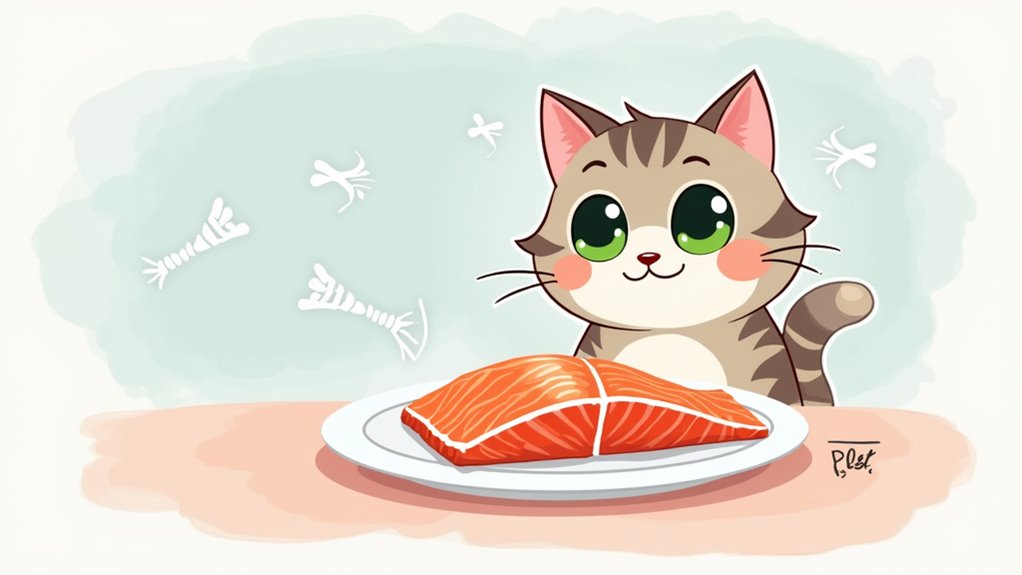
Salmon Toxicity and Parasite Risks
Raw salmon may contain parasites like flukes. These can infect your cat and cause health issues.
Bacteria such as Salmonella and Listeria can also lead to food poisoning. Feeding raw salmon too often can lead to thiamine deficiency. This can harm your cat’s nervous system. Additionally, raw fish can contain harmful bacteria and parasites that pose health risks to your cat.
Dangers of Processed Salmon****
Smoked or cured salmon often has high sodium. Too much salt can be toxic for cats. It can cause dehydration and kidney damage.
Canned salmon can also be high in sodium. It may contain small bones, which can be a choking hazard.
Health Conditions
Cats with health problems, like kidney disease or heart issues, need special care.
Talk to your veterinarian before adding salmon to their diet. This ensures their safety and health.
Safe Preparation Methods for Salmon
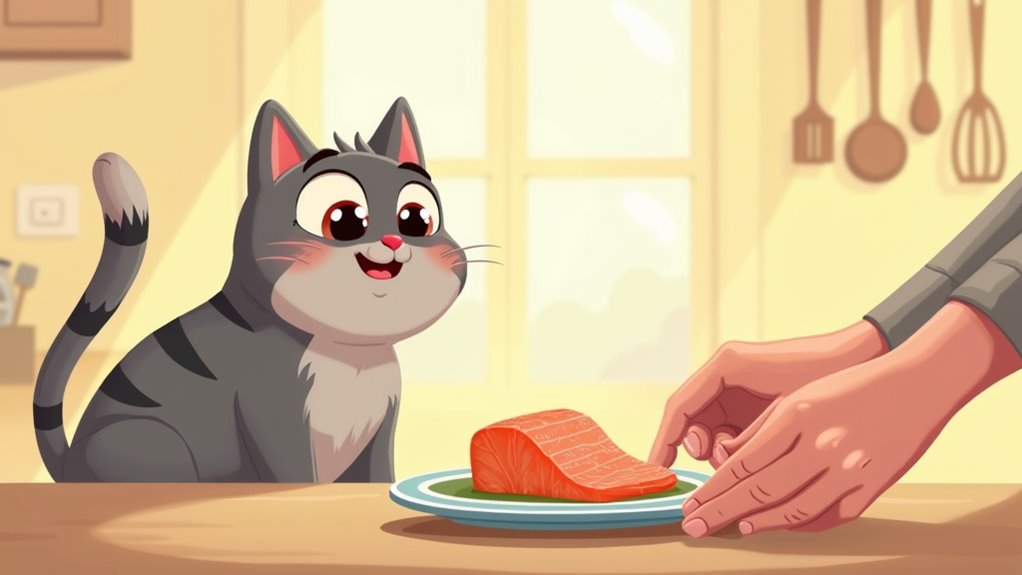
Preparing salmon for your cat requires safety first.
Cook the salmon well. Baking, boiling, or steaming works best. This kills any harmful bacteria. Always remove bones before serving. Bones can cause choking.
Salmon should be a treat, not a meal. Too much fish can upset your cat’s stomach. Offer it sparingly. It’s important to remember that raw salmon poses significant health risks for cats.
Your cat will enjoy the taste and benefit from the nutrients. Keep it safe and simple. Additionally, ensuring the salmon is fully cooked before serving helps prevent digestive issues related to raw fish.
Cooking Techniques for Safety
Cooking salmon for your cat is essential for their health. Here are some safe ways to prepare fish:
- Baking: Set the oven to 400°F. Bake for 12–15 minutes. Ensure it’s fully cooked.
- Boiling: Place the salmon in water. Cook until it’s done.
- Steaming: This method keeps nutrients. Cook without any oil.
Skip frying or adding seasonings. Too much fat can upset your cat’s stomach. Remove all bones to avoid choking.
You can give salmon skin, but make sure it’s cooked and plain. Offer it only sometimes because it has many calories.
Raw or undercooked salmon can have parasites. Cooking it well is very important. Always let the fish cool before serving. This prevents burns.
Serving Size Guidelines
Serving salmon to your cat can be enjoyable. Getting the portion sizes right is very important. The right amount helps prevent digestive issues and allergies. Use this simple guide for safe serving sizes based on your cat’s weight:
| Cat Weight (lbs) | Recommended Salmon Portion |
|---|---|
| Under 2 | 1/8 cup or less |
| 4-8 | 1-2 small bites |
| 9-15 | 2-3 small bites |
| Active Cats | Occasional larger bites |
Limit salmon to about 10% of your cat’s total diet each week. Serve it once or twice a week. Keep an eye on your cat’s health. Adjust serving sizes as needed. Always check with your vet for the best advice.
Salmon’s Role in Commercial Cat Foods
Adding salmon to your cat’s diet can offer many benefits.
Salmon is rich in high-quality protein and omega-3 fatty acids. These nutrients help your cat’s skin, coat, and joints stay healthy.
Always ensure the salmon in commercial cat foods is safe and well-prepared.
Raw or poorly processed salmon can cause health problems. Look for trusted brands that use safe salmon.
Your cat deserves the best!
Nutritional Benefits of Salmon
Salmon is a superfood for cats, packed with benefits for their health. Here are some key reasons to include salmon in your cat’s diet:
- Omega-3 Fatty Acids: These support heart, brain, and joint health. They also help reduce inflammation.
- High-Quality Protein: Salmon provides essential protein for muscle maintenance and energy.
- Vitamins and Minerals: Salmon is rich in B12 and D. These vitamins boost the immune system and strengthen bones.
These benefits make salmon a popular ingredient in cat food. Cats love the taste, and it keeps them healthy.
Safety and Preparation Methods
Your cat’s safety while enjoying salmon needs careful preparation. Always use high-quality salmon, preferably wild-caught. This helps reduce harmful contaminants. Additionally, a varied diet is important for maintaining your cat’s overall health and prevents reliance on a single food source.
Cook the salmon thoroughly to kill any harmful bacteria or parasites. Avoid adding seasoning, bones, or skin. These can cause choking or upset stomachs.
Treat salmon as a special treat, not a daily meal. Many commercial cat foods include salmon. These often use deboned, cooked salmon or salmon meal. This ensures safety and easy digestion.
Salmon broth is also a good choice. It hydrates and provides important nutrients. Keep in mind that occasional consumption of salmon is best to prevent any potential health issues.
Always read labels to check for quality. Follow portion recommendations to avoid overfeeding. This helps keep your cat’s diet balanced and healthy.
Potential Health Conditions Linked to Salmon Consumption
Salmon might seem like a tasty treat for your cat, but it carries health risks. Here are three health problems linked to salmon:
- Salmon Toxicity: Raw salmon can have harmful parasites. This can cause a disease called salmon poisoning, which can be deadly without treatment.
- Neurological Disorders: Eating raw salmon can lead to thiamine deficiency. This deficiency can cause serious issues like seizures.
- Heavy Metal Exposure: Salmon can collect toxic heavy metals. Over time, this can harm your cat’s kidneys and liver.
To keep your cat safe, always cook salmon well. Avoid giving raw fish.
Watch for signs of distress after your cat eats salmon. Signs like vomiting or seizures need a vet’s attention right away. Being careful helps protect your furry friend from serious health problems.
Recommendations for Feeding Salmon to Cats
Feeding your cat salmon can be a tasty treat, but safety is key. Always serve cooked salmon. Avoid any seasonings, oils, or marinades. The best cooking methods are baking, steaming, or boiling. Make sure to remove all bones to prevent choking.
Portion size is important. Offer your cat one or two small bites. Salmon shouldn’t be more than 10% of their daily calories. Treat it as a special snack, not a regular meal. Once or twice a week is perfect. This helps prevent any stomach issues or allergies.
Cats may enjoy other flavors too. Consider fish-based cat foods for balanced nutrition. When giving salmon, mix a little with their usual food. It’s important to remember that nutritional imbalances can arise from over-reliance on treats like salmon.
Watch for any bad reactions. If your cat seems upset, stop feeding salmon and talk to your vet. Always keep your cat’s health in mind.
Frequently Asked Questions
Can Kittens Eat Salmon Safely?
Kittens can eat salmon safely. Just make sure it is cooked well. No spices or extra ingredients should be added. Raw salmon can be harmful due to bacteria and toxins. Always watch for any signs of salmon toxicity.
Salmon can be a nice treat for your kitten. It is rich in protein and omega-3 fatty acids. These nutrients support healthy growth and a shiny coat.
Balance is key. Salmon should not replace your kitten’s main food. Offer it as an occasional treat. A good diet helps to prevent health problems. Always provide fresh water with their meals. Enjoy feeding your furry friend!
How Often Can I Feed My Cat Salmon?
Feed your cat salmon once or twice a week. This keeps their diet balanced and healthy. Small portions are best. Too much salmon can upset their stomach. Cats need a variety of foods. Salmon is a tasty treat but not a main meal. Always cook the salmon. Raw fish can be harmful. Removing bones is important. Watch for any signs of allergies. If your cat enjoys salmon, that’s great! Just remember, moderation is key.
Is Canned Salmon Safe for Cats?
Canned salmon can be a safe treat for your cat. It has good protein and omega-3 fatty acids. These nutrients help keep your cat healthy.
Watch out for some risks. Canned salmon often has added salt and other ingredients. Too much sodium is not good for cats. Always give small amounts. Treat it like a special snack, not a meal.
Make sure the salmon is plain and unseasoned. No sauces or spices. This way, you keep your cat safe and happy. Enjoy sharing this tasty treat with your furry friend!
What Are Signs of Salmon Allergy in Cats?
Signs of a salmon allergy in cats can be concerning. Look for persistent itching and skin irritation. Vomiting and diarrhea are also common signs. Swelling may occur too. Keep an eye out for severe reactions. Always consult your vet if symptoms get worse. Early action can help your cat feel better.
Can Salmon Help With My Cat’s Dry Skin?
Salmon can really help your cat’s dry skin. It contains omega-3 fatty acids. These fats hydrate the skin and reduce inflammation. This helps soothe dryness and irritation. With salmon, your cat can have a healthier and shinier coat. Many pet owners notice improvements after adding salmon to their cat’s diet. It’s a tasty way to support their skin health.
Conclusion
Salmon can be a tasty treat for your cat. It is full of good nutrients. Omega-3 fatty acids in salmon help keep your cat’s coat shiny and heart healthy. But, there are some risks too. Feeding too much salmon can cause allergies or even pancreatitis.
If you share salmon with your cat, make sure to prepare it safely. Cook it without any seasoning. Remove all bones and cut it into small pieces. Keep the portions small. Treat salmon like a rare snack, not a daily meal.
Your cat’s health is very important. Always think carefully about what you feed them. Moderation is key!
