
Can Cat Eat Table Food
This post contains affiliate links. As an Amazon Associate, we earn from qualifying purchases.
Feeding your cat table food is not recommended due to potential health risks. Cats require specific nutrients that table scraps often do not provide, and some human foods can be toxic to them. In this article, we will explore the dangers of feeding your cat table food, including toxic ingredients and the impact on their health, while also offering safe alternatives for a balanced diet.
Essential Facts in 30 Seconds
- Cats have specific dietary needs that differ from dogs.
- Some table foods, like onions, chocolate, and alcohol, are toxic to cats.
- Safe human foods, such as cooked chicken and certain vegetables, can be given as treats but should only comprise 10-15% of their diet.
- Sudden changes in diet, including table scraps, may cause digestive issues and other health risks, such as pancreatitis.
- Always consult a veterinarian for tailored dietary advice and to monitor your cat’s health with new foods.
Understanding Cats’ Nutritional Needs
Sharing your food with your cat might seem nice, but it can harm their health. Cats have special nutritional needs. They need about 41 important nutrients that are different from dogs. As obligate carnivores, cats rely on animal tissues for key nutrients like taurine and preformed vitamin A. They can’t get these from plants.
Here are some key points about cat nutrition:
- Protein: Cats need at least 26% protein in their diet. This helps keep their muscles and tissues strong. Additionally, small pieces of cooked meats can be a safe treat for your cat.
- Taurine: This amino acid is essential for heart and eye health. Cats can only get taurine from animal proteins.
- Fats: Cats need fats for energy and to absorb nutrients. Their bodies don’t make enough fatty acids on their own.
Knowing these facts helps keep your cat healthy. Always talk to your vet before changing their diet. Additionally, providing a balanced diet with high-quality commercial cat food ensures that all their nutritional needs are met.
Common Toxic Foods in Table Scraps
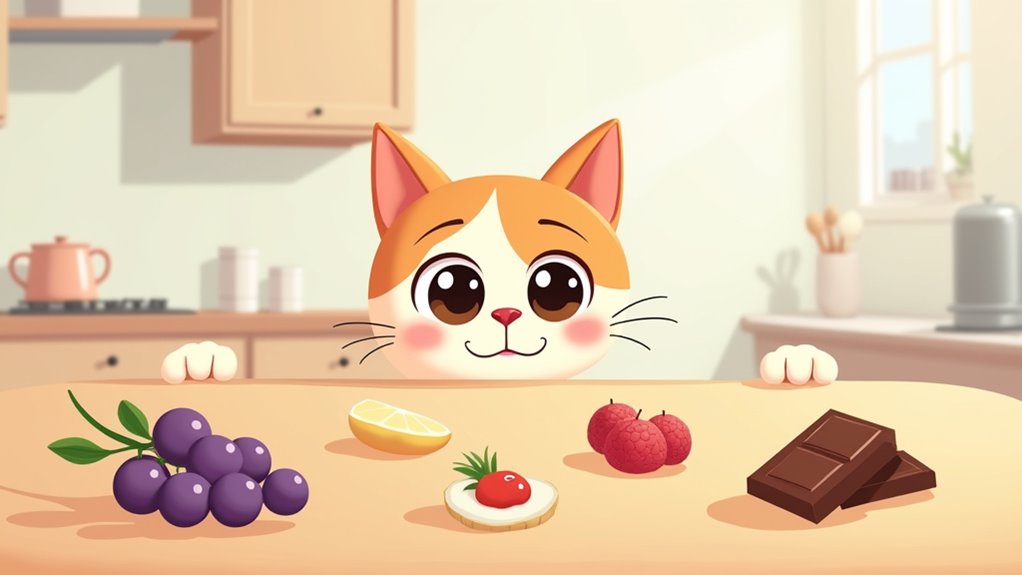
Sharing table scraps with your cat can be risky. Many common foods in your kitchen can harm your furry friend.
Alcohol and Caffeine
Even a small amount of alcohol can hurt your cat’s organs. Caffeine from coffee and tea can cause vomiting and heart problems.
Chocolate
Chocolate is dangerous. It has theobromine, which is toxic. Dark chocolate is especially harmful.
Allium Vegetables
Onions and garlic can hurt red blood cells. This can lead to anemia in cats. Garlic contains compounds that are toxic to cats and should be avoided entirely. Even small amounts of onion forms can be harmful.
Fat and Bones
Fatty scraps can cause vomiting and pancreatitis. Bones can choke your cat.
Toxic Fruits and Mushrooms
Citrus fruits can upset your cat’s stomach. Some wild mushrooms can be deadly.
Keep these foods away from your cat. It helps keep them safe and healthy!
Risks Associated With Feeding Cats Table Food
Feeding your cat table food might seem harmless, but it can cause serious problems. Here are some key concerns:
- Digestive Issues: Cats can have a hard time digesting human food. This often leads to vomiting or diarrhea. A sudden change in their diet can upset their stomach and lead to serious issues like pancreatitis.
- Nutritional Imbalances: Human food usually doesn’t provide the nutrients that cats need. This can lead to obesity and other chronic health issues. Overfeeding can also cause them to take in too many calories.
- Behavioral Problems: Giving table food can lead to bad habits. Cats may start begging for food, which can disrupt their training and cause stress for both of you.
To keep your cat healthy and prevent obesity, stick to a balanced diet made just for them. Additionally, remember that cats are obligate carnivores, meaning their diet should primarily consist of meat.
It might be tempting to share your meals, but think about the long-term health risks.
Make wise choices to keep your furry friend happy and healthy.
Safe Human Food Treats for Cats
Feeding your cat safe human food treats can be a great addition to their diet. Many options are nutritious and enjoyable. Here are some tasty choices:
| Safe Meat Options | Healthy Vegetable Choices | Safe Fruits |
|---|---|---|
| Cooked chicken | Cooked pumpkin | Blueberries |
| Plain boiled eggs | Softened carrots | Seedless watermelon |
| Cooked salmon | Pureed broccoli | Bananas |
Cooked lean meats like chicken, turkey, and eggs provide good protein. It’s crucial that these meats are prepared without added seasonings to ensure safety. Vegetables such as cooked pumpkin and carrots help with digestion. Fruits like blueberries and seedless watermelon make fun snacks. Always serve these treats in moderation. They should only make up about 10% of your cat’s daily intake. Avoid any seasoning, and ensure everything is cooked well. Keeping your cat safe and healthy is the priority! It’s also important to monitor for any adverse reactions when introducing new items to their diet.
Hazards of Table Foods and Leftovers
Sharing table food with your cat can be risky. Many foods are harmful to them.
Chocolate, for example, is toxic. Onions can also upset their stomach. Leftovers often have bad ingredients too. These can cause serious health problems. Garlic powder, in particular, is toxic to cats and should be avoided. Even small amounts of onions can be harmful to cats, leading to severe health issues.
It’s better to keep scraps away from your cat. Stick to cat food that’s safe and healthy. This way, your furry friend stays happy and healthy.
Always think about what your pet eats. A little care goes a long way.
Toxic Ingredients to Avoid
It’s important to know about toxic ingredients in table foods and leftovers. Even small amounts can harm your cat. Staying informed can protect your furry friend from serious health problems.
Here are three toxic ingredients to avoid:
- Allium Family: Onions, garlic, and chives can cause anemia, even in small amounts.
- Alcohol and Caffeine: Just one tablespoon of alcohol can cause a coma. Caffeine can make your cat very hyper and lead to severe reactions.
- Toxic Fruits and Seeds: Grapes, raisins, and cherry pits can be deadly. They can upset your cat’s stomach and cause more serious issues.
Always check what’s on your plate before sharing. Some foods aren’t safe for your beloved pet! Additionally, onion toxicity in cats can lead to severe health problems like hemolytic anemia, so it’s crucial to avoid these ingredients altogether.
Gastrointestinal Risks Explained
Many cat owners do not know that giving table food and leftovers can harm their pets. High-fat foods often lead to vomiting and diarrhea. Changing a cat’s diet suddenly can upset their stomach and gut health.
| Problem | Effect on Cats |
|---|---|
| High-fat table foods | Upset stomach, pancreatitis |
| Sudden dietary changes | Stomach pain, diarrhea |
| Nutritional imbalances | Vomiting, diarrhea, nutrient loss |
| Contaminated leftovers | Risk of toxins, organ stress |
| Altered gut bacteria | Inflammation, digestive diseases |
To keep your cat’s stomach healthy, feed them a balanced diet made just for cats. Avoid giving them table scraps. This helps prevent discomfort and serious health problems. Regular meals support a happy and healthy gut.
Long-Term Effects and Veterinary Recommendations
Feeding your cat table food can cause many health problems. Regularly giving them human leftovers may lead to obesity and poor nutrition.
Cats need specific nutrients that table food often lacks. This can result in serious health issues over time.
Talk to your vet about safe feeding practices. They can provide emergency care options too.
Keeping your cat healthy and happy is very important. Stick to cat food that meets their needs. Treats are fine, but they should be small and occasional.
Make smart choices for your furry friend.
Health Risks Overview
Feeding your cat table food may seem safe, but it can harm their health. Here’s what you need to know about the risks:
- Nutritional Imbalance: Cats need high protein and low carbs. Table scraps often miss essential nutrients.
- Obesity Risk: Human foods can be high in calories. This can lead to weight gain, diabetes, and joint problems.
- Toxicity: Some foods like garlic and onions are dangerous. They can hurt your cat’s organs and cause serious health issues.
Feeding your cat the wrong food can hurt them. Talk to your veterinarian about a proper diet. This helps keep your cat healthy and happy.
Good nutrition is key to a long life!
Emergency Care Importance
Acting fast is key if your cat eats something toxic. Watch for signs like severe vomiting, diarrhea for more than 48 hours, or sudden tiredness. Quick vet care can stop serious problems like poisoning or organ damage.
- Remove all toxic foods from your cat’s reach.
- Keep a close eye on their signs and hydration.
Veterinary care might include tests, fluids, and medications to protect their organs. Delaying treatment can lead to long-term issues like kidney or liver damage.
Always follow your vet’s advice for recovery. Quick action can save your cat’s life. Don’t wait to get help!
Safe Feeding Practices
To keep your cat healthy, pay attention to their food. Follow these safe feeding practices:
- Portion Control: Treats and table food should make up only 10-15% of their daily calories. This helps prevent nutritional problems.
- Safe Treats: Select treats that are good for cats. Avoid harmful ingredients like garlic and chocolate.
- Vet Advice: Talk to your vet before adding new foods. They can help you watch for any bad reactions and ensure your cat gets the right nutrition.
Frequently Asked Questions
Can Cats Eat Dairy Products Like Milk and Cheese?
Cats should not eat dairy products like milk or cheese. Many cats are lactose intolerant. This means they cannot digest lactose, the sugar found in milk. Giving them dairy can cause upset stomachs, diarrhea, or other health problems.
Instead of dairy, give your cat safe treats. Look for cheese alternatives made for cats. Stick to their regular cat food to keep them healthy. Always provide fresh water. This keeps your cat happy and hydrated. Remember, a balanced diet is key for your furry friend.
Is It Safe for Cats to Have Eggs?
Cats can safely eat eggs. Cook them well to avoid any health risks. Scrambled or boiled eggs are great choices. Serve them plain and only in small amounts. Eggs are nutritious and can be a tasty treat. Remember, moderation is key to keeping your cat healthy. Enjoy watching your cat enjoy this special snack!
Are There Any Fruits Cats Can Safely Eat?
Cats can enjoy some fruits safely. Apples and blueberries are good options. These fruits have fiber and vitamins. They can help keep your cat healthy. Remember to serve fruits in small amounts. Fruits should not make up more than 10% of your cat’s daily food. Always remove seeds and cores from fruits. This keeps your cat safe from harm. Always watch your cat for any reactions after trying new foods. Make sure your furry friend enjoys these treats!
How Often Can I Give My Cat Human Food?
Treats are like sprinkles on a cupcake. Fun, but not the main dish. You can share human food with your cat sometimes. Just do it in small amounts. Choose safe options to keep their diet healthy.
Some good choices include cooked chicken or fish. Avoid foods that are toxic, like onions or chocolate. Always watch how your cat reacts to new foods. Too many treats can upset their tummy. Balance is key for a happy cat. Keep their meals mostly cat food for the best health.
What Signs Indicate My Cat Is Having a Food Reaction?
Chronic itching, vomiting, diarrhea, and skin inflammation are signs of food reactions in cats. Watch for changes in behavior. Recurrent infections can also indicate food issues. These signs may mean your cat has food intolerance or allergies. Pay attention to what your cat eats. A food reaction can happen with any ingredient. Keep track of their symptoms. This information is helpful for your vet. Regular vet visits can help manage your cat’s health.
Conclusion
Sharing your meals with your cat can be tempting, but it’s important to be careful. Some table food is not safe for cats. Foods like onions, garlic, and chocolate can be harmful. Stick to safe options like cooked chicken or plain pumpkin. Always give these treats in small amounts.
Check with your vet for advice on what foods are best for your cat. This keeps your furry friend healthy and happy. Remember, making safe choices helps your cat thrive. Love and care go a long way in keeping your cat strong and joyful.
