
Can Cat Eat Tuna Fish
This post contains affiliate links. As an Amazon Associate, we earn from qualifying purchases.
Cats can eat tuna fish, but it should only be given in moderation. While tuna offers protein and omega-3 fatty acids that are beneficial for your cat’s health, excessive consumption can lead to mercury poisoning and nutritional deficiencies. It is advisable to limit tuna to about 10% of their diet—approximately 0.4 ounces weekly for a 5 lb cat or 1 ounce for a 15 lb cat. Opt for safe, water-packed varieties and serve it occasionally. For those interested in more detailed information on safe feeding practices, further explanation will follow.
Essential Facts in 30 Seconds
- Cats can eat tuna fish, but it should only be 10% of their daily diet.
- Tuna is high in protein and omega-3 fatty acids, which are good for skin and coat health.
- Regular consumption of tuna can lead to mercury poisoning and nutritional deficiencies.
- Choose water-packed canned tuna or freshly cooked, unseasoned tuna for safety.
- Serve tuna as an occasional treat, ideally once or twice a week.
Nutritional Value of Tuna for Cats
[Tuna can be a tasty treat for your cat. It has good nutritional value. Light tuna packed in water is a great option. One can has about 42 grams of protein. This protein helps your cat build muscles and stay healthy.
Tuna is also high in omega-3 fatty acids. These acids help keep your cat’s skin healthy and coat shiny. However, mercury content in tuna can pose health risks if consumed excessively.
Even with its benefits, tuna should only be about 10% of your cat’s daily food. Regular consumption of tuna can lead to health issues over time.
Mix tuna with other proteins like chicken or fish. Tuna alone doesn’t have all the nutrients your cat needs. Always choose low-fat and low-calorie tuna.
Give tuna as an occasional treat. It can make mealtime exciting for your cat.]
Health Risks of Feeding Tuna to Cats

Feeding tuna to cats can be risky. It may seem like a tasty treat, but it can cause serious health problems. Here are some important risks to know:
| Health Risk | Description | Consequence |
|---|---|---|
| Mercury Poisoning | Tuna can hold harmful mercury. | It can cause neurological issues and paralysis. |
| Nutritional Deficiencies | Tuna lacks key nutrients like vitamin E. | This can lead to bleeding problems and an unbalanced diet. |
| Pansteatitis Risk | Too much fat without enough vitamin E. | This can cause pain, fever, and inflammation. |
| Kidney Health | High phosphorus can hurt the kidneys. | It may speed up chronic kidney disease. |
Tuna should only be an occasional treat for your cat. Too much can cause lasting harm. Always watch what your cat eats to keep them healthy! Additionally, a varied diet is essential for a cat’s overall health and well-being. Consider limiting tuna intake to about once a week to mitigate potential risks.
Safe Tuna Options and Preparations for Cats
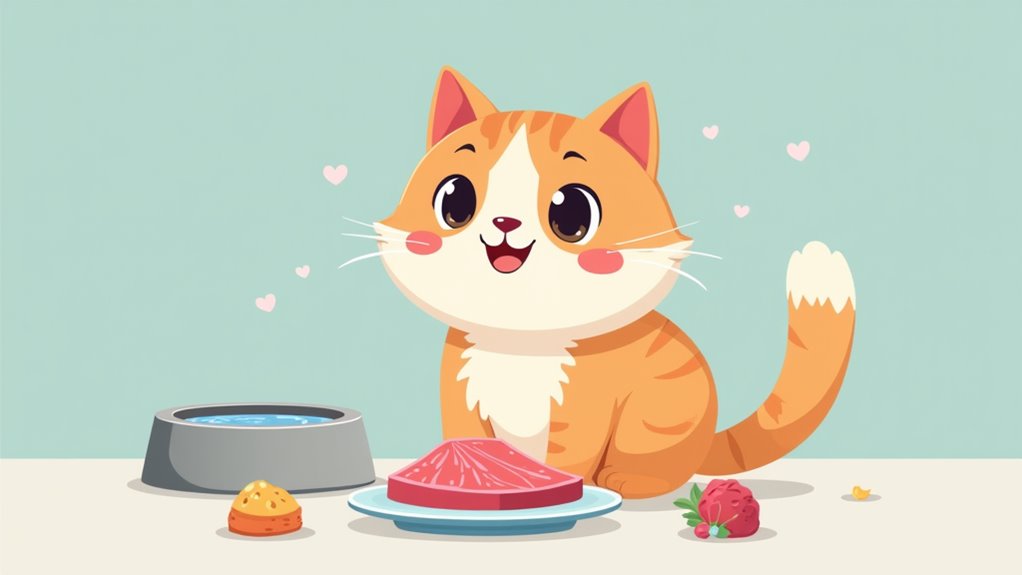
Feeding your cat tuna can be fun and tasty, but safety is key. Choose safe brands like Wild Planet or Weruva. They use skipjack tuna, which has lower mercury levels.
Tuna Preparation Guidelines:
- Fresh Tuna: Always cook it completely. Don’t add any seasonings. This helps kill harmful bacteria and thiaminase, reducing the risk of health risks associated with raw fish consumption.
- Canned Tuna: Pick unseasoned, water-packed tuna. Drain the water before serving. Avoid options with added salt or preservatives.
- Serving Size: Give tuna in small amounts. Treat it as an occasional snack to keep your cat healthy.
Key Tips:
- Mix tuna with other protein sources for balanced nutrition.
- Watch your cat for any allergies after giving tuna.
- Be cautious, as raw fish consumption can pose health risks to cats.
Following these tips keeps your cat safe and happy while enjoying their special treat!
Recommended Feeding Frequency and Portions
Keeping your cat healthy is important. Treating them to tuna can be fun, but do it right. Serve tuna once or twice a week. This helps avoid mercury buildup. It also prevents nutrient imbalances. Tuna shouldn’t be more than 10% of your cat’s weekly diet.
Feeding Guidelines:
- For a 5 lb cat, give up to 0.4 ounces of tuna each week.
- For a 15 lb cat, limit it to 1 ounce weekly.
Mix a little tuna with their regular food for added flavor. Don’t serve it alone.
Think about other options like chicken or beef. These can help keep your cat’s diet balanced. Always use water-packed tuna without any additives.
Watch for any changes in your cat’s health. Following these tips helps your furry friend stay happy and healthy!
Nutritional Benefits of Tuna in Moderation
Tuna can greatly benefit your cat’s diet. It provides high-quality protein, which helps build and maintain strong muscles. This protein includes all the amino acids your cat needs. It boosts energy and supports the immune system.
Tuna contains omega-3 fatty acids. These healthy fats improve your cat’s skin and coat. Yet, moderation is important. Too much tuna can lead to mercury exposure. Keep tuna as a treat, limiting it to 10% of your cat’s diet.
Tuna also has essential vitamins and minerals. Vitamin B12 and selenium help with energy and protect cells. However, a balanced diet is crucial for preventing nutritional imbalances and ensuring your cat’s overall health.
Cats need a low-carb diet to avoid obesity and diabetes. A balanced diet keeps your furry friend healthy and happy.
Frequently Asked Questions
Can Kittens Eat Tuna Safely?
Kittens should not eat tuna often. Tuna does provide protein, but it is not enough for their health. Kittens need a balanced diet full of vitamins and minerals. Regularly feeding them tuna can cause health problems. It may lead to imbalances in their diet.
Commercial cat foods are a better choice. They contain the right mix of nutrients for your kitten’s growth. Look for high-quality food made just for kittens. This way, your kitten will grow strong and healthy. Always prioritize their health with the right foods.
How Does Tuna Affect a Cat’s Hydration?
Tuna water can help keep your cat hydrated, especially during hot days. Cats often love the taste, which makes it a fun treat. Just remember to give it only sometimes. Too much tuna can cause health problems for your cat. Always make sure your cat has fresh water available. This keeps them healthy and happy!
Is There a Difference Between Fresh and Canned Tuna for Cats?
Fresh tuna offers more nutrients and omega-3 fatty acids for your cat. It’s a great choice for better health. Canned tuna, on the other hand, can have added salt and other chemicals. These can be harmful if given too often.
Feeding your cat fresh tuna can boost their energy and support their heart. But too much canned tuna may lead to health problems. Always serve either type in moderation. Keep your cat’s diet balanced to avoid issues. Fresh is best, but be careful with canned. Your cat deserves the healthiest options!
Can Tuna Cause Allergies in Cats?
Tuna can cause allergies in cats. Some cats may scratch or have skin issues after eating tuna. This could mean they are allergic. Allergies can lead to more serious health problems.
Cats may also suffer from other issues like stomach upset. Tuna can be high in mercury. Too much mercury is harmful for cats.
If your cat shows signs of an allergy, it’s time to check their food. Look for other protein sources. Chicken or fish without additives can be safer choices. Always consult your vet for the best diet options. Keeping your cat healthy is important.
Are There Any Signs of Tuna Intolerance in Cats?
Persistent itching, over-grooming, and stomach issues like vomiting or diarrhea can signal tuna intolerance in cats. These symptoms may point to tuna toxicity. This condition can harm your cat’s digestive health and overall well-being. Pay close attention to your cat’s behavior and eating habits. Regular check-ups with the vet can help keep your feline friend healthy.
Conclusion
Tuna can be a tasty treat for your cat. It’s important to give it in moderation. Too much tuna can cause health problems like mercury poisoning. It can also create nutritional imbalances.
Offer small portions of tuna, maybe once a week. Always pick safe options. This way, your cat can enjoy tuna without risking their health. A balanced diet is essential for your cat’s well-being. Keep their meals healthy and varied!
