
Can Cat Eat Blueberries
This post contains affiliate links. As an Amazon Associate, we earn from qualifying purchases.
Yes, cats can eat blueberries in moderation! These berries are rich in antioxidants and fiber, which can help support your cat’s immune system and digestion. It’s best to start with just one or two washed and cut blueberries to avoid choking hazards, offering them once or twice a week. However, it’s important to monitor for any potential risks such as an upset stomach or allergies. If your cat displays any unusual reactions, consult your vet. For those interested, further details on safe fruits and potential hazards for your feline friend will follow.
Essential Facts in 30 Seconds
- Cats can safely eat blueberries in moderation.
- Blueberries are non-toxic and provide some nutritional benefits.
- Start by offering one or two washed and cut blueberries to prevent choking.
- Monitor your cat for any allergic reactions or digestive issues.
- Offer blueberries once or twice a week to avoid diarrhea.
- Consult your vet before introducing new foods, especially for cats with health conditions.
Nutritional Benefits of Blueberries for Cats
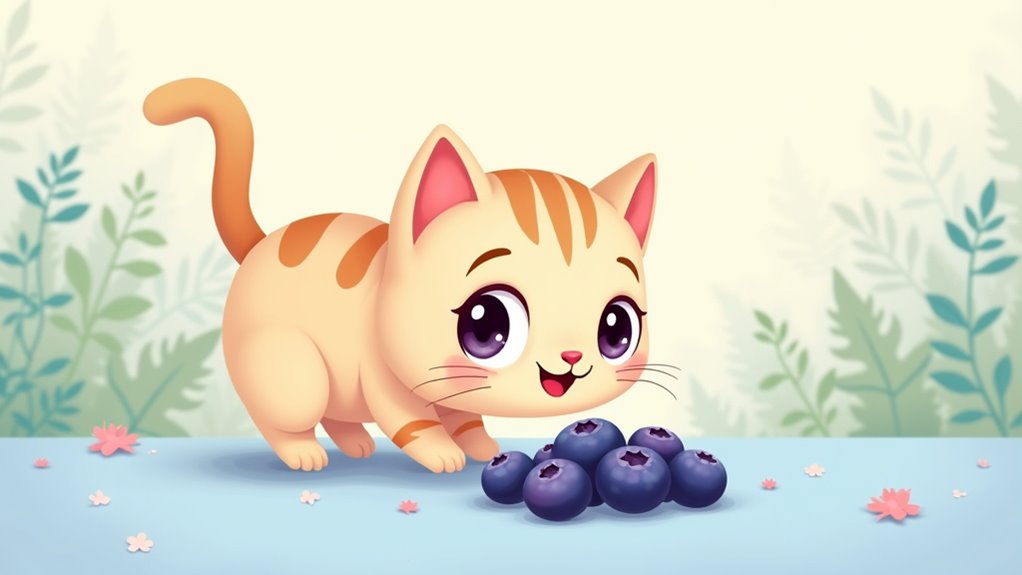
Blueberries are a great treat for cats. These small fruits are full of antioxidants. They contain anthocyanins and vitamin C. These nutrients help fight off harmful free radicals. This can prevent cell damage and support your cat’s immune system.
Blueberries may also help reduce inflammation, which is good for joint health. Additionally, antioxidants in blueberries can support overall health and well-being.
Fiber is another benefit of blueberries. They’ve a lot of fiber, which helps digestion. Fiber keeps the gut moving and adds bulk to stools. This can prevent constipation. It also helps control blood sugar levels. This means fewer spikes after meals. Plus, fiber can help your cat feel full without many calories.
Treat blueberries as a special snack. Always check with your vet before adding new foods to your cat’s diet. They can help you decide if blueberries are right for your furry friend. Additionally, moderation is key when offering blueberries to ensure your cat’s diet remains balanced.
Guidelines for Feeding Blueberries
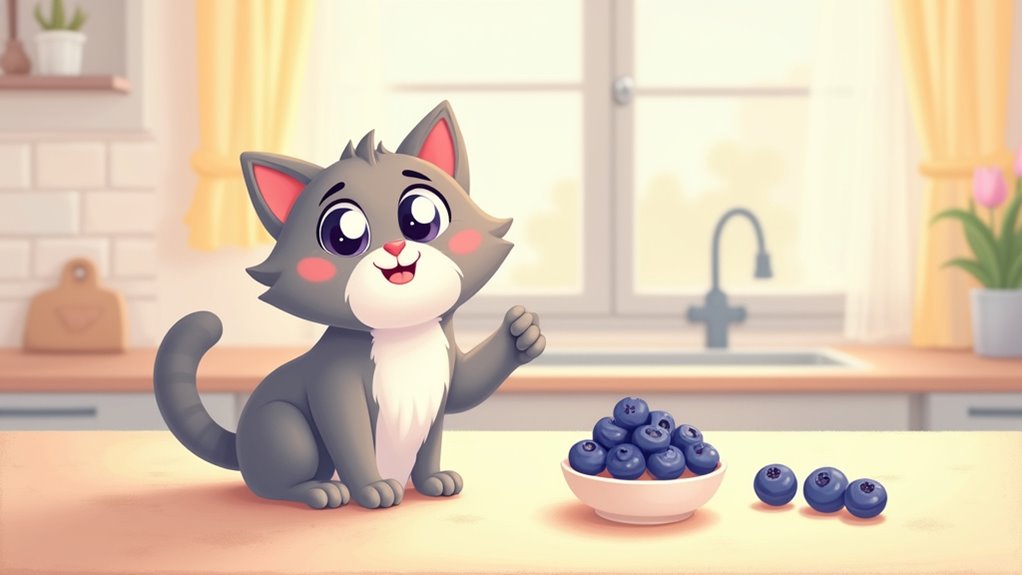
Feeding blueberries to your cat can be a fun and healthy treat. Follow these guidelines to keep your furry friend safe and happy. Start with small portions to see if your cat likes them.
Give one or two blueberries, especially for smaller cats. Always wash the blueberries well to remove pesticides and dirt. Remove the stems to avoid choking. Serve fresh or slightly frozen blueberries. Avoid hard frozen ones.
Limit your cat to no more than two blueberries at a time. Offer blueberries once or twice a week. Treats shouldn’t make up more than 10% of your cat’s daily calories. This helps keep their diet balanced and prevents stomach issues.
Watch for signs of intolerance, such as diarrhea. Stop giving blueberries if you notice these signs.
Always talk to your vet before adding new treats to your cat’s diet. They can help ensure blueberries are safe for your pet.
Potential Risks and Concerns
Blueberries can be a tasty and healthy treat for your cat. Still, it’s vital to know the risks before sharing them.
Digestive Issues
Eating too many blueberries may cause diarrhea. Even small amounts can upset a cat’s stomach.
Introduce blueberries slowly to check for any reactions. This is especially important for cats with sensitive stomachs.
Sugar Levels
Blueberries have natural sugars. For diabetic cats, this can raise blood sugar levels.
Too much sugar can also lead to obesity and other health problems.
Choking Hazards
Whole or large blueberries can be a choking risk.
Always cut them into smaller pieces to keep your cat safe.
Allergic Reactions
Some cats may have allergies to blueberries.
Signs include vomiting or itching. Stop giving blueberries and talk to your vet if this happens.
Knowing these things helps ensure your cat enjoys blueberries safely.
Understanding Cat Behavior Towards Blueberries
Cats often show curiosity towards blueberries, but not out of hunger. They explore these small fruits because of their shape and size. This can trigger their natural hunting instincts.
Here are some important points about how cats behave with blueberries:
- Cats can’t taste sweetness. Flavor doesn’t matter to them.
- Each cat reacts differently; some may ignore blueberries completely.
- In homes with multiple cats, one cat’s interest can inspire others to check it out.
- Cats learn socially. They might try blueberries after seeing you or another pet eat them.
- Blueberries offer a fun, short-lived novelty, not lasting interest.
Blueberries can be a rare treat for cats. Keep an eye on how your cat reacts. Don’t overfeed them.
Safe Alternatives to Blueberries and Toxic Fruits to Avoid
Finding safe snacks for your cat can be fun. Certain fruits not only pique their interest but also provide health benefits. Here are some safe options along with their advantages:
| Safe Fruits | Nutritional Benefits |
|---|---|
| Apples | Fiber, vitamins K, A, C, antioxidants |
| Bananas | Vitamins B6, C, potassium |
| Strawberries | Vitamin C, potassium, fiber |
| Cantaloupe | Hydration, vitamins |
Be aware of fruits that are harmful to cats. Avoid the following:
- Apple seeds & stems: They contain cyanide.
- Grapes & raisins: These are highly toxic.
- Mango pits & peel: They have toxic compounds.
- Apricot pits & leaves: These contain harmful elements.
Keep fruits to no more than 10% of your cat’s diet. Always talk to your vet before adding new treats. Strawberries are not toxic to cats and cats are obligate carnivores, so their health deserves careful attention!
Frequently Asked Questions
Can Kittens Eat Blueberries Safely?
Kittens can eat blueberries safely, but only in small amounts. Blueberries are not harmful. They can be a fun treat. Always focus on giving high-quality kitten food. This food provides the right nutrients for growing kittens. Treats like blueberries should be small and rare. Too many can upset their stomachs. Keep your kitten healthy and happy with balanced meals and occasional fruit.
How Should I Prepare Blueberries for My Cat?
Rinse blueberries well before giving them to your cat. Cut them into small pieces or mash them. This makes it easier for your cat to eat. Offer blueberries as a special treat. They have great health benefits, like antioxidants. Mix them with regular cat food for better acceptance. Remember to serve sparingly. Too many treats can upset your cat’s stomach. Enjoy watching your cat savor this healthy snack!
Are Frozen Blueberries Safe for Cats?
Frozen blueberries can be risky for your cat. They may cause choking or dental issues. Ice cubes also pose similar threats. Thawed blueberries are much safer for your furry friend. They can be a fun and tasty treat in small amounts. Always watch your cat while they eat new foods. Keep their health a priority. Treats should be enjoyed, not harmful.
Can Blueberries Help With My Cat’s Hydration?
Blueberries can be a fun treat for your cat. They can help with hydration, but they are not a substitute for water. Always provide fresh water for your cat. You can also give wet food, which has extra moisture. Treats like blueberries should only be given sometimes. They can add variety to your cat’s diet, but hydration is key. Make sure your cat drinks enough every day. Happy cats are hydrated cats!
What Are Signs of Blueberry Allergies in Cats?
Cats can show signs of blueberry allergies. Sneezing or scratching may happen after eating blueberries. Watch for digestive issues, too. Vomiting and diarrhea can signal a reaction. Skin irritation is another sign to notice. Blueberry toxicity can upset your cat’s stomach and cause discomfort. Always monitor your cat after trying new foods. If you see any of these signs, contact your vet right away. Your cat’s health is important.
Conclusion
Blueberries can be a fun treat for cats. They have some good nutrients. But, it’s important to be careful. Think of blueberries as a small snack, not a full meal. Always introduce them slowly. Watch your cat for any bad reactions.
If your cat likes blueberries, give them one or two small berries now and then. Too many can upset their stomach. Some fruits are not safe for cats. Always choose safe options for your pet. Your cat’s health is the most important thing!
