
Can Cat Eat Chicken Breast
This post contains affiliate links. As an Amazon Associate, we earn from qualifying purchases.
Cats can safely eat chicken breast as it is an excellent source of protein. However, it’s essential to cook the chicken thoroughly without any spices or oil to eliminate harmful bacteria like Salmonella. Always remove the skin and bones to avoid choking hazards. For kittens under six months, serve about 2 teaspoons daily, while adults can have around 2 tablespoons. Treat chicken as a supplement to their regular diet rather than the main meal. More details and explanations will follow for those who want a deeper understanding.
Essential Facts in 30 Seconds
- Cats can eat chicken breast for essential protein and amino acids.
- Always cook chicken thoroughly to kill harmful bacteria.
- Remove skin and bones to avoid choking and digestive issues.
- Consult a veterinarian for balanced nutrition advice.
- Serve chicken as an occasional treat, not a primary diet component.
Nutritional Benefits of Chicken Breast for Cats
Feeding your cat chicken breast brings many nutritional benefits.
Chicken breast is a great source of protein. Protein helps your cat maintain strong muscles and stay healthy. It supports your cat’s metabolism and keeps them active.
Chicken breast also has a good mix of amino acids. These are important for your cat’s immune system and tissue repair. Amino acids like taurine are present in chicken breast, which helps keep your cat well. Additionally, feeding your cat plain, cooked chicken ensures they receive the benefits without harmful additives. Cooking chicken thoroughly ensures that harmful bacteria are eliminated, making it safe for your pet.
Safety Considerations When Feeding Chicken Breast
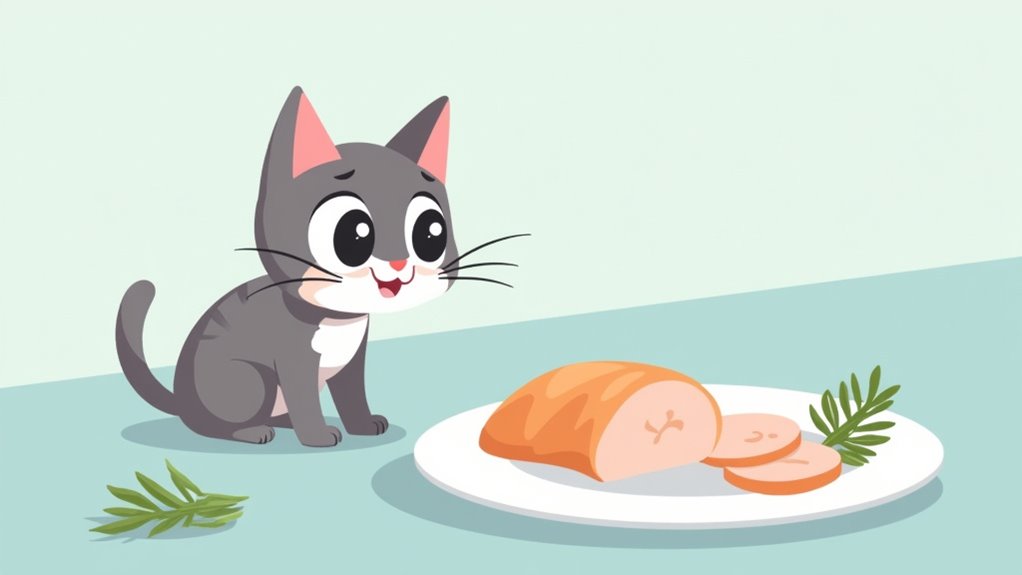
Feeding chicken breast to your cat can be a great choice. It’s important to keep safety in mind. Raw chicken may have harmful bacteria such as Salmonella and E. coli. These bacteria can make both your cat and your family sick.
Follow these guidelines to keep everyone safe:
- Buy chicken from trusted stores.
- Cook the chicken well. Avoid adding spices or oils.
- Take off the skin and bones. They can cause choking or hurt your cat’s stomach.
Chicken breast alone doesn’t have all the nutrients your cat needs. It shouldn’t be the only food in their diet. Boiled chicken can provide a high-quality source of protein that is beneficial for your cat. Talk to your vet for advice on how to balance their meals. Proper preparation is key to a safe feeding experience.
Be extra careful with young kittens, older cats, and those with weak immune systems. They’re more at risk for infections.
Risks Associated With Chicken Bones
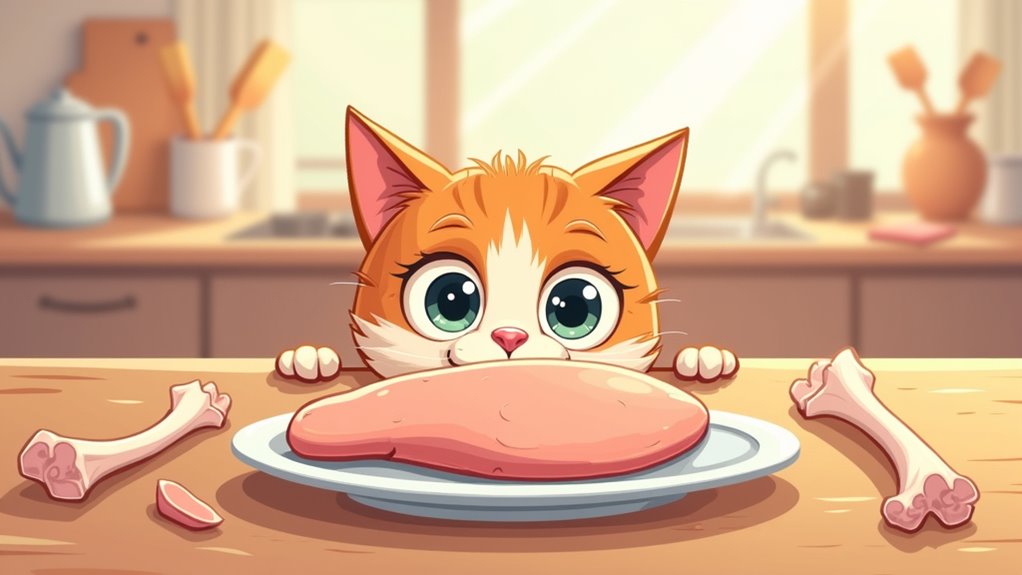
Many pet owners think sharing chicken bones with their cats is okay.
It’s important to know the dangers. Cooked chicken bones can splinter easily. These sharp pieces can hurt your cat’s mouth or throat. They can even cause serious injuries inside the body. This can lead to bleeding and other health issues. Additionally, raw chicken is a good source of protein for cats and can be a safer alternative when prepared properly.
Bone fragments can also get stuck in your cat’s throat. This creates a choking risk that needs urgent help. Choking can quickly cause breathing problems and panic. To protect your cat, avoid giving chicken bones at all. Look for safer food options instead.
Additionally, raw bones are generally softer and less prone to splintering, making them a safer alternative when feeding your cat.
Watch for signs if your cat eats a bone. Symptoms like vomiting, tiredness, or trouble breathing are serious. Seek veterinary help right away if you see any of these signs.
Keeping your cat healthy means saying no to chicken bones.
Raw vs. Cooked Chicken Breast for Cats
Raw chicken and cooked chicken breast each have their own benefits and risks for your cat.
Raw chicken offers high protein and nutrients. But it can also carry bacteria like Salmonella and E. coli. These germs can make both your cat and family sick. Raw meat may also have parasites. So, choosing high-quality meat is crucial. Additionally, bacterial contamination poses serious gastrointestinal risks for both cats and humans. Feeding raw chicken can mimic natural diet patterns of wild cats, but it requires careful sourcing and preparation.
Cooked chicken breast is a safer option. Cooking kills harmful bacteria. Boiling or baking without any spices is the best way to prepare it. This keeps the nutrients while ensuring safety. Always serve plain, skinless, and deboned chicken to your cat.
Both options can be part of a cat’s diet. Just be careful with raw chicken to keep everyone healthy.
Frequency and Portion Guidelines
Portion sizes and feeding frequency are key for your cat’s health. For kittens under six months, give up to 2 teaspoons of plain, cooked chicken each day. Adult cats can have around 2 tablespoons. Always cut the chicken into small pieces. This helps with safe eating and digestion. It is crucial to ensure that the chicken is free from harmful ingredients to maintain your cat’s health.
Feed your cat at least two meals a day. Some cats do better with 3-4 smaller meals. Kittens need 3-4 meals daily due to their high energy needs.
Avoid free-choice feeding. This can lead to obesity. Keep an eye on your cat’s weight and health. Adjust portion sizes and meal frequency as needed.
Chicken should be a treat, not the main part of their diet. A balanced diet with variety is important for their well-being. Additionally, incorporating low-sodium broth can enhance hydration and improve meal palatability.
Frequently Asked Questions
Can Kittens Eat Chicken Breast Safely?
Kittens can eat chicken breast safely. It must be cooked and unseasoned. This helps keep them healthy. Chicken is a good source of protein. It supports their growth and energy. Always include other foods for a balanced diet. Too much chicken can cause problems. Keep feeding practices safe and simple. Always check with a vet for advice. They can help ensure your kitten gets the right nutrition.
Is It Okay to Feed Leftover Chicken to Cats?
Feeding leftover chicken to cats is safe. Make sure the chicken is cooked well and has no seasoning. Always cut it into small pieces. This helps prevent choking. Remove all bones, too. Bones can be dangerous for cats. Serve chicken as a treat, not a full meal. Cats need a balanced diet. Remember, moderation is key. Enjoy watching your cat eat their tasty treat!
How Should Chicken Breast Be Stored for Cats?
Store raw chicken in airtight containers. Freeze it right after buying. For cooked chicken, keep it in the fridge. Use it within three days. Always throw away leftovers after 30 minutes. This keeps your cat safe. Remember, safety is important! Proper storage helps avoid germs. Cats love chicken, so keep it fresh and tasty for them. Follow these tips for happy, healthy pets!
Can Cats Be Allergic to Chicken Breast?
Cats can indeed be allergic to chicken breast. Signs of this allergy include itching and stomach problems. Watch for symptoms like skin irritation or vomiting. It’s important to take these signs seriously. A visit to the vet can help. They can provide tests and advice. Knowing your cat’s food allergies is key. Keep track of what they eat and how they react. This way, you can help your cat feel better and stay healthy.
What Other Meats Are Safe for Cats?
Explore safe meats for your cat, like chicken, turkey, and beef. These meats can be a great addition to their diet. Always serve small portions. Make sure the meat is cooked and unseasoned. Avoid spices and sauces. Fish options like salmon and cod are also good choices. Offering these meats keeps your furry friend healthy and happy. Always check for allergies or sensitivities too. Cats love variety, so mix it up!
Conclusion
Chicken breast can be a tasty treat for your cat. It is important to be careful. Cats need a diet with 70-80% animal protein. Always make sure the chicken is cooked and boneless. Chicken bones can be dangerous for cats.
Keep portions small. Aim for no more than 10% of their daily food. Following these tips allows you to safely share this tasty protein with your feline friend. Enjoy feeding your cat chicken breast!
