
Can Cat Eat Egg Yolk Raw
This post contains affiliate links. As an Amazon Associate, we earn from qualifying purchases.
Feeding your cat raw egg yolk is not recommended due to the risk of harmful bacteria like salmonella, which can cause severe illness. Symptoms such as vomiting and diarrhea can occur, making it unsafe for your feline friend. Additionally, relying solely on egg yolk may lead to nutritional imbalances. For those who want to offer egg yolk, safer options include hard boiling or using pasteurized eggs, which provide benefits without the associated risks. Keep reading for more helpful insights and alternatives!
Essential Facts in 30 Seconds
- Raw egg yolks can contain harmful bacteria like salmonella and E. coli, posing health risks to cats.
- Feeding raw egg yolks may cause nutritional imbalances and biotin deficiency, impacting coat health.
- Some cats may have allergies or intolerances to egg yolk, leading to skin rashes or digestive issues.
- Cooked egg yolk can be a nutritious treat in moderation, while raw egg yolks should be avoided.
- Always consult a veterinarian before introducing egg yolks or making dietary changes for your cat’s health.
Nutritional Benefits of Egg Yolk for Cats
Egg yolk is a great addition to your cat’s diet. It offers high-quality protein that helps build and repair muscles. Egg yolk contains 19 amino acids. Ten of these are essential for your cat, like arginine and lysine. This protein helps keep your cat strong and healthy.
Egg yolks are also packed with vitamins A, D, and E. These vitamins support good eyesight, healthy skin, and a strong immune system. The healthy fats in egg yolks give your cat energy. They also help absorb important vitamins, making them a beneficial part of a balanced diet.
Minerals like calcium and zinc are present in egg yolks. These minerals are vital for strong bones and a healthy immune system.
Always cook egg yolks before giving them to your cat. Cooking makes them easier to digest and allows your cat to absorb more nutrients. Feeding raw egg yolks may pose health risks due to salmonella contamination and should be avoided.
Egg yolks can truly enhance your cat’s nutrition.
Safety Concerns of Feeding Raw Egg Yolk
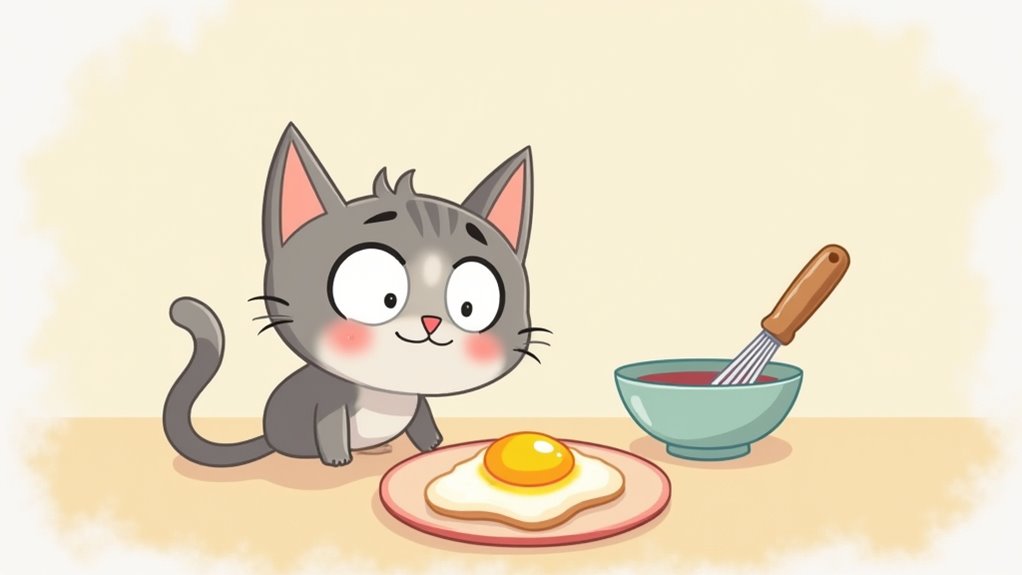
Bacterial Infections: Raw egg yolks may contain harmful bacteria like salmonella and E. coli. These bacteria can make cats very sick. Consuming raw egg yolks can pose similar risks to raw fish due to potential contamination.
Symptoms of Infection: Cats that get infected may vomit, have diarrhea, or feel very tired. In serious cases, they can become dehydrated. This can even be life-threatening.
Zoonotic Risks: Cats can spread these bacteria to humans. This is especially dangerous for young children and elderly people. Cooking the egg yolk eliminates these risks, making it a safer option for your cat.
To keep your cat safe, change your feeding habits. Buy eggs from trusted farms. Always wash the shells well. Consider giving your cat cooked eggs instead.
Always talk to your vet before adding new foods to your cat’s diet.
Risks Associated With Raw Egg Yolk Consumption
Raw egg yolk can pose risks for your cat.
Bacterial infections, like Salmonella, can make cats very sick. Symptoms include vomiting and diarrhea. Additionally, bacterial contamination is a significant concern when feeding raw egg yolk.
Some cats may also have allergies or intolerances to raw yolk. Feeding raw yolk can lead to nutritional imbalances if not done carefully. It’s important to note that cooked eggs are safe and eliminate these bacterial risks.
Always consider these risks before adding raw egg yolk to your cat’s diet. Keeping your cat safe is the priority.
Bacterial Infection Risks
Raw egg yolks may look like a fun snack for your cat, but they pose serious health risks. Bacterial infections from raw eggs can harm your pet.
Here are the main issues:
- Salmonella: This bacteria can make your cat very sick. Symptoms include vomiting, diarrhea, and fever.
- E. coli: This germ can cause colibacillosis. Your cat might experience stomach pain and feel very tired.
- Zoonotic Risks: Both bacteria can spread to humans. This is a big worry for kids and older adults.
To keep your cat safe, don’t feed them raw egg yolks.
Watch for any signs of illness. If you see symptoms, contact your vet right away.
Keep your cat and family healthy by avoiding raw eggs.
Allergies and Intolerances
Allergies and intolerances can hurt a cat’s health. Feeding raw egg yolk can be risky. Egg allergies aren’t common, but they can cause serious problems. A cat with an egg sensitivity may itch, get skin rashes, or have stomach issues like vomiting and diarrhea.
To keep your cat safe:
- Watch for Symptoms: Look for signs of discomfort after meals.
- Talk to Your Vet: They can help find any food allergies.
- Try Elimination Diets: Removing eggs from the diet might help.
Taking these steps can keep your cat healthy and happy.
Nutritional Imbalance Concerns
Nutritional imbalances can happen with raw egg yolks in your cat’s diet. Here are three key concerns:
- Nutritional Deficiencies: Using only egg yolks means missing vital nutrients. This can harm your cat’s health over time.
- Dietary Diversity: Cats need different foods to stay healthy. Too many egg yolks can replace important meals, creating imbalances.
- Biotin Absorption: Feeding raw egg whites with yolks can block biotin. This can lead to skin and coat issues.
Keep your cat healthy by providing a balanced diet with various nutrients.
Always talk to a vet before adding raw foods. They can help you find safe and balanced options.
Feeding Recommendations and Portion Control
Feeding your cat egg yolk can be beneficial, but moderation is essential. Egg yolk is packed with nutrients. Give only small amounts, usually just a bit of one yolk, and do this rarely. This helps prevent too much fat, which can cause stomach problems or weight gain. Additionally, egg yolk contains essential nutrients that can support your cat’s overall health.
Think about your cat’s age and health. Active cats or those recovering from illness may need the extra nutrients from egg yolks. Still, keep an eye on how often you feed it. Too much egg yolk can worsen health issues, especially in cats that are overweight or have kidney problems.
Always talk to your vet about the right amount for your cat. Watch for any bad reactions, such as vomiting or skin problems. If these happen, stop feeding egg yolk and get advice from your vet. Additionally, cooking the egg yolk can eliminate harmful bacteria, making it safer for your cat.
It’s important to balance treats like egg yolk with a healthy diet for your cat’s overall health.
Alternative Preparation Methods for Eggs
After safely introducing egg yolk to your cat’s diet, consider the best cooking methods for eggs. Here are some safe and nutritious ways to prepare them:
- Hard Boiling: Boil eggs for 12 minutes on medium heat. After boiling, cool the eggs and crumble the yolks. For easy storage, bake the yolks at 140°F for about 10 hours until they’re dry. This creates egg powder that’s easy to use.
- Poaching and Boiling: These methods reduce the risk of bacteria. Don’t add oils or seasonings. Cool the cooked eggs before giving them to your cat. Limit the serving to half a yolk, once or twice a week.
- Pasteurized Eggs: Use in-shell pasteurized eggs for raw feeding. They lower the risk of contamination. Soft-boiled or poached eggs from pasteurized sources provide a good balance of safety and nutrition. Additionally, scrambled eggs can be a nutritious treat for cats when prepared correctly.
These methods help keep your cat healthy while enjoying eggs.
Special Considerations for Kittens and Sensitive Cats
Feeding kittens and sensitive cats requires special care. These young cats can easily get sick. Raw egg yolks may contain harmful bacteria like salmonella. This can lead to serious health issues.
Kittens need balanced nutrition to grow strong. Cooked eggs are a safer option. Cooking eggs kills harmful bacteria and keeps your kitten safe. Additionally, a balanced diet is essential for overall cat health.
Always prioritize their health. Offer them cooked eggs instead of raw. Keep their meals simple and safe.
Kittens and Nutrition Balance
Kittens need special food to grow strong and healthy. Their bodies are different from adult cats.
Here are important points to remember about kitten nutrition:
- High Protein: Food should have 35%-50% protein. This gives them the energy they need.
- Vital Fats: Look for food with 18%-35% fat. Healthy fats like DHA help their brains grow.
- Frequent Meals: Feed kittens 2-3 times each day. This keeps their energy up and helps them grow well.
Watch your kitten’s weight. They should gain about 15-20 grams each day.
Risks for Sensitive Cats
Sensitive cats, like kittens or those with weak immune systems, face serious dangers from raw egg yolk. Bacteria, such as Salmonella, can cause severe stomach problems.
| Risk Factor | Impact on Cat Health |
|---|---|
| Bacterial Infection | Causes vomiting, diarrhea, and fever |
| Digestive Sensitivity | Leads to upset stomach and pancreatitis |
| Biotin Deficiency | Results in poor coat health and skin issues |
To keep your cat safe, do not feed them raw egg yolk. Cooked yolks are much safer and easier to digest. Always talk to your vet before adding new foods to your cat’s diet. Watch your cat closely for any signs of trouble after giving treats like egg yolks, whether cooked or not. Your cat’s health is important, so take these precautions seriously.
Frequently Asked Questions
Can I Feed My Cat Egg Yolk Daily?
Feeding your cat egg yolk can be a tasty treat. It offers many nutrients. Egg yolks have protein, vitamins, and healthy fats. These benefits can help your cat stay healthy.
Giving egg yolk daily is okay. Just keep the portion small. Too much can lead to extra calories and fat. Balance it with their main food.
Watch your cat’s weight and health. If they gain too much weight, cut back. Always check with your vet for the best advice on your cat’s diet.
What Are Signs of Egg Allergy in Cats?
Cats can show signs of an egg allergy in different ways. Watch for itching or scratching. Skin lesions may appear. Some cats might groom themselves too much. Look for signs of stomach issues, like vomiting or diarrhea. These symptoms can mean your cat is sensitive to eggs. Pay attention to these signs. Early detection helps keep your cat healthy. Always consult a vet if you notice these issues. Your cat’s comfort matters.
Can Egg Yolk Help With My Cat’s Skin Health?
Egg yolk can boost your cat’s skin health. It has important vitamins and healthy fats. These nutrients help keep your cat’s skin hydrated. A shiny coat shows good health. Egg yolk can make a big difference in your cat’s appearance. Just a small amount can be a tasty treat. Always check with your vet before adding new foods to your cat’s diet. Healthy skin and a glossy coat can make your cat feel great.
Are There Specific Breeds of Cats That Should Avoid Egg Yolk?
No specific cat breeds need to avoid egg yolk. Most cats can safely eat it. Some cats may have individual sensitivities, but this is rare. Egg yolk is generally safe for all breeds. There are no known allergies linked to egg yolk for any cat breed. Always watch your cat after trying new foods. If your cat shows any signs of discomfort, consult a vet. Keeping your cat healthy is the priority.
How Should I Store Leftover Cooked Egg Yolk for My Cat?
Store leftover cooked egg yolk like a treasure. First, let it cool. Then, place it in an airtight container. Keep it in the fridge. Make sure it’s below 40°F. It will stay fresh for 3 to 4 days. If you don’t use it in that time, freeze it. Freezing keeps the yolk good for longer. Enjoy feeding your cat!
Conclusion
Egg yolk can be good for your cat. It has nutrients like protein and vitamins. But raw egg yolk comes with risks. Bacteria can make your cat sick. There’s also a chance of biotin deficiency. Cooking the yolk can solve these problems. It makes it safer for your furry friend. Always ask your vet for advice. They can help keep your cat healthy and happy. Treats like egg yolk can be fun, but safety is key. Enjoy those sunny moments with your pet!
