
Can Cat Eat Fish
This post contains affiliate links. As an Amazon Associate, we earn from qualifying purchases.
Cats can eat fish, but it’s important to do so with caution. Fish is beneficial due to its omega-3 fatty acids that promote heart and skin health. However, raw fish poses risks such as dangerous parasites and thiaminase, which can lead to deficiencies. It’s best to offer lean, cooked fish like salmon and sardines while steering clear of high-mercury options like tuna. Consider serving fish as a treat two to three times a week rather than a staple in their diet. For those interested in more details and guidelines, further information will be provided in the article.
Essential Facts in 30 Seconds
- Cats can enjoy fish as an occasional treat.
- Fish provides beneficial Omega-3 and Omega-6 fatty acids.
- Only feed cooked fish like salmon and sardines; avoid raw fish.
- Some fish may have high mercury levels; choose low-mercury options.
- Excessive fish consumption can cause dietary imbalances and health issues.
- Ensure fish is boneless and prepared without oils or spices.
Nutritional Benefits of Fish for Cats
Fish can be a great part of your cat’s diet. It offers many nutritional benefits. Types like salmon and sardines are rich in Omega-3 and Omega-6 fatty acids. These fatty acids help with heart health and brain development. They also improve your cat’s skin condition.
Feed your cat fish two to three times a week. This keeps their diet balanced. It ensures they get enough high-quality protein for muscle growth and energy. Lean fish, like cod, is a low-fat option that can help balance their meals. Additionally, plain, cooked fish is a safe choice to incorporate into their diet.
Fish also provides vital vitamins and minerals. Vitamin D and B-complex vitamins are important for overall health. However, it is crucial to remember that fish alone cannot provide all essential nutrients for cats.
Always remember to feed fish in moderation. Check with your vet before making big changes to your cat’s diet. This way, you can meet all their nutritional needs.
Risks Associated With Feeding Fish to Cats
Feeding fish to your cat may seem safe, but it has serious risks. It’s important to know these dangers to keep your cat healthy.
| Risk | Details |
|---|---|
| Parasite Infections | Raw fish can carry dangerous parasites. These can cause salmon poisoning disease. |
| Heavy Metal Toxicity | Some fish contain high levels of mercury. This can lead to severe health problems. |
| Nutritional Deficiencies | Raw fish has thiaminase. This can cause thiamine deficiency, leading to nerve issues. Additionally, fish should be cooked to eliminate harmful bacteria and parasites. |
| Urinary Tract Issues | Fish has a lot of phosphorus. This can worsen urinary problems for some cats. |
Furthermore, the consumption of raw fish can lead to gastrointestinal issues, such as vomiting and diarrhea, which can further impact your cat’s health. Think carefully before adding fish to your cat’s meals. While fish can offer some benefits, the risks can be significant. Always talk to your vet for advice specific to your cat’s health.
Safe Preparation and Types of Fish for Cats
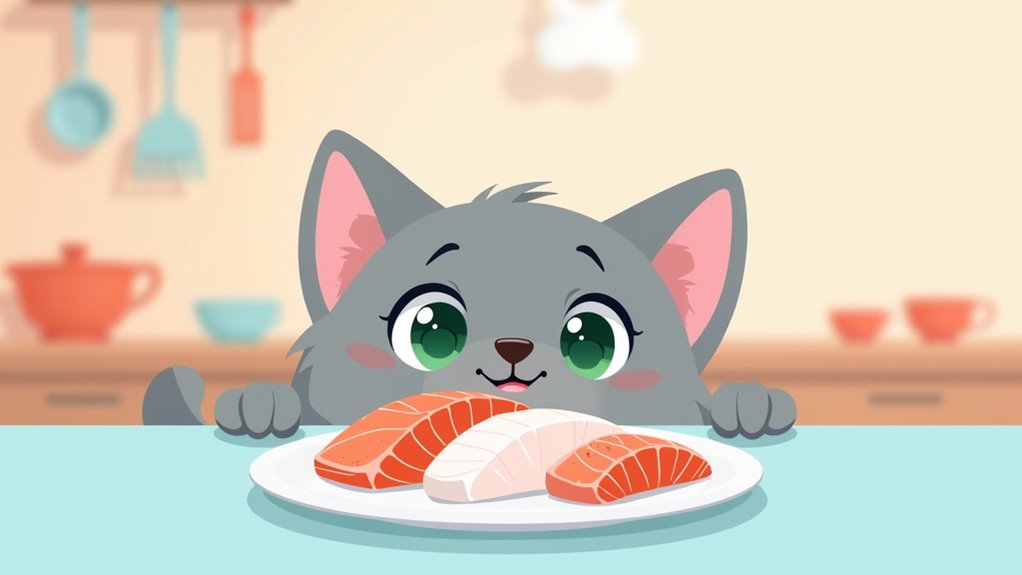
Preparing fish for your cat is important for their health. Start with safe fish types like salmon and sardines. These fish are packed with omega-3 fatty acids. Avoid fish like tuna and swordfish. They’ve high mercury levels and can be harmful, as excessive consumption can lead to health issues.
Use safe cooking methods. Steaming the fish is best. This helps kill harmful bacteria and parasites. Always remove bones to keep your cat safe from choking.
Here are steps to prepare fish for your cat:
- Freshness: Get fresh fish from trusted suppliers.
- Cooking: Steam or bake the fish. Don’t use oils or spices. Avoid frying. Garlic and onions are dangerous for cats.
- Cooling: Let the cooked fish cool before giving it to your cat.
- Mixing: You can mix the fish with safe veggies like pumpkin for extra nutrition.
Watch your cat for any reactions when you introduce fish. For a quick option, look for commercial cat foods that include safe, cooked fish. These foods meet your cat’s nutritional needs. Additionally, be mindful that tuna should be an occasional treat as excessive consumption can lead to health issues.
Impact on Cat Health
Fish can be a tasty treat for your cat. It provides important nutrients. But there are some risks to consider.
Some cats can be allergic to fish. This may cause upset stomach or skin problems. Too much omega-6 fatty acids can lead to inflammation. Certain fish might’ve harmful levels of mercury, which can cause symptoms of mercury poisoning. Raw or poorly cooked fish can carry dangerous bacteria. A balanced diet is important for your cat’s health. Raw fish should be an occasional treat, not a regular diet component, to minimize health risks.
Watch how your cat reacts to fish. Look for signs like vomiting or diarrhea. If you see these signs, talk to your vet. Keep fish as an occasional treat, not a daily meal. This way, your cat can enjoy fish without health issues.
Always prepare fish safely. Remember, variety in your cat’s diet is key for good health.
Sustainability and Environmental Considerations
The diet of your cat can have a big impact on the environment. Choosing fish from sustainable sources is a smart move. Small wild-caught fish like anchovies and mackerel are great options. These fish are caught using methods that need less fuel. This means they leave a smaller carbon footprint.
On the flip side, farmed catfish and shrimp produce a lot of greenhouse gases. They can create emissions up to 20 times higher than farmed mollusks. Instead, go for farmed bivalves like mussels or oysters. They not only require no freshwater but also help clean the water.
To help the environment, follow these tips:
- Pick low-impact fish like small wild-caught species.
- Skip high-emission choices like farmed catfish.
- Add farmed sea vegetables to your cat’s diet for extra benefits.
Making these choices can reduce your cat’s impact on the planet.
Frequently Asked Questions
Can Cats Be Allergic to Fish, and How Can I Tell?
Cats can be allergic to fish. Symptoms of a fish allergy include itching, red skin, and upset stomach. Watch for these signs in your cat. A vet can help diagnose the allergy. They may suggest an elimination diet. This diet removes fish to see if symptoms improve. Always consult your vet for advice. Keeping your cat healthy is important.
Is Fish-Based Cat Food Better Than Chicken-Based Options?
Fish-based cat food has some great benefits. It is rich in omega-3 fatty acids. These fatty acids can help keep your cat’s coat shiny and healthy. Fish also provides unique nutrients.
On the other hand, chicken is a very digestible protein. It is easy for cats to break down and use. This makes chicken a balanced choice, especially for cats with special health needs.
Both options have their strengths. Fish offers unique vitamins, while chicken provides strong protein. Think about your cat’s health and needs when choosing food. A mix of both could also be a good idea.
How Often Can I Feed My Cat Fish?
Feed your cat fish 1 to 3 times each week. This keeps their diet balanced. Fish can be a tasty treat. It also offers health benefits. Too much fish can cause problems. Your cat needs a variety of foods. Include dry and wet cat food. Always check for bones in fish. Some fish have toxins. Avoid feeding raw fish often. Cooked fish is safer. Keep your cat healthy and happy!
Can Kittens Eat Fish Safely?
Kittens can eat fish, and it’s safe for them! Just make sure the fish is cooked. Serve it occasionally, not every day. Fish has good nutrients. It contains omega-3 fatty acids. These acids help keep their skin and coat healthy. Remember, too much fish can upset their tummy. Moderation is important for a balanced diet. Always check for any bones before feeding. Enjoy watching your kitten savor this tasty treat!
Should I Avoid Feeding My Cat Fish if They Have Sensitive Stomachs?
Avoid feeding your cat fish if they have a sensitive stomach. Fish can sometimes help with digestion. But it is also a common allergen. Many cats can have stomach issues after eating fish. Watch your cat for any bad reactions. If they show signs of discomfort, stop giving them fish. Always choose foods that suit your cat’s health. Stick to safer options to keep your cat happy and healthy.
Conclusion
Fish can be a tasty treat for your cat. It offers important nutrients like protein and omega-3 fatty acids. But feeding fish needs care. Think of it as a special dessert. Too much can cause problems like mercury poisoning. It can also create nutritional imbalances.
Always cook fish well before serving. Remove any bones to keep your cat safe. Limit fish to occasional treats, not daily meals. Keep your cat healthy by focusing on a balanced diet. Your furry friend deserves the best!
