
Can Cat Eat Rice Everyday
This post contains affiliate links. As an Amazon Associate, we earn from qualifying purchases.
Cats should not eat rice every day due to potential health risks. While small amounts can provide quick energy, rice does not contain the necessary protein that cats require. Overfeeding can lead to obesity, diabetes, and digestive issues like diarrhea. It is advisable to limit rice to one teaspoon of cooked rice, which is about 5 calories, and ensure that treats make up no more than 10% of their daily calorie intake. Always serve plain, cooked rice, and consult a veterinarian with any concerns. More detailed information about healthy cat diets can be found later in the article.
Essential Facts in 30 Seconds
- Cats should not eat rice daily due to their obligate carnivore status.
- A meat-based diet is essential for a cat’s optimal health.
- Rice lacks essential protein and amino acids, risking malnutrition if fed regularly.
- Overfeeding rice can lead to gastrointestinal issues like diarrhea and gas.
- Excessive rice consumption may cause obesity and related health issues, such as diabetes.
- Rice should only be an occasional treat, served in small, plain portions.
Nutritional Value of Rice for Cats
Benefits of Rice
- Rice gives quick energy because it has lots of carbs.
- Brown rice has some vitamins like B1 and B3, adding small nutritional value. Additionally, small amounts of rice can be safe as a rare treat for cats.
Drawbacks of Rice
- Rice doesn’t provide enough protein. Cats need meat for full health.
- Too much rice can make cats gain weight. Cats don’t need carbs to live.
- Feeding rice often can lead to malnutrition, especially in kittens.
Use rice carefully in your cat’s diet. It should only be a small part.
Always make sure to feed high-quality, protein-rich foods. This will help your cat stay healthy and happy. Additionally, monitoring for adverse reactions is crucial when introducing new foods to your cat.
Safety and Digestive Considerations
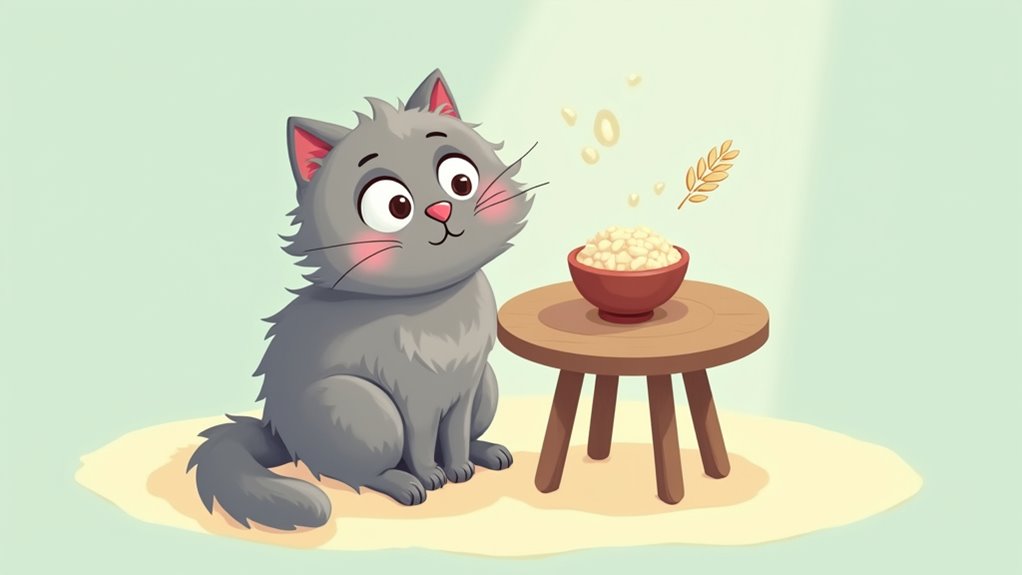
Rice can be a part of your cat’s diet, but it’s important to know the safety and digestive issues. Cats are obligate carnivores. Their bodies don’t digest carbohydrates well. This can lead to problems like diarrhea, gas, and bloating.
Key points to remember:
- Carbohydrate Overload: Feeding rice too often can upset your cat’s stomach. This may lead to gastrointestinal problems.
- Uncooked Rice Risks: Never give uncooked rice to your cat. It has lectins that can make them vomit.
- Preparation: Serve only plain, fully cooked white rice. Avoid any additives, as some can be toxic to cats. Feeding small amounts of brown rice can also be considered as a treat for cats.
- Allergies: Watch for signs of allergies when introducing rice. Look for vomiting or diarrhea.
Giving rice as a small treat is usually safe. Just don’t make it a daily food. Additionally, plain cooked rice can serve as a temporary solution for gastrointestinal issues in cats.
Long-Term Health Implications
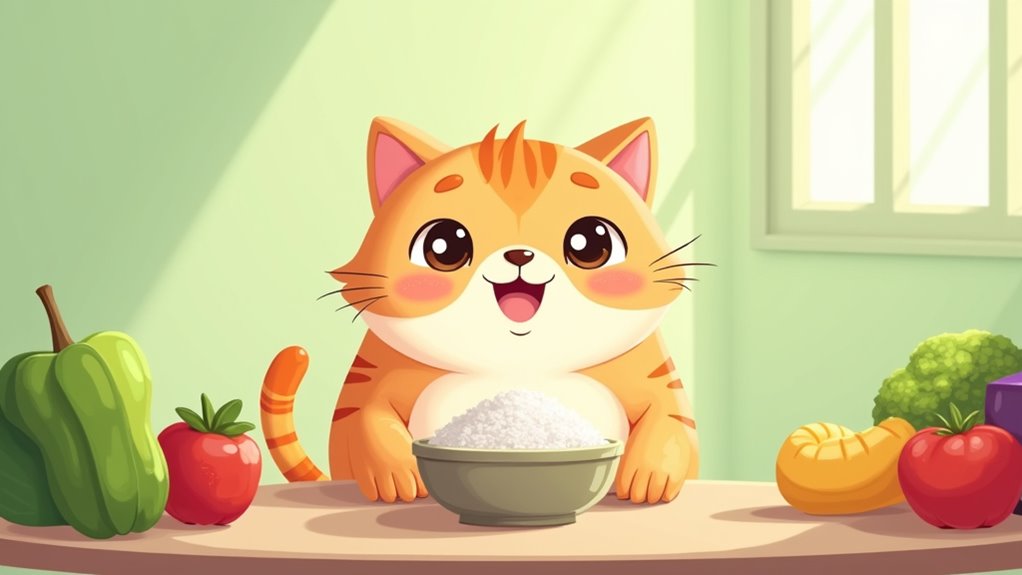
Feeding your cat rice regularly can lead to serious health problems. Rice lacks important amino acids like taurine. Taurine is vital for your cat’s heart and eyes. A diet high in rice can replace essential meat proteins. This can cause malnutrition and muscle loss over time.
Obesity is another risk with too much rice. Rice has high carbohydrates. This can make your cat gain weight, especially if they aren’t active. Extra weight can lead to diabetes, joint pain, and heart issues. Eating rice can also cause spikes in blood sugar. This puts stress on your cat’s pancreas and can cause insulin resistance. Additionally, it’s important to remember that cats are obligate carnivores, meaning they primarily need meat in their diet. High-quality commercial cat food is recommended to meet their nutritional needs.
To keep your cat healthy, offer a variety of protein sources. A balanced diet is key. It helps avoid long-term problems from eating too much rice.
Types of Rice and Their Effects
Understanding rice types helps you care for your cat’s health. Two main types exist: white rice and brown rice. Each affects digestion differently.
White Rice
White rice is soft and easy to chew. It suits cats with sensitive stomachs. This rice is low in fiber and nutrients. It mainly offers carbohydrates, which cats don’t need much of.
Use white rice as a bland filler or to make food soft.
Brown Rice
Brown rice has more fiber and nutrients. It also contains antioxidants. However, it’s tougher to digest. Brown rice can help with constipation, but too much may upset your cat’s stomach.
Always cook it well and serve in small amounts.
Choosing the right rice can support your cat’s health.
Feeding Guidelines and Recommendations
Feeding your cat rice can be a tricky choice. You want their diet to be balanced and healthy. Here are some clear guidelines for giving rice as a treat:
- Serving Sizes: Keep rice to a small amount. One teaspoon of cooked rice has about 5 calories. Treats shouldn’t make up more than 10% of their daily calories.
- Occasional Treats: Think of rice as a rare snack. Offer it only sometimes, not every day.
- Preparation: Always cook rice well. Serve it plain, with no salt or spices. These can harm your cat. Cooked meats are a better source of protein for your cat’s diet.
Important Notes:
- Watch your cat for any stomach issues. Signs can include bloating or diarrhea after eating rice.
- Talk to your vet before adding rice to your cat’s diet. This is especially important if your cat has health issues. Additionally, remember that cats are obligate carnivores and may not benefit significantly from carbohydrate sources like rice.
Frequently Asked Questions
Can Cats Eat Rice if They Have Allergies?
Cats can eat rice, even if they have allergies. Rice is low in allergens, making it a safe option for many cats. It can serve as a filler in their meals. But don’t forget about other options. Alternatives like sweet potatoes or pumpkin can also be good choices. Always check with your vet before changing your cat’s diet. They can help make sure your cat gets all the nutrients they need. A balanced diet is key to your cat’s health.
How Often Can I Give Rice to My Cat?
You can give your cat rice once a week. This is a safe choice. Keep the portions small. Rice does not provide much nutrition for cats. Focus on feeding your cat meat. Cats need protein for good health. They thrive on a meat-based diet. Remember, rice is just a treat, not a meal. Always prioritize your cat’s primary food.
What Are Signs of Rice Intolerance in Cats?
Cats can have problems digesting rice. Signs include vomiting or excessive scratching. Watch for diarrhea, skin irritation, and low energy. These symptoms need your attention.
Rice intolerance may lead to upset stomachs or allergic reactions. Some cats may not tolerate grains well. Providing a grain-free diet might help. Always consult a vet for the best advice. Your cat’s health is important. Keep an eye on their behavior and diet.
Can Kittens Eat Rice Safely?
Kittens can safely eat rice in small amounts. Rice should not replace their main food. Kittens need animal protein for healthy growth. It helps them develop strong muscles and bones. Rice can offer some benefits, like being easy to digest. But the main focus should always be on a balanced diet. Make sure their food includes meat. This keeps them happy and healthy. Treats like rice should be just that—treats. Always watch how much you give. A little rice now and then is fine. Just remember, it’s not the main meal. Kittens thrive best with proper nutrition.
Is Rice Good for Senior Cats?
Senior cats can enjoy rice in small amounts. It can help with digestion and is safe for them. Still, focus on giving them high-quality protein. Meat is much better for their health than rice. Rice does not provide many nutrients. A balanced diet is key for your cat’s well-being. Always prioritize meat for strong muscles and overall health. Remember, a happy cat is a healthy cat!
Conclusion
Rice can be a safe and tasty treat for your cat. It is easy to digest and can help with some stomach issues. But rice should not be a daily food. Think of it as a side dish, not the main meal. Too much rice can cause problems. It may lead to nutritional imbalances and digestive issues.
Cats need a diet rich in protein and essential nutrients. Keep rice as an occasional snack. Always check with your vet for advice on your cat’s diet. Keep your furry friend healthy and happy!
