
Can Cat Eat Salad
This post contains affiliate links. As an Amazon Associate, we earn from qualifying purchases.
Cats can eat some greens, but raw salad is not ideal for them. As obligate carnivores, cats require a diet high in protein and essential nutrients. While certain vegetables like steamed broccoli or carrots can be safe in small amounts, lettuce may cause digestive issues. Excessive consumption can lead to diarrhea or constipation, so it’s important to proceed with caution. Always introduce new foods gradually and keep an eye out for any adverse reactions. For those interested in learning more about the best greens for their feline friends, further details will follow.
Essential Facts in 30 Seconds
- Cats are obligate carnivores and require a meat-based diet.
- Most salad ingredients are not suitable for cats.
- Safe greens include asparagus and green beans.
- Lettuce may cause digestive upset and lacks essential nutrients.
- Introduce new greens gradually and monitor for reactions.
- Consult a veterinarian before adding new foods to your cat’s diet.
Understanding Cats’ Nutritional Needs
Sharing your salad with your cat may seem nice, but it’s important to know what cats really need. Cats are obligate carnivores. This means they must eat meat. Their diet needs to be high in protein, usually between 28% and 55%. This amount can change based on their age and health.
Essential amino acids are crucial for cats. Taurine and arginine are two important ones found in meat. Without enough protein, cats may start to lose muscle. Additionally, cats lack digestive enzymes necessary for processing large amounts of carbohydrates typically found in salads.
A balanced diet also needs the right fats and very few carbohydrates. Always make sure your cat has clean, fresh water. Talk to your vet for advice on your cat’s diet.
Salad doesn’t provide the nutrients cats require. Feeding them the right food helps keep them healthy and happy. Cats need high-quality commercial cat food that is formulated to meet their dietary needs.
Safe Salad Ingredients for Cats
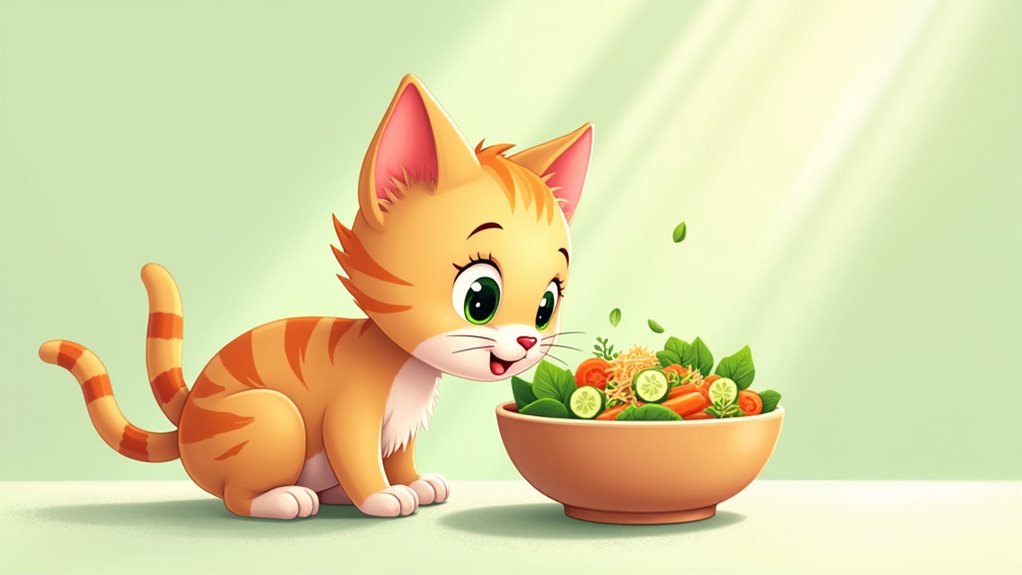
Cats can enjoy some safe salad ingredients. It’s important to pick options that are gentle on their stomachs. Here are good vegetables for your cat’s salad:
- Asparagus: Steam it and serve 1–2 teaspoons once or twice a week.
- Broccoli: Steam or roast it. Offer small bites, about 1 teaspoon now and then.
- Pumpkin: Steam or puree it. Give around 1 teaspoon weekly.
- Green Beans: Cook them and cut into small pieces. Serve in small portions.
- Carrots: Boil or steam them. Shred and serve in tiny amounts.
For greens, use romaine lettuce or other safe leafy veggies. Avoid iceberg lettuce and raw vegetables. They can upset your cat’s tummy. Safe vegetables can provide some nutrients when offered in moderation.
Always cook the veggies to make them easier to digest. Cut everything into small pieces. Don’t add seasonings.
Keep veggie intake to 10% of your cat’s daily calories to prevent stomach issues. Additionally, introducing new foods gradually can help monitor your cat’s reaction to ensure they are well-tolerated.
Potential Health Risks of Lettuce
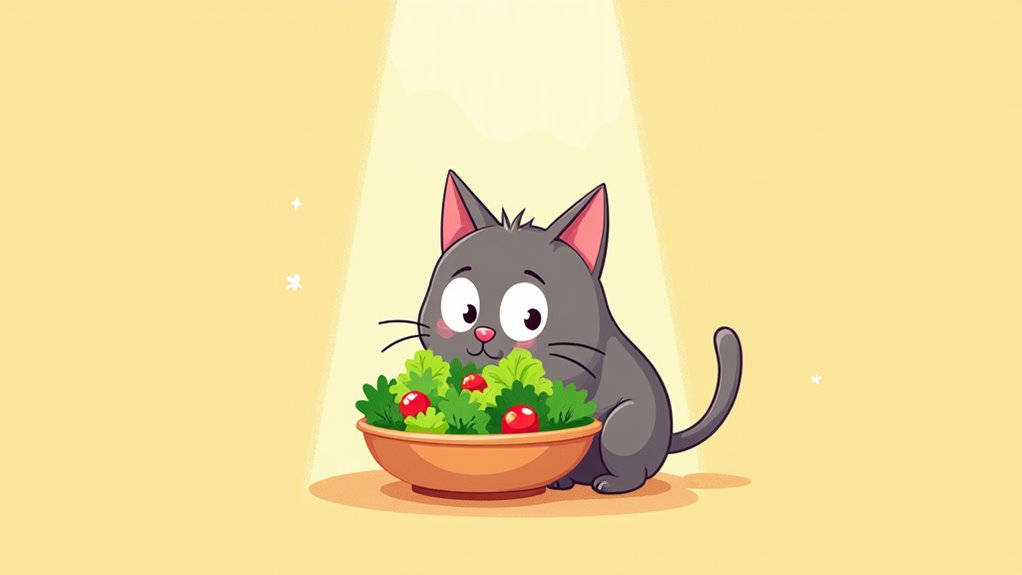
Lettuce may seem safe for your cat, but it can cause health problems.
- Digestive upset: Too much lettuce can lead to diarrhea or constipation. Its high water and fiber content are the reasons.
- Nutritional deficiencies: Lettuce doesn’t have important nutrients like taurine and vitamin A. These are essential for your cat’s health.
- Allergic reactions: Some cats may have allergies, especially if they’re sensitive to grasses.
Be careful when giving lettuce to your cat. Lettuce isn’t toxic, but it can cause discomfort or stomach issues. Small amounts can be introduced occasionally as a treat.
Watch for signs like tiredness or unusual stools. If you see any problems, contact your vet right away.
Always remember, lettuce shouldn’t replace a balanced diet that meets your cat’s needs.
How to Introduce Greens to Your Cat’s Diet
Introducing greens to your cat’s diet can be good for their health. A careful approach helps ensure their safety. Start with safe greens like cooked carrots or green beans, which are rich in beta-carotene.
Step-by-Step Guide
- Choose Wisely: Start with small amounts of safe greens. Try steamed spinach or peeled cucumber.
- Prepare Properly: Wash greens well. Cook or steam them to make them easier to digest.
- Monitor Response: Mix greens into their regular food. Watch for any signs of upset, like vomiting.
- Increase Gradually: If your cat accepts the greens, slowly increase the portion size over a couple of weeks.
Important Notes
- Don’t add seasonings or dressings.
- Stop feeding any greens that upset your cat’s stomach.
Collard greens can also be introduced in moderation, as they are generally non-toxic to cats.
Following this method helps your cat enjoy greens safely. This change can lead to better health without unnecessary risks.
Veterinary Recommendations for Feeding Cats Human Food
Feeding your cat human food can be risky. Some human foods are safe, but many can harm your cat. Here are important things to know:
- Toxic Foods: Chocolate, onions, and grapes can make cats very sick or even kill them.
- Missing Nutrients: Human food doesn’t have all the nutrients cats need. This can hurt their health. Additionally, some herbs, like rosemary, can have potentially toxic effects if consumed by cats.
- Weight Problems: Extra treats can add calories. This can lead to obesity in cats.
Veterinarians say human food should make up no more than 10% of your cat’s daily calories. Safe options include cooked meats and some vegetables. Additionally, it is essential to ensure that any human food given is cooked thoroughly to avoid harmful bacteria.
Avoid dairy and raw foods. Always talk to your vet before giving new foods. Keeping your cat healthy and happy is very important!
Frequently Asked Questions
Can Cats Eat Other Vegetables Besides Salad Greens?
Cats can eat various vegetables besides salad greens. Carrots, peas, and pumpkin are safe options. Always check for safety first. Introduce new veggies slowly. Some cats may have trouble digesting certain fibers. This can cause digestive issues. Watch for any signs of upset stomach. Always consult with your vet before making changes to your cat’s diet. Cats are primarily meat-eaters, so veggies should be just a small part of their meals. Keep it simple and safe for your furry friend!
How Do Cats React to Eating Lettuce for the First Time?
Introducing lettuce to your cat can be interesting. Cats often show curiosity about new foods. They may sniff it first. Then, they might take a small bite. Some cats enjoy the crunchy texture. Others may ignore it completely.
Not all cats like lettuce. It depends on their personal taste. Some may even play with it instead of eating. This reaction can be funny to watch.
Lettuce is safe for cats in small amounts. It has some vitamins and water. Always wash it well before offering it. Cut it into small pieces to make it easier.
Watch your cat closely. If they enjoy it, you can give a little more. If not, don’t worry. Cats have many other tasty options.
Are There Any Benefits to Cats Eating Salad Greens?
Cats can benefit from eating salad greens. These greens provide vitamins and fiber. They help improve digestive health and support healthy bowel movements. Eating salad greens can also help control hairballs. This promotes overall well-being for your cat. Just make sure to give them in moderation. Too much can upset their stomach. Always wash the greens thoroughly. Some safe options include lettuce and spinach. Avoid onions and garlic, as they are toxic to cats. Adding a bit of salad can be a fun treat for your furry friend.
Can Kittens Eat Salad or Lettuce Safely?
Kittens can eat salad or lettuce safely, but only in small amounts. Stick to safe greens like romaine or cat grass. Always wash the greens well before giving them to your kitten. This helps remove dirt and pesticides.
Watch your kitten after they eat. Look for any signs of stomach upset. Not all kittens enjoy salad, so don’t be surprised if yours ignores it. Remember, their main diet should be high-quality cat food. Greens can be a fun treat but should not replace their regular meals.
How Often Can I Offer Salad to My Cat?
You can give your cat salad a few times each week. Keep it simple and plain. Too much salad can upset their stomach. Always watch how your cat reacts. Cats need a balanced diet, and salad should not replace their main food. Offer small amounts and see how they do. Fresh vegetables can be fun for them, but not all veggies are safe. Stick to cat-friendly options like lettuce or cucumber. Remember, moderation is important for your cat’s health.
Conclusion
Cats might watch you eat your salad with interest. It can look like a tasty treat to them. But not all greens are safe for cats. Some vegetables can upset their stomachs. A few safe veggies can be okay, but too many can cause problems.
A balanced diet is best for your cat. Stick to cat food that meets their needs. You wouldn’t want a salad party for your cat unless you enjoy cleaning up! Remember, their health comes first. Keep the salad for yourself and let your cat enjoy their proper meals.
