
Can Cat Eat Seasoned Chicken
This post contains affiliate links. As an Amazon Associate, we earn from qualifying purchases.
Feeding seasoned chicken to your cat is not safe, as many seasonings can be toxic and harmful to their health. Instead, opt for plain, cooked chicken—preferably boiled or baked—cut into small pieces for a safe and enjoyable treat. For those interested in a more detailed understanding of how to prepare chicken safely for your feline friend, further information will follow.
Essential Facts in 30 Seconds
- Cats should not eat seasoned chicken due to toxic ingredients like garlic and onions.
- High salt levels in seasoned chicken can cause sodium ion poisoning in cats.
- Spices can upset a cat’s stomach, leading to vomiting and diarrhea.
- Plain, cooked chicken without seasonings is safe and healthy for cats.
- Introduce new foods gradually and monitor for adverse reactions.
Health Risks of Feeding Seasoned Chicken to Cats
Feeding seasoned chicken to your cat can be risky. Many seasonings, like garlic and onions, are toxic to them. These can cause serious health problems like hemolytic anemia. Additionally, just a few grams of onion consumption can be harmful due to their toxic effects.
Spices can upset their stomachs, leading to vomiting and diarrhea. High salt levels can cause sodium ion poisoning. This may result in symptoms like tremors and seizures.
Spicy ingredients can hurt their stomachs too. This may lead to pain and a loss of appetite. Long-term exposure to seasoned chicken can cause gastritis and pancreatitis. Cats with existing health issues are especially at risk. To keep your cat healthy, give them plain, unseasoned chicken. Always watch their health closely. Talk to your vet for advice on good cat food. Monitoring for signs of upset means avoiding seasoned chicken entirely.
Safe Preparation of Chicken for Feline Diets
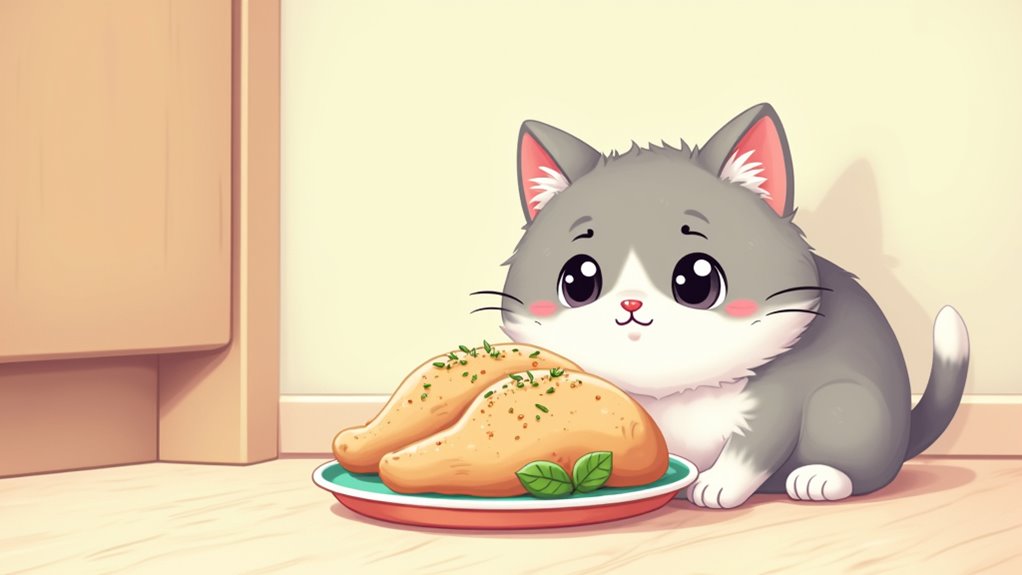
Feeding your cat chicken can be a healthy choice. Proper preparation is key to keeping it safe. Follow these steps for safe chicken preparation:
Choosing the Right Cuts
- Use boneless, skinless chicken breast for lean protein.
- Chicken thighs are acceptable in small amounts due to higher fat.
- Avoid chicken skin and bones to prevent choking hazards.
Cooking Instructions
- Cook chicken to an internal temperature of at least 165°F (74°C). A meat thermometer helps ensure safety.
- Boil or steam the chicken for 15-25 minutes. Make sure it’s firm and has no pink areas.
- Don’t add salt or spices. Cats don’t need these extras, as many seasonings can be toxic.
Preparation Tips
- Cut chicken into small, bite-sized pieces before cooking.
- Let the chicken cool completely to prevent burns.
- Consider shredding the chicken. It makes eating easier for your cat.
- Introducing chicken as a high-quality source of protein can help entice picky eaters, as cats are obligate carnivores requiring meat in their diet.
Following these steps will help keep your cat healthy and happy!
Understanding Raw Chicken Risks for Cats
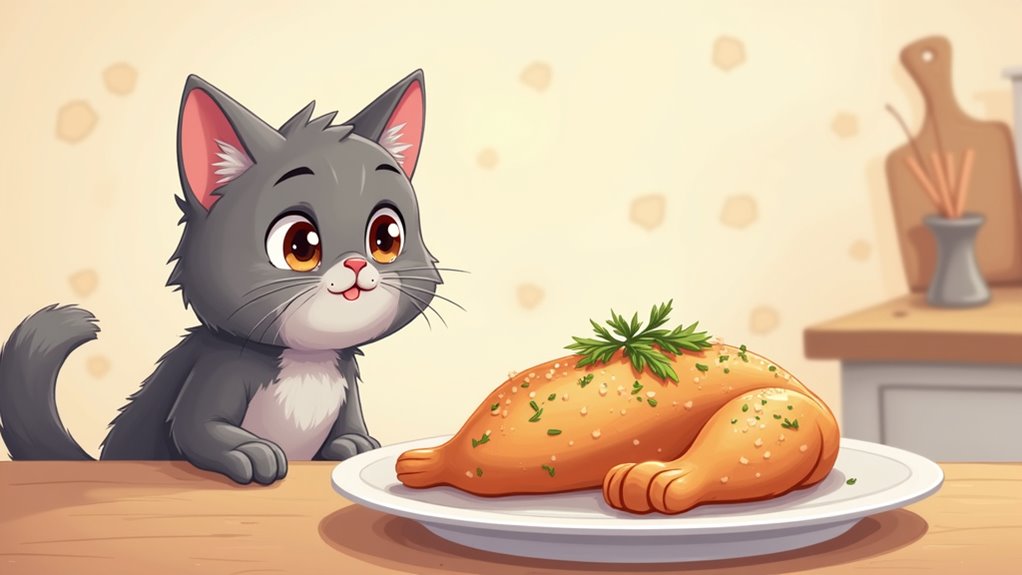
Raw chicken can carry parasites like *Toxoplasma gondii*. This parasite can cause toxoplasmosis in cats. It can even spread to humans, making it a risk for everyone. Additionally, raw chicken may also harbor harmful bacteria that can pose serious risks to both cats and humans.
To keep your cat safe, follow these tips:
- Always wash your hands after handling raw chicken.
- Buy chicken from trusted stores.
- Watch your cat for signs of sickness. Look for things like tiredness or not wanting to eat. Gradual introduction of raw chicken is recommended to monitor cat’s reaction to the new food.
Taking these steps helps protect your cat and your family.
Stay safe and keep your pets healthy!
Toxic Ingredients and Seasonings to Avoid
Cats can be sensitive to many ingredients in seasoned chicken. Some spices and ingredients can harm their health. Garlic and onions are major dangers. They can cause severe anemia by damaging red blood cells. Even garlic powder and onion powder are unsafe. Onion toxicity in cats is a critical concern that all cat owners should be aware of.
Too much salt can lead to sodium ion poisoning. This affects a cat’s heart and kidneys.
Spices like chili powder and cayenne pepper can upset their stomachs. This can lead to nausea and vomiting. Oils and fats in seasoned chicken may also cause pancreatitis. This painful condition is serious for cats.
To keep your cat safe, avoid feeding them chicken with:
- Garlic or onion (in any form)
- High-sodium sauces like soy sauce
- Spicy seasonings
Plain, cooked chicken is the best choice. It keeps your cat healthy and happy. Additionally, it’s essential to remember that garlic powder should never be included in a cat’s diet due to its toxicity.
Watch for any unusual symptoms. If you see anything strange, consult your veterinarian right away.
Recommendations for Feeding Chicken to Your Cat
Including chicken in your cat’s diet can be safe and tasty. Start with plain, cooked chicken. Boiled or baked chicken works best. This method removes harmful bacteria. Always remember that cooked chicken bones can pose significant risks to cats.
Portion chicken in small amounts. A tablespoon or two makes a great treat. Cats have different tastes. Some love chicken breast, while others prefer liver as a special snack. Avoid fried or breaded chicken. These options have unhealthy fats and additives.
Introduce chicken slowly. Watch how your cat reacts. Always supervise your cat when giving bones. Bones can cause choking.
Remember, chicken should be a treat, not the main meal. Keep your cat’s diet balanced. Chicken should not replace regular cat meals as it may lead to imbalances in their diet.
If your cat shows any bad reactions, talk to your veterinarian right away. Following these steps helps your cat enjoy chicken safely.
Frequently Asked Questions
Can Cats Eat Chicken Skin or Fried Chicken?
Feeding your cat chicken skin or fried chicken is not a good idea. These types of food can upset your cat’s stomach. They may also cause allergies. This can lead to serious health problems later on. Always choose plain, cooked chicken for your cat. It’s a safer option that is easier for them to digest. Your cat will enjoy it without the risks that come with skin or fried foods. Keep your furry friend healthy by sticking to simple meals.
What Should I Do if My Cat Eats Seasoned Chicken?
Your cat may eat seasoned chicken. Keep an eye on them for signs of trouble. Watch for vomiting or tiredness. Remove any leftover chicken right away. Some seasonings can be harmful to cats. Garlic and onion are examples. Always check with your vet. They can help if your cat shows any problems. Your cat’s health is important. Stay alert and take action quickly if needed.
How Often Can I Feed My Cat Plain Chicken?
Feeding your cat plain chicken a few times a week is a great choice. Chicken provides essential protein for their health. Balance is key. Too much chicken can lead to problems. Always mix chicken with other foods for a well-rounded diet. Watch for any signs of allergies. Fresh, cooked chicken is best. Avoid seasoning and bones. Keep your cat happy and healthy with this tasty treat!
Is Store-Bought Chicken Safe for Cats?
Store-bought chicken can be a good treat for cats. It has protein that helps them grow strong. Always choose plain, unseasoned chicken. Seasonings and additives can harm your cat.
Safety is key. Wash your hands after handling raw chicken. Keep it away from other foods to avoid cross-contamination. Cook the chicken thoroughly. This helps kill harmful bacteria that could make your cat sick.
Talk to your vet about your cat’s diet. They can help you find the right balance. Remember, chicken should not replace cat food. It can be a tasty addition to their meals.
Can I Mix Chicken With My Cat’s Regular Food?
Mixing chicken with your cat’s regular food is a great idea. Chicken is a good source of protein for cats. It helps keep them strong and healthy. Make sure the chicken is plain and cooked. Avoid any seasonings or sauces. These can be harmful to your cat.
Adding chicken can make their meals tastier. Cats often love the taste of chicken. It can also encourage picky eaters to eat more. Just remember to keep portions small. Too much chicken can upset their stomach. Always balance it with their regular food. This way, your cat gets a well-rounded diet. Enjoy mealtime with your furry friend!
Conclusion
Sharing seasoned chicken with your cat may sound nice, but it’s not safe. Cats can get sick from many seasonings. They might have stomach problems or even more serious issues. Keeping your cat safe is what matters most. Instead, cook plain chicken without any spices. It’s better for their health. Always talk to your vet about the best food for your cat. By choosing safe options, you help your cat stay happy and healthy for a long time.
