
Can Cat Eat Vegetables
This post contains affiliate links. As an Amazon Associate, we earn from qualifying purchases.
Cats can eat certain vegetables, but it’s crucial to select safe options like carrots, green beans, and broccoli. These should be washed, cooked (for carrots and broccoli), cut into small pieces, and served in small amounts, about 1 to 2 teaspoons as a treat, once or twice a week. It’s important to avoid toxic vegetables such as onions and garlic, which can lead to serious health problems. For those interested in more details on safe preparation and the benefits of vegetables for cats, further information will follow.
Essential Facts in 30 Seconds
- Cats can eat some vegetables, such as carrots, green beans, and broccoli, in moderation.
- Vegetables should be washed, cooked, and cut into small pieces for safety.
- They provide fiber and hydration but are not essential to a cat’s protein-based diet.
- Avoid toxic vegetables like onions and garlic completely.
- Monitor your cat’s health when introducing new foods and consult a vet for dietary advice.
Understanding Cat Digestion and Nutritional Needs
Cats have a special way of digesting food. They’re obligate carnivores, which means they need meat to stay healthy. Their stomachs are very acidic, with a pH of about 1.6. This helps break down meat quickly and efficiently. Additionally, cats have a limited ability to digest complex carbohydrates, which makes it essential to focus on protein-rich foods.
The liver plays an important role in digestion. It makes bile, which helps digest fats. The pancreas also helps by producing enzymes that break down protein. Because cats are designed to eat meat, their intestines are shorter. This allows them to digest food in just 12 to 24 hours.
Cats find it hard to digest complex carbs and plant materials. Too many vegetables can upset their stomachs. Focus on giving your cat high-quality protein sources. Additionally, some safe vegetables can be offered in moderation for added nutrients. Always consult your vet before making any changes to their diet. Remember, good nutrition is key to keeping your cat healthy and full of energy.
Safe Vegetables for Cats
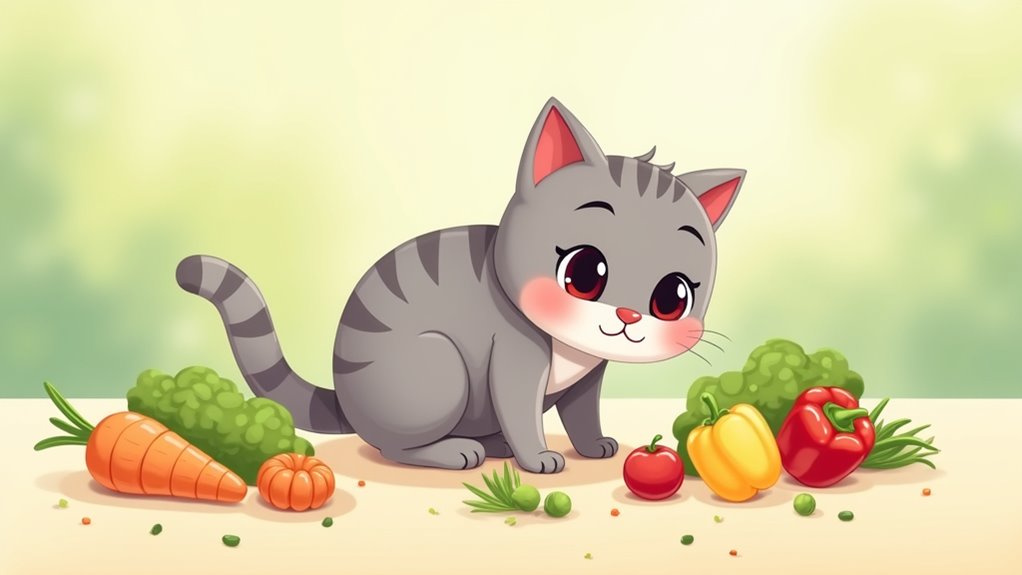
Cats are meat-eaters, but some vegetables can be good for them. Adding vegetables can give extra nutrients. Cats often like carrots, green beans, and broccoli. Always prepare vegetables properly before serving.
Preparation Guidelines:
- Cook: Steam or roast veggies. This makes them softer and safer.
- Cut: Slice into small pieces. This helps prevent choking.
- Serve: Offer small amounts, about 1–2 teaspoons, once or twice a week.
Vegetables to Try:
- Carrots: Peel, cook, and let cool before giving.
- Green Beans: Use canned beans without salt.
- Broccoli: Steam and cut into small bites. Feed in small amounts. Broccoli is not toxic to cats, making it a safe option for occasional treats. Additionally, always ensure that any new vegetable introduced is given in small amounts to monitor for possible adverse reactions.
Watch how your cat reacts to new foods. Changes in behavior can happen with different tastes and textures. Safety is key.
Always ask your vet if unsure about new veggies in your cat’s diet.
Nutritional Role of Vegetables in Cat Diets
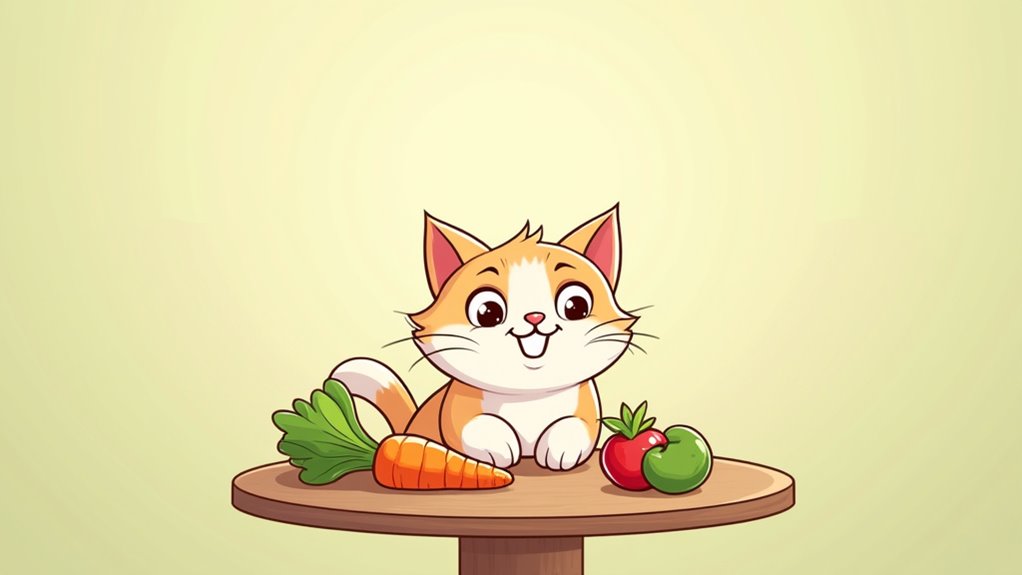
Cats need a balanced diet for good health.
Vegetables can help, but they aren’t essential. They provide fiber and hydration. Fiber aids digestion, while hydration keeps your cat healthy. You can use veggies as a treat or supplement. They can help your cat feel full. Including green peas in moderation can offer additional vitamins and fiber to support overall health.
Remember, protein is the most important part of a cat’s diet. Always focus on providing high-quality protein sources. This keeps your furry friend strong and energetic. Additionally, some vegetables, like peas, can offer nutritional benefits when prepared properly.
Use vegetables wisely, but never forget their main needs.
Fiber and Hydration Benefits
Here are some key benefits of fiber and hydration for cats:
- Fiber helps with digestion. It keeps the bowel movements regular and prevents constipation.
- Vegetables like zucchini and lettuce are packed with water. They help keep cats hydrated without too much liquid. Additionally, cooked zucchini is easier for cats to digest than raw, making it a suitable treat.
- Pumpkin and sweet potatoes are also great. They’re high in fiber and support healthy gut bacteria. They can also help reduce inflammation.
Incorporating these vegetables into a cat’s diet can lead to better overall health. Additionally, green beans can be a low-calorie option that aids in digestion and helps cats feel fuller.
Happy and healthy cats enjoy life more!
Occasional Supplement, Not Essential
Understanding the role of vegetables in your cat’s diet is important. Cats are obligate carnivores, meaning they need mostly meat for health. While vegetables can offer some flavors and textures, peas are commonly found in cat food and can be a healthy treat in moderation.
Vegetables can be a nice treat, but they aren’t essential. They provide some vitamins and antioxidants. Still, meat should always be the main part of your cat’s meals.
Key Points:
- Vegetable Options: Try carrots, broccoli, and zucchini.
- Serving Size: Limit veggies to 1-2 teaspoons a few times a week.
Too many vegetables can upset your cat’s tummy. Cats struggle to digest plant material. Additionally, excess fiber from plant foods can lead to digestive issues in cats.
Always steam veggies to make them easier to digest. Avoid raw vegetables with tough peels. Remember, veggies are a supplement, not a replacement for protein.
Risks and Toxic Vegetables for Cats
Many vegetables can be dangerous for cats. It’s important to know which ones to keep away from them. Here are some vegetables that can harm your furry friend:
- Allium Vegetables: Onions and garlic can damage red blood cells. This may lead to anemia in cats.
- Avocados: They contain persin. This can upset your cat’s stomach and cause other problems.
- Spicy and Pickled Vegetables: These often have high salt levels and irritants like capsaicin. They can make your cat vomit or have diarrhea.
These foods might seem safe, but they can create serious health issues. Even small amounts can be toxic. For example, just 0.5% of your cat’s body weight in onions can cause poisoning.
Always keep these harmful vegetables away from your cat. Choose safer food options instead.
If you think your cat has eaten something toxic, contact your vet right away for help. Your cat’s health is important.
Preparation and Feeding Guidelines for Vegetables
Introducing vegetables to your cat’s diet needs careful preparation. Start by washing the veggies well. This removes pesticides and bacteria. Fresh or frozen vegetables are better than canned ones. Canned veggies often have too much sodium.
Cook the vegetables to make them soft. Steam or boil broccoli and carrots. This helps your cat digest them easily. For harder vegetables, peel them, remove seeds, and cut them into small pieces.
Avoid giving your cat raw hard vegetables. They can be a choking hazard. Offer small amounts, about 1 to 2 teaspoons. Serve veggies as treats, 1 to 2 times a week.
Don’t add seasonings or oils. They can be harmful to cats. Following these tips helps keep your cat safe while enjoying a veggie snack.
Benefits of Certain Vegetables for Feline Health
Cats are often seen as strict meat eaters. Yet, some vegetables can help their health. Adding small amounts of vegetables improves your cat’s well-being. Here are some benefits:
- Nutrient Boost: Vegetables have essential vitamins and antioxidants. They include magnesium and potassium, which help strengthen the immune system.
- Digestive Support: Fiber from veggies helps digestion. It promotes healthy bowel movements and prevents constipation.
- Phytonutrient Power: Vegetables like broccoli and carrots have phytonutrients. These can help boost immunity.
Keep vegetable intake to about 10% of their daily calories. Not all vegetables are safe. Always choose wisely.
Watch for signs of tummy trouble. Consult your vet before changing their diet. Balancing their food keeps your furry friend healthy and happy!
Frequently Asked Questions
Can Cats Eat Vegetable-Based Cat Food?
Cats can eat vegetable-based cat food. Make sure it has balanced nutrition. Look for key ingredients that cats need. Cats require nutrients that come mainly from animal products. Without these, they can become deficient. It’s important to supplement their diet to keep them healthy. Always check the food label for quality ingredients. Cats thrive best on a mix of plant and animal sources. Remember, a balanced diet helps your cat live a happy, healthy life.
How Can I Tell if My Cat Is Allergic to Vegetables?
Watch for signs of allergies in your cat. Persistent itching and overgrooming can mean trouble. Gastrointestinal issues like vomiting or diarrhea might also be a sign. Respiratory symptoms, such as sneezing or coughing, are important to note too.
Check your cat’s reaction after eating vegetables. If they seem uncomfortable or if symptoms appear, it’s time to act. Consult your vet for the best advice. They can help with proper diagnosis and management. Your cat’s health matters.
What Are the Signs of Vegetable-Induced Digestive Upset in Cats?
Signs of vegetable-induced digestive upset in cats include vomiting, diarrhea, and loss of appetite. Cats may also seem more tired than usual. Watch for changes in their behavior. If your cat avoids food, it could be a sign of trouble. Keep an eye on their litter box habits too. If you notice any of these signs, it’s important to act quickly. Vegetable toxicity can lead to serious health issues in cats. Always consult a vet if you’re unsure. Keeping your cat healthy is the top priority.
Are There Any Vegetables That Can Help With Cat Hairballs?
Certain vegetables can help with cat hairballs. Pure pumpkin is one of them. It has a lot of fiber. This fiber helps move hair through your cat’s stomach. Less hair gets stuck, which means fewer hairballs.
Finely grated carrots are another good option. They also provide fiber. Adding these veggies to your cat’s diet can make a difference. Many cats enjoy the taste too.
Always introduce new foods slowly. This helps your cat adjust. Watch for any signs of upset stomach. Keeping your cat healthy and hairball-free is important.
Can Cats Eat Vegetable Juice or Smoothies?
Vegetable juice and smoothies are not good for cats. They may sound fun, but these drinks can upset a cat’s stomach. Cats need a diet mainly made of meat. Always ask your vet for safe food options for your furry friend. Stick to what’s best for their health.
Conclusion
Cats can eat some vegetables safely. This can be good for their health. Small amounts of safe veggies are usually fine. Always introduce new foods slowly. Watch for any bad reactions. Some safe options include carrots, peas, and pumpkin. Avoid toxic vegetables like onions and garlic. Always ask your vet before changing your cat’s diet. This helps keep your furry friend healthy. Veggies can be a fun treat sometimes. Balance is key in their meals.
