
Can Cat Eat Walnuts
This post contains affiliate links. As an Amazon Associate, we earn from qualifying purchases.
Cats cannot eat walnuts. These nuts are high in fat and can cause serious health issues such as pancreatitis and digestive problems. Symptoms like vomiting, diarrhea, and stomach pain may arise from walnut consumption. Additionally, moldy walnuts carry neurological risks. For healthier treat options, consider items like cooked chicken or tuna. Further details and explanations will follow for those interested in understanding more about safe snacks for your feline friend.
Essential Facts in 30 Seconds
- Walnuts are high in fat and can cause pancreatitis in cats.
- Cats are obligate carnivores, making walnuts unsuitable for their diet.
- Eating walnuts may lead to digestive issues such as vomiting and diarrhea.
- Moldy walnuts can contain toxins that may cause seizures and confusion.
- Healthier snack alternatives for cats include cooked meats, eggs, and pureed pumpkin.
Understanding the Risks of Walnuts for Cats
Sharing snacks with your cat may seem harmless, but walnuts can be very dangerous. These nuts are high in fat, which isn’t good for cats. Cats are obligate carnivores. This means they need meat, not plant-based foods. Eating walnuts can lead to pancreatitis, which is very painful.
Salted or flavored walnuts are even worse. They contain harmful sodium and spices. These can hurt your cat’s kidneys. Even a little can cause big health problems.
Moldy walnuts are another serious threat. They’ve toxins that can cause seizures and confusion. Walnuts pose health risks because they are difficult for cats to digest and can lead to gastrointestinal blockages.
To keep your cat safe, don’t feed them walnuts. Store nuts in a safe place. Watch your cat for signs of sickness. If they eat walnuts, call a vet right away.
Stay aware of the dangers in foods that seem safe. Your cat’s health depends on it.
Digestive Issues Caused by Walnut Consumption
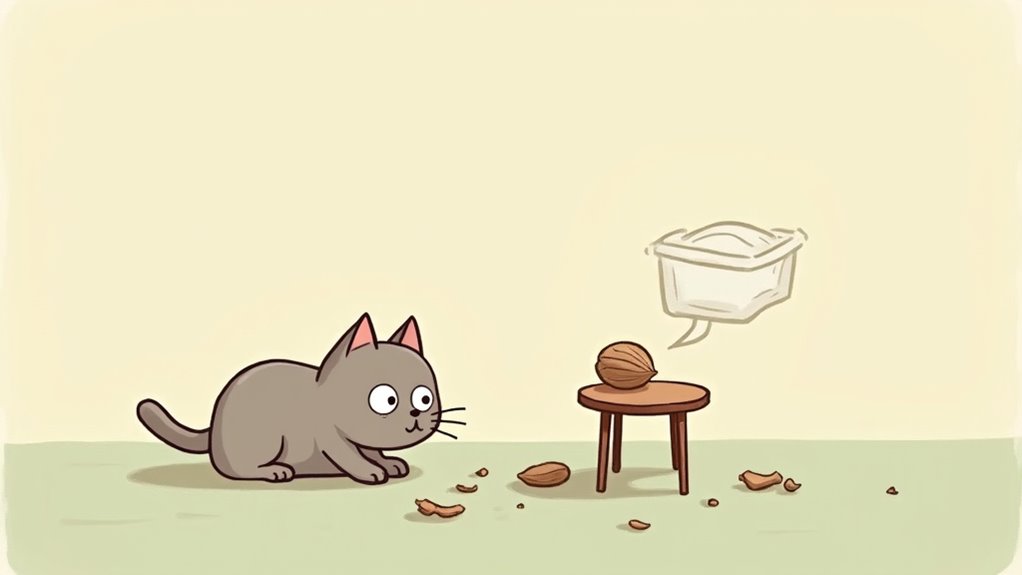
Cats can get serious digestive issues from eating walnuts. These nuts have a lot of fat. Cats find it hard to digest fat. This can lead to upset stomachs.
Common signs include:
- Vomiting
- Diarrhea
- Nausea
- Stomach pain
These symptoms show inflammation in the stomach. This inflammation can get worse. It can even lead to pancreatitis, which is very dangerous.
Watch for these signs:
- Abdominal pain (your cat may hunch over or not want to move)
- Lethargy (your cat may seem tired) and loss of appetite
If your cat vomits or has diarrhea for a long time, it can become dehydrated. This needs a vet’s care. Quick action is very important to stop more problems.
To keep your cat safe, store walnuts and other fatty nuts away. If your cat eats a walnut, call your vet. Their health depends on fast help and careful watching.
Allergic Reactions and Toxicity Concerns
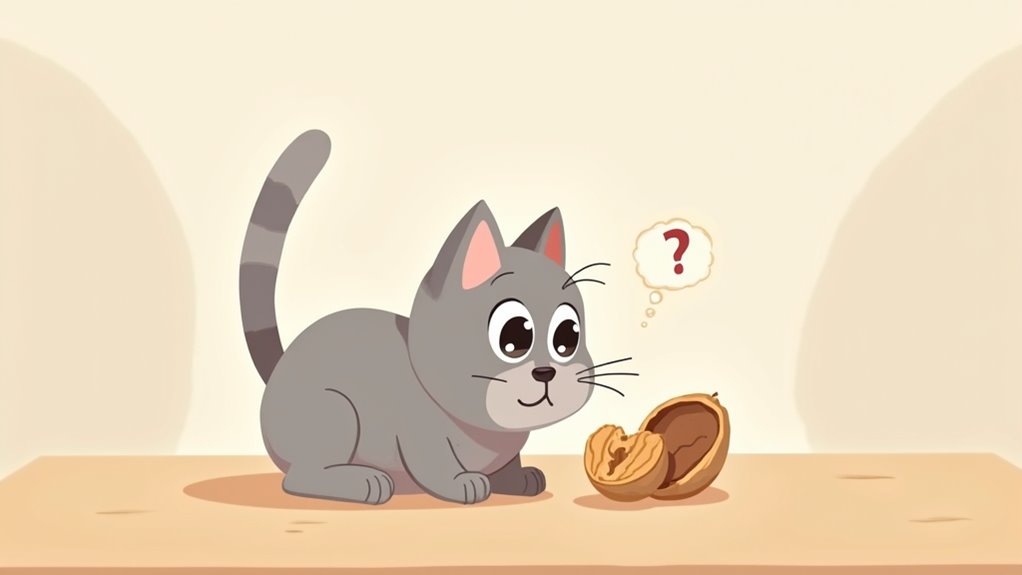
Cats can have allergic reactions or face toxicity from walnuts. Watch for these signs:
- Itching in the mouth, tongue, or ears
- Swelling or hives on the face
- Wheezing or coughing
- Vomiting or diarrhea
- Redness or skin reactions
These symptoms happen because of the cat’s immune response to walnut proteins. Reactions can be mild or severe, like anaphylaxis. Anaphylaxis needs immediate veterinary help.
Walnuts aren’t very toxic, but moldy walnuts can cause serious neurological problems.
Always act quickly if your cat shows any signs of a bad reaction. Monitor their behavior closely. If you think your cat ate walnuts, talk to your vet for advice. Keeping walnuts out of your cat’s reach is a smart choice for safety.
Comparison of Walnuts With Other Nuts
Walnuts are special because of their unique nutrition. They’ve about 654 calories and 15.23 grams of protein in every 100 grams. Pecans have a few more calories but offer different vitamins. Cashews are higher in carbs and sugars, while walnuts keep sugar low at just 2.61 grams.
Walnuts are rich in omega-3 fatty acids. They provide 6,280 mg of alpha-linolenic acid, which is more than any other nut. This makes walnuts a great choice for heart health. They also have 6.7 grams of fiber, which helps digestion.
Almonds and pistachios have healthy fats. But they don’t have omega-3 fatty acids. Walnuts stand out for those who want plant-based omega-3 and better heart support.
Choosing the right nut can impact your health. Consider these points when making your choice.
Safe Snack Alternatives for Your Cat
Giving your cat safe snacks is important for their health. Instead of walnuts, try these tasty options:
- Cooked, unseasoned chicken or turkey: Cats love this lean protein.
- Cooked eggs: Hard-boiled or scrambled without seasoning adds protein and vitamins, and they are nutritious treats that can enhance your cat’s diet.
- Cooked, pureed pumpkin: This helps digestion and adds fiber for tummy troubles.
- Freeze-dried chicken treats: Great for dental health and packed with protein.
- Frozen tuna treats: Mix tuna juice with ice for a refreshing snack.
These snacks satisfy your cat’s cravings and provide essential nutrients. Additionally, cooked eggs can offer a little extra boost when given occasionally, as they are rich in essential amino acids that align well with the dietary needs of obligate carnivores.
Introduce new treats slowly. Watch how your cat reacts to avoid any issues. Keeping your cat safe and healthy is the most important thing!
Frequently Asked Questions
Can Kittens Eat Walnuts Safely?
Kittens cannot eat walnuts. These nuts have high fat content, which can be harmful. Walnuts may also be toxic to cats. It’s vital to focus on what kittens need for healthy growth.
Proper kitten nutrition includes specially designed cat food. Look for snacks made for kittens. These will support their growth and help with digestion. Always choose safe options for your furry friend. Keep them healthy and happy!
What Should I Do if My Cat Eats Walnuts?
Your cat should see a vet immediately if it eats walnuts. Walnuts can be harmful to cats. Watch for signs like vomiting, diarrhea, or changes in behavior. These may mean your cat is not feeling well.
Instead of walnuts, offer better snacks. Cooked chicken or cat treats are safer options. They keep your cat happy and healthy. Always check what foods are safe for your pet. Keeping your cat safe is the most important thing.
Are There Any Nut Types Safer Than Walnuts for Cats?
Some nut types are safer for cats than walnuts. Peanuts and hazelnuts can be good options. Just give tiny portions. Nuts don’t help cats much. Cats need balanced diets for health. Too many nuts can cause problems. Always focus on what’s best for your cat.
How Can I Tell if My Cat Has Ingested Moldy Walnuts?
Moldy walnuts can be dangerous for cats. Watch for signs like tremors, vomiting, or drooling. These symptoms can mean your cat ate something harmful. Look for weakness or signs of distress. Quick action is important. Reach out to a vet right away. Don’t wait; walnut hazards can get worse fast. Your cat’s health is the priority. Stay alert and keep them safe.
What Common Symptoms Indicate Walnut Toxicity in Cats?
Common symptoms of walnut toxicity in cats include vomiting, diarrhea, and disorientation. Muscle tremors may also occur. These signs indicate that your cat may have ingested walnuts. Recognizing these symptoms early is vital. Quick action can help you assess how serious the situation is. It also ensures your cat gets the medical care it needs promptly. Always keep an eye on your pet after they eat new foods. Being alert can save your cat’s life.
Conclusion
Walnuts are not safe for cats. They can cause digestive problems and allergic reactions. While walnuts are healthy for humans, they can harm your feline friend. It’s best to avoid giving your cat any nuts. Instead, choose healthy treats. Small pieces of chicken or cat-friendly fruits are great options. These choices keep your cat safe and happy. Always think about what is best for your pet. Choosing the right snacks helps your cat thrive and stay healthy.
