
Can Cat Get Sick From Eating a Mouse
This post contains affiliate links. As an Amazon Associate, we earn from qualifying purchases.
Yes, cats can get sick from eating a mouse. Mice can carry harmful parasites and bacteria that pose health risks to your cat. This article will provide further details about these dangers and how to keep your cat safe and healthy.
Essential Facts in 30 Seconds
- Cats can contract parasites like *Toxoplasma gondii* and roundworms from eating mice.
- Infected mice may carry germs such as Salmonella, causing diarrhea and vomiting in cats.
- Cats risk secondary poisoning if they consume mice that have ingested rodenticides, leading to symptoms like bleeding and lethargy.
- Sharp bones from mice can pose physical hazards, causing injuries or choking.
- It’s important to monitor cats for illness after eating mice; severe symptoms require immediate veterinary attention.
Parasites Transmitted From Mice to Cats
Cats can face serious dangers from eating mice. Mice carry harmful parasites like *Toxoplasma gondii* and roundworms such as *Toxocara cati*. When a cat eats an infected mouse, it can swallow cysts or larvae. This can lead to health problems.
*Toxoplasma gondii* grows in a cat’s intestines. The cat then sheds it in its feces, which can infect other animals. This parasite can cause mild illness or even be deadly. Many infected cats show no symptoms, which can make it difficult to detect the presence of the parasite.
Roundworms can make your cat vomit and lose weight. Some intestinal parasites can upset a cat’s stomach too.
Limiting your cat’s hunting can help reduce these risks. Regular vet check-ups are important. They can find and treat any infections.
Keep your home clean by disposing of cat feces right away. This protects your cat and your family’s health.
Diseases and Bacterial Infections Risk
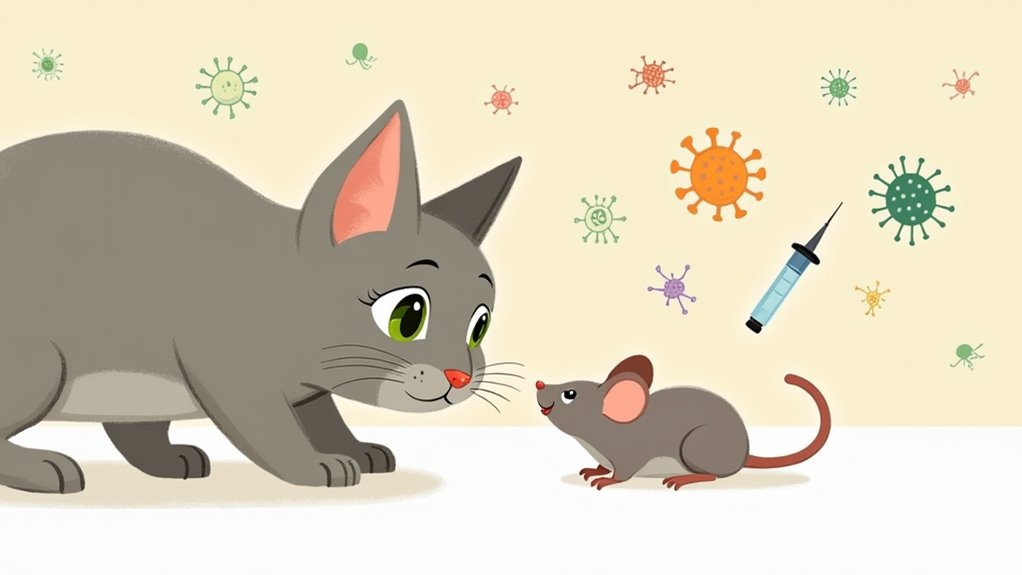
Cats love to hunt mice. But this can bring health risks. Mice can carry dangerous germs like Salmonella. These germs can make your cat sick. Cats control rodent populations effectively and their natural hunting instincts often lead them to catch and eat mice. Ingesting a mouse may expose your cat to harmful parasites that can lead to serious health issues.
Watch for signs like vomiting, diarrhea, or fever. If your cat shows any of these signs, act fast. These infections can affect both your cat and you.
Keep your cat healthy by preventing them from eating mice. Regular vet visits can help catch problems early. Always keep your home clean to reduce risks.
Salmonella Infection Risks
Salmonella infection poses serious risks for cats, especially those that hunt mice. Mice can carry the Salmonella bacteria. Cats get infected by eating these mice. Studies show that 1% to 5% of mice may have Salmonella. This puts your cat at risk. Salmonella is typically found in the intestinal tract, which means that even if a mouse looks healthy, it could still harbor the bacteria.
Symptoms of salmonellosis include diarrhea, vomiting, and fever. Severe cases can cause more serious illness.
To keep your cat safe, keep it indoors. This limits its access to wild mice. Regular vet visits are important. They can check for any hidden infections.
Practice good hygiene. Wash your hands after cleaning the litter box. Clean any areas where your cat may have been.
These steps help prevent spreading the bacteria to your family. Stay safe and keep your cat healthy.
Toxoplasmosis Transmission Concerns
Hunting mice can be risky for your cat. Toxoplasma gondii is a parasite that can harm both cats and humans. If your cat eats an infected mouse, it swallows immature cysts. These cysts grow into the parasite in your cat’s gut. This starts the toxoplasmosis lifecycle.
Your cat then sheds infectious oocysts in its poop. These oocysts can contaminate the environment. This poses serious risks for people and other animals.
You may not see any signs of illness in your cat. But the danger is real. It’s important to limit your cat’s access to mice. When cats hunt more, they increase the risk of spreading the parasite.
Protect your furry friend by keeping them safe from infected mice. Take action now to keep them healthy!
Other Bacterial Diseases
Cats love to hunt mice, but this can lead to serious health problems. Eating infected rodents puts your cat at risk for dangerous bacteria.
Here are some key risks:
- Salmonella can cause stomach issues like vomiting and diarrhea.
- Leptospira can harm the kidneys and can spread to humans.
- Yersinia pestis, which causes the plague, can lead to fever and pneumonia.
If your cat shows any symptoms, seek veterinary care right away.
Keeping your cat away from areas with many rodents can lower the risk of infection. This helps protect both your cat and your family.
Risk of Secondary Poisoning From Rodenticides
Letting your cat roam outside comes with serious risks. One big danger is secondary poisoning from rodenticides. These poisons, like brodifacoum and bromadiolone, can stay in a rodent’s body for days. If your cat eats a poisoned rodent, it might swallow harmful toxins. This can lead to rodenticide poisoning.
Research shows that about 4.5% of cats can be exposed without showing any signs. This means your cat could be in danger without you knowing. Delayed symptoms can be serious. They include bleeding, tiredness, and pale gums. These signs can make it hard for vets to diagnose the problem. Quick action is crucial if you think your cat might be poisoned.
Cats aren’t the only animals at risk. Wildlife like foxes and bobcats can also be harmed by these poisons. Protecting your cat from these hidden dangers is important.
Limit their time outside and keep an eye on rodenticide use in your area. This way, you can help ensure your cat stays safe and healthy.
Physical Hazards From Eating Mice
Cats love to hunt and eat mice. But there’s a risk when they do. Sharp bones in the mouse can hurt your cat. These bones can puncture the mouth or throat. They can also cause blockages in the stomach. This can be very serious and may need a vet’s help.
Choking is another danger. Watch your cat closely after it eats a mouse. Look for signs like coughing or trouble swallowing. These signs mean your cat might be in trouble. It’s always better to be safe and check on them.
Keep your cat healthy and happy by being aware of these risks.
Bone Injury Risks
Eating a mouse can seriously harm your cat’s bones. Here are the risks:
- Sharp bone pieces can cut or puncture your cat’s mouth or throat.
- Digestive injuries may occur from small bones irritating the esophagus.
- Obstructions can happen when bone bits clump together, needing urgent surgery.
These risks are real. They can cause severe problems like infections and internal bleeding.
Watch for signs of distress. Vomiting or lethargy means a trip to the vet is necessary.
Even small mouse bones can be dangerous. Keep an eye on what your cat eats to avoid bone injuries.
Choking Hazards
Choking hazards from eating mice can seriously harm your cat. Cats often take apart their prey. Yet, some parts, like heads or bones, can still cause choking if swallowed whole. Cats usually swallow well, but they may rush and not chew enough. This can increase the risk of blockage. Additionally, the natural hunting instincts of cats can lead them to consume prey too quickly when they are excited.
| Choking Risk Factor | Description | Prevention Tip |
|---|---|---|
| Mouse Bones | Small, sharp pieces can get stuck in the throat. | Always watch your cat while eating. |
| Larger Parts | Hard to swallow whole, raising choke risk. | Encourage slow eating by using small pieces. |
| Swallowed Fur | Can irritate the airway if breathed in. | Give your cat water after meals. |
| Forced Feeding | Increases choking risk due to fast eating. | Avoid rushing during feeding time. |
Watch for signs like coughing or trouble breathing. Stay alert to keep your cat safe.
Natural Hunting Behavior and Its Impact
Cats may be domesticated, but their hunting instincts are still strong. These instincts are important for their health. Hunting gives cats exercise and mental stimulation. Even well-fed cats will show hunting behavior. This behavior isn’t only about food. It helps keep them happy and engaged.
Hunting activities help cats stay fit. They build muscle coordination and physical strength. The thrill of stalking prey reduces stress and anxiety. Playing like they hunt helps cats stay interested and active.
These activities sharpen their skills. Cats become better at jumping and chasing. Allowing them to hunt keeps them healthy and happy. Additionally, snacking on insects can provide protein that supports their nutritional needs.
Symptoms and Health Monitoring After Mouse Consumption
After your cat catches a mouse, monitor them closely for signs of illness.
Check for symptoms like vomiting, diarrhea, or lethargy. These may point to infections. Look at their gums. Pale gums can mean anemia or illness.
Watch for respiratory problems too. Coughing or trouble breathing might suggest poisoning.
Notice any strange behavior like sadness or drooling. These signs could mean your cat was exposed to something toxic.
Keep an eye on your cat for several days. Symptoms can appear later.
Severe symptoms like seizures or shock need immediate veterinary care. Trust professionals for treatment, not home remedies. Quick action can save your cat’s life. Your attention is crucial for their health! Additionally, consider that raw meat can contain harmful bacteria, which may pose further risks if your cat eats infected prey.
Frequently Asked Questions
Can a Cat Digest a Whole Mouse Safely?
Can a cat digest a whole mouse?
Yes, a cat can digest a whole mouse.
Are a cat’s digestive systems suited for mouse consumption?
Yes, a cat’s digestive system is designed to break down the components of a mouse, including bones and fur.
What nutrients do cats get from eating mice?
Cats obtain essential nutrients from mice, including protein, fat, and vitamins.
Is it safe for cats to eat whole mice?
Yes, it is generally safe for cats to eat whole mice, as their bodies are adapted to handle them.
Can eating a mouse be harmful to a cat?
While eating a mouse is usually safe, there is a risk if the mouse is contaminated with toxins or diseases. Always monitor your cat for any unusual symptoms after consumption.
How Often Do Cats Eat Mice in the Wild?
How often do cats eat mice in the wild?
Cats eat mice regularly in the wild, as they are a primary food source.
Why do cats hunt mice?
Cats hunt mice to obtain essential nutrients that are important for their health, especially when larger prey is scarce.
Are mice a significant part of a cat’s diet?
Yes, mice account for a large portion of a cat’s diet in the wild.
What nutrients do cats get from eating mice?
Cats obtain protein, fat, and various vitamins and minerals from consuming mice.
Do all cats hunt mice?
While many cats have the instinct to hunt mice, individual hunting behavior can vary based on factors like environment and availability of prey.
What happens if there are no mice available?
If mice are not available, cats may hunt other small animals or rely on their stored energy.
Do Cats Prefer Fresh Mice Over Frozen Ones?
Do cats prefer fresh mice over frozen ones?
Yes, cats generally prefer fresh mice because of their movement and scent.
Why do cats find fresh mice more appealing?
Fresh mice activate a cat’s hunting instincts due to their natural behavior and smell.
Can cats eat frozen mice?
Yes, cats can eat frozen mice, but they may not find them as enticing as fresh ones.
What should I consider when feeding my cat mice?
Consider the freshness and safety of the prey, and ensure it is appropriate for your cat’s diet.
Can Eating Mice Enhance a Cat’s Hunting Skills?
Question: Does eating mice help improve a cat’s hunting skills?
Answer: Yes, eating mice enhances a cat’s hunting skills.
Question: How does eating mice affect a cat’s instincts?
Answer: It reinforces their hunting instincts and promotes natural behavior.
Question: What benefits do live prey provide for a cat’s hunting abilities?
Answer: Live prey sharpens a cat’s reflexes, improves decision-making, and stimulates mental engagement.
Question: Is it important for cats to encounter live prey?
Answer: Yes, regular encounters with live prey are vital for effective predation.
Are Certain Cat Breeds More Prone to Hunting Mice?
Q: Are some cat breeds better at hunting mice than others?
A: Yes, certain breeds have stronger hunting instincts.
Q: Which cat breeds are known for their hunting abilities?
A: Breeds like Abyssinians and Bengals are known for their strong hunting skills.
Q: What makes these breeds better hunters?
A: Their breed characteristics contribute to their natural hunting instincts.
Q: Can any cat be trained to hunt mice?
A: While any cat can learn to hunt, breeds with strong instincts may be more successful.
Q: Do all cats have the same level of interest in hunting?
A: No, individual interest in hunting can vary among cats, even within the same breed.
Q: How can I encourage my cat to hunt?
A: Provide toys that mimic prey and engage in interactive play to stimulate hunting behavior.
Conclusion
Cats love to hunt mice. It feels like a big treat to them. But eating a mouse can be risky. Mice can carry parasites. These tiny creatures can make your cat very sick. Bacterial infections are another danger. A cat can get sick from germs in the mouse’s body.
Some mice might have been poisoned. Rodenticides can hurt your cat too. This poison can cause serious health problems.
If your cat catches a mouse, watch for signs of illness. Look out for vomiting or tiredness. These could mean your cat is not well.
It’s strange that a cat’s natural hunt can lead to trouble. Always keep an eye on your cat’s next catch. Safety is important for your furry friend!
