
Can Cat Throw up From Eating Too Fast
This post contains affiliate links. As an Amazon Associate, we earn from qualifying purchases.
Yes, cats can vomit if they eat too quickly. When they gulp down their food without chewing, it can lead to stomach stretching and trigger a vomiting reflex. This is particularly concerning if you notice your cat finishing meals in under two minutes, along with symptoms like regurgitation or a bloated belly. To help prevent this, consider using slow feeder bowls or offering smaller, more frequent meals. If vomiting continues, it’s important to consult a veterinarian for potential underlying health issues. Further insights will follow for those interested in a deeper understanding.
Essential Facts in 30 Seconds
- Cats can vomit from eating too quickly due to overfilling their stomachs.
- Fast eating can lead to regurgitation of undigested food soon after meals.
- Swallowing air while eating rapidly may cause stomach discomfort and vomiting.
- Cats that eat their meals in under two minutes are more prone to vomiting.
- Stressful feeding environments can increase the chance of vomiting in fast eaters.
Understanding Rapid Eating in Cats
Cats that eat very quickly often do so for specific reasons. They may feel competitive, especially in homes with more than one cat. Stress or boredom can make them rush their meals. Some cats might’ve a past of food scarcity, making them anxious about losing their food. A craving for tasty wet food can also lead to fast eating. Rapid eating can trigger vomiting due to overfilling the stomach, which can cause further issues. It is important to remember that cats are obligate carnivores, requiring a diet primarily of meat to maintain their health.
To help your cat eat more slowly, try these tips:
- Serve smaller meals more often. This helps reduce their urgency.
- Use food puzzles. These toys make eating a fun challenge.
- Keep an eye on their environment. Changes can stress them out and affect their eating.
Understanding why your cat eats quickly is key. These steps can help ensure your cat eats safely and stays healthy.
Signs That Your Cat May Be Eating Too Fast
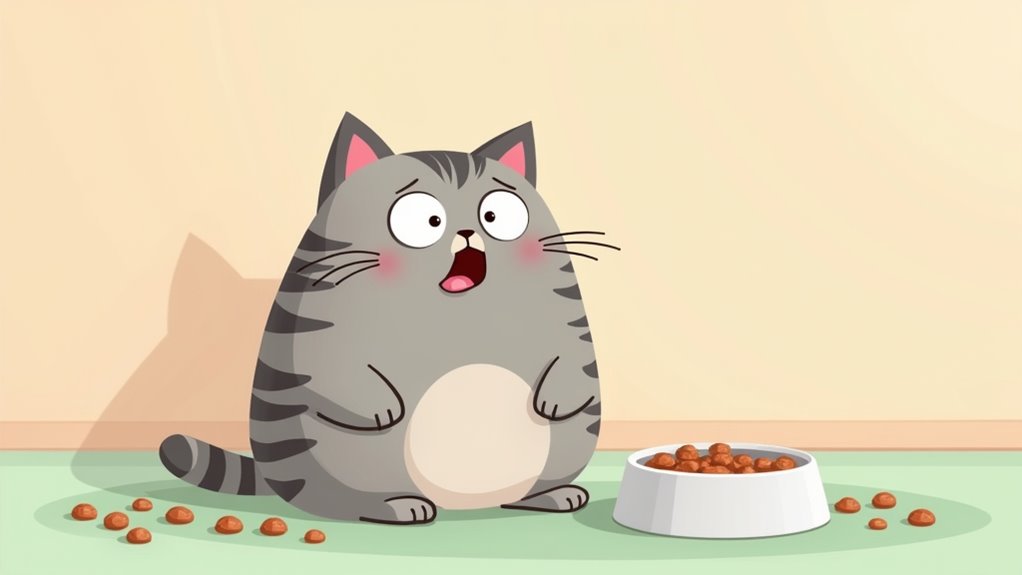
Recognizing signs that your cat eats too fast is important for their health. A cat that finishes meals in under two minutes is a concern. Fast eating can harm their digestion. Gulping food without chewing may cause gagging or choking. Regurgitation or vomiting soon after meals shows they may have stomach issues.
Watch your cat’s behavior during meals. Constant begging or looking anxious while eating can mean they eat too quickly. Signs like a bloated belly or a lot of gas indicate they swallow air when they eat.
Keep track of how fast your cat eats. Consider using slow-feed bowls or puzzle feeders. These tools help your cat eat more slowly and enjoy their meals.
Taking these steps helps protect their digestive health.
The Connection Between Fast Eating and Vomiting
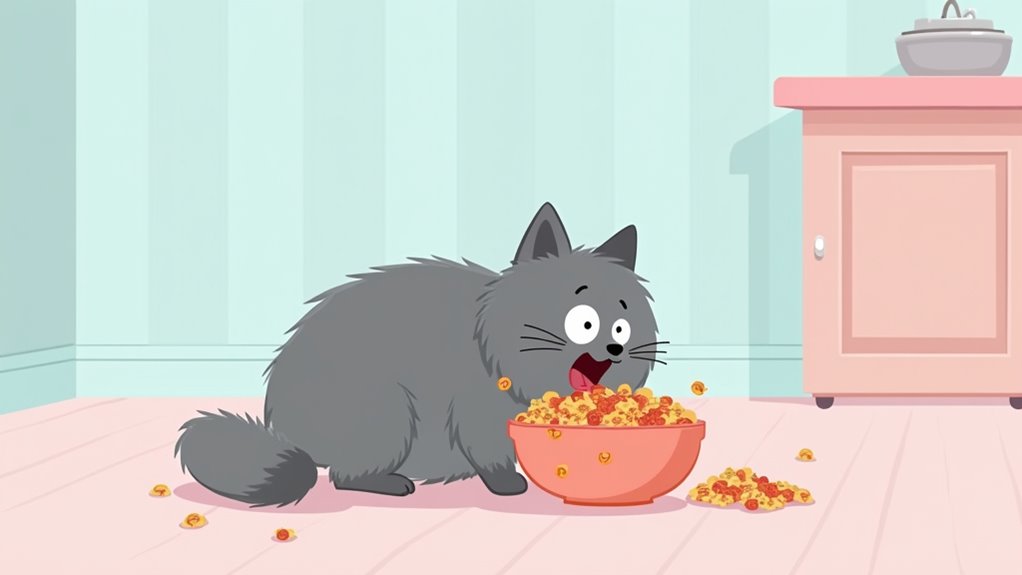
Fast eating can cause serious health problems for your cat, especially vomiting. Cats that gulp down their food too quickly may regurgitate. This means they bring up undigested food, which often looks like tubular-shaped vomit.
Eating too fast can also make the stomach expand too much, leading to a protective vomiting reflex. Swallowing a lot of air while eating quickly can cause stomach discomfort. This increases the chances of vomiting.
Many cats don’t chew their food well. Instead, they swallow whole kibble that can irritate their stomach or esophagus. Stressful feeding conditions can make this worse. Competition for food or sudden changes in diet can also trigger vomiting.
Watch your cat closely after meals. Frequent vomiting is a sign to visit the vet. It could mean there are underlying health problems. Monitoring your cat’s eating habits is very important.
Preventive Measures to Slow Down Eating
To help your cat eat more slowly and avoid vomiting, try these simple tips.
- Slow Feeder Bowls: These bowls have obstacles that make your cat eat slower. They come in different styles for dry and wet food.
- Smaller, Frequent Meals: Give your cat smaller portions several times a day. This matches their natural hunting style and keeps their energy steady. An automatic feeder can help with timing.
- Interactive Puzzle Feeders: These fun toys keep your cat busy. They release food as your cat plays, which makes mealtime last longer and slows down eating. Ensuring that your cat has access to fresh water is also essential for their health.
Using these methods can help your cat eat better and feel healthier.
When to Consult a Veterinarian
Cats can eat too quickly, and this may cause vomiting. If a cat vomits blood, seek help right away. Bright red blood or blood that looks like coffee grounds is an emergency.
Also, if a cat vomits many times in a few hours, it needs to see a vet quickly. Cats that can’t keep food or water down may become dehydrated. This makes a vet visit necessary.
Watch for signs like sudden tiredness, pale gums, or fast breathing. These signs can mean serious illness.
Sometimes, cats vomit after eating fast. This happens occasionally. If it happens often or if the cat acts differently, see a vet. Ongoing vomiting might point to health problems.
Always care for your cat’s health. Don’t wait to ask for veterinary help when these problems arise.
Frequently Asked Questions
Can Certain Cat Breeds Eat Faster Than Others?
Certain cat breeds indeed eat faster than others. For example, Siamese cats often eat quickly. They have a lot of energy and excitement. Other breeds may take their time while eating. This difference can be linked to their personalities.
It’s important to watch how your cat eats. Fast eating can lead to health problems, like choking or digestive issues. Slow eaters might be more relaxed and careful. Understanding your cat’s eating habits is key for their well-being.
Every cat is unique. Some may need help to slow down. Using special bowls or feeding them smaller portions can help. Always pay attention to your cat’s behavior during meal times. It can give you clues about their health.
Are There Specific Foods That Increase Rapid Eating?
Certain food textures can make cats eat faster. For example, crunchy kibble is very appealing. It can create a feeding frenzy. The sound and feel of crunching food excite them.
An exciting feeding area matters too. Strong and tasty smells draw them in. This can trigger their instinct to eat quickly.
Cats might eat fast because they feel competition. They may think they need to hurry for their food. A fun and engaging environment can cause this behavior.
Understanding these factors can help pet owners control how fast their cats eat.
How Can I Tell if My Cat Is Stressed While Eating?
Watch your cat closely while they eat. Look for signs of stress. Signs include restlessness, loud meowing, or flicking their tail. These behaviors show they feel uncomfortable. Stress can make them eat less. It can even affect their health. Always pay attention to how they act at mealtime. A calm cat enjoys their food more. Create a peaceful eating space for them.
Will a Slow Feeder Bowl Help All Cats?
A slow feeder bowl helps many cats. It encourages them to eat slowly. This leads to better digestion. Slower eating can reduce bloating too. Cats stay engaged during mealtime. They enjoy their food more. Overall, it promotes healthier eating habits. Many owners see positive changes in their cats. A slow feeder bowl can be a great addition to your kitty’s routine.
Can Rapid Eating Lead to Long-Term Health Issues?
Rapid eating can cause serious health problems over time. For cats, this can lead to digestive issues. One big issue is obesity. Eating too fast can also cause stomach upset. It’s important to watch how quickly your cat eats. Encourage them to slow down for better health. Use smaller portions or special bowls to help. Healthy eating habits can keep your cat happy and fit.
Conclusion
Cats can throw up when they eat too fast. This happens because they gulp down their food without chewing. Fast eating can lead to upset stomachs and vomiting. It’s important to help your cat eat slowly.
Try special feeding bowls designed to slow them down. These bowls have obstacles that make it harder for cats to eat quickly. You can also try smaller meals throughout the day. This gives your cat time to digest food properly.
Taking these steps can keep your cat healthy and happy. A little effort now can prevent problems later. A happy cat makes a happy home.
