
Can Domestic Cat Eat Raw Meat
This post contains affiliate links. As an Amazon Associate, we earn from qualifying purchases.
Feeding your domestic cat raw meat can pose significant health risks. Raw meat may contain harmful bacteria such as *E. coli* and *Salmonella*, and can lead to nutritional imbalances, including deficiencies in thiamine or calcium. Additionally, splintering bones can cause injuries, and parasites like *Toxoplasma* can affect both cats and humans. For those interested in a deeper understanding of these risks and best practices, further explanation will follow.
Essential Facts in 30 Seconds
- Domestic cats can consume raw meat, but it poses risks of harmful bacteria like Salmonella and E. coli.
- Raw meat diets may cause nutritional deficiencies, particularly in taurine and calcium, impacting health.
- Consumption of raw meat can lead to exposure to parasites, such as Toxoplasma and tapeworms.
- Raw meat bones can splinter, posing choking hazards or causing injuries to the digestive system.
- Safe handling practices are crucial; always clean surfaces and use separate utensils to avoid contamination.
Understanding the Risks of Feeding Raw Meat to Cats
Feeding raw meat to cats comes with important risks. Raw meat can contain harmful bacteria like *Salmonella*, *E. coli*, and *Listeria monocytogenes*. These germs can make both cats and humans sick.
A study showed that about 25% of commercial raw pet foods had these bacteria. Additionally, raw meat can also contain harmful parasites that pose health risks to cats.
To keep your cat safe, take these steps:
- Wash your hands well after touching raw meat.
- Clean surfaces and utensils used for preparation.
- Store raw pet food away from human food.
Cats with weak immune systems face higher risks. They can get infections more easily from these bacteria. Additionally, it’s crucial to recognize that raw meat diets may lack essential nutrients necessary for your cat’s overall health.
Knowing these dangers helps you decide on your cat’s diet. Keeping your pet safe and healthy is the priority.
Nutritional Concerns With Raw Meat Diets

Feeding raw meat diets to cats can cause serious health risks. Nutritional imbalances may occur, leading to deficiencies. These deficiencies can result in significant health issues. For example, low levels of thiamine or calcium can harm their nervous system and bones. Additionally, raw meat, including beef, can carry harmful bacteria that poses risks not only to your cat but also to humans and other pets in the household.
Taurine is crucial for cats. They can’t produce it on their own. A lack of taurine can lead to heart disease and other severe problems. Additionally, it’s important to consider the potential for bacterial contamination, which can pose risks not only to your cat but also to humans and other pets in the household.
To keep your cat healthy, follow these tips:
- Maintain a balanced calcium-to-phosphorus ratio. This helps prevent bone deformities.
- Add essential vitamins and minerals to their diet.
- Work with your veterinarian. They can help create a diet that fits your cat’s age and health needs.
Regular blood tests can spot imbalances early. A raw diet can be good for your cat. But without careful planning, it might hurt their health.
Physical Hazards Associated With Raw Meat Feeding
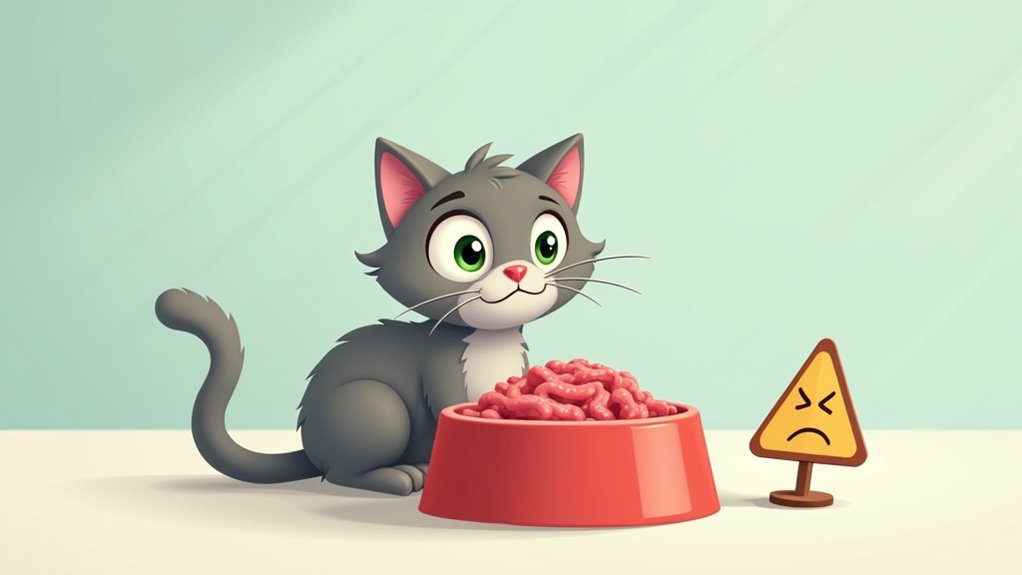
Feeding your cat raw meat can seem like a natural choice. But it has serious risks. Here are the main dangers:
- Bone Splintering Hazards: Bones can break into sharp pieces. This can hurt your cat’s mouth or cause serious internal injuries.
- Choking Risks: Small or sharp bones can get stuck in your cat’s throat. This can be very dangerous.
- Emergency Vet Visits: If your cat eats a bone that blocks its digestive system, it may need urgent vet care.
- Monitoring Needed: Always watch your cat while it eats raw meat. Remove any bones right away to avoid accidents.
To keep your cat safe, choose boneless meat or special raw diets. These options lower the risks.
Your cat deserves the best care! Always talk to your vet about safe feeding practices. Be aware of the dangers before adding raw meat to your cat’s diet.
Parasites and Zoonotic Diseases From Raw Meat
Feeding your cat raw meat might seem like a good idea, but it can be risky. Raw meat can carry harmful parasites and diseases. For example, Toxoplasma gondii and tapeworms can infect your cat. These parasites can also spread to your home through cat feces.
Zoonotic diseases, like toxoplasmosis, can affect people too. You can catch this disease by handling dirty litter or eating undercooked meat. Studies show that about one-third of cats in the U.S. have been exposed to Toxoplasma. This reveals a serious health risk for both pets and humans. Additionally, mice can carry diseases that may pose health risks to your cat when consuming raw meat. Feeding your cat raw meat can also lead to bacterial contamination, which can cause gastrointestinal issues.
Think carefully about the dangers of feeding your cat raw meat. Talk to your veterinarian before making any changes to your cat’s diet. There are safer food options available.
Protect your cat and your family by choosing safer alternatives.
Best Practices for Handling Raw Meat Safely
Handling raw meat safely is very important. Follow these best practices to keep your food safe.
1. Use Separate Tools: Always have special cutting boards and utensils for raw meat. This helps stop germs from spreading.
2. Store Properly: Keep raw meat in leak-proof containers. Store it at 40°F or lower to keep it fresh.
3. Wash Hands and Surfaces: Wash your hands for at least 20 seconds before and after touching raw meat.
Clean all surfaces, cutting boards, and tools right away with hot, soapy water.
4. Watch the Time: Don’t leave raw meat out for more than 2 hours. If the temperature is above 90°F, only leave it out for 1 hour.
Frequently Asked Questions
Can I Feed My Cat Raw Meat Occasionally?
Feeding your cat raw meat can be done, but caution is key. Raw meat can carry bacteria or parasites. Always choose high-quality meat from a safe source. Limit how often you give it to your cat. It’s important to talk to your vet for advice. Your cat needs a balanced diet to stay healthy. Make sure raw meat is just a small part of their food. Keep an eye on your cat for any signs of illness after feeding raw meat. This way, you can help them stay happy and healthy.
What Types of Raw Meat Are Safest for Cats?
Many cats love raw meat. Studies show that about 70% of cats prefer it. For safe options, choose chicken, rabbit, or salmon. These meats offer balanced nutrition. They also lower the risks of improper handling. Always handle raw meat carefully. Wash your hands and surfaces after use. Enjoy feeding your cat these tasty options!
How Do I Transition My Cat to a Raw Diet?
Transitioning your cat to a raw diet requires a careful approach. Start slowly by mixing raw food with their current kibble or wet food. This method helps your cat adjust to the new taste and texture.
Pay attention to your cat’s appetite. Some cats may take to raw food quickly, while others need more time. Offer small amounts of raw food and see how they react.
Observe their comfort level. If they seem hesitant, mix in a little more raw food each day. Keep their preferences in mind. Some cats may prefer chicken, while others like fish or beef.
Monitor their health during the transition. A raw diet can be beneficial, but it’s important to ensure they are thriving. If you notice any issues, consult your vet for advice.
This process can take time, but patience pays off. With gradual changes and careful observation, your cat can enjoy a healthy raw diet.
Are There Any Benefits to Feeding Cats Raw Meat?
Feeding your cat raw meat offers many nutritional benefits. It can boost their energy and improve gut health. Raw meat contains essential proteins and nutrients that support a cat’s overall well-being. Many cat owners report that their pets enjoy the taste of raw meat too.
Yet, this diet also has risks. Raw meat can carry harmful bacteria like Salmonella or E. coli. These germs can make both cats and humans sick. Another concern is nutritional balance. Cats need a variety of nutrients to stay healthy. Too much of one type of meat can lead to deficiencies in others.
Before switching to a raw meat diet, talk to your vet. They can help you understand the right balance of nutrients. They can also guide you on safe meat choices. A balanced diet is key to keeping your cat healthy and happy.
How Much Raw Meat Should I Feed My Cat?
Feed your cat raw meat daily. A good portion is 2% to 3% of their body weight. Adjust this amount based on their needs. Think about their activity level and health. These factors help ensure your cat gets balanced nutrition. Proper feeding prevents health issues and deficiencies. Always monitor your cat’s weight. Regular check-ups with a vet also help. They can guide you on the right diet for your furry friend.
Conclusion
Feeding your cat raw meat can be risky. There are dangers like parasites and harmful bacteria in raw meat. These threats can make your cat very sick. The nutritional benefits might not be worth the risks. Always talk to your vet before making any changes to your cat’s diet. They can guide you on safe feeding practices. This way, your cat can stay healthy and happy without any surprises. Keep your furry friend safe by making informed choices about food.
