
Can Kittens Eat Adult Cat Food
This post contains affiliate links. As an Amazon Associate, we earn from qualifying purchases.
Feeding kittens adult cat food is not safe, as it lacks the essential nutrients and higher protein levels that kittens require for healthy growth. Kittens need about 35-50% protein, whereas adult cat food typically contains only 25-40% protein. Insufficient nutrition can hinder their development and lead to serious health issues. It’s crucial to provide specially formulated kitten food until they reach about 90% of their adult weight, usually around 10-12 months. For those interested in understanding more about their dietary needs and hydration, further details will follow in the article.
Essential Facts in 30 Seconds
- Kittens should avoid adult cat food due to insufficient protein, fat, and calories needed for growth.
- Adult cat food lacks essential vitamins and minerals, risking bone health in kittens.
- Poor nutrition from adult cat food can weaken a kitten’s immune system.
- Kittens require specially formulated food for their rapid growth, unlike adult cat food which is for maintenance.
- Transition to adult cat food should happen after kittens are about 90% of their adult weight, typically around 10-12 months old.
Nutritional Needs of Kittens vs. Adult Cats
Kittens have special nutritional needs that are different from adult cats. They need more calories to support their fast growth. A diet with 35-50% protein helps build strong muscles and gives them energy to play. Adult cat food, with only 25-40% protein, won’t provide what kittens need.
To help kittens grow properly, choose food rich in vitamins and minerals. Look for calcium and phosphorus for strong bones. Vitamin A is important for their immune system.
A balanced diet should also include omega-3 fatty acids, like DHA. These are great for brain health.
Feeding kittens the right food is essential. It helps them grow healthy and strong. Make sure to read labels and choose high-quality kitten food. Your furry friend deserves the best!
Risks of Feeding Kittens Adult Cat Food
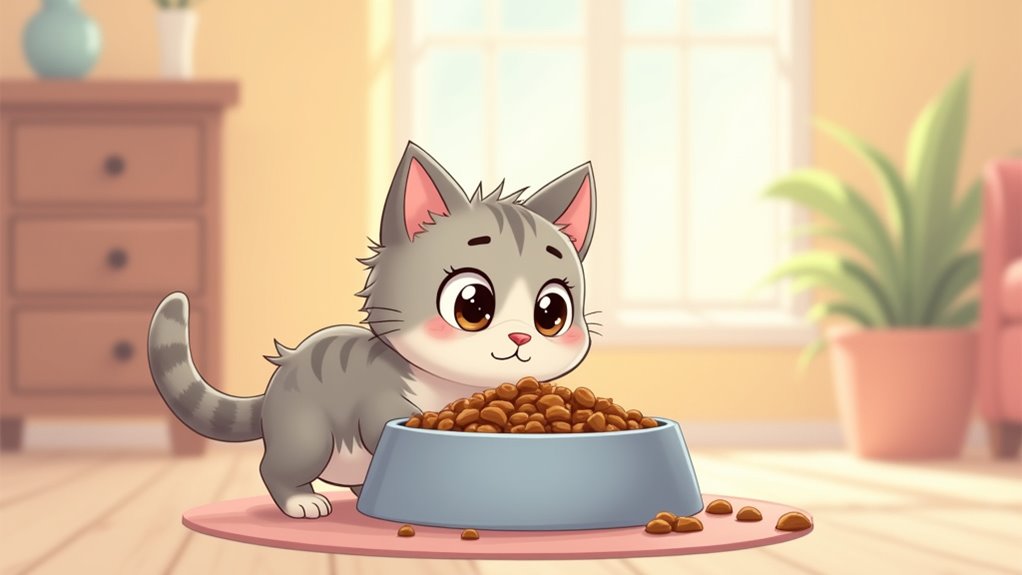
Feeding kittens adult cat food can cause big problems. Kittens grow fast and need special nutrition. Adult food doesn’t have enough protein, fat, or calories. This lack can slow their growth. It can also make them more likely to get sick.
Kittens need a diet rich in nutrients. They require more energy than adult cats. Feeding them the wrong food now can lead to health issues later.
A balanced diet helps them grow strong and healthy. Remember, proper nutrition is key to your kitten’s future well-being.
Nutritional Deficiencies Risks
Kittens grow quickly in their early months. Feeding them adult cat food can cause serious problems. Adult food doesn’t have enough protein and fat. Kittens need these nutrients to develop well. Without enough protein, their energy drops. This affects their play and exploration.
Lower amounts of important minerals like calcium and phosphorus can hurt bone growth. Not enough DHA can slow brain and vision development. These problems can weaken their immune systems. Kittens may get sick more easily. Poor nutrient absorption can also lead to tummy troubles.
It’s important to feed kittens specially made food. This ensures they get all the nutrients they need. Proper nutrition helps them grow strong and healthy. A good diet supports their immune systems too. Choose kitten food for the best results.
Growth Impairment Concerns
Many people think any cat food is good for kittens. This is wrong. Feeding adult cat food to your growing kitten can cause serious problems.
Adult food doesn’t have the right nutrients for kittens. Kittens need more protein and calories to grow strong and healthy. Adult food lacks these important parts.
Without enough calcium and phosphorus, kittens can have bone issues. This can hurt their growth when they need it the most. A poor diet can also harm their immune system. This makes them more likely to get sick.
To help your kitten grow well, pick food made just for them. Kitten food has the right nutrients. It supports their fast growth and keeps them healthy.
Choose wisely for a happy, healthy kitten!
Long-term Health Consequences
Feeding your kitten adult cat food can cause serious health issues later on. Adult food lacks key nutrients that kittens need. Without enough protein and DHA, a kitten’s brain and vision can develop poorly. Low calcium and phosphorus can hurt their bones.
Kittens may also have weak immune systems. This makes them more likely to get sick. Slow growth can affect their metabolism. This might lead to problems with their organs as they grow.
To help your kitten grow strong and healthy, choose high-quality kitten food. It has the right mix of nutrients for their needs. Your choice today can lead to a healthier, happier life for your furry friend.
Transitioning Kittens to Adult Cat Food
Shifting your kitten to adult cat food is important. Wait until your kitten is about 90% of their adult weight. This usually happens around 10 to 12 months old.
Make the change slowly. Take 7 to 14 days to mix the new food with the old. This helps avoid stomach problems. Your kitten still needs the right nutrition during this change. Kittens have specific nutritional needs that must be met for healthy growth.
Keep an eye on your kitten’s behavior and health. Watch for any signs of upset stomach.
If everything goes well, your kitten will enjoy their new food.
Optimal Age Transition
Shifting your kitten to adult cat food is important for their health. They usually reach maturity between 10 to 12 months old. Watch for signs like reaching 90% of their adult weight and less playful behavior. These signs help you know when to switch to adult food.
For larger breeds, like Maine Coons, the change can happen later. They mightn’t be ready until 18 to 24 months.
Switching too early can cause nutritional problems. Waiting too long can lead to obesity from too much food. It’s wise to ask your veterinarian for advice based on your kitten’s growth and health.
Keep an eye on their weight and behavior. This will help make the transition smooth and healthy.
Gradual Diet Change
Shifting your kitten to adult cat food is very important for their health. Doing this the right way can prevent stomach problems.
Start by mixing 25% adult food with 75% kitten food for the first two days. Then, for days three and four, use a 50/50 mix. For days five and six, increase to 75% adult food. Aim to switch to 100% adult food by day seven to ten.
Keep an eye on your kitten’s stool and appetite. If they’ve stomach upset or don’t want to eat, slow down the change. Every cat is different, so talk to your vet for advice tailored to your kitten’s needs. This can help make the switch smooth and healthy.
Nutritional Needs Assessment
As your kitten grows, it’s important to check their nutritional needs. This helps them transition smoothly to adult cat food. A good balance of nutrients is key for healthy growth.
Here are some important points to remember:
- Age Matters: Kittens require special food until they’re about 12 months old. Bigger breeds may need it until 18-24 months.
- Nutrition Counts: Ensure they get enough calories and protein. Aim for 35-50% protein. DHA is also vital for their development.
- Transition Slowly: Introduce adult food gradually. This helps prevent digestive problems and ensures they get enough nutrients.
- Vet Visits: Regular check-ups with the vet help determine when to switch your kitten to adult food.
Keep these tips in mind for a healthy and happy kitten!
Occasional Adult Cat Food for Kittens
Raising a kitten requires careful attention to their diet. Feeding adult cat food occasionally is okay, but it mustn’t replace their main diet of kitten formula. Adult food doesn’t have the right nutrients for growing kittens. Kittens need more calories, protein, and DHA for healthy growth.
Using adult food as a treat can be fun for kittens. They often enjoy the taste and smell. Just remember to give it sparingly. Treats should never replace meals.
Follow these guidelines for occasional feeding:
- Offer small amounts to keep nutrients balanced.
- Keep an eye on their weight to avoid health problems.
Best practices suggest sticking to kitten food until about 10-12 months old. Talk to your vet for advice on when to switch to adult food.
Balancing both kitten and adult food helps your kitten grow strong and healthy!
Importance of Kitten Food for Development
Kittens grow fast in their first months. They need special kitten food for healthy development.
Here are four reasons to choose kitten food:
- High Protein: Kittens need 35-50% protein to grow strong. Adult cats don’t need as much.
- Calcium and Phosphorus: A good balance of calcium and phosphorus helps build strong bones and teeth. The right ratio is 1.2:1.
- Healthy Fats: Kitten food has 18-35% fat, including DHA. DHA is important for brain and sensory development.
- Vitamins and Minerals: Kitten food provides extra vitamins A, B-complex, and E. These nutrients help protect their growing immune systems.
Choosing the right kitten food is key. It supports their health and growth during this important time.
Hydration and Food Type Considerations
Kittens need special care for hydration. Their bodies grow quickly and use energy fast. Here are easy ways to keep your kitten hydrated:
- Wet Food is Best: Wet kitten food has 75-80% water. This is much more than dry food, which only has 10%. Wet food helps kittens drink enough water. Additionally, incorporating safe foods for cats can further enhance their hydration.
- Texture Matters: Kittens might find dry food hard to chew. This can make it tough for them to drink enough. Mixing wet and dry food can help them adjust.
- Watch for Signs: Always check your kitten for signs of dehydration. If they seem tired or have diarrhea, they mightn’t be drinking enough. Cats also benefit from safe human foods that can provide additional hydration and nutrients.
Start mixing in adult food around 10-12 months old.
Keep an eye on how much water they drink. This helps make sure they stay healthy and hydrated.
Frequently Asked Questions
Can Kittens Eat Treats Made for Adult Cats?
Kittens need special care. They require specific nutrients for healthy growth. Treats made for adult cats often lack these essential nutrients. Giving adult cat treats to kittens too often can cause problems. Kittens may not get the vitamins and minerals they need. This can lead to health issues and slow development. It’s important to choose treats designed for kittens. These treats support their growth and help them thrive. Always check the label. Look for treats that mention they are for kittens. This way, you ensure your kitten gets the right nutrition they need to grow strong and healthy.
How Often Can Kittens Eat Adult Cat Food?
Kittens can eat adult cat food sometimes, but not often. Adult food does not have the right nutrients for growing kittens. Kittens need special food that supports their growth and development. It’s best to give them kitten food most of the time.
Feeding adult food once in a while is okay. Just don’t make it a habit. Stick to kitten food for their meals. This way, your kittens will stay healthy and strong. Always check the food labels to make sure it meets their needs. Remember, healthy kittens become healthy adult cats.
Are There Specific Brands of Adult Food Suitable for Kittens?
Purina, Royal Canin, and Hill’s offer adult food that supports kittens. These brands use high-quality ingredients. Look for food rich in proteins, fats, and vitamins. These nutrients help kittens grow strong and healthy. Always check the label for the right nutrition. Feeding your kitten the right food is important for their overall health.
Will Feeding Adult Food Affect a Kitten’s Growth Rate?
Feeding adult food to kittens can hurt their growth. Adult food does not have enough important nutrients. Kittens need more calories and specific vitamins to grow strong. Special kitten food is made just for their needs. It helps them grow healthy and strong. Stick to kitten food until they are fully grown. This way, your kitten will develop properly and stay healthy.
Can Kittens Digest Adult Cat Food Without Any Issues?
Kittens can eat adult cat food, but it’s not ideal for them. Adult food lacks important nutrients that help kittens grow. Kittens need special food that has the right balance of proteins, fats, and vitamins. Eating adult food too often can stop them from getting the nutrients they require. It’s best to feed kittens kitten-specific food for healthy growth and development. This helps them stay strong and happy. Always check food labels to ensure they meet kitten needs. Proper nutrition is key to raising a healthy kitten.
Conclusion
Kittens need special food to grow strong and healthy. They require about 30% protein in their diet. Adult cats only need 26% protein. This difference is very important for their growth. Feeding kittens adult cat food can lead to nutrient gaps. Always ask your vet before changing their diet. Giving kittens the right food helps them develop properly. You want your kitten to grow into a happy, healthy cat. Remember, you are building a lifelong friend!
