
What Household Foods Can Cat Eat
This post contains affiliate links. As an Amazon Associate, we earn from qualifying purchases.
Cats can safely enjoy certain household foods, including cooked meats like chicken, turkey, and fish, as long as they are unseasoned and boneless. Additionally, small portions of cooked vegetables such as carrots or green beans, and fruits like apples and bananas (with seeds and peels removed) can be offered. However, it’s crucial to avoid toxic foods like onions and grapes due to their potential health risks. For more detailed information and additional safe options, continue reading!
Essential Facts in 30 Seconds
- Cooked meats (chicken, turkey, beef, fish) are safe for cats if unseasoned and boneless.
- Safe vegetables include carrots, cucumbers, green beans, and pumpkin; cook to avoid choking hazards.
- Fruits like apples, bananas, blueberries, and strawberries are suitable; remove seeds and stems before serving.
- Many cats are lactose intolerant; opt for lactose-free cat milk or small amounts of hard cheese.
- Avoid harmful foods such as onions, garlic, grapes, raisins, citrus fruits, and cherries due to health risks.
Cooked Meats Safe for Cats
Choosing safe cooked meats for your cat is important. Cooked meats are great for their health. They give cats the protein and vitamins they need. Here are some safe options:
Safe Cooked Meats:
- Chicken or Turkey: These meats are high in protein and good fats. They can be a safe and nutritious treat for cats.
- Beef: This offers protein and vitamins A, B, and C.
- Fish: Salmon or tuna has omega-3 fatty acids for a shiny coat.
- Shellfish: Shrimp or lobster can be a fun treat now and then.
Tips for Preparation:
- Make sure the meat is fully cooked and has no seasoning.
- Always take out all bones to avoid choking.
- Cut the meat into small, easy-to-eat pieces.
Foods to Avoid:
- Stay away from processed meats like deli meats and sausages.
- Don’t give fried meats or those with heavy sauces.
Talk to your vet before adding new meats to your cat’s diet. This helps ensure they get the right nutrition. Additionally, chicken breast is a nutritious treat for cats when prepared correctly.
Keep your furry friend healthy and happy!
Vegetables Cats Can Eat
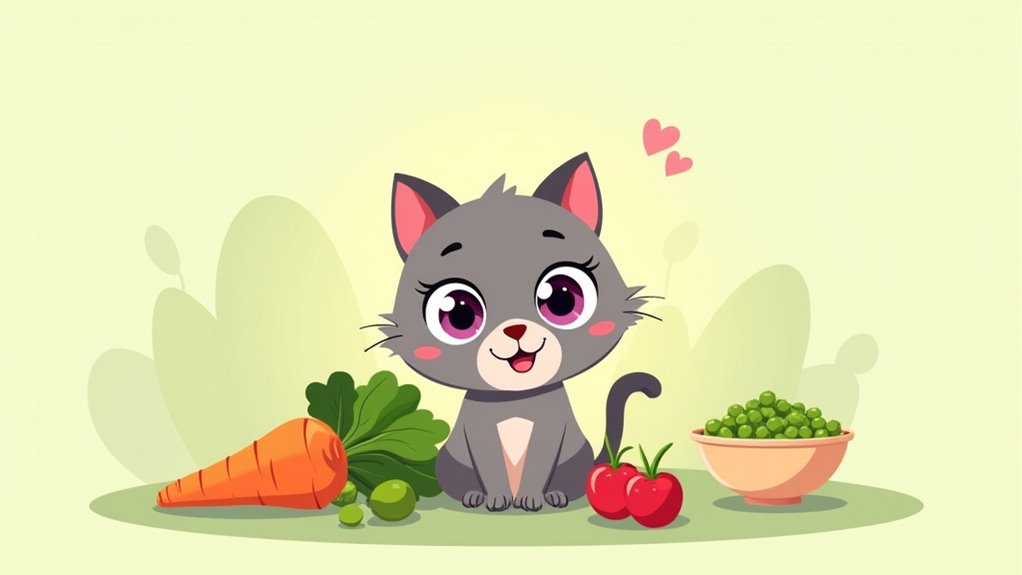
Cats can enjoy many vegetables in their diet. These veggies can add variety and health benefits. Safe options include carrots, cucumbers, green beans, and pumpkin. Always cook these vegetables to make them safe for your cat. Steaming or boiling softens them. This helps prevent choking.
Here are some safe vegetables for your cat:
- Carrots: Peel and cook them. Serve 1-2 teaspoons each week. Cooked carrots are rich in beta-carotene beneficial for vision and immune system.
- Cucumbers: Peel and slice thinly. Offer a few pieces. Broccoli is not toxic to cats and can provide nutritional benefits when introduced in moderation.
- Green Beans: Use fresh or canned without salt. Limit to 1 tablespoon.
- Pumpkin: Cooked or plain canned pumpkin is great for digestion.
Do not add any seasoning. Serve in small amounts. This helps keep your cat healthy and balanced. Always watch for any bad reactions when trying new foods.
Fruits Suitable for Cats
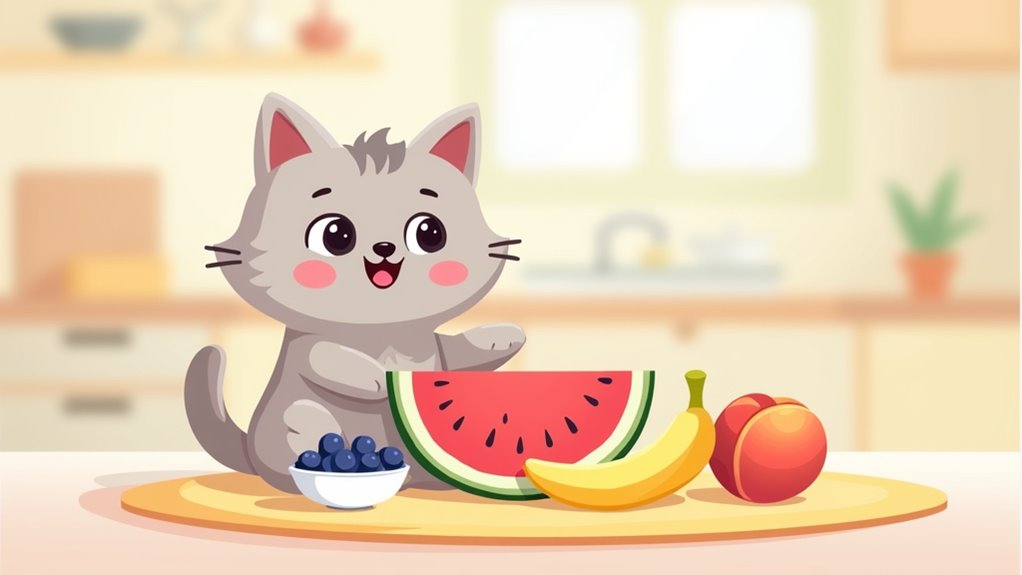
Fruits can add fun and nutrition to your cat’s meals. They provide vitamins and hydration. Always serve fruits in small amounts. Safe fruits for cats include apples, bananas, blueberries, strawberries, and pears. Remember to remove seeds, stems, and peels. These parts can be harmful.
Fruit Serving Guidelines:
- Apples: Give 1-2 small slices. No seeds or stem, please.
- Bananas: Offer 1-2 small pieces. Keep treats under 10% of daily calories.
- Blueberries: Fresh or frozen berries are great snacks.
- Strawberries: Serve them fresh or pureed in small amounts. In moderation, strawberries can be a fun treat for your cat.
- Pears: Take off seeds and peel. Offer small pieces.
Start with tiny portions. Watch for any allergies or tummy troubles. Always talk to your vet if your cat has health issues. Fruits can provide nutritional benefits that enhance your cat’s overall health.
With careful choices and small servings, fruits can be a tasty treat for your furry friend!
Dairy and Eggs
Cats enjoy tasty treats, but be careful with dairy. Many adult cats can’t digest lactose. This can cause diarrhea or vomiting. Regular cow’s milk or cream isn’t a good choice. Instead, try lactose-free cat milk. Additionally, it’s important to remember that most adult cats are lactose intolerant, so offering dairy can lead to digestive issues.
Cheese Tolerance
- Hard cheeses like cheddar or gouda have less lactose. Cats may tolerate these in small amounts. Hard cheeses are generally safer options for sharing with cats.
- Soft cheeses contain more lactose and can have harmful ingredients. It’s best to avoid them.
- Serve cheese in moderation. Too much can upset your cat’s stomach.
Eggs
Cooked eggs are a good source of protein for cats. Always serve eggs scrambled or boiled. Avoid raw egg whites. They can stop biotin absorption.
Foods to Avoid and Cautions
Feeding your cat is important, but not all human foods are safe. Some seasonings can be harmful. Onions and garlic can cause anemia and stomach issues; onions contain thiosulfates that are toxic to cats. Even tiny amounts can be dangerous. Stay away from any food containing these ingredients.
Certain fruits are also risky. Grapes and raisins can hurt your cat’s kidneys. Citrus fruits can upset their stomach. Cherries can be a choking hazard and are toxic too. It’s crucial to remember that garlic powder is toxic to cats and should never be included in their diet.
To keep your cat safe:
- Avoid: Onions, garlic, grapes, raisins, citrus fruits, and cherries.
- Watch for signs: Vomiting, diarrhea, and tiredness.
If you think your cat ate anything harmful, call your vet right away. Your cat’s health matters. Always check before sharing your food.
Frequently Asked Questions
Can Cats Eat Cooked Bones Safely?
Cats should not eat cooked bones. Cooked bones can splinter easily. This can cause serious internal injuries. Sharp pieces may hurt your cat’s mouth, throat, or stomach. Instead of bones, give your cat soft meats. You can also choose special cat treats made just for them. These options are safer and healthier. Always think about your cat’s safety when choosing food. A happy cat is a healthy cat.
Is It Safe to Feed My Cat Seafood?
Feeding your cat seafood can be safe sometimes. Cooked tuna or salmon is a great choice. These foods provide high-quality protein and omega fatty acids. Make sure the seafood is plain and has no added ingredients. Proper preparation is key to avoid any health risks. Always serve it in small amounts. Too much seafood can upset your cat’s stomach. Keep an eye on your cat after feeding seafood. If they show any signs of allergies, stop giving it to them. Enjoy treating your furry friend with tasty seafood!
Can Cats Have Chocolate-Flavored Treats?
Cats cannot have chocolate-flavored treats. Chocolate is very dangerous for them. It can cause serious health problems. For example, if a cat eats chocolate ice cream, it might suffer from chocolate poisoning.
Instead of chocolate, choose safe snacks for your cat. Freeze-dried meat is a great option. These treats are healthy and tasty for your feline friend. Always keep chocolate away from your pets. Their safety comes first!
Are There Any Grains Cats Can Eat?
Cats can eat some grains. Oats and quinoa are safe options. Oats help with digestion. They are high in fiber. Quinoa is packed with protein and important nutrients. Always serve these grains cooked and plain. Avoid adding salt or spices. This keeps your cat healthy and happy. Remember, grains should only be a small part of their diet. Cats need meat for most of their nutrition. Always consult your vet before making changes to your cat’s food.
How Often Can I Give My Cat Human Food?
You can treat your cat with human food a few times each week. Just remember, it should not be more than 10% of their daily calories. Stick to safe options like cooked vegetables. This keeps your cat healthy and happy. Avoid harmful foods like onions, garlic, and chocolate. Always check if the food is safe before sharing. Treats can be fun, but moderation is key. Your cat will appreciate the tasty snack!
Conclusion
You can share many foods with your cat. Cooked meats are a great choice. Cats enjoy chicken, turkey, and fish. Certain vegetables are also safe. Carrots and peas can be good options. Some fruits are fine too. Cats like small pieces of watermelon or cantaloupe.
Be careful with dairy. Some cats cannot digest it well. Eggs are tricky too. Many cats can eat cooked eggs, but watch for any reactions.
Avoid toxic foods. Chocolate is very dangerous for cats. Onions and garlic can also harm them. Always check what you give your cat. This way, your furry friend stays healthy and happy. Share love through safe food choices!
