
What Plants Can Cat Eat
This post contains affiliate links. As an Amazon Associate, we earn from qualifying purchases.
Cats can safely eat certain edible fruits and herbs, such as apples (without seeds), bananas, blueberries, catnip, and cat grass. However, it is crucial to avoid toxic plants like lilies and sago palms, which can be harmful or even fatal. Monitoring your cat’s plant intake is important to avoid digestive issues. For those interested in more details about safe options and potential risks, further information will be provided later in the article.
Essential Facts in 30 Seconds
- Safe indoor plants for cats: catnip, silver vine, valerian, and cat grass; beneficial for digestion and stress relief.
- Non-toxic houseplants: parlor palm, areca palm, bamboo palm, and Boston fern; safe around cats.
- Monitor cat’s plant consumption to avoid digestive issues from overindulgence.
- Toxic plants to avoid: lilies, oleander, and sago palm; can cause severe health problems.
- Fresh fruits like apples, bananas, blueberries, mangoes, and strawberries can be given as occasional treats.
Cat-Safe Edible Fruits for Cats
Treat your cat with safe fruits. Knowing which fruits are good is important. Here are some cat-safe fruits and how to prepare them.
- Apples: Remove seeds and stems. Cut into 1-2 small pieces.
- Bananas: Slice fresh or frozen. Limit to 10% of daily calories.
- Blueberries: Low in calories. Great for a special treat.
- Mango: Peel and pit. Cut into small slices.
- Strawberries: Serve fresh, frozen, or pureed in small amounts. Strawberries are not toxic to cats, making them a safe option for occasional treats.
Keep fruit serving sizes small. This helps avoid tummy troubles. Always remove seeds and pits.
Introduce new fruits slowly. Watch for any allergic reactions. Talk to your vet before adding fruits to your cat’s meals. This ensures balanced nutrition. Additionally, it’s important to remember that excessive consumption can lead to digestive issues, so moderation is key.
Cat-Safe Indoor Plants and Herbs
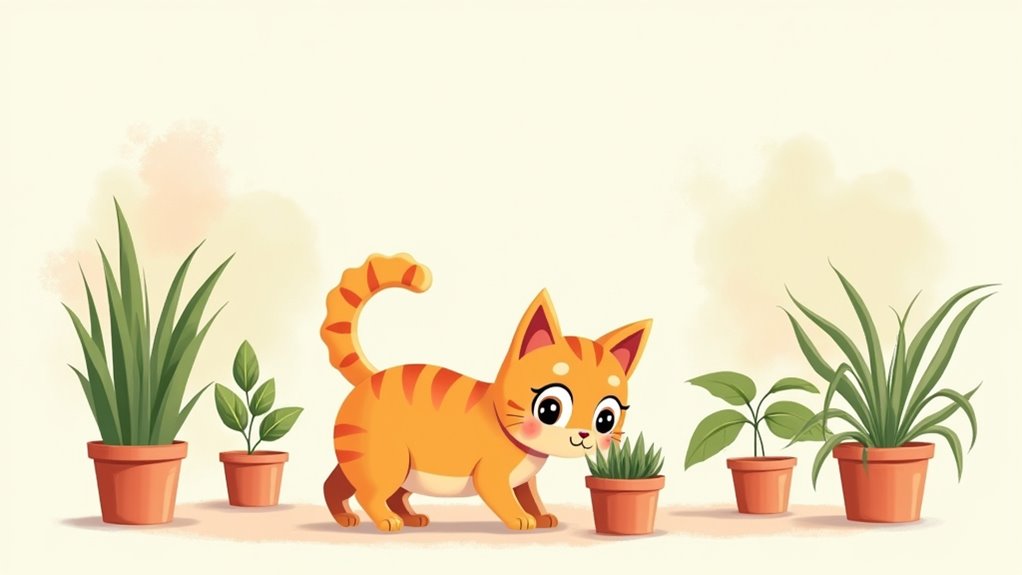
Cat-safe indoor plants and herbs can make your home feel better. They also give your cat safe options to explore and enjoy.
These plants not only improve your decor but also offer health benefits for your feline friend.
Here are four great cat-safe options:
- Catnip: This plant makes many cats happy. It can help reduce stress for about two-thirds of cats.
- Silver Vine: This herb works for about 80% of cats. It gives them a fun mood boost, just like catnip.
- Valerian: This plant acts as a calming sedative. It’s helpful for anxious cats.
- Cat Grass: Varieties like oat and barley help with digestion. They can also reduce hairballs. Eating cat grass can also fulfill nutritional gaps that your cat may have.
Additionally, providing safe plants can satisfy curiosity and offer health benefits for your cat.
Monitor your cat’s consumption of these herbs. Catnip is fun, but too much can upset their tummy.
Keep an eye on how much they eat.
Additional Safe Houseplants for Cats
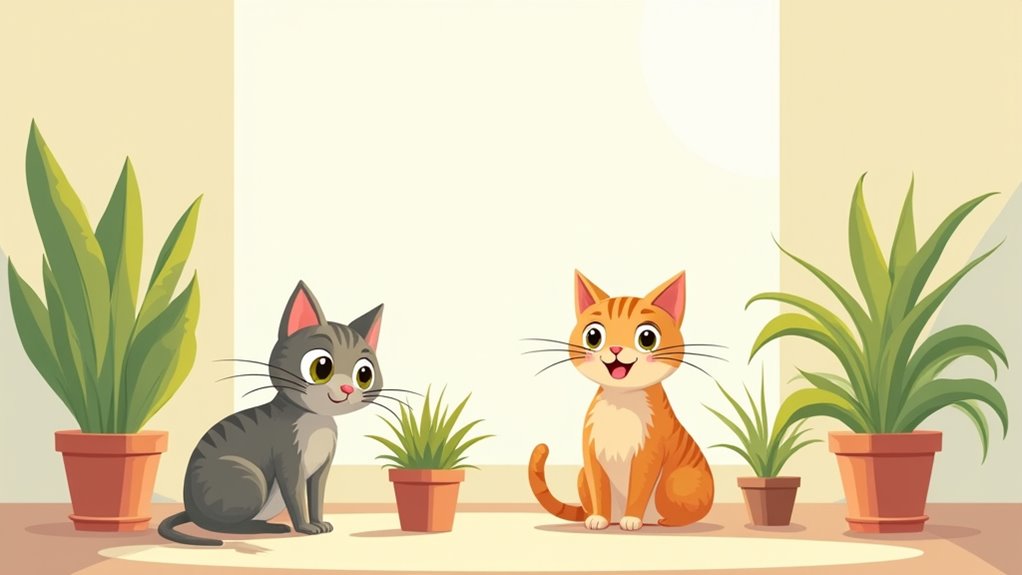
Find plants that are safe for your cat and look great in your home. Here are some wonderful houseplants!
Cat Friendly Palms:
- Parlor Palm (Chamaedorea elegans): This palm grows up to 2 feet tall. It adds lush greenery and isn’t toxic to cats.
- Areca Palm: This palm is non-toxic and thrives in bright, indirect light. It’s also good for cleaning the air.
- Bamboo Palm: Safe for cats, it fits well in small spaces and adds a nice touch.
Non-Toxic Ferns:
- Boston Fern (Nephrolepis): Cats love its shaggy fronds. It grows well in humid places with indirect light.
- Ponytail Palm (Beaucarnea recurvata): This unique and easy-care plant is safe for your furry friend.
These plants make your home look beautiful while keeping your cat safe. Enjoy the greenery and keep your cat happy and healthy!
Common Toxic Plants to Avoid Around Cats
Cats love to explore. Their curious nature often leads them to chew on plants in your home. Some plants can be very dangerous for your cat.
Here are four common toxic plants to avoid:
- Lilies (Lilium species): These plants are very harmful. They can cause kidney failure in cats.
- Oleander (Nerium oleander): All parts of this plant are toxic. It can cause serious heart problems.
- Sago Palm (Cycas revoluta): Both the seeds and leaves are dangerous. They can lead to liver failure.
- Dieffenbachia (Dumb Cane): This plant has crystals that irritate the mouth. It can cause pain and swelling.
Removing these plants from your home is important.
Always check a plant’s safety before bringing it inside. Keep your cat safe and healthy. Your attention can help prevent serious health issues for your furry friend.
Toxic Household Plant Examples and Effects
Some household plants can be dangerous for cats. Knowing which plants are toxic is key to keeping your pet safe. Here are some examples and what they can do:
| Plant Name | Toxicity Symptoms | Timeframe for Symptoms |
|---|---|---|
| Aloe Vera | Causes diarrhea and vomiting | Symptoms appear within a few hours |
| Amaryllis | Can lead to vomiting and low blood pressure | Symptoms show in 2-4 hours |
| Dieffenbachia | Causes mouth irritation and drooling | Symptoms appear quickly after chewing |
| Foxglove | May cause heart problems and vomiting | Symptoms can occur immediately to within hours |
| Sago Palm | Can cause liver failure and can be fatal | Effects vary based on amount eaten |
Recognizing these symptoms helps you act fast. If your cat shows any signs after contact with these plants, call your vet right away. Keep these toxic plants in mind to keep your furry friend safe.
Safety Guidelines for Plant Ownership With Cats
Keeping your home safe for cats means being careful about the plants you have. Follow these guidelines for a pet-friendly environment:
- Pick Safe Plants: Go for cat-friendly choices like Catnip, Cat Grass, or Bird’s Nest Fern. These plants are safe for your furry friends.
- Watch for Chewing: Keep an eye on your cat. If they chew too much on plants, it can upset their stomach.
- Care for Plants Properly: Make sure plants like the Zebra Plant and Parlour Palm get enough water. Avoid overwatering to prevent root rot.
- Place Plants Wisely: Put plants out of reach. Use hanging planters to keep them safe from curious paws.
Following these steps ensures your home stays safe and your cats stay happy.
Frequently Asked Questions
Can Cats Eat Vegetables or Only Fruits and Plants?
Cats can enjoy some safe greens. Cat grass is a good choice. It helps their digestion and is safe for them. Most vegetables, however, can upset their stomachs. Vegetables like onions and garlic are harmful. Stick to safe greens and fruits for healthy treats. Fruits like melon or blueberries are fine in small amounts. Always watch your cat for any signs of trouble. Keeping their diet simple is best for their health.
What Are the Signs if My Cat Eats a Toxic Plant?
Cats can get sick from eating toxic plants. Watch for signs like vomiting, drooling, or swelling. These symptoms can show that your cat is in trouble. Common toxic plants include lilies, azaleas, and poinsettias.
Keep an eye on your cat’s behavior. Changes in eating or drinking habits can be a warning. If you suspect your cat ate a toxic plant, act quickly. Contact a vet right away. Early treatment is important for their health. Always check your home for harmful plants to keep your cat safe.
How Much of These Plants Can I Safely Give My Cat?
Offer your cat safe plant portions in moderation. Keep their diet balanced. A few leaves or blades each day works well. This helps avoid overconsumption. Too much can upset their stomach. It can also change their behavior. Always watch your cat after introducing new plants. This way, you ensure they stay happy and healthy.
Are There Any Fruits or Plants That Are Completely Unsafe for Cats?
Many plants are harmful to cats. Lilies are very dangerous. Philodendrons can also make cats sick. Fruits like grapes and citrus are not safe either. These items can cause serious health issues for your cat. Always check your home for these unsafe plants and fruits. Keeping your cat safe is very important. Make sure your cat’s environment is free from these dangers.
Can I Use Cat-Safe Herbs in Cat Food Recipes?
You can use cat-safe herbs in homemade cat food. Herbs like catnip, basil, and thyme are great choices. They add flavor and offer health benefits. Use these herbs in small amounts. This keeps your cat healthy and happy. Always check what herbs are safe before using them. Your cat will enjoy the tasty meals you prepare!
Conclusion
Keeping your cat safe around plants is very important. Some fruits and herbs are safe for cats, but many plants can be harmful. Always check if a plant is safe before bringing it home. Even plants that seem harmless can pose risks. Educate yourself about which plants are safe for your furry friend. Their health and safety depend on it. Take steps to protect your cat today.
