
What Food Can Cat Eat
This post contains affiliate links. As an Amazon Associate, we earn from qualifying purchases.
When choosing food for your cat, prioritize safe options like plain, cooked meats and fish. Suitable choices include chicken, turkey, duck, and fish such as salmon and cod, all served without seasonings or sauces. You can also incorporate small amounts of cooked vegetables, like carrots or pumpkin, but limit them to 5–10% of their diet. Ensure that all food is boneless and fresh. For more insights on hydrating options and treat ideas, continue reading.
Essential Facts in 30 Seconds
- Cats can consume plain, cooked meats like chicken, turkey, or duck without any seasoning or skin.
- Fish options such as salmon, cod, and tuna are safe, but bones should be removed.
- Cooked vegetables like carrots, pumpkin, and green beans can be offered in moderation.
- Lean meats and cooked eggs can be given as occasional protein-rich treats.
- Introduce new foods gradually and avoid seasonings to prevent digestive issues.
Safe Meats and Fish for Cats
Feeding your cat safe meats and fish is important for their health. You can give them plain, cooked chicken, turkey, or duck. Always keep it simple. No seasoning, skin, or sauces. Boil or bake these meats. Avoid frying to keep fat low.
Fish can also be a nice treat for your cat. Choose safe options like salmon, cod, and tuna. Cook these fish without breading or extra flavors. Always remove bones to prevent choking. Chicken breast is a common dietary option that many cats enjoy. However, be cautious with tuna as it should be given in moderation due to high mercury levels that can accumulate in cats.
Remember these key points:
- Avoid raw meats or fish. They can be dangerous.
- Control portions. Serve small pieces based on your cat’s size.
- Watch for any upset stomach when trying new foods.
Taking these steps helps keep your cat healthy and happy!
Beneficial Vegetables for Feline Health
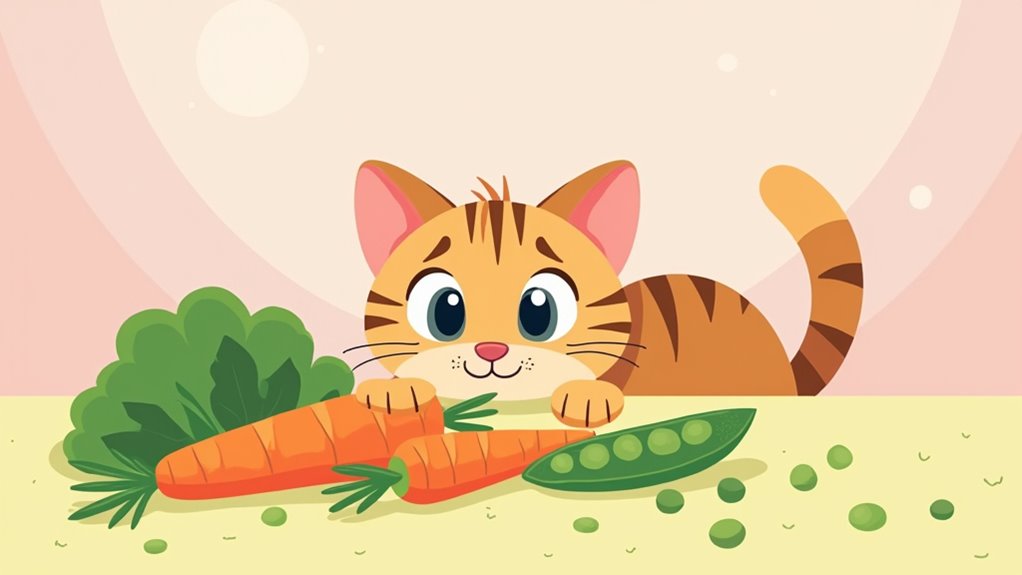
Cats need a balanced diet with protein and vegetables. Adding certain veggies can boost their health. Here are three great choices:
- Carrots: These are full of beta carotene. They help with eye health and make coats shiny. Additionally, carrots can aid in digestion due to their high fiber content. Cooking carrots until soft enhances their digestibility for cats.
- Pumpkin: Cooked and pureed pumpkin gives fiber. It helps keep digestion healthy and is also a good source of essential vitamins that can support overall health.
- Green beans: Low in calories, they help control weight and provide extra protein.
Wash all vegetables well. Cook them to make them easier to digest. Cut them into small pieces to prevent choking.
Limit veggies to 5–10% of your cat’s daily calories. This keeps their nutrition balanced.
Human Foods Cats Can Occasionally Enjoy
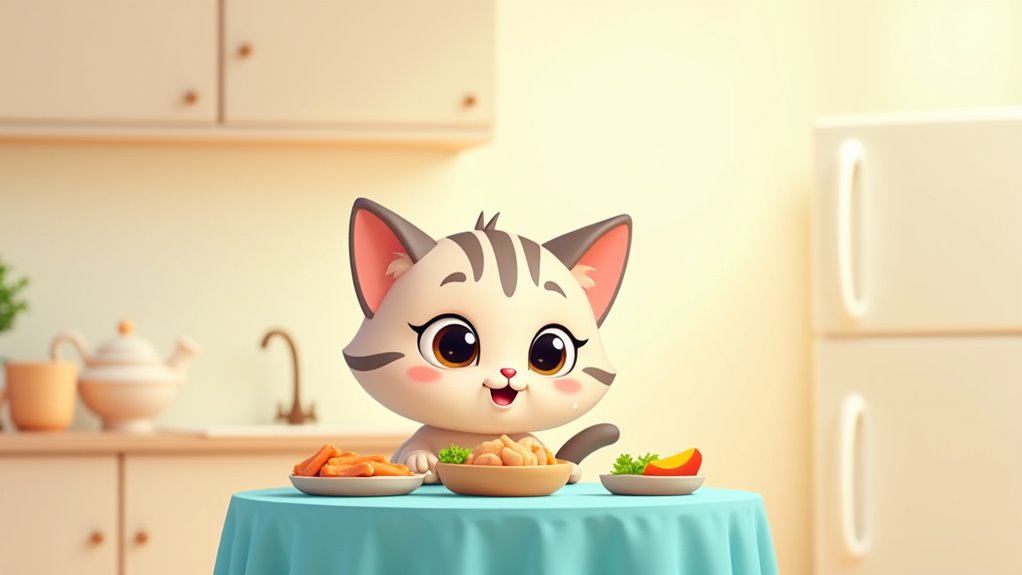
Cats can enjoy some human foods safely. Lean meats, like cooked chicken or turkey, are great sources of protein. These meats help keep your cat strong and healthy. Chicken is a great source of essential amino acids that contribute to your cat’s overall well-being.
Certain vegetables, such as cooked carrots or peas, can also be good for them. Always prepare these foods without any seasoning or spices. Cats have sensitive stomachs. Serving these foods in small amounts is best. Treats should be special, not daily meals. Keep your feline friend happy and healthy with these safe options! Additionally, cooked eggs can be a nutritious treat for cats, providing high-quality protein.
Safe Meat Options
Here are some safe meats for your feline friend:
- Cooked, unseasoned poultry like chicken or turkey is great. It has high protein and low calories, making it a great source of protein for your cat’s diet.
- Cooked, unseasoned beef is another good choice. Lean cuts are best to keep fat low.
- Cooked fish such as salmon or shrimp can be tasty. These provide omega-3 fatty acids. Treat your cat with fish occasionally to avoid too much fat.
- Chicken gizzards are also a nutritious option, as they are an excellent source of protein for cats and can be a delightful treat in moderation.
Choose these meats to keep your cat happy and healthy!
Beneficial Vegetables Choices
Many pet owners may not know that some vegetables can be good for cats. Carrots, cucumbers, and broccoli can offer great benefits. Carrots are full of beta-carotene. This helps keep your cat’s eyes healthy. Cook them and cut into small pieces for safe eating.
Always peel and cook vegetables first. Don’t add garlic or onion. These are harmful. Broccoli is not toxic to cats, making it a safe occasional treat.
Cucumbers and celery help keep your cat hydrated. Green beans are a tasty, low-calorie snack.
These veggies can add variety to your cat’s diet. They provide nutrients and can make mealtime fun. Always introduce new foods slowly. Watch for any reactions. Your cat may enjoy these healthy treats! Additionally, some vegetables can be safe and beneficial in moderation for your cat’s overall health.
Nutritional Considerations and Risks for Cats
Keeping your cat healthy means meeting their specific nutritional needs. Cats are obligate carnivores. They need high-quality protein from animal sources to thrive.
Here are some important points to remember:
- Vital Amino Acids: Cats need taurine, found only in animal tissues. A lack of taurine can cause serious health issues.
- Balanced Vitamins and Minerals: Cats require preformed vitamin A. They can’t convert plant sources into this vitamin effectively.
- Controlled Fat Intake: Cats need some fat for energy and to absorb nutrients. However, too much fat can lead to obesity.
Providing the right diet ensures your cat stays strong and healthy. Pay attention to what you feed them for their well-being.
Preparation and Serving Tips for Cat Food
Preparing food for your cat is important for their health. Safe handling and nutrition are key. Follow these tips for a happy and healthy feline friend.
Food Preparation and Serving Techniques
| Preparation Tip | Serving Technique |
|---|---|
| Cook eggs fully | Use shallow, clean bowls |
| Puree veggies for easier digestion | Warm food a little before serving |
| Keep out seasonings and salt | Use different utensils for prep |
| Store food in airtight containers | Watch serving sizes closely |
| Introduce new foods slowly | Clean bowls often to avoid bacteria |
Store prepared meals in the fridge. Use them within 1-2 days. Always check for freshness before serving. Limit treats to 10% of their daily intake. Avoid high-calorie foods. These habits help prevent obesity and keep your cat’s diet balanced.
Hydration Support Foods for Cats
Keeping your cat hydrated is essential for their health. Cats often don’t drink enough water, so it’s important to provide high-hydration foods. These foods help keep them healthy and hydrated.
Here are some great options:
- Raw or freeze-dried diets: These foods have over 70% water. They mimic what cats ate in the wild.
- Wet cat food: This food usually contains 70-80% water. It gives your cat a good hydration boost.
- Hydrating human foods: Small amounts of seedless watermelon or cantaloupe are safe. These can be fun treats but shouldn’t replace their main meals.
Frequently Asked Questions
Can Cats Eat Dairy Products Like Milk and Cheese?
Feeding your cat dairy products like milk and cheese is not a good idea. Many cats are lactose intolerant. This means they can’t digest lactose well. Milk and cheese can upset their stomachs. This can lead to vomiting or diarrhea.
Cats need a balanced diet. Dairy products do not provide the nutrients they require. Instead, focus on cat food that meets their needs. Look for high-quality cat food with meat as the first ingredient. Fresh water should always be available.
Some cats might enjoy the taste of milk, but it’s best to avoid it. Stick to food made just for cats. This keeps them healthy and happy. Always consult a vet if you have questions about your cat’s diet.
Are There Any Fruits Safe for Cats to Eat?
Apples are mostly water, making them a refreshing treat for cats. Safe fruits like apples, bananas, and blueberries can bring health benefits to your feline friend. These fruits should be given only as occasional treats, not a main part of their diet. Always remove seeds and core from apples, as they can be harmful. Bananas are soft and easy for cats to eat. Blueberries are small and packed with vitamins. Remember, moderation is key. Treats should not be more than 10% of your cat’s daily food. Always watch for any signs of allergies when introducing new foods. Enjoy sharing these tasty fruits with your furry companion!
How Often Can I Give My Cat Human Food?
Occasionally giving your cat human food is fine. Keep it to no more than 10% of their daily calories. This helps with their health. Focus on how often you feed them. Use portion control to avoid overfeeding. Cats need balanced diets. Stick to safe foods like cooked chicken or fish. Avoid toxic foods like chocolate and onions. Treats should be small and infrequent. Always watch for any bad reactions. A happy cat is a healthy cat!
Can Cats Eat Food With Preservatives or Additives?
Many commercial cat foods have harmful preservatives. Studies show that 75% of these foods contain them. These synthetic additives can be dangerous for your cat’s health. They may cause serious problems over time. It’s best to avoid foods with these ingredients.
Choose natural options for your cat. Look for brands that use real ingredients. Natural foods support your cat’s well-being. They help your furry friend stay healthy and happy. Always check the label before buying. Your cat deserves the best nutrition.
Is It Safe for Cats to Eat Raw Meat?
Feeding your cat raw meat can be risky. Raw meat may have harmful bacteria and parasites. These can cause serious health problems for your cat. Some benefits exist, but the risks often outweigh them. Always talk to your vet before changing your cat’s diet. They can help you decide what is safe and healthy for your furry friend. Keeping your cat safe should always come first.
Conclusion
Feeding your cat a balanced diet is key for their health and happiness. About 70% of cats are overweight or obese. This is a big problem! You can share some human foods with them, but stick to safe choices. Good options include cooked chicken, turkey, and some vegetables like carrots. Always avoid onions, garlic, and chocolate.
Keep an eye on their weight. Regular vet check-ups are important for tailored advice. Provide fresh water daily. With nutritious meals, your cat can live a long and happy life.
