
What Snacks Can Cat Eat
This post contains affiliate links. As an Amazon Associate, we earn from qualifying purchases.
When selecting snacks for your cat, prioritize safe protein sources like cooked chicken, turkey, and fish. You can also offer vegetables such as cooked carrots or green beans for added vitamins, and some fruits like peeled apples or blueberries can be given in moderation. It’s crucial to avoid harmful foods like chocolate, onions, and raw meats. Remember, treats should constitute only about 10% of their overall diet. For those interested, further details and tasty options will be discussed later in the article.
Essential Facts in 30 Seconds
- High-quality proteins like cooked chicken, turkey, and fish are great snacks for cats.
- Cooked vegetables such as carrots, green beans, and cucumbers are healthy low-calorie options.
- Small amounts of fruits like blueberries, strawberries, and apples (without seeds) can be safe treats in moderation.
- Avoid toxic foods like chocolate and onions; never give raw proteins due to health risks.
- Introduce new snacks gradually and consult your vet if unsure about any food.
Safe Protein Sources for Cats
Feeding your cat safe protein sources is vital for their health. Cats need animal proteins as a major part of their diet. Over 50% of what they eat should be protein. Chicken, turkey, and fish are excellent choices. These options provide high digestibility, ensuring your cat gets the nutrients they need. Additionally, plain, cooked chicken can be a great source of protein when prepared properly.
For cats with food sensitivities, consider using novel proteins like rabbit or venison. These lean meats are less likely to cause allergies. Whole eggs are also a great addition. They offer a balanced amino acid profile that supports your cat’s health. Additionally, keep in mind that occasional consumption of tuna can be a tasty treat for cats, but should not replace their regular diet.
Watch out for processed meats like ham or bacon. They contain high sodium, which can be harmful.
Always check with your veterinarian before changing your cat’s diet, especially if they’ve health issues. Choosing safe and high-quality protein sources keeps your furry friend healthy and happy.
Healthy Vegetables Cats Can Enjoy
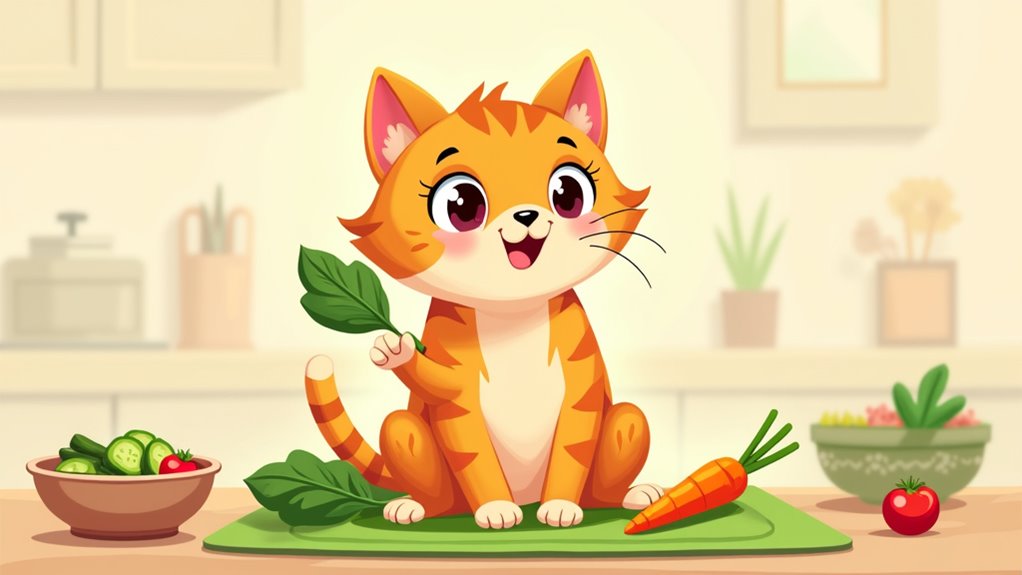
Cats need a balanced diet. This includes proteins and some vegetables. Healthy veggies offer many benefits.
Carrots are great for cats. They’re full of beta-carotene. This helps with eye and coat health. Peel and cook carrots until they’re soft. This makes them safe to eat. Introducing safe vegetables in small amounts is a great way to diversify your cat’s diet.
Cucumbers are another good option. They’ve lots of vitamins and water. This helps keep your cat hydrated. Cut cucumbers into thin, bite-sized strips. This makes them easy to eat.
Green beans are rich in fiber and low in calories. They help with digestion. You can give them fresh, frozen, or canned. Just make sure they’re sodium-free.
Broccoli is also healthy for cats. It has antioxidants and vitamins. Steam or roast broccoli and cut it into small pieces. This helps your cat enjoy it better. Interestingly, collard greens are non-toxic to cats and can be offered in moderation as a nutritious snack.
Serve these vegetables in moderation. Your cat will love the crunch and get health benefits too!
Fruits That Are Generally Safe in Moderation
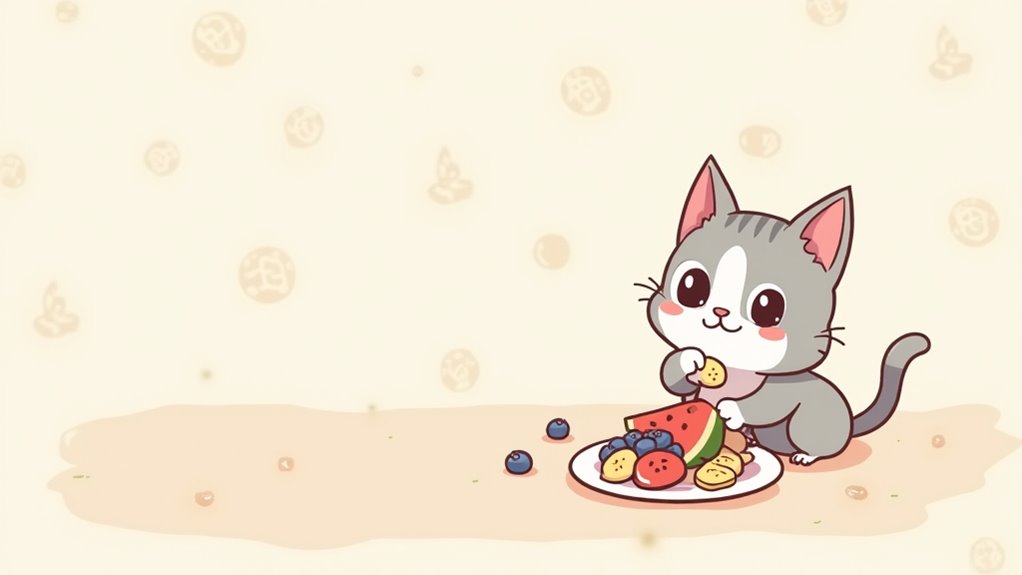
Many fruits can be a tasty treat for your cat. Just remember, moderation is key. Here are some fruits that are usually safe for cats. Make sure to prepare them correctly and serve small amounts:
- Apples: Remove seeds and stems. Offer 1-2 small pieces. It’s essential to remove seeds and core to avoid toxicity.
- Bananas: Limit to 1-2 slices since they’ve high sugar.
- Blueberries: These are safe as treats. Offer them in small amounts.
- Strawberries: Fresh, frozen, or pureed; serve in little amounts.
Always take out toxic parts like pits and peels. Fruits should make up only 10% of your cat’s daily calories. Additionally, it’s important to monitor for adverse reactions when introducing new fruits to your cat’s diet.
Introduce new treats slowly. Watch how your cat reacts to keep them healthy while enjoying tasty, hydrating snacks!
Foods to Avoid or Use Caution
Chocolate is dangerous for cats. Dark chocolate is the worst. It can cause severe reactions like seizures. Onions are another food that is toxic to cats and should be avoided completely.
Raw proteins can carry harmful bacteria. Avoid giving these to your cat.
Caffeine and alcohol are also very harmful. Even small amounts can be deadly.
Always read food labels. Talk to your vet if you’re unsure about any food. Chocolate toxicity in cats is a serious concern that every cat owner should be aware of.
Keeping your cat away from these dangers helps them stay safe and healthy!
Nutritional Benefits of Snacks for Cats
Choosing snacks for your cat matters. Focus on their nutritional benefits to keep them healthy and happy. These benefits can make a big difference in their well-being.
- High-Quality Animal Protein: This helps build strong muscles. It gives essential amino acids, like taurine, which cats need.
- Important Fatty Acids: Omega-3 and omega-6 fatty acids support healthy skin and brain function. They keep your cat looking and feeling great.
- Vitamins and Minerals: Snacks can provide key nutrients. They help strengthen the immune system and support bone health. Additionally, incorporating healthy treats such as green beans can provide added vitamins and fiber.
- Low-Calorie, High-Protein Treats: These treats help with weight management. They keep your cat fit and full of energy.
Additionally, some snacks, like cooked green beans, can be offered in moderation as a treat, ensuring variety in their diet.
Choose wisely to ensure your furry friend gets the best snacks. A healthy cat is a happy cat!
Frequently Asked Questions
Can I Give My Cat Snacks Every Day?
Giving your cat snacks every day is not a good idea. Treats can add extra calories. Cats need a balanced diet to stay healthy. Limit snacks to 10% of their daily food intake. This helps them enjoy treats without gaining weight.
Choose healthy treats for your cat. Look for options with real meat or fish. Avoid snacks high in sugar or fillers. Always check the label for ingredients. Remember, moderation is key. Treats should be special, not regular.
Keep your cat happy and healthy. Offer snacks occasionally, not daily. This way, your cat can enjoy treats without any health risks.
How Do I Introduce New Snacks to My Cat?
Introducing new snacks to your cat can be fun and rewarding. Start slow. Offer a tiny piece of the new snack first. Watch your cat’s reaction. If your cat likes it, great! If not, try something else.
Give the new snack over a few days. This helps your cat adjust. It also prevents stomach issues. Always check for any signs of allergies or upset tummies. If your cat shows any problems, stop giving the snack.
Mix the new snack with their regular food. This can make it more appealing. Keep an eye on your cat’s overall behavior. A happy cat will show interest in the new treat. Enjoy the process!
What Are the Signs of Food Intolerance in Cats?
Cats can have food allergies that lead to various signs. Watch for chronic itching, hair loss, or red skin. Digestive problems are also common. Symptoms like vomiting and diarrhea may appear. These signs can show food intolerance. A visit to the vet is important for a proper diagnosis and treatment. Keeping track of what your cat eats can help. It may also help to try hypoallergenic food. Always pay attention to your cat’s health. Quick action can make a big difference.
Are Homemade Treats Safe for Cats?
Homemade treats can be safe for cats. Use trusted recipes and safe ingredients. Focus on nutrition. Avoid toxic foods like onions, garlic, and chocolate. Always wash your hands and clean surfaces before cooking. Choose simple ingredients like chicken, fish, or pumpkin. Cats enjoy these flavors. Treats should be small and given in moderation. Remember, balance is key for your cat’s health. Enjoy making tasty snacks for your furry friend!
How Can I Ensure My Cat Maintains a Balanced Diet?
To help your cat have a balanced diet, follow these tips. First, choose high-quality animal proteins. Cats need meat for energy and health. Keep an eye on how much food you give. Too much can lead to weight problems.
Limit treats to keep your cat healthy. Treats should not make up more than 10% of their daily food. Check the calorie count on food labels. This helps you keep track of how much your cat eats.
Fresh water is also important. Always have clean water available. Regular vet check-ups will help you monitor your cat’s health. A balanced diet leads to a happy, healthy cat.
Conclusion
Snacks can be a fun part of your cat’s diet. Many cats enjoy treats like cooked chicken or small pieces of fish. Some veggies, like cooked carrots or peas, are safe too. These snacks can give them extra nutrition.
Watch out for dangerous foods. Chocolate, onions, and garlic can harm your cat. Always keep these away from them.
Moderation is important. Too many snacks can upset your cat’s stomach. Stick to small amounts.
With smart choices, your cat will stay healthy and happy. Keep their diet balanced. Happy cats make happy homes!
