
Can Cat Eat Canned Chicken
This post contains affiliate links. As an Amazon Associate, we earn from qualifying purchases.
Cats can safely eat canned chicken, provided it’s low-sodium and unseasoned. It’s important to rinse the chicken to eliminate excess sodium and serve it at room temperature for easier digestion. Limit portions to about 10% of their daily caloric intake, as it should be a treat rather than a full meal. Ensure that there are no harmful additives like garlic or onion, which are toxic to cats. For more tips on safe preparation and health precautions, continue reading.
Essential Facts in 30 Seconds
- Canned chicken can be given to cats as an occasional treat.
- It should not replace their main diet of high-quality cat food.
- Opt for plain, low-sodium, or no-salt-added canned chicken.
- Rinse the canned chicken to lower sodium content before serving.
- Avoid canned chicken with harmful ingredients like garlic, onion, or artificial additives.
- Consult a veterinarian before adding canned chicken to your cat’s diet, especially if they have health issues.
Safety Considerations for Feeding Canned Chicken to Cats
Feeding canned chicken to your cat can be safe and tasty. Focus on their health first. High sodium can harm your cat’s kidneys and raise blood pressure. Always check the label for sodium content. Low-sodium or no-salt-added options are the best choices.
Choose Quality Ingredients****
Pick canned chicken without artificial colors, additives, or preservatives. Avoid cans with spices that can upset your cat’s stomach. Rinsing the chicken may help reduce sodium levels before serving. Additionally, ensure that the chicken is plain and cooked to avoid any potential health risks associated with raw poultry.
Serving Suggestions
- Serve plain, unseasoned chicken only.
- Drain any extra liquid to cut down on unwanted additives.
- Start with small portions. Watch how your cat reacts.
- Remember that canned chicken should not replace regular cat food in a balanced diet.
Keeping your cat healthy is important. Canned chicken can be a great treat when done right!
Nutritional Benefits of Canned Chicken

Canned chicken is a tasty and nutritious choice for your cat. It’s packed with high-quality protein. This protein helps build strong muscles and gives your cat energy. Essential amino acids like taurine and lysine support their overall health. Lean protein also helps prevent obesity. It strengthens your cat’s immune system too. Additionally, canned chicken can be a good occasional treat, similar to other protein sources like tuna, but should not replace regular meals.
Canned chicken is great for hydration. It contains 75-80% moisture. This keeps your cat’s urinary tract healthy and aids digestion.
Here are the main benefits of canned chicken:
- Protein: Key for strong muscles and a healthy immune system.
- Amino Acids: Vital for your cat’s overall well-being.
- Hydration: Helps increase water intake through food.
- Cooking Methods: Safe and free from harmful additives.
Canned chicken is a simple way to boost your cat’s diet. It’s delicious and packed with nutrients they need. Additionally, it’s important to ensure that any canned chicken is prepared correctly to avoid harmful additives that could negatively impact your cat’s health.
Risks Associated With Canned Chicken Ingredients
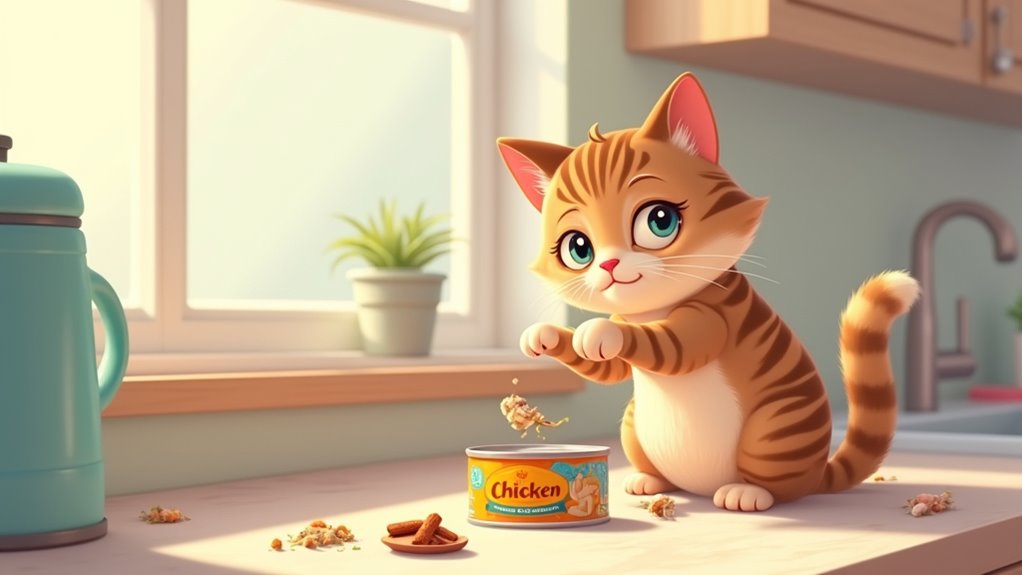
Canned chicken has nutritional benefits, but it also has some risks to consider.
Sodium Levels
Many canned chicken products are high in sodium. This can cause hypertension and stress on your cat’s kidneys. Cats need low-sodium diets. Look for low-sodium options or rinse the chicken before serving. Regular consumption of high-sodium foods can lead to serious health issues.
Allergens
Watch for additives like preservatives and fillers. They can cause allergic reactions. Common allergens include corn, wheat, and soy. Always check labels for harmful ingredients like garlic or onion powder. These can seriously harm your cat.
Best Choice
Choose plain, unseasoned canned chicken or products made for cats. This helps keep your cat healthy while reducing risks from canned chicken ingredients. Additionally, ensure that your cat has access to fresh water to maintain proper hydration.
Safe Preparation and Serving Practices
To ensure your cat enjoys canned chicken safely, follow these important steps:
- Pick the right option. Choose plain, low-sodium, or no-salt-added canned chicken. This keeps your cat healthy and provides a good source of cooked meats that are beneficial.
- Rinse well. Drain or rinse the chicken. This reduces sodium before you serve it.
- Serve at room temperature. This prevents discomfort and helps digestion.
- Watch portion sizes. Start small. Limit to 10% of your cat’s daily calories. This helps avoid tummy troubles.
Additionally, ensure that the primary diet consists of high-quality cat food to meet your cat’s nutritional needs.
Your cat will love this tasty treat while staying healthy!
Health Precautions and Alternative Options
Canned chicken can be a tempting treat for your cat, but it comes with risks. Understanding these risks and knowing safer options is important for your cat’s health.
Health Risks
- Sodium & Additives: Canned chicken often has high sodium. This can harm cats with heart or kidney problems. Rinsing the chicken helps remove some of this salt.
- Toxic Ingredients: Some canned chicken has garlic or onion. These ingredients are poisonous to cats.
- Unsafe Parts: Never feed your cat chicken bones. They can cause choking or injury.
Alternative Options
- Plain Boiled Chicken: This is a safer choice. It has no additives and allows you to control what your cat eats.
- High-Quality Wet Cat Food: Choose brands that offer essential nutrients for your cat’s health, as nutritional imbalances can lead to health issues over time.
Veterinary Guidance
Always talk to your vet before changing your cat’s diet. This is especially important if your cat has health issues.
Watch for any bad reactions when introducing canned chicken. Limit it to an occasional treat to keep your cat’s diet balanced.
Frequently Asked Questions
Can Kittens Eat Canned Chicken Safely?
Kittens can safely enjoy canned chicken. Make sure it’s low in sodium. Check for no additives or preservatives. Canned chicken can be a fun treat. Use it occasionally, not every day. A balanced diet is important for kittens. They need the right nutrients to grow strong and healthy. Always focus on their main kitten food for proper nutrition. Treats like canned chicken should not replace their regular meals. Keep their diet varied and exciting!
How Often Can I Feed My Cat Canned Chicken?
Feeding your cat canned chicken can be a tasty treat. Offer it 1-2 times a week. This keeps mealtime exciting while balancing their regular food. A mix of wet and dry food helps prevent nutritional problems. Always check the ingredients. Choose options without added salt or spices. This ensures your cat stays healthy. Canned chicken can be a great source of protein. It also provides moisture for hydration. Keep an eye on your cat’s weight. Too many treats can lead to weight gain. Enjoy feeding your furry friend!
Is Homemade Canned Chicken Better Than Store-Bought?
Homemade canned chicken stands out over store-bought options. You can choose the ingredients. No preservatives or too much salt. This means it’s healthier for you. Homemade chicken often tastes fresher too. Plus, it usually costs less. Making your own is a smart choice for your wallet and your health. Enjoy delicious meals with peace of mind.
Can Canned Chicken Cause Allergies in Cats?
Canned chicken can cause allergies in cats. Some cats are sensitive to chicken protein. This sensitivity can lead to reactions. Common signs include itching, stomach issues, and skin problems. Watch for changes in your cat’s behavior or health after eating canned chicken. Consult your vet if you notice any symptoms. Always read labels to check for other ingredients that might cause allergies. Keeping your cat healthy is important.
What Should I Do if My Cat Refuses Canned Chicken?
Canned chicken doesn’t always please every cat. Try mixing in other proteins like tuna or salmon. Different flavors might catch their interest. Keep the feeding area calm and comfortable. Cats can be picky, so patience is key. Offer small amounts of new food. Wait and see what they like. Always provide fresh water too.
Conclusion
Canned chicken can be a tasty treat for your cat. Many cats enjoy it. But be careful. Too much canned chicken can be bad for them. Always check the ingredients. Some canned chicken has added salt or spices that are not good for cats. Serve it in small amounts.
Talk to your vet before giving your cat new foods. They can help you decide what’s safe. Remember, a happy cat is a healthy cat. Keep their diet balanced with the right foods. Treats are fun, but they should not replace regular meals.
